
 Μake us preferred on Google
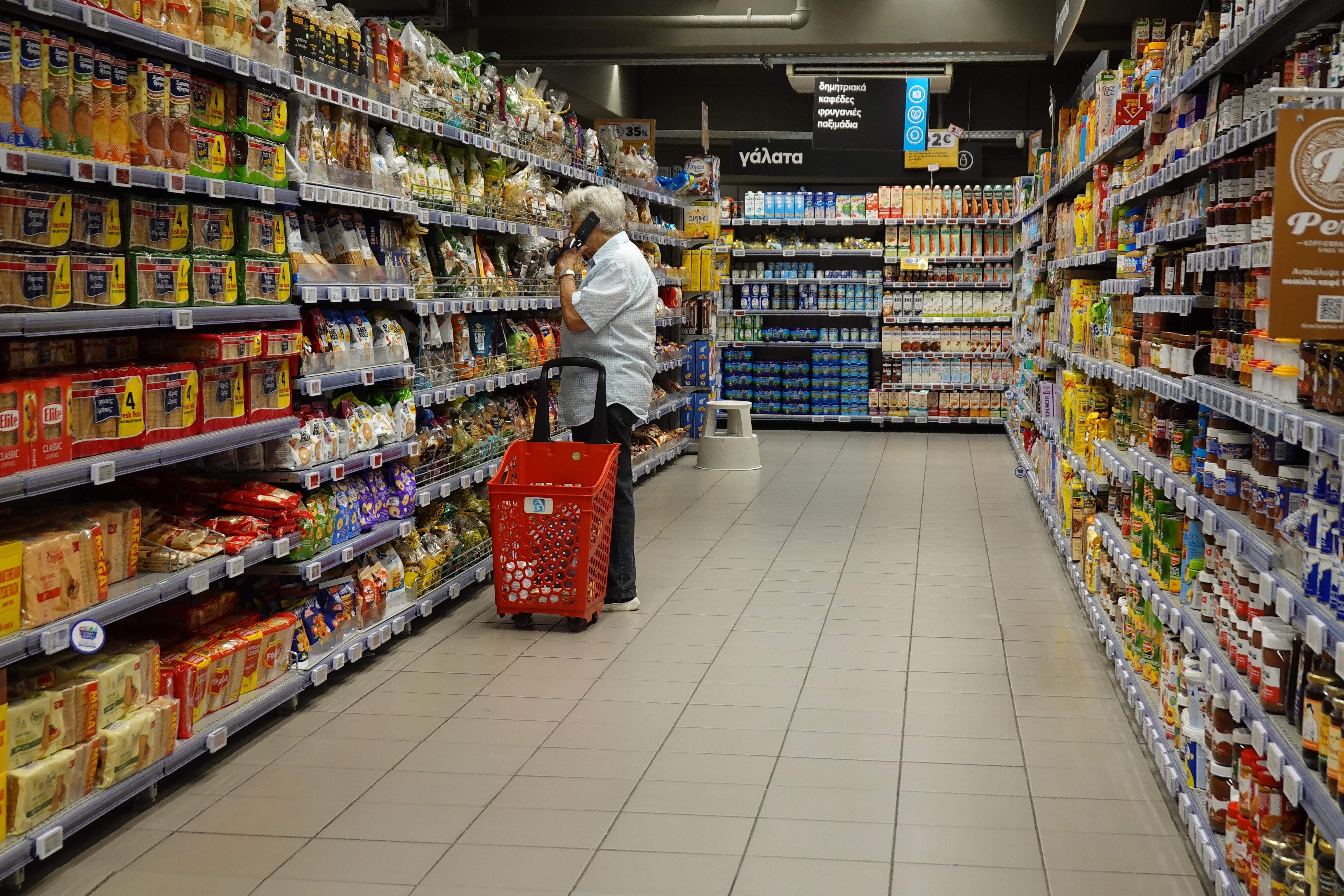
 Greek consumers are set to see lower prices on a broad range of essential supermarket products from August 31, following a voluntary agreement between the government, food manufacturers and major supermarket chains aimed at easing the impact of inflation on household budgets.
The new initiative, announced after a meeting led by Development Minister Takis Theodorikakos, will replace the existing cap on profit margins with a voluntary price reduction scheme. Participating companies have committed to reducing prices by at least 5% on key everyday products, with discounts expected to remain in place for between two and four months.
Products included in the scheme will carry special shelf labels to help shoppers easily identify discounted items.
Which Products Will Be Discounted?
The initiative covers many of the essential goods that make up the majority of a typical household’s shopping basket, including:
- Fresh beef, pork and poultry
- Milk, yogurt, cheese and eggs
- Bread and flour
- Pasta, rice and legumes
- Olive oil, vegetable oils, butter and margarine
- Infant formula, baby food and diapers
- Coffee and breakfast cereals
- Chocolate, biscuits and confectionery
- Soft drinks
- Household cleaning products, including laundry and dishwashing detergents
- Personal hygiene products
- School supplies, ahead of the new academic year
Fresh Produce Excluded
Fresh fruit and vegetables will not be included in the agreement because their prices fluctuate frequently due to seasonal and production-related factors, making long-term price commitments impractical.
Why These Products Were Chosen
According to the Ministry of Development, the selected products were identified using data from the country’s official consumer price monitoring platform.
The ministry said that around 10% to 15% of supermarket products account for approximately 70% to 80% of total sales. Rather than applying broad discounts across thousands of items, the initiative focuses on the products consumers buy most frequently in an effort to maximize the impact on household spending.
Government Says Participation Is Voluntary
Following the meeting, Theodorikakos said the goal is to ensure meaningful price reductions across all essential food and household goods.
He said participating companies will join the initiative voluntarily, with the minimum price reduction set at 5%, while encouraging businesses to offer even larger discounts where possible. The scheme will be monitored by Greece’s independent consumer protection authority.
Inflation Remains a Challenge
The announcement coincided with the release of June inflation data, showing overall inflation eased to 4.4%, down from 5.2% in May, while food inflation stood at 2.7%.
However, significant price increases remain in several key categories. Beef prices rose by 15.6%, lamb and goat meat increased by 16.2%, poultry climbed by 4.7%, dairy products and eggs rose by 2.4%, and coffee prices increased by 4.3%.
By contrast, olive oil prices fell by 12.8%, rice declined by 6.9%, and fresh and frozen fish prices dropped by 2.4%.