 Μake us preferred on Google
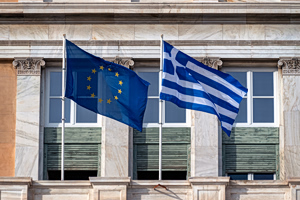
 Athens and Cairo have been bound since Aug. 6, 2020, by an agreement partially delimiting their Exclusive Economic Zones (EEZs), a deal that directly challenges the Turkey-Libya maritime memorandum and, by extension, Ankara’s broader revisionist policy in the region.
Greek and Egyptian interests also converge over political developments in post-civil war Libya, while Athens serves as a channel of communication between Cairo and the European Union.
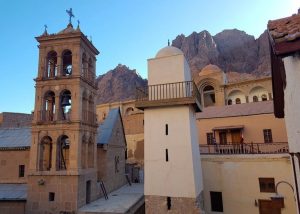
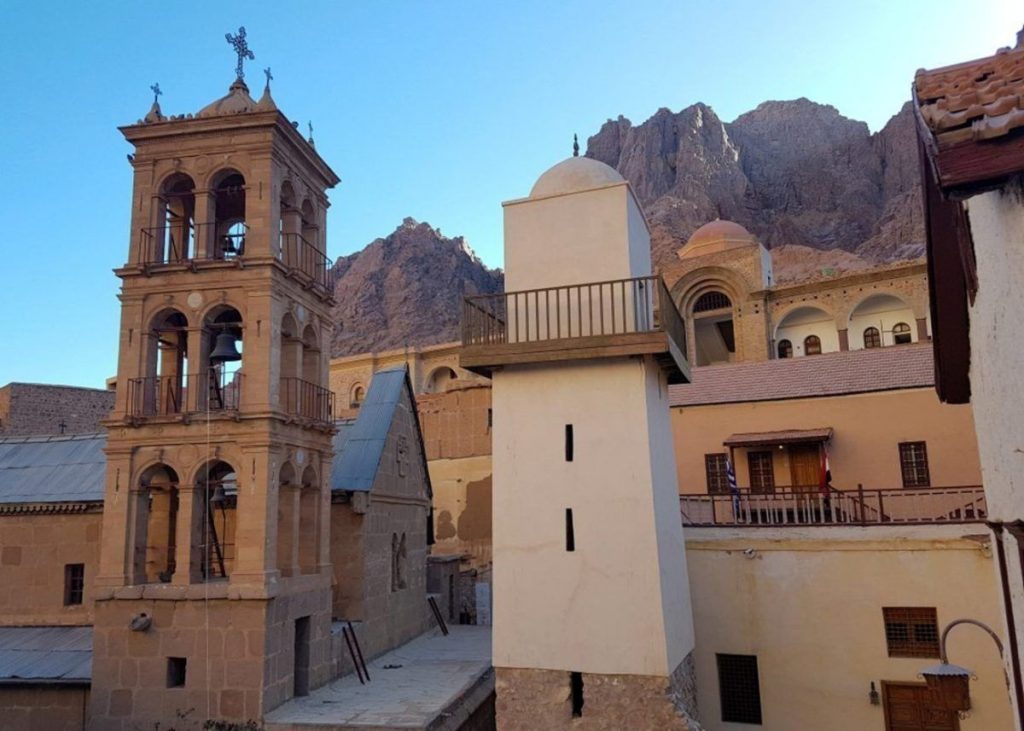
A year ago, however, bilateral relations were tested by the dispute over the ownership status of St. Catherine’s Monastery at Mount Sinai, while Turkey’s strategy of reengaging with Egypt after years of confrontation has created additional concern in the Greek capital.
The government’s aim is to finalize an agreement between the Egyptian state and the monastery as soon as possible, while at the same time exploring ways to further strengthen ties with Cairo.
Obstacles to an Agreement
Under the timetable in place until recently, only a few details appeared to remain before an agreement could be finalized concerning both the monastery’s ownership status and the operation of the monastery and its surrounding areas.
As it turns out, however, significant differences remain between the two sides, while second thoughts and disagreements have also emerged within the monastic community itself.
Although a formal legal framework defining the monastery’s status would be established for the first time, one point cannot be overlooked: signing the agreement would mark the transfer of ownership to the Egyptian state, with the monastic community seeking perpetual possession and use of the property.
Through such an arrangement, Athens’ principal objective would be achieved: safeguarding the religious and worship character of St. Catherine’s.
The Greek side may understand the Egyptian demand to obtain legal title — particularly following the widely discussed ruling by the Ismailia Court of Appeals — but the responsibility resting on Archbishop Symeon of Sinai, the abbot of St. Catherine’s who would sign the agreement, is considerable.
For this reason, and in an effort to keep the community united, he has continuously kept the monks informed, a process that has prolonged the negotiations.
Notably, former abbot Damianos, who has been criticized for inadequate representation of the monastery before the Ismailia Court of Appeals, chose in the middle of the negotiations to send a letter to his successor expressing objections to relinquishing ownership rights.
Concern also remains within the monastery because Symeon has still not received Egyptian citizenship, as is customary for each abbot, while the residency status of the monks in Egypt has yet to be finalized. To date, they have been required to renew their residence permits every year.
Resolving this issue is considered essential to ensuring the monastery can continue operating without disruption.
Another serious concern for Symeon, as well as for the negotiating team as a whole, is that the monastery has not yet been granted legal personality, which is essential to securing its rights.
A source closely following the negotiations told TO VIMA that “the agreement must recognize the monastery as a contracting party vis-à-vis the Egyptian state, which in turn would recognize the monastery’s rules of operation, thereby safeguarding the Greek Orthodox character of the site.”
Because Egyptian law does not provide for the establishment of a legal entity for religious communities, this route is being pursued as a means of securing indirect recognition and protecting the rights of the monastery, its clergy, its financial status and its use of property.
Particular attention is being paid to the monastery’s properties, which number more than 70. The goal is to obtain an explicit commitment from Egypt that no fee will ever be demanded in the future for their use.
All these issues must be agreed upon by Aug. 23, when the provisions of the Ismailia Court of Appeals ruling are expected to be finalized, creating a new set of legal facts.
Diplomatic Dimensions
Throughout the past year, the Greek government has sought to maintain an extremely delicate balance. Amid a fluid geopolitical environment, it wants Greek-Egyptian relations to remain at an excellent level while simultaneously securing the best possible agreement for Sinai.
A senior diplomatic source told To Vima that “signing the agreement is a matter for the monastic community. The government is not a contracting party, and under no circumstances do these developments affect our ties with Egypt.”
It is worth noting, however, that within the space of a month, Greek Foreign Minister Giorgos Gerapetritis has spoken at least four times with his Egyptian counterpart, Badr Abdelatty, while just last Wednesday Prime Minister Kyriakos Mitsotakis spoke by phone with Egyptian President Abdel Fattah el-Sisi.
The agenda of those discussions was not limited to the monastery. Still, it can be taken as certain that the Prime Minister’s Office and the Foreign Ministry are monitoring the negotiations from a distance, in a clear effort to limit any potential political cost, depending, of course, on the final provisions of the agreement.
An informed source stressed that “the negotiations are not being conducted in a confrontational atmosphere, but each side is seeking the best possible outcome.”
A face-to-face meeting between Gerapetritis and Abdelatty is expected in the coming period.
Mitsotakis had also been seeking a date to travel to Cairo for talks with the Egyptian president, although it was ultimately not possible to arrange the visit.
At the same time, Athens is concerned about migration, particularly following recent events in Ceuta, Spain.
Egypt hosts several hundred thousand migrants. Those who cross the border into eastern Libya form the main source of migration flows departing from Libya’s eastern coast toward Crete.
That means that, in addition to coordination with Benghazi, cooperation with Cairo is also necessary to control irregular migration.
Egypt, for its part, recognizes the crucial role played by the Greek prime minister in securing the €7.5 billion European financial assistance package for the country. Cairo values both Athens’ efforts to strengthen Egypt’s relationship with the European Union and the Greek naval presence in the Red Sea, which helps maintain freedom of navigation, including through the Suez Canal.
Procedures are also accelerating for work to begin on the Greece-Egypt electricity interconnection, known as GREGY, a project that adds an energy dimension to the Greek-Egyptian EEZ relationship.
Finally, Cairo’s close contacts with Washington have not gone unnoticed. Massad Boulos, Donald Trump’s envoy for North Africa, has been visiting Egypt almost once a month.