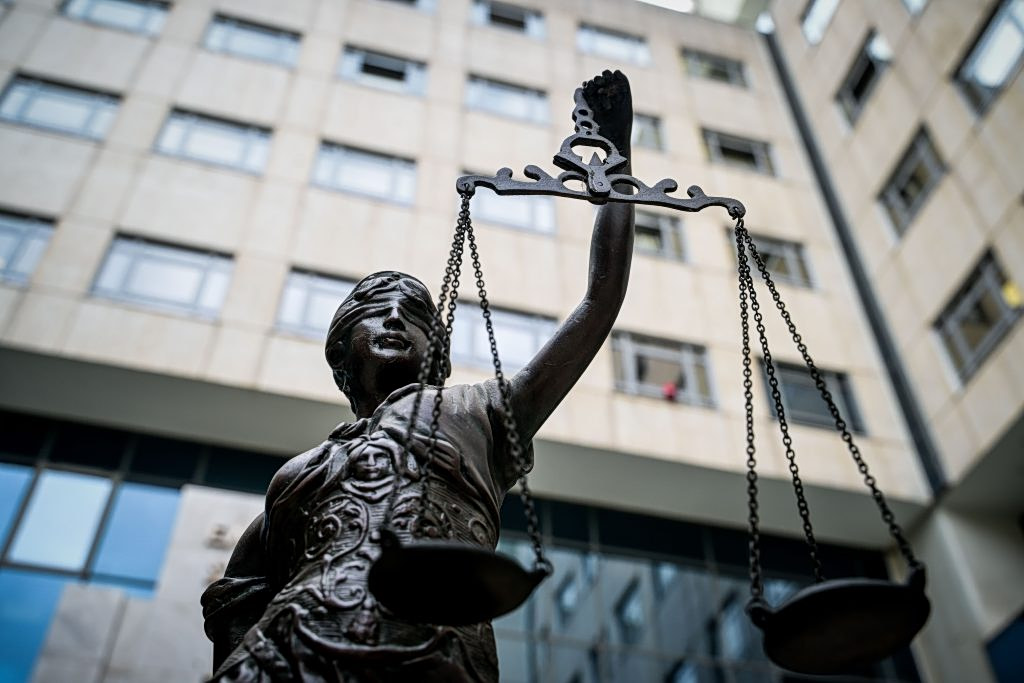
Will this be the last time the Cabinet — that is, the government — chooses the leadership of the judiciary? Or will the upcoming constitutional revision mean that future presidents of Greece’s three supreme courts will be selected by a broader parliamentary majority?
Last week’s vote at the Supreme Court (Areios Pagos), where senior judges and prosecutors cast ballots for their preferred candidates for President and Prosecutor General of the court, was conducted under a recently enacted law being applied for the second time. That law gives judges themselves the right to weigh in on who they want leading the court in which they serve.
The inclusion of judges, even in an advisory capacity, in the selection of judicial leadership came about as a direct result of years of observations on the rule of law that Greece had been receiving from European Commission reports.
Yet this meaningful improvement in how the judiciary’s leadership is chosen has done little to quiet sharp criticism over appointments that call judicial independence into question. The way in which leadership has been selected since the post-junta restoration of democracy has been a perennial source of political and institutional concern, and despite incremental improvements, the system itself has not fundamentally changed.
Under the current framework, in addition to the judges themselves, the Conference of Parliamentary Speakers also offers an opinion on judicial leadership selections, while final authority rests with the Cabinet upon the recommendation of the Justice Minister.
Concerns about overhauling the existing system have been voiced repeatedly over the past decades by politicians, constitutional scholars, legal experts, and serving and retired judges alike. So what is actually being proposed now that constitutional revision is once again on the table, and how much support does the government’s proposal on this weighty institutional question have among the judiciary itself?
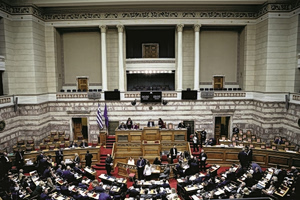
According to the government’s announced proposal, the selection of judicial leadership would shift to a parliamentary body (which has not yet been specified), and would follow votes by the full benches of the supreme courts. Sources close to the matter tell To Vima that the government is weighing two options: the Conference of Parliamentary Speakers, which already issues an advisory opinion under the current system, or the Committee on Institutions and Transparency, a question that remains to be finalized.
However, the government’s proposal is being rejected by virtually all senior judges who have held or currently hold leadership positions in the judiciary, as well as many who have served in the past. In public statements, former President of the Republic Katerina Sakellaropoulou and honorary Council of State President Kon. Menoudakos, who for years led the Independent Authority for Personal Data Protection, as well as honorary Council of State President Irini Sarp, currently chair of the Competition Commission, and many others, have all come out in favor of keeping the power to appoint judicial leadership with the government, but with a firm commitment that it would be bound to choose from among the top three candidates voted on by the judges themselves.
The same position, namely maintaining the existing system following an advisory input from the judges, has also been publicly taken by Council of State President Michalis Pikramenos, his predecessors, and a wide array of other senior judges.
At the opposite end of the spectrum sits the Association of Judges and Prosecutors, which argues that the judiciary should select its own leadership free from the interference of any other branch of power, whether parliament or the executive.
Whatever solution is ultimately chosen as part of the constitutional revision, senior judges agree on one point: the one thing that can no longer be rolled back is the judges’ own participatory vote in the selection process.
As for the current picture, the ballot held at the Supreme Court saw senior judges and prosecutors express confidence in Deputy President Pan. Lyberopoulos for the position of President and in Ev. Bakelas for the post of Prosecutor General. The final decision will be made by the Cabinet at the end of the month, after the Conference of Parliamentary Speakers issues its opinion. At the Council of State, President Michalis Pikramenos has one year left in his term, as does the leadership of the Court of Audit.