 Μake us preferred on Google
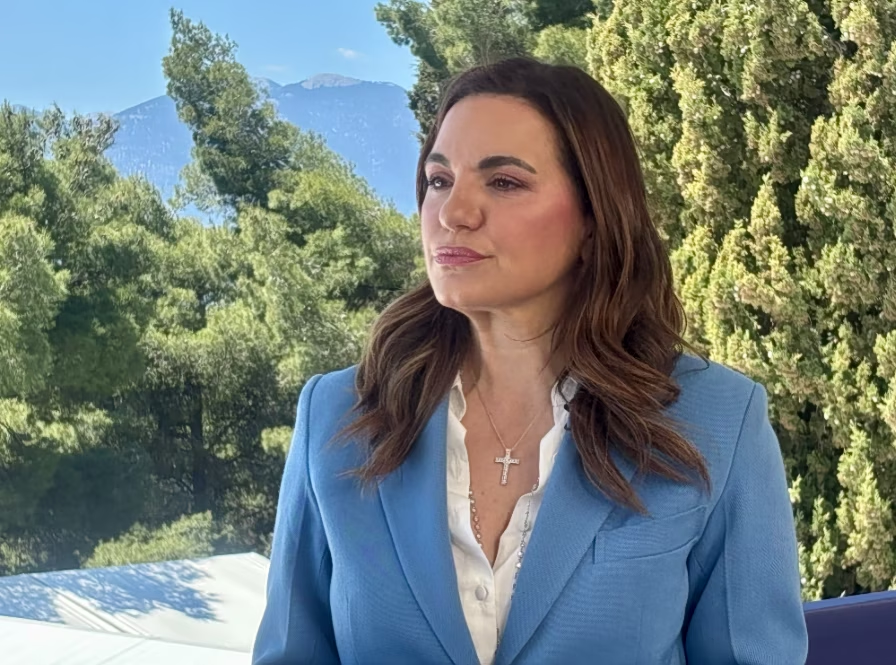
 Greece remains a resilient and mature tourism destination offering a strong sense of security despite wider geopolitical uncertainty, Tourism Minister Olga Kefalogianni said during remarks at the Delphi Economic Forum.
Speaking in an interview, the minister stressed that the country’s tourism sector continues to perform strongly, noting that recent data points to a record year. Tourism revenues rose by around 10%, reaching €23.6 billion, while arrivals increased by approximately 5%.
Strong performance despite global uncertainty
Kefalogianni said there is no reason for concern regarding Greece’s tourism outlook, even as global geopolitical developments continue to create uncertainty. She added that the sector is also seeing improvements in qualitative indicators, with strategic targets being met.
However, she acknowledged that external factors, particularly energy prices and aviation fuel costs, are being closely monitored. These, she explained, can indirectly affect airfares and, if instability in regions such as the Middle East continues, may also impact supply chains and prices of goods.
She noted that responses to such challenges are coordinated at a European level, particularly when it comes to aviation fuel supply and broader market stability.
Extending the tourism season
A key priority for Greece, according to the minister, is reducing reliance on seasonal tourism and extending the tourism period throughout the year.
“The challenge for tourism is to move beyond seasonality,” Kefalogianni said, adding that the goal is to expand and diversify the country’s tourism offering so that Greece can effectively operate as a 12-month destination.
She highlighted initiatives aimed at promoting mountain tourism, including a new campaign under the slogan “Mountain Greece takes you higher all year round.” The initiative seeks to support regions that have not traditionally benefited from tourism growth and to strengthen local economies through increased visitor flows.
Infrastructure and sustainable development
Kefalogianni emphasised that tourism development must be supported by adequate infrastructure, noting significant progress in upgrading transport and travel facilities, particularly airports across the country.
She argued that tourism should be treated as a cross-sector priority in national planning, with investments tailored to meet the needs of each region.
The minister also announced that a new spatial planning framework for tourism will soon be presented jointly with the Ministry of Environment and Energy. The plan will outline strategic directions for tourism development, aiming to balance economic growth with environmental protection and the needs of local communities.
According to Kefalogianni, Greece’s long-term tourism strategy is focused not only on maintaining strong visitor numbers but also on improving sustainability, spreading tourism benefits more evenly across regions, and enhancing the overall quality of the visitor experience.
.