 Μake us preferred on Google
 The Greek government has said it will issue an official response after receiving a letter sent by European Chief Prosecutor Laura Kövesi to the European Commission, raising concerns about recent developments affecting the operation of the European Public Prosecutor’s Office (EPPO) in Greece.
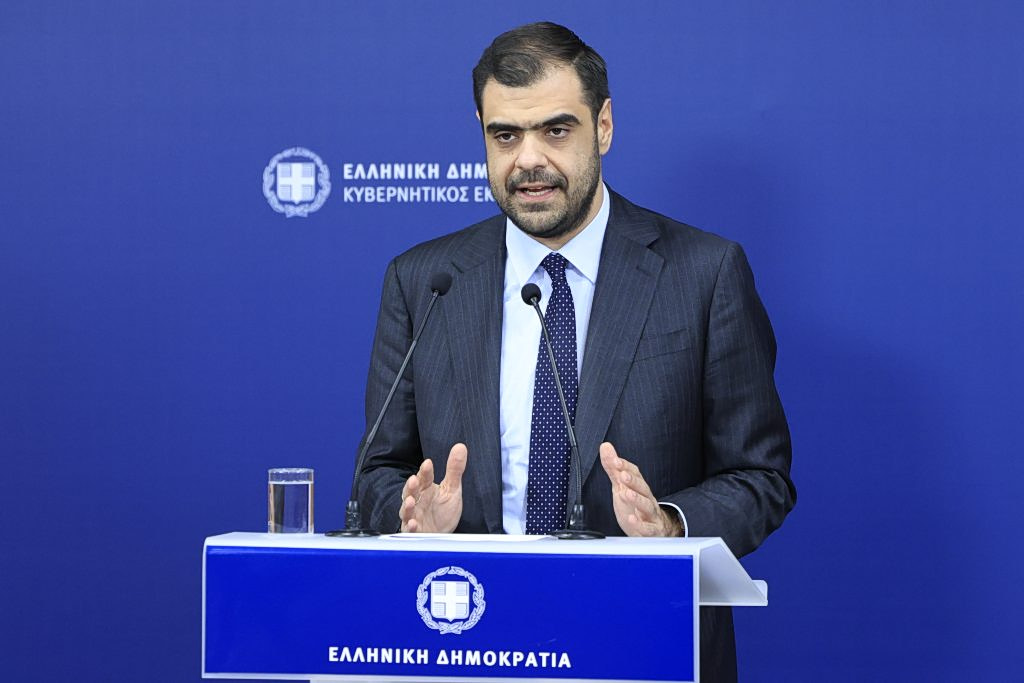
Government spokesperson Pavlos Marinakis said the administration had not yet received the full text of the letter and would respond “institutionally and on all issues” once it had reviewed the document.
Speaking about reports concerning the letter’s contents, Marinakis questioned the criticisms being raised. He argued that one issue relates to the renewal of judicial appointments, which he described as a decision made by the judiciary itself.
He also defended recent legislative changes concerning criminal investigations involving political figures, stating that the planned reform had been known to the European Public Prosecutor’s Office in advance. According to Marinakis, the measure strengthens investigations by assigning a specially designated appellate investigating judge in felony cases instead of a standard first-instance investigating judge.
Kövesi Raises Concerns With European Commission
According to an official statement, Kövesi informed the European Commission of developments that she says could negatively affect the independent and effective functioning of the EPPO in Greece.
The letter reportedly requests the activation of a European Union mechanism that allows action against member states over violations of rule-of-law principles.
The concerns focus on two recent developments: amendments to criminal procedure rules governing the handling of cases involving members of parliament, and the decision to renew the mandates of three delegated European prosecutors in Greece for two years rather than the five-year term approved by the College of European Prosecutors.
Questions Over Independence and Cooperation
In the communication to the Commission, the European Chief Prosecutor argued that the fast-tracked amendment to Greece’s Code of Criminal Procedure could hinder the EPPO’s ability to effectively investigate and prosecute crimes falling within its jurisdiction.
The letter also criticizes a decision by Greece’s Supreme Judicial Council regarding the tenure of three delegated European prosecutors, arguing that it may affect the independence of the EPPO’s operations in the country.
According to the statement, these developments raise serious concerns about whether Greek authorities are fully complying with their obligation of sincere cooperation under Article 4(3) of the Treaty on European Union.