 Μake us preferred on Google
 Greece and France reaffirmed their strategic defense partnership on Thursday, with both sides pledging to renew their bilateral defense agreement later this year, during a high-profile meeting at the Salamis Naval Base, west of Athens.
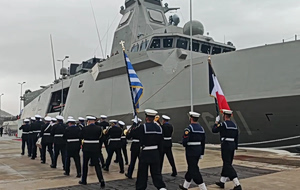
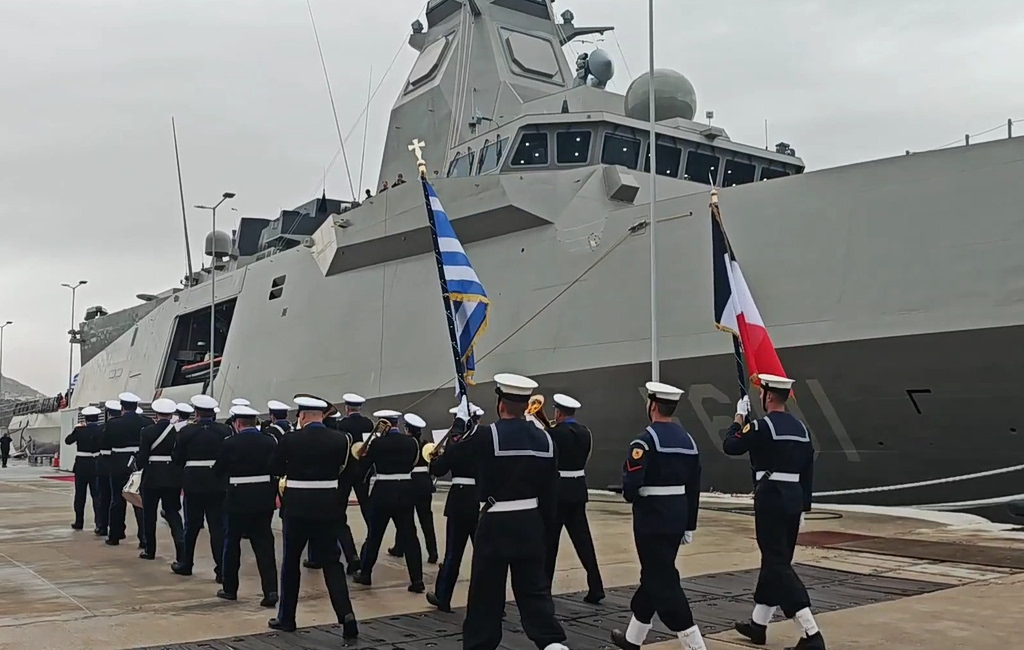
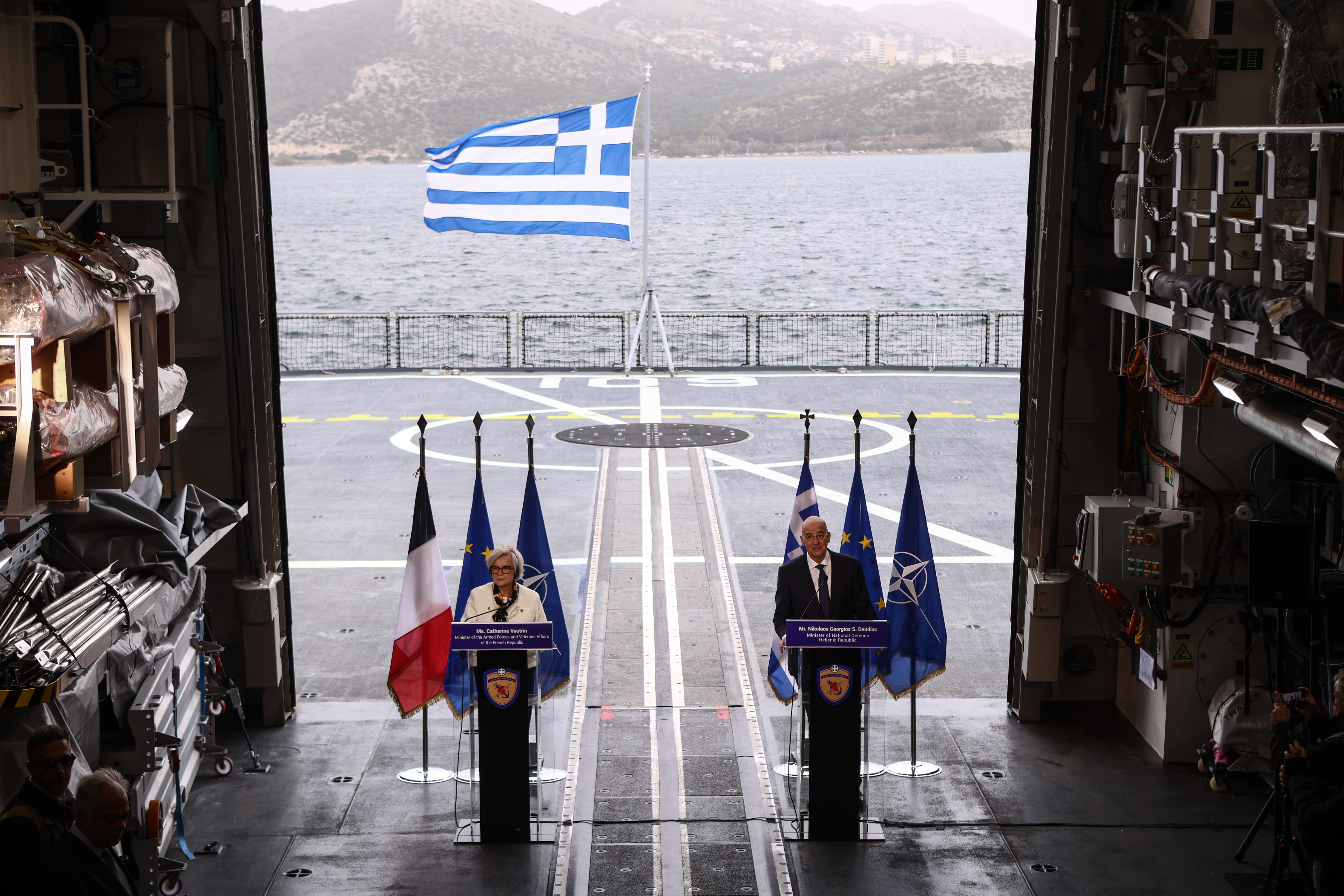
Greek Defense Minister Nikos Dendias and his French counterpart, Catherine Vautrin, met aboard the newly acquired Belharra frigate Kimon, a centerpiece of Greece’s naval modernization program and a flagship symbol of Greek-French military cooperation.
The two ministers described the frigate as a tangible expression of a broader strategic relationship that goes well beyond arms procurement, touching on sovereignty, regional stability and Europe’s long-term security architecture.
A partnership rooted in the 2021 agreement
The strategic partnership between Greece and France was originally signed in 2021, against the backdrop of heightened tensions in the Eastern Mediterranean following the crisis involving Turkey’s research vessel Oruc Reis. The agreement coincided with Greece’s decision to acquire Rafale fighter jets and three French-built FDI frigates, marking a pivotal moment in bilateral defense ties and a decisive shift in its defense posture.
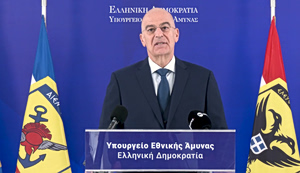
Speaking aboard the Kimon, Dendias said the frigate represents “the most emblematic culmination” of the strategic cooperation between Athens and Paris.
“This decision was never about numbers or simple procurement,” he said. “It is about how Greece chooses to protect its maritime space, its sovereign rights and its sovereignty, and how the Hellenic Navy adapts to the real demands of the 21st century.”
Dendias confirmed that Greece’s decision to proceed with a fourth frigate further strengthens fleet cohesion, operational capacity and what he described as “strategic depth.”
Toward a renewed defense pact
Both ministers announced that Greece and France have agreed to fast-track procedures, in coordination with their foreign ministries, to renew the strategic partnership agreement within the next one to two months, paving the way for formal signing.
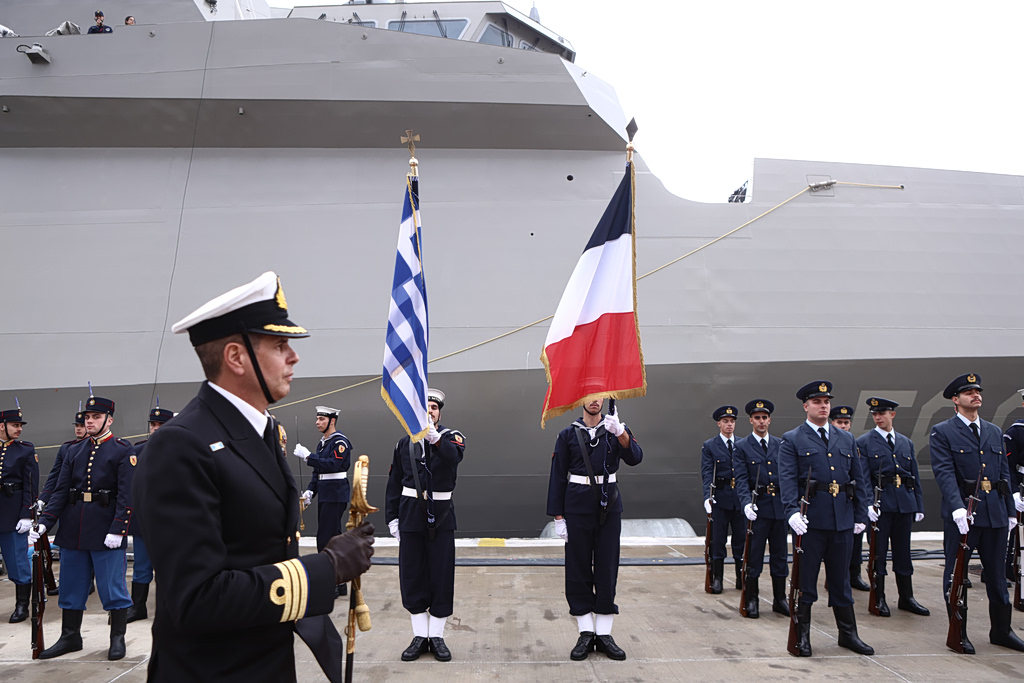
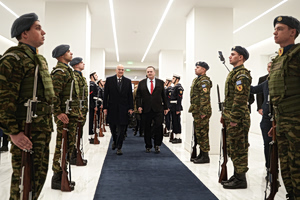
Meeting between Greek Minister of Defense Nikos Dendias with the French minister of Armed Forces Catherine Vautrin at the Belharra frigate in Salamina Naval Base, on Jan 29, 2026
The agreement includes a mutual defense assistance clause, which Dendias said safeguards national sovereignty, strengthens European security and defense policy, supports European defense autonomy and contributes to peace and stability in the Mediterranean.
Message on international law and regional stability
Without naming Turkey directly, Dendias stressed that Greece and France share a common approach to international law, including the Law of the Sea and the principles of the United Nations Charter.
“Together, we promote peace, security and cooperation,” he said, adding that Greece seeks a strong French defense presence in the wider region.
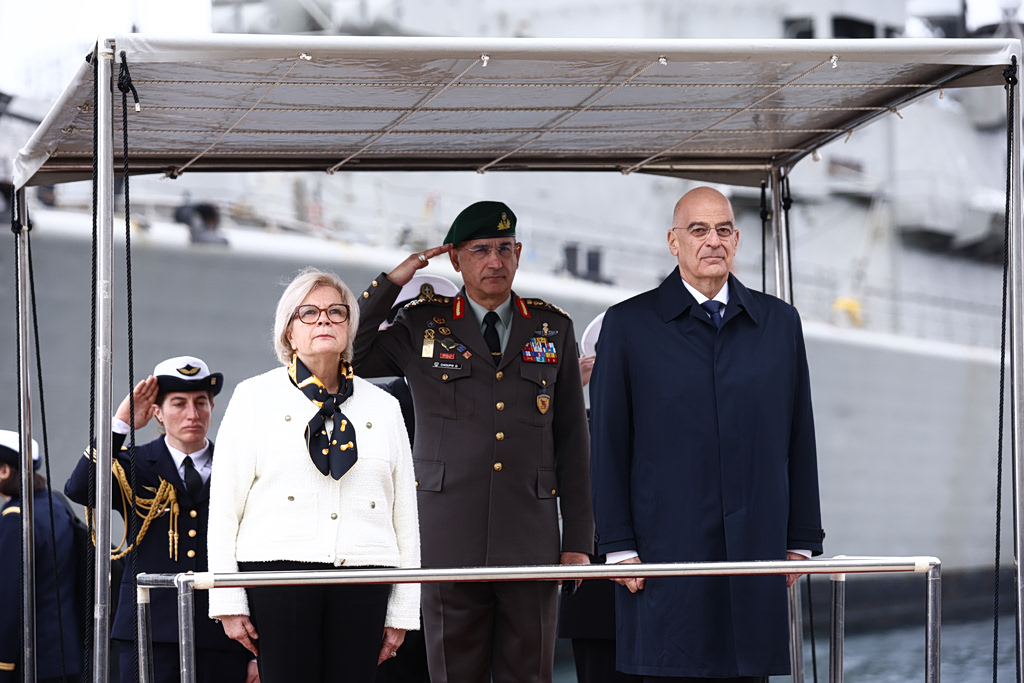
Meeting between Greek Minister of Defense Nikos Dendias with the French minister of Armed Forces Catherine Vautrin at the Belharra frigate in Salamina Naval Base, on Jan 29, 2026
Discussions also covered joint military exercises, including NATO and EU operations, as well as Greece’s increased participation in Exercise Orion 2026. Both countries currently cooperate in eight joint programs under the EU’s Permanent Structured Cooperation framework.
The ministers also reviewed broader regional developments, including the war in Ukraine, North Africa, the Sahel, the Middle East, the Red Sea and the Gulf, underscoring what Dendias described as the need for a “broader geopolitical approach.”
Expanding defense industry and innovation ties
A significant portion of the talks focused on defense industry cooperation and innovation, with particular emphasis on research and emerging technologies.
Dendias said Athens has proposed concrete joint initiatives in areas such as air defense systems, satellites, unmanned drone systems, electronic warfare and missile and anti-missile capabilities. He noted that Greece already operates a substantial inventory of French-made defense systems and remains committed to strengthening Europe’s security role in complementarity with NATO.
Vautrin echoed those remarks, describing the acquisition of the Kimon as opening “a new chapter” in Greek-French naval cooperation and highlighting the unprecedented level of interoperability between the two navies.
“We will be speaking the same operational language, with the same standards, systems and requirements,” she said, calling the partnership one of the most successful in Europe.
Economic and industrial footprint in Greece
The French minister pointed to the growing presence of French defense industry in Greece, noting that the contract for the fourth frigate provides for 25% participation by Greek industry.
She highlighted the role of Naval Group, which has signed 30 contracts with Greek companies, creating tangible economic benefits and reinforcing industrial ties between the two countries, according to the Minister.
“This is not theory. It is reality,” Vautrin said, adding that cooperation spans Rafale aircrafts, maintenance agreements, helicopters and Greece’s participation in satellite observation programs.
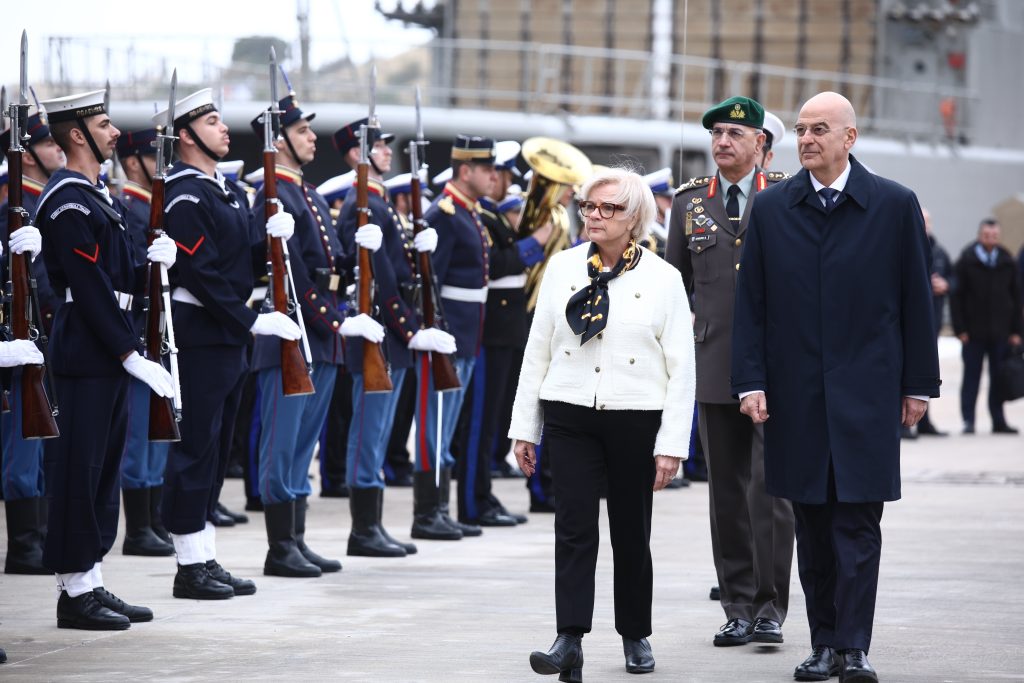
Meeting between Greek Minister of Defense Nikos Dendias with the French minister of Armed Forces Catherine Vautrin at the Belharra frigate in Salamina Naval Base, on Jan 29, 2026
A call for European strategic awakening
Addressing wider geopolitical challenges, Vautrin called for what she described as a “strategic awakening” among Europeans, arguing that Europe must produce more defense capabilities domestically to reduce dependence on third countries.
She stressed that European taxpayers’ money should support defense systems produced in Europe, strengthening both sovereignty and economic growth.
The Greek-French partnership, she said, is a stabilizing factor for Europe and the Mediterranean, particularly amid tensions in the Eastern Mediterranean and ongoing Russian aggression in Ukraine.
“France and Greece move forward together, hand in hand, for the security of the continent, freedom of navigation and respect for international law,” she said.
Both ministers concluded by emphasizing that the renewal of the strategic partnership would focus on key pillars such as innovation, capabilities, skills and training, with the aim of deepening cooperation in the coming decades.
As Dendias put it, the progress made “strengthens our collective ability to maintain regional stability, ensure the security of our peoples and defend the fundamental values of Europe.”
source: in.gr