 Μake us preferred on Google
 The fallout from the Council of State’s decision to strip three private universities of their operating licenses has turned into a full-blown blame game inside the Greek government, with officials working behind the scenes to pin the crisis on a single official rather than the policy itself.
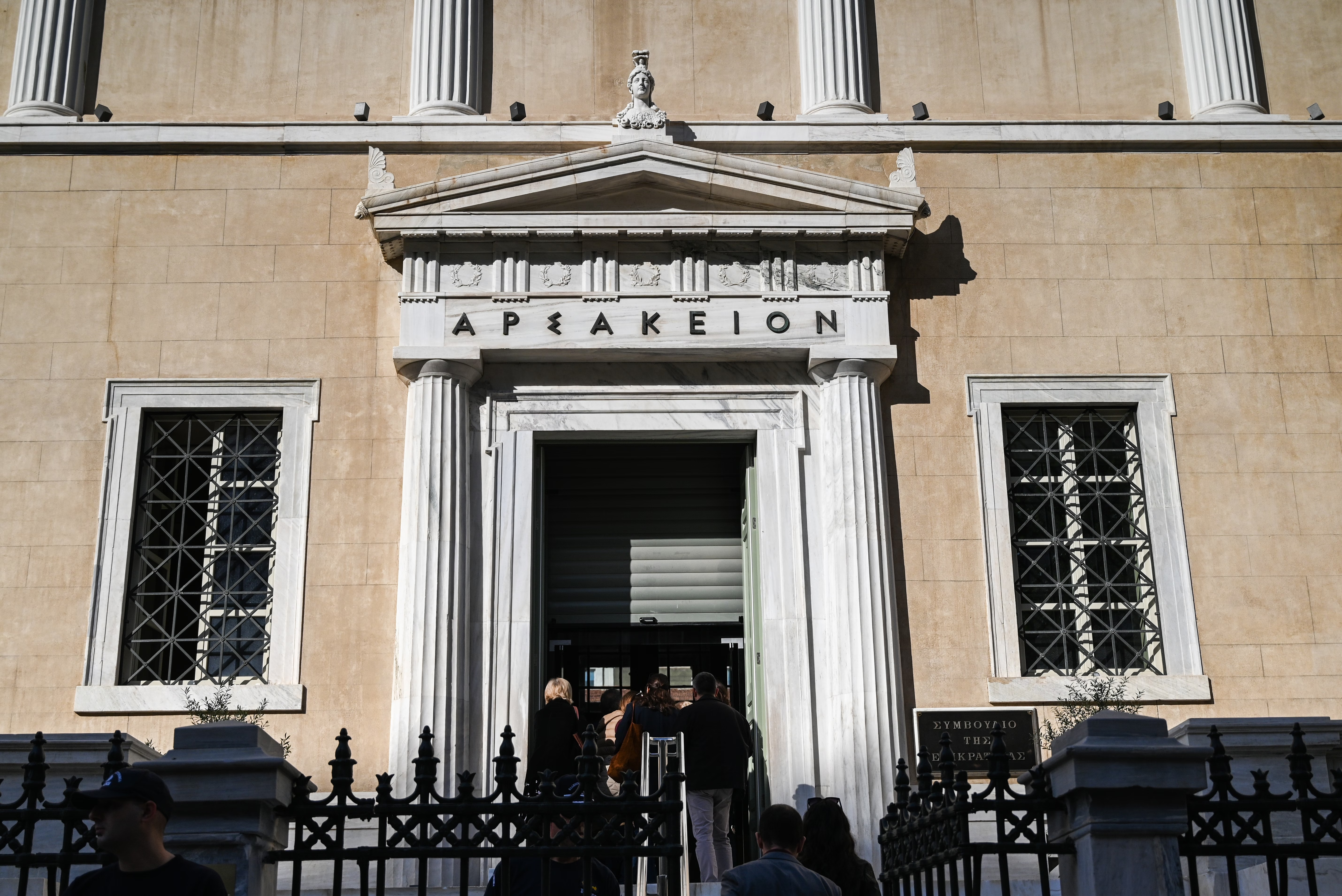
The court’s ruling last week annulled the licenses of CITY University, Keele University and Anatolia College, along with the administrative decisions that had certified their study programs. The case was brought by Panagiotis Lazaratos, a law professor at the Athens Law School, and the court found unspecified legal problems in how the three institutions had been licensed to operate.
Government sources have since worked to steer responsibility away from the law that created Greece’s private university system and toward the Hellenic Authority for Higher Education (ΕΘΑΑΕ), and specifically its president, Periklis Mitkas. Those sources argue the underlying law is sound, noting that Greece’s highest court had already upheld it as constitutional, and blame the turmoil entirely on the authority, saying it never issued the guidance needed to put the licensing system into practice or verified that the three universities met the required conditions.
Sources close to the prime minister’s office, and the education ministry have tried to project calm, insisting the situation will be fully resolved within the next 40 days through corrective administrative actions. But that timeline hinges on whether Mitkas and his agency move quickly enough to comply with the court’s ruling in time for the new academic year.
Resignation on the table
The scale of the legal problem has added pressure to an already tight timeline. Government sources say the possibility of asking for Mitkas’ resignation is now being discussed, even as officials maintain that responsibility for the failures lies squarely with the authority he leads.
The government appears determined not to be seen as responsible for delays to what it has treated as a flagship reform, preferring instead to leave the burden at ΕΘΑΑΕ’s door. Pressure on Mitkas is expected to intensify in the coming days.
A Contested Reading
The full text of the court’s decision has not yet been published, but the education ministry and Lazaratos are already offering starkly different readings of what it means. The ministry’s public statement downplayed the ruling’s severity. Lazaratos pushed back directly, saying the ruling does not concern a single, isolated administrative act but the entire regulatory framework underpinning how non-state university programs were certified in Greece. He said the court found that the authority’s certifying act failed to meet the basic conditions required for a regulatory measure and exceeded the powers granted to it by law.
Konstantinos Menoudakos, a former president of the Council of State, weighed in on Lazaratos’ analysis as well, saying he hoped officials would not attempt a “clumsy” workaround to sidestep the consequences of the court’s rulings. Any such fix, he warned, risks creating fresh ambiguity and uncertainty for students who enrolled the previous year under a licensing regime that has now been annulled retroactively.