
 Μake us preferred on Google
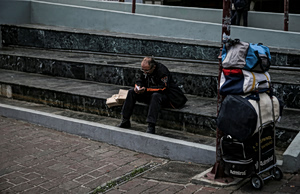
 More than eight in 10 Greeks are struggling to make ends meet or have little money left over at the end of the month, according to a new opinion poll that highlights mounting financial pressures on households ahead of winter.
The nationwide survey, conducted by Metron Analysis for MEGA News 104.6, found that 36% of respondents run out of money before the end of the month, while a further 46% say they earn just enough to cover their expenses. Only 18% report being able to save.
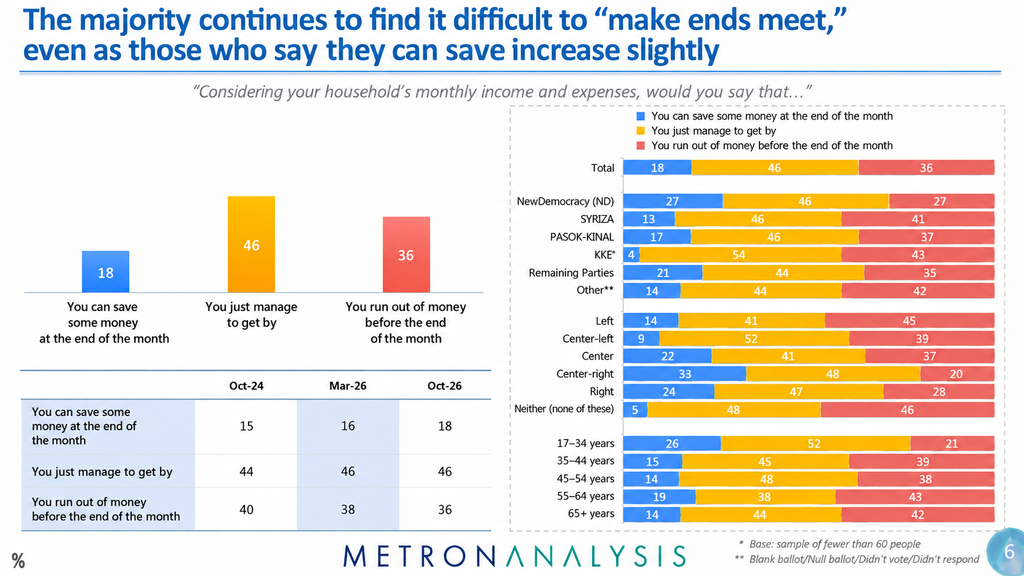
The findings suggest that most households have limited financial reserves to absorb further increases in living costs, with respondents expecting prices for essential goods and energy to rise in the coming months.
Cost of Living Dominates Concerns
The outlook for winter is particularly bleak. Some 81% of respondents expect consumer goods to become more expensive, while 80% anticipate further increases in fuel and energy costs.
Housing is another major concern, with 66% expecting conditions to deteriorate, including higher rents and greater difficulty finding affordable accommodation.
Beyond household finances, nearly seven in 10 respondents, or 69%, expect crime and delinquency to become more serious problems. Taken together, the findings point to widespread pessimism about living conditions in the months ahead, particularly as households with little or no savings face the prospect of higher essential expenses.
Most Greeks Still Believe Politics Can Make a Difference
Despite their concerns about the economy, respondents remain broadly convinced that political action can improve living standards.
The survey found that 76% believe politics can make a positive difference to people’s lives, while 23% say they have become disillusioned and expect nothing from it.
Expectations are focused primarily on government policy. Some 86% of respondents see coordinated government measures as a means of addressing the problems they face, compared with 72% who point to the role of opposition parties and 65% who emphasize action by labor unions.
The findings suggest that dissatisfaction with current living conditions has not necessarily translated into a broader rejection of political institutions.
There is considerably less support for relying on personal political connections. Only 22% of respondents identify patronage and clientelist networks, traditionally associated with the Greek political system, as a means of securing improvements.
The figure rises to 46% among respondents aged 17 to 34, however, revealing a marked difference between younger people and the population as a whole.
Hope Persists Despite Pessimism
The survey also points to a distinction between expectations for the immediate future and longer-term attitudes toward change.
Asked about their prevailing outlook, 53% of respondents express hope despite their pessimism, compared with 18% who report disappointment and 22% who describe themselves as optimistic.
This combination of hope and pessimism is particularly pronounced among middle-aged respondents. It is reported by 55% of those aged 35 to 44 and 63% of those aged 45 to 54.
The findings also indicate that political affiliations and collective identities continue to influence attitudes, particularly among voters on the left and center-left.
For those who have lost confidence in politics altogether, personal relationships appear to offer an alternative source of support. Among the 23% who say they expect nothing from political action, 72% identify family and close friends as their main source of help in dealing with everyday difficulties.
The survey presents a picture of an electorate deeply concerned about its immediate economic prospects but still looking to government, opposition parties and organized political action for solutions as the spring elections approach.