 Μake us preferred on Google
 Greece is heading into the winter with higher energy costs expected for households, as heating oil, natural gas and electricity prices all face upward pressure.
Heating oil is set to begin the season at a price reminiscent of previous energy crises, while the average retail price of natural gas is nearly 40% higher than a year ago. Electricity prices have also climbed sharply, with wholesale power prices rising 77.5% since May and 18.38% compared with August, potentially pushing October household tariffs higher.
The final cost for households will depend on international energy prices, how much of the increase suppliers absorb and the extent of government support.
The government is preparing measures to limit the impact on households, with the heating-related measures expected to be announced on October 14, one day before the heating oil distribution season begins.
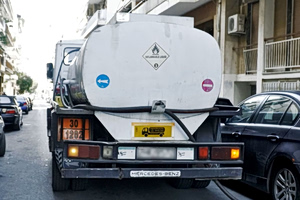
Heating oil faces sharp increase
In the Attica region, heating oil opened the 2025-26 season on October 15, 2025, at €0.102 per kilowatt-hour (kWh), or €1.10 per liter.
If the distribution season began at current prices, the equivalent price would be €0.179 per kWh, or €1.92 per liter — an increase of about 75.5% compared with last year’s opening price.
Nationwide, the estimated current average price is even higher, at €1.96 to €1.97 per liter, although the final price varies by region depending on transportation and commercial costs.
Natural gas remains more competitive
Natural gas has seen a smaller increase.
The average final price across all suppliers, including regulated charges, taxes and VAT, stood at €0.0787 per kWh in September 2025. It is now approximately €0.110 per kWh, representing an increase of 39.8%.
The increase is being influenced by average prices at the Dutch TTF gas hub, which have recently been above €80 per megawatt-hour, while lower natural gas storage levels in Europe and the availability of liquefied natural gas are adding uncertainty.
Despite the increase, natural gas continues to hold a significant cost advantage over heating oil. When the higher efficiency of gas heating systems is taken into account, the difference in heating costs is estimated at around 46% to 47%.
Government prepares measures
Against this backdrop, the Greek government is preparing measures focused on fuel and heating costs.
According to the current plan, measures concerning transportation fuels are expected to be announced on September 30, while details of heating support are expected on October 14, one day before heating oil sales begin.
One objective is to keep the price of heating oil below €1.75 per liter, equivalent to approximately €0.163 per kWh. If achieved, this would narrow the price gap between natural gas and heating oil.
The government is also considering a significant increase in the heating allowance. The benefit covers heating oil as well as natural gas, electricity, firewood and wood pellets, but it is not available to all households. About 1.2 million consumers who meet specific eligibility criteria currently qualify.
A measure targeting diesel fuel is also expected in October. The package under consideration includes an intervention aimed at the price at the pump. The possibility of an emergency reduction in the special consumption tax has also been examined, provided this is possible at the European level, while measures affecting the fuel distribution chain remain under discussion.
European governments also intervene
Greece’s energy market is being affected by wider developments across Europe.
Rising fuel and natural gas prices have spread across the continent, prompting governments to consider measures previously used during the earlier energy crisis, including tax cuts, subsidies, tax interventions and, in some cases, price caps.
Germany, France, Italy, Portugal, Cyprus and the Netherlands are moving ahead with tax relief or targeted support. Spain and Luxembourg are maintaining discounts with different levels of assistance.
Belgium, Croatia and Slovenia are applying price ceilings, while the Czech Republic, Poland and Hungary are opting for measures involving profit margins, temporary taxation or direct support for households.
Electricity prices continue to climb
Electricity wholesale prices have also accelerated during 2026.
The average wholesale price rose from €88.98 per MWh in May to €92.93 per MWh in June, €109.95 per MWh in July, €133.40 per MWh in August and €157.92 per MWh in September, based on data from Sept. 1 through Sept. 29.
The September figure compares with €90.99 per MWh during the same period last year, representing an increase of 73.6%. Compared with May, the increase is approximately 77.5%.
The rise comes as electricity suppliers prepare to announce their October household tariffs. Those tariffs are expected to reflect at least some of the pressure in the wholesale market, although the size of any increases will also depend on how much of the higher costs suppliers choose to absorb.
For household electricity customers, the average retail price was approximately €0.170 per kWh in September 2025. This year’s September price is estimated to finish close to €0.25 per kWh, representing an increase of about 47%.