Greek Prime Minister Kyriakos Mitsotakis has called for the European Union to adopt new legal and operational tools to address what he describes as the “weaponization” of migration, arguing that the bloc’s existing asylum framework is not equipped to respond to mass migration flows orchestrated as a form of hybrid pressure.
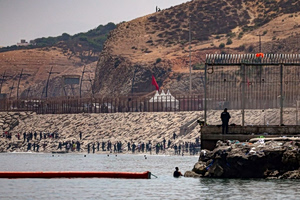
In an opinion article published by Politico ahead of an extraordinary EU videoconference on the situation in the Spanish exclave of Ceuta, Mitsotakis wrote that Europe’s security environment has “fundamentally changed,” with the EU facing not only conventional military threats and cyberattacks but also “the deliberate instrumentalization of migration by state and non-state actors seeking to test Europe’s resilience, undermine its cohesion and extract political concessions.”
According to Mitsotakis, recent events in Ceuta demonstrate that migration can no longer be viewed solely as a humanitarian issue or a migration management challenge.
“In some cases, it has become a tool of geopolitical coercion,” he wrote.
Current EU Framework Is Insufficient
The prime minister acknowledged that the EU has made significant progress through the Pact on Migration and Asylum, which introduced mechanisms to manage migratory pressure, greater procedural flexibility, and solidarity among member states. However, he argued that these tools were designed for situations that remain fundamentally manageable and “do not adequately address scenarios in which migration is weaponized, or where flows are engineered, amplified or facilitated in a way that creates a de facto hybrid challenge.”
While noting that the exact causes of last week’s developments in Ceuta are not yet known, Mitsotakis stressed that similar situations have occurred before.
He cited Greece’s 2020 migration crisis at its land border with Turkey in the Evros region, as well as the migration pressures experienced by Lithuania, Poland, and Latvia along their borders with Belarus in 2021.
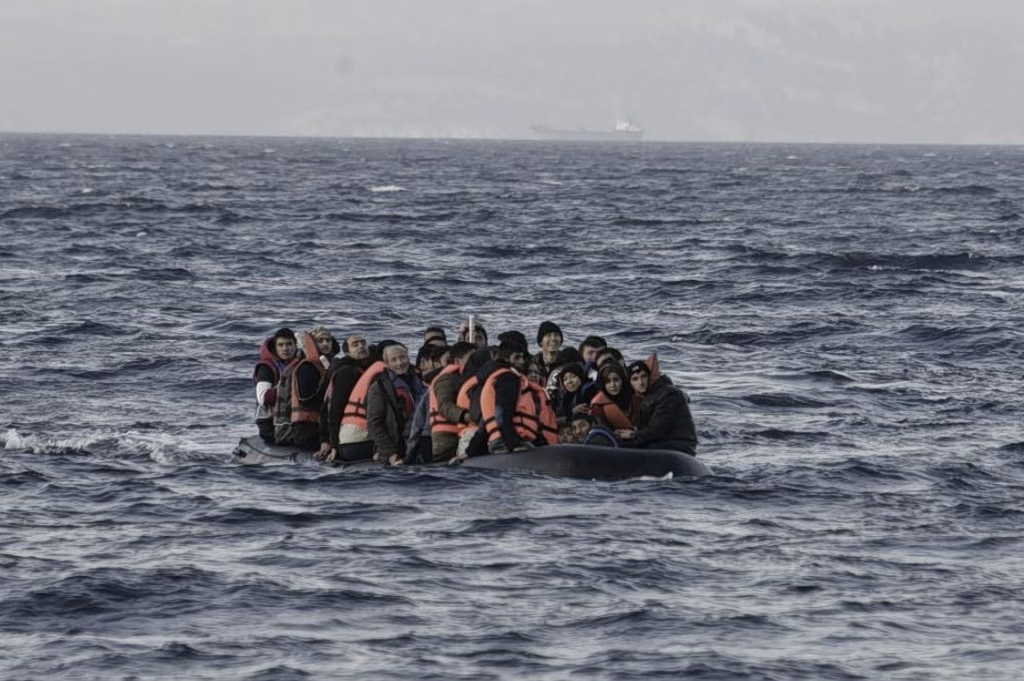
According to Mitsotakis, such crises are characterized not by gradual increases in arrivals but by sudden, large-scale, and often coordinated movements of people—sometimes numbering in the tens of thousands within just a few days—that overwhelm national capacities and put the Schengen area’s functioning under strain.
“In such extreme circumstances, the immediate and full application of standard asylum and reception systems for all arrivals is not simply difficult—it is often impossible,” he wrote.
A New EU Emergency Mechanism
To address what he described as a gap in the EU’s current framework, Mitsotakis proposed the creation of a dedicated European mechanism for situations involving mass and instrumentalized migratory pressure.
He said the framework should include clear and objective activation criteria based on both quantitative factors, such as the scale and speed of arrivals relative to a country’s capacity, and qualitative indicators, including evidence of coordination, facilitation, or involvement by third countries or organized criminal networks.
Once activated under a specifically defined EU emergency regime, the mechanism could allow “temporary, proportionate, and strictly controlled adjustments” to standard asylum procedures. Mitsotakis also argued that accelerated asylum procedures should remain part of the EU’s toolkit, particularly for applicants from countries with low recognition rates for international protection.
However, he maintained that this alone would not be sufficient.
Mitsotakis argued that, during clearly defined emergency situations involving exceptionally high migratory pressure—whether at land borders or after large-scale sea arrivals—EU member states should be able to temporarily halt the processing of new asylum claims under a dedicated EU emergency mechanism, while quickly returning people who do not qualify to remain, provided all actions comply with EU legal obligations.
Respect for EU Law and Greater Solidarity
He emphasized that such measures should be temporary, proportionate, and accompanied by robust safeguards.
“Full respect for EU law, the Charter of Fundamental Rights of the EU and the principle of non-refoulment remains non-negotiable,” he wrote, adding that safeguarding international obligations must go hand in hand with the EU’s ability to protect its external borders and preserve internal stability.
Mitsotakis also stressed that no frontline member state should be left to manage such situations alone.
He called for automatic operational support from EU agencies, coordinated return efforts, and financial and technical assistance whenever such an emergency mechanism is activated.
Without a dedicated framework, he warned, frontline countries would remain vulnerable, hostile actors would have greater incentives to exploit migration for geopolitical purposes, internal divisions within the EU would deepen, and public confidence in Europe’s ability to manage its external borders would continue to erode.
“Europe has always adapted its policies to changing realities. Migration is no exception. And recognizing that it can be weaponized is not alarmism—it is realism,” Mitsotakis wrote.
He concluded that the European Union must equip itself with the legal and operational tools needed to defend its external borders, deter those seeking to exploit its openness, and “respond to this evolving challenge firmly, lawfully, and collectively.”