 Μake us preferred on Google
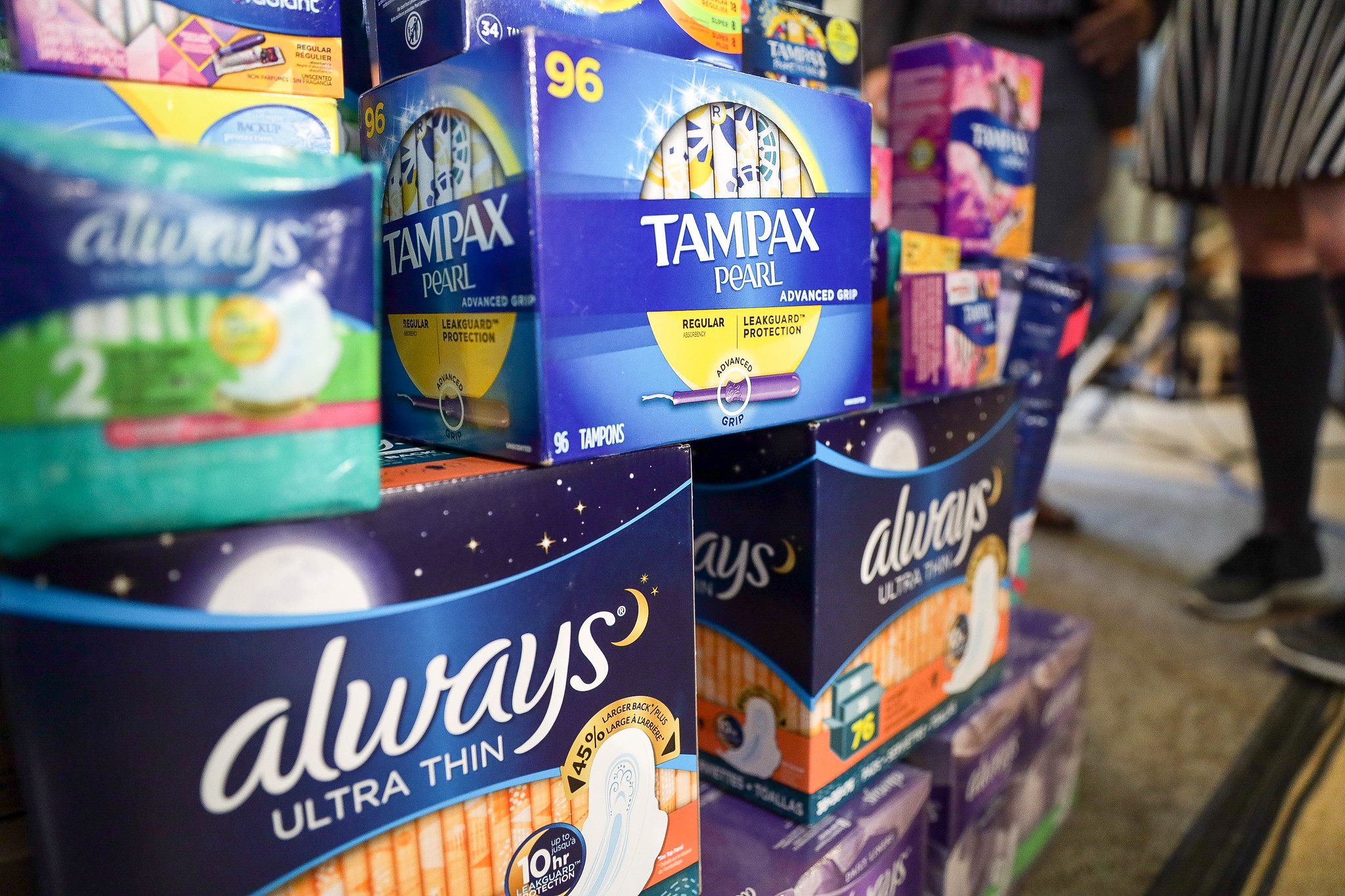
Greek Prime Minister Kyriakos Mitsotakis announced Tuesday that the government would lower the value-added tax on menstrual products beginning next year, acknowledging that essential hygiene items have long been subject to the country’s highest VAT rate.
Greece has been among the EU countries with the highest taxes on menstrual products, maintaining a 24% VAT rate despite a 2022 change in European rules allowing member states to eliminate the tax altogether. By comparison, medicines for human use, including Viagra, are subject to a super-reduced VAT rate of 6% in Greece, less than half the 13% rate that will apply to menstrual products from January.
Speaking in an interview with Alpha Radio 9.89, Mitsotakis said the tax on products such as sanitary pads and tampons would fall from 24% to 13% on Jan. 1, 2027.
He described the current tax treatment as an anomaly that needed correcting, given that menstrual products are a basic necessity rather than an optional purchase. “There are girls who cannot afford to buy them,” Mitsotakis said.
The prime minister also said he had requested a review of programs that would provide menstrual products free of charge in schools, prioritizing areas where the need is greatest.
How Greece Compares With Other EU Countries
In April 2022, the European Union revised its VAT directive, removing the previous minimum rate of 5% and allowing member states to apply a zero rate to menstrual hygiene products. The European Parliament subsequently urged governments to use that flexibility to make the products more affordable.
Several countries had already introduced substantially lower rates by July 2025, according to data compiled by the European Parliamentary Research Service.
Ireland, Cyprus and Malta applied no VAT to tampons, while Spain charged 4%, Germany 7% and Italy 10%. Greece, by contrast, maintained a rate of 24%, placing it among the countries with the highest taxes on these products in the EU.
Even after the reduction takes effect, Greek consumers will pay 13% VAT on menstrual products, more than three times the rate applied in Spain and higher than the rates in several other EU countries, according to the July 2025 comparison.
Will Lower VAT Make Menstrual Products Cheaper?
The taxation of menstrual products has long been linked to the issue of period poverty, a term describing the financial barriers that prevent people from obtaining essential menstrual hygiene supplies.
The United Nations has identified tax policies as one factor contributing to the problem, alongside the stigma and social taboos surrounding menstruation.
Whether reducing VAT makes menstrual products more affordable depends in part on how retailers and manufacturers respond. Some tax policy experts have warned that suppliers could absorb tax reductions into their profit margins rather than pass the savings on to consumers.
However, research cited by the European Parliamentary Research Service suggests that cuts to menstrual product taxes have translated into lower retail prices. A study examining VAT reductions in Belgium, Germany, France and Austria found that the savings were eventually passed on to consumers in full. Researchers also found that low-income households increased their purchases of menstrual products following the reductions. A separate study of Germany’s 2020 VAT cut reached similar conclusions, finding that the entire reduction was reflected in consumer prices.
Other European governments and local authorities have gone beyond tax reductions, introducing free menstrual products in schools, public restrooms and other public spaces.
Source: TA NEA, UNWomen, European Parliament