 Μake us preferred on Google
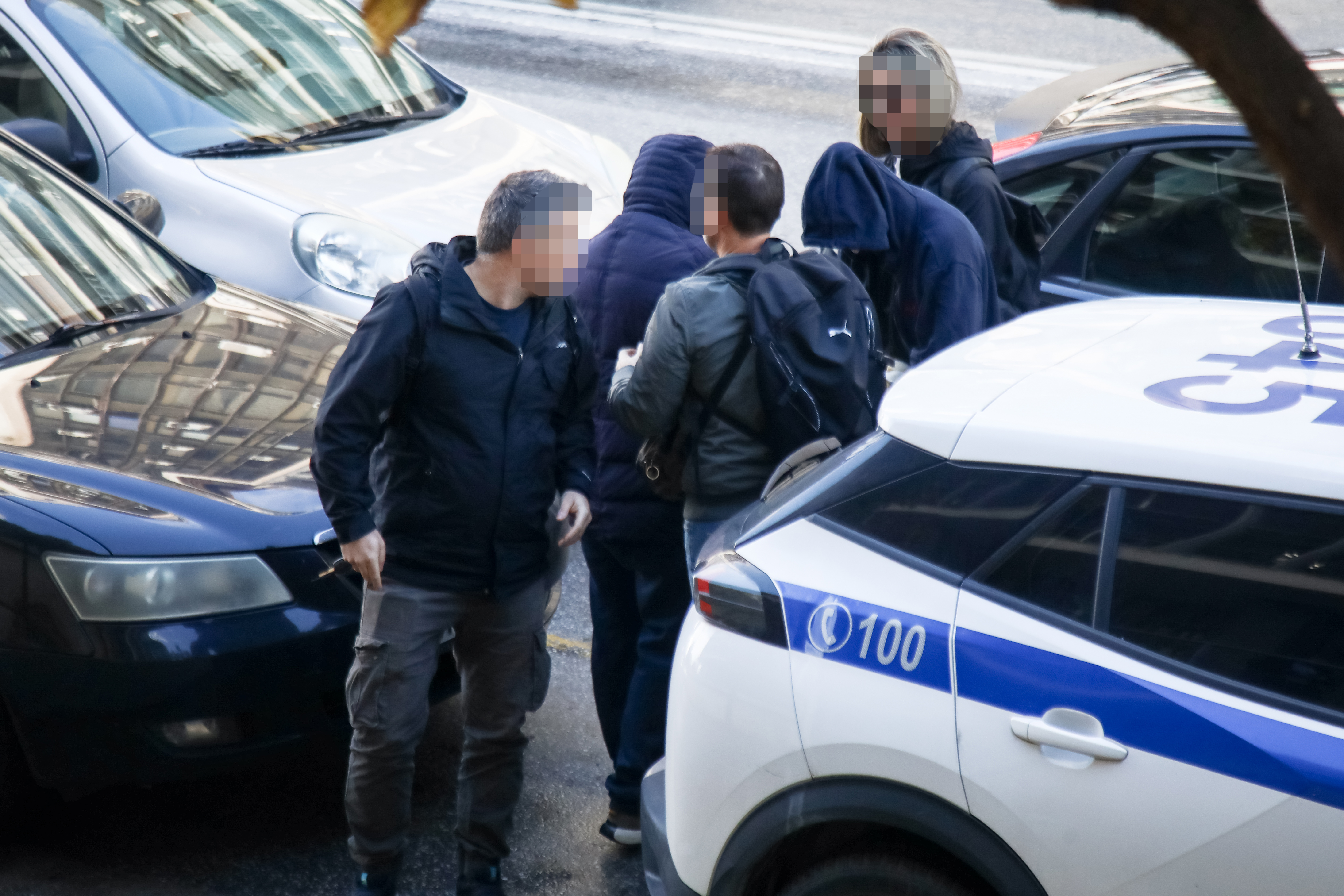
The revelations in the “Paidiki Chara” NGO fraud case keep coming. On Tuesday, shortly before 10 a.m., the first four defendants appeared before the investigating magistrate to give explanations about their involvement in the case.
Among the four testifying on Tuesday, are the partner of the organization’s president, her brother and two other people connected to the NGO’s activities.
As they arrived, citizens loudly booed them, shouting, “Aren’t you ashamed of what you did?” The defendants walked in silently, with their heads down.
Another defendant is expected to testify on Thursday (November 5), while the president of the “Paidiki Chara” NGO will be the last to be called to give his own explanations.
Speaking to MEGA on Tuesday morning, police analyst Stavros Balaskas, who noted that he lost his sister to cancer when she was 13, said: “How were they able to make 10 million euros in seven and a half years? They would tell a mother, send me a photo of the child without hair, in intensive care. We’re talking about 34 cases… Most of the children passed away. They chose children who were very serious cases and in the final stage.”
The money trail
The key question the defendants must now answer is where the money really went and whether the financial transactions under investigation are linked to citizens’ donations.
The investigation reportedly began after two emails were received by the police unit responsible for combating organized crime.
Among other things, the authorities are examining how the money was collected. Social media posts reportedly dating from 2017 and 2018 listed personal bank accounts, as well as accounts on online payment platforms such as Revolut and PayPal.
“They told me they would hold a fundraiser, but the money would go into their own account”
One of the families that needed help for their child was that of Madonna Myrteli, whose daughter was diagnosed with sarcoma in 2023.
Laura’s mother contacted the NGO through Facebook to ask for financial help. The organization launched a fundraiser using its own bank account, claiming the mother could not open one herself. As a result, she had no information or accountability about how much was being donated in her child’s name.
“They told me we would hold a fundraiser and I said okay, how does that work? They said, we have our own fundraising account, because I couldn’t open one, and to tell you the truth, I didn’t ask why I couldn’t open one. I just relied on the fact that they had a fundraising account and let them collect money there. I mean, I didn’t care about that. What I cared about was getting help for my little girl.”
While the child was in the hospital, businesswoman Dimitra Katsafadou and former police officer Vangelis Batarlis approached the family to offer direct financial and moral support. This direct contact caused tension, with the NGO accusing Ms. Katsafadou’s secretary of fraud and pushing away those who were helping independently.
“They were saying she was fooling people and things like that. I told her she wasn’t fooling anyone. I personally went and met her in person, and this lady had also come to the hospital full of gifts for my child. And I had told Paidiki Chara that it wasn’t a lie, that she wasn’t fooling anyone.”
Mr. Batarlis, who personally gave 5,000 euros, had warned the mother to ask the NGO for documents proving how much money had been raised. He himself received threats from the organization on social media because of his independent efforts.
The head of the NGO handed the mother about 30,000 euros, requiring her to sign a solemn declaration that she had received the money, but without giving her any official receipt. He also told her that some of the money had been given to another child because hers “had been covered.”
“42,000 euros were raised for my child’s treatment, but I didn’t get a single euro”
Among the complaints against the NGO, one that stands out is the case of a father who expected to receive money to cover the costs of his child’s surgery.
Speaking to ERT, Panagiotis Theodoridis, the parent of a child with serious health problems, said the organization took on raising money for his son’s treatment in Russia. According to him, 42,000 euros was collected in one month, yet his family never received a single euro.
Mr. Theodoridis said a representative of the organization approached him in June 2020 in Komotini, where he was working. The NGO’s vice president contacted him, aware of the difficulties his family was facing and their efforts to treat their child’s illness.
He said his son has had epileptic seizures since he was five months old. The family had already gone to various clinics and hospitals in Greece, in Thessaloniki and Athens, without finding an effective solution. Later, through a Greek living abroad, they got in touch with a surgeon in St. Petersburg, Russia, to pursue specialized treatment.
The father explained that after starting medication, the child gradually improved, with fewer seizures and better motor function. However, continuing the treatment required significant financial resources.
The NGO took on organizing an online fundraising campaign to cover the treatment costs. According to Mr. Theodoridis, a total of 42,000 euros was raised between September 15 and October 16, an amount that appeared in the personal bank account of the organization’s president, as the president himself had informed him.
The family had estimated that about 95,000 euros was needed to cover the treatment. However, once 42,000 euros had been raised, the NGO’s president told the father that the effort was being stopped because the fundraising campaign was considered a failure.
Mr. Theodoridis said that when he asked what had happened to the money, he began facing pressure and threats, and was told not to interfere in the process or take any initiatives. The situation became even more complicated because of the coronavirus pandemic and the war, which made it harder to communicate with the clinic in Russia and obtain the necessary paperwork. The Greek who had served as the link to the clinic was called up for military service, and contact with him was lost.
About 14 months after the process began, the father was told that the money had been frozen in the bank account due to missing paperwork and that the family could no longer claim it. According to what he was told, the money might even be returned to the donors.