The Grand Dance, also known as the “Tsiatsios,” is an important traditional ritual in the northwest Greece village of Samarina. Performed on the Feast of the Dormition of the Virgin Mary, it is a slow, majestic and proud dance with roots stretching back to antiquity. Participants sing without musical accompaniment, holding hands to form one enormous open circle.
Greek MPs are usually among those taking part in the Grand Dance, which begins after the celebratory Divine Liturgy at the Church of the Great Panagia in Samarina, Grevena. They rarely miss an opportunity to make their presence felt at festivals and local celebrations in their constituencies at this time of year. This year, however, not everyone was allowed to join the dance. The reason was the sheep and goat pox outbreak.

New Democracy MPs Kostas Gioulekas, Maximos Charakopoulos and Alexandra Sdoukou were confronted by an angry livestock farmer who had lost his flock to the disease.
“You destroyed us, and now you have come to join the Grand Dance?” he told them, preventing them from entering the circle.
The government officials withdrew from the area, and the dance began as usual, with opposition MPs participating, including Evangelia Liakouli of PASOK, Giannis Karypidis of SYRIZA and independent MP Vassilis Kokkalis.
Although the incident was not representative of what happened everywhere, it was seen as indicative of a broader mood that poses risks for the governing party. New Democracy’s resilience is being tested in the provinces, particularly among communities that have suffered on multiple fronts, including farmers and livestock breeders affected by the OPEKEPE farm subsidy scandal, the handling of the sheep and goat pox outbreak and rising production costs.
Multiple Fronts Remain Open
The major issues weighing on society are now being raised directly with government MPs as they fan out across their constituencies, attending festivals, local celebrations, coffeehouses and beaches.
At the top of the list are high prices and the cost of living, particularly household groceries, energy and fuel. Voters also complain about local infrastructure projects that have either failed to materialize or have been seriously delayed; the suffocating financial pressure facing small and medium-sized businesses and the self-employed; shortages of staff and infrastructure at regional healthcare facilities; insufficient support for the primary sector; and the progress of reconstruction projects in areas affected by wildfires and floods. Housing, especially for young people and students, is another prominent concern.
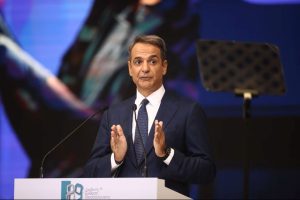
New Democracy MPs remain in a state of constant election readiness, following Prime Minister Kyriakos Mitsotakis’ instruction: “The elections will take place in the spring of 2027, but we will campaign as though they were being held tomorrow.”
Ahead of the Thessaloniki International Fair, contact with voters is taking on particular importance. It reflects public expectations while also serving as an informal barometer of the electorate’s mood, which is far from calm.
The general impression MPs are taking away from these encounters is of widespread dissatisfaction over the major problems burdening daily life, as well as a belief that income-support measures are inadequate at a time of inflationary pressure and considerable economic uncertainty.
“The slogan ‘We said it, and we delivered’ does not satisfy people who are under pressure, despite the progress that has been made,” admitted an MP from the Peloponnese, who believes that “trust between the government and citizens has been shaken.”
He is not the only one who sees a growing climate of insecurity, something that, as party officials acknowledge, “is not a good omen at the ballot box.”
Even when government MPs try to persuade voters that concrete efforts are producing measurable results, the messages they receive are contradictory.
“We hear complaints about delays and mistakes, particularly in the agricultural and livestock sectors. At the same time, people tell us they need stability. They protest strongly about high prices, but they also give us credit for the E65 highway,” said an MP from Thessaly.
Cost of Living Tops the List
There is no doubt that high prices, income support and infrastructure projects sit at the top of the pyramid of public concerns.
An initiative by Maria Syreggela, an MP for the western sector of Athens, offers an indication of the prevailing public mood. Using a structured questionnaire, she conducted a telephone survey to gauge sentiment in her constituency.
Preliminary findings suggest that the cost of living and the need for more infrastructure in the area are voters’ leading concerns. The findings will be compiled and submitted to the relevant government bodies so that citizens’ needs are reflected where decisions are made.
“Finally do something about the cost of living” is also what MPs representing Greece’s islands are hearing, alongside demands for water-supply and waste-management infrastructure. Many of these long-standing problems have been allowed to drag on, as demonstrated by the destructive fire at the Paros landfill.
Each area has its own particular concerns, leaving MPs to face the reactions of local communities. On Rhodes, for example, government representatives were declared “unwelcome” at events and festivals by the municipal district of Kameiros following the relocation of the National Emergency Aid Center’s local base from Soroni to the airport.
Tourism, meanwhile, is not developing uniformly across the country. The progress of the tourist season was a central topic in discussions held in Rethymno by former minister Giannis Kefalogiannis. The season began on a rather unsettled note but has proceeded more smoothly in recent weeks, something local residents attribute to developments in the Middle East. They remain cautiously optimistic as they wait to assess the final results at the end of the season.
The mood in Crete is also mixed when it comes to the primary sector. According to Kefalogiannis, most producers received more money than they had expected, which he attributed to the streamlining of subsidy payments through the Independent Authority for Public Revenue.
On the other hand, around 25% of producers were either not paid at all or received considerably less than expected. They are now awaiting the outcome of the appeals they have filed, a situation that is generating dissatisfaction.
“New Democracy Still has Political Capital”
Despite the complaints, some within the party believe that “New Democracy still has political capital” and that, notwithstanding delays and mistakes, “a degree of optimism is beginning to emerge.”
“This is not a picture of collapse or inevitable defeat,” party officials say, placing considerable hope in the government’s presence at the Thessaloniki International Fair.
“It will be a good TIF,” Deputy Finance Minister Dimitris Markopoulos said, expressing confidence that “the picture we are receiving from the public is not irreversible.”