 Μake us preferred on Google
 No one has ever left Kostas with just one souvlaki wrap. And perhaps no one has ever quite managed to get enough of this little culinary marvel, which began life on a street cart in 1946 and eventually became known around the world.
It is one of the regular stops on my outings with the most precious little person in my world: my godson, Nikolas. In fact, the first time I took him there, I was a little hesitant. He was young, after all, and his experience of souvlaki up to that point had been fairly limited—and quite different from what he was about to taste at this tiny souvlaki shop, one you could easily walk past without realizing what you were missing.
But Nikolas fell head over heels for it from the very first bite. Since then, he hasn’t cared how long he has to wait in line, as long as he eventually gets his coveted prize in his hands and devours it, regardless of how much sauce ends up on him. Kostas’ souvlaki has become one of his great loves, and rightly so: it set the standard by which he would later judge every other souvlaki he tried.
So what makes Kostas’ souvlaki different?
Certainly, it has no interest in showing off. Its deliciousness lies in precisely the opposite approach: a handful of ingredients, all of them good, each doing its job properly.
The pita is warm and fluffy, toasted just enough to develop its aroma. The pork skewers and beef patties have a clean, unmistakable meat flavor. The tomato is sliced to order, while the onion and parsley add freshness. Then comes the red tomato sauce, the likes of which you would be hard-pressed to find anywhere else. Spicy with a hint of sweetness, it melds with the fat and smoky aroma of the meat, leaving a little burn that makes you want another bite almost immediately.
This is souvlaki with nothing unnecessary, its flavor clean and deeply familiar. It’s the kind of food you can hardly bring yourself to analyze while eating, because by the time you think about what makes it so good, you’ve already reached the last bite.
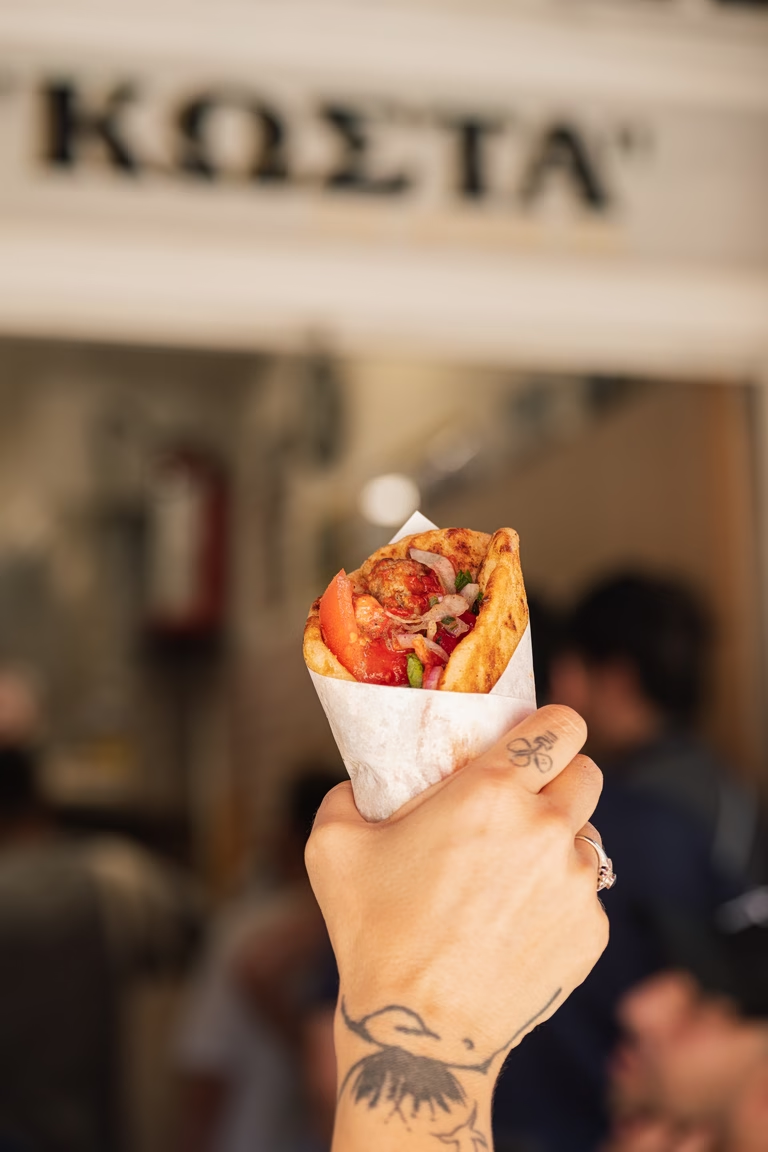
Kostas’ souvlaki contains nothing unnecessary, and everything that goes into it is just right. Photo: Alexandros Alexandris.
I spoke with Tasos, the third generation of the family to run the business, who can reliably be found tending the grill. Together, we traced the story of a family venture that began with a street cart in 1946 and continues to this day—a family business determined to keep us fed and deliver generous helpings of happiness, wrapped in greaseproof paper and drizzled with that dream of a sauce.
To understand Kostas’ story, we need to go all the way back to 1946 and leave the square behind. How did it all begin?
“My grandfather came to Athens from Constantinople [modern-day Istanbul] and decided to sell souvlaki on the streets using a cart. He really did start in 1946. At first, he sold only lamb skewers, then later added beef patties.
“Many people know the story, and they’ve probably seen the black-and-white photograph hanging on the shop wall, reminding everyone how we started. Those were difficult years, with widespread hunger. People did whatever they could to survive.
“My grandfather would collect bones from the butcher, put them in a pot with tomatoes, and make the sauce. Gradually, things got a little better, and he opened a very small shop on Agias Eirinis Street, a little farther up from the square, where a new hotel stands today. It was just three square meters, but he got the job done.”
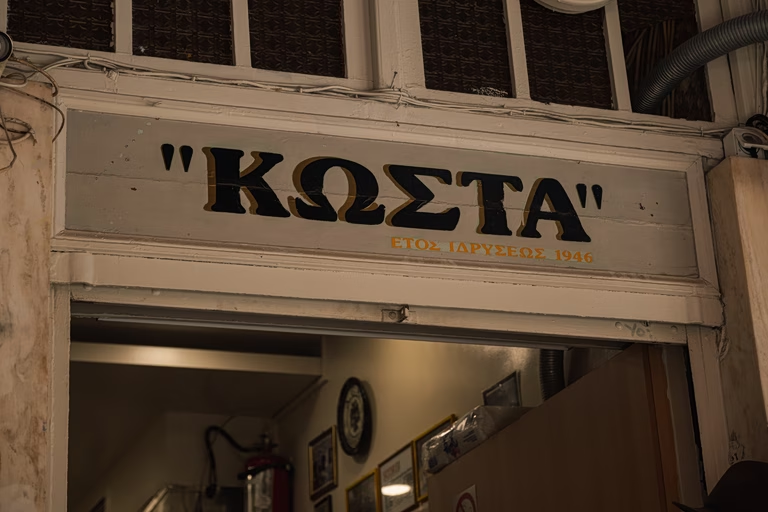
The current shop, on Agias Eirinis Square. Its tiny 18-square-meter space holds the entire story of Kostas’ souvlaki, from 1946 to today. Photo: Alexandros Alexandris.
How did the business grow into the shop we know today?
“My grandfather eventually moved about 10 meters farther down Agias Eirinis Street and opened a bigger shop. By then, my father, Kostas, had grown up. He was born in 1943, and as soon as he completed his military service in the Hellenic Navy, around the mid-1960s, he went straight to work with my grandfather. That’s essentially when the second generation joined the business.
“When my grandfather retired and stopped working, my father moved the shop here, to the square, where we still are today. This place is only 18 square meters, so it’s small, too. But I think that’s what we’ve always wanted. It’s who we are.
“We want a small shop where we can keep a closer eye on everything, stay involved in every aspect of the business, and maintain close relationships with our customers. Today, three of us can fit behind the grill, and we manage just fine. We communicate well, and there’s a good atmosphere.”
You’re open every day until 6 p.m. and closed on weekends. It seems that even your hours reflect your philosophy. Would you agree?
“My father established those hours. In the past, he used to close even earlier, at 4 p.m. Then he moved closing time to 5 p.m., and eventually we extended it to 6 p.m. But that’s as far as we’re going. We can’t—and don’t want to—go beyond that.
“It has mostly to do with maintaining the quality we want. When you start expanding too much, whether in opening hours or in the volume of business, you eventually lose control. The most important thing here is hands-on work. I don’t miss a single day at the shop.
“And just because we open at 10 a.m. doesn’t mean we arrive at 10. Preparation begins much earlier. I’m there by 7 or 7:30 a.m. We make the sauces, light the fires, and prepare everything we need before serving begins. The staff work their scheduled hours, but I spend many more hours here.”
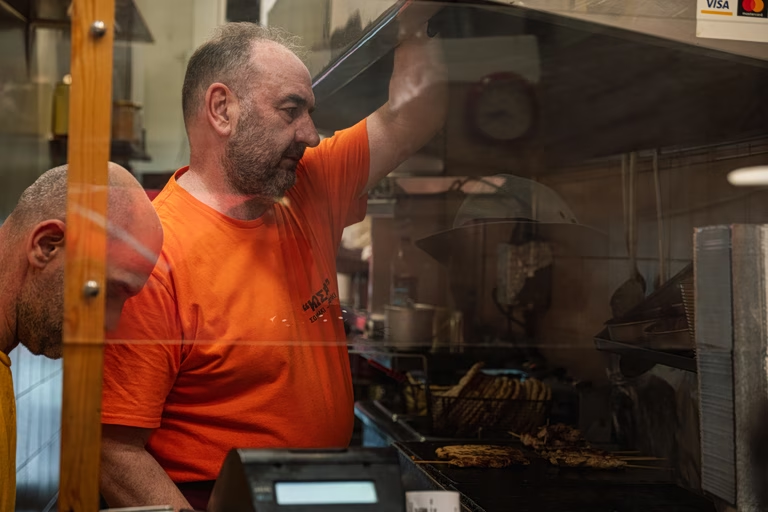
Tasos, the third generation to run the souvlaki shop founded by his grandfather, is there every day. Preparation starts early, and everything—from the souvlaki and beef patties to the sauce—is made fresh that day. Photo: Alexandros Alexandris.
Your father is 82, but from what I understand, he has never really stepped away from the shop.
“No, he still comes in. My father always started very early, at 6 a.m., and he still does. When he’s in Athens, from around late September, when he returns from vacation, until late May, he comes in every morning at six.
“And he doesn’t just drop by. He makes the sauce himself and lights the fire for me every morning. I arrive a little later, around 7 or 7:30, so by the time I get there, he’s already started preparing everything.
“Think about it: a man who is 82 still follows this routine whenever he’s in Athens.
“The sauce is also something we’ve kept strictly within the family. Today, only two people know the recipe: my father and me. And that’s how it will remain until the time comes to pass it on to the next generation.”
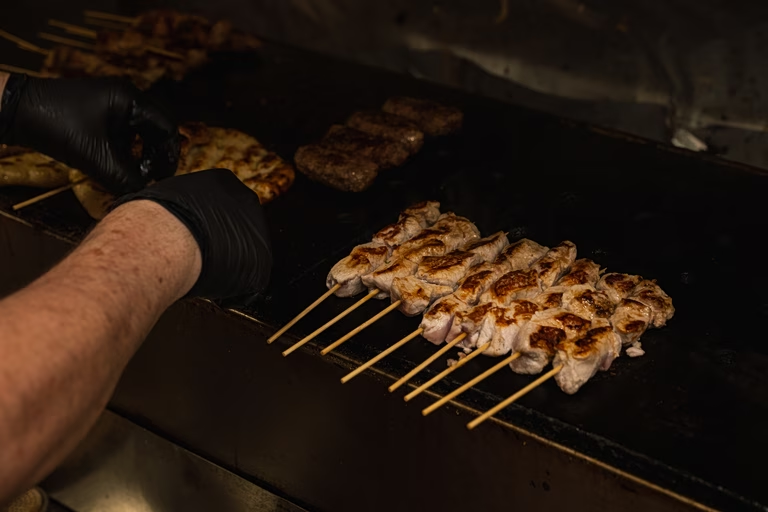
Each pork skewer is assembled by hand, one at a time, using top-quality meat. Photo: Alexandros Alexandris.
Is the sauce the great secret behind your souvlaki, or is the answer more complicated?
“It’s not just the sauce. It’s the entire philosophy of the shop and the way we’ve worked all these years.
“We have only two meat options: pork skewers and beef patties. For the skewers, we use pork leg meat. The patties contain very little bread, and we don’t load them up with spices. We don’t marinate our meat, and we thread each skewer by hand. They’re not machine-made; we don’t buy anything ready-made or mass-produced.
“Beyond that, the most important thing is the quality of our ingredients. We always try to buy the best quality available on the market. If you saw our invoices and the prices we pay, you’d understand what I mean.
“We’ve worked with most of our suppliers for years. We don’t haggle over prices or ask anyone to give us something cheaper. But we are extremely demanding about what they supply. We want top-grade products.
“And that applies to everything, not just the meat. Even with tomatoes, we want the best we can find, both in quality and size. We don’t care if they’re more expensive. What matters is what ultimately goes into our souvlaki.
“The same goes for the pita. It’s handmade, and we get it from the Stamatis family. They make it the same way they did 40 years ago. We know them personally.
“That’s our general approach: a few things, good ingredients, and as much as possible, everything passing through our own hands.”
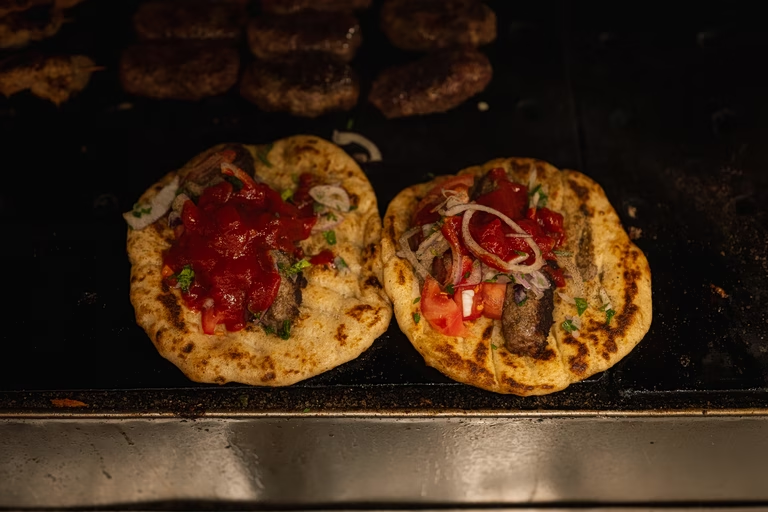
At Kostas, the team always looks for the best tomatoes on the market. The handmade pita has been prepared the same way for 40 years. Photo: Alexandros Alexandris.
With such a strong brand, were you ever tempted to expand the shop or open a second location?
“It crossed my mind at one point. We discussed it, thought about it carefully, explored the idea, and eventually decided against it.
“It’s not that we couldn’t have done it. We received offers to open a second shop, even a third. The problem was that we wouldn’t have been able to be there ourselves and keep everything under control.
“This business depends enormously on hands-on work. From the preparation and the ingredients to what ultimately reaches the customer, we want to know what’s happening and be there ourselves.
“Things are very straightforward here: if I can’t be at the shop, we don’t open.”
You support Olympiacos, but the shop remains full of AEK memorabilia. Were you ever tempted to change the decor?
“No, some things don’t change. My father is a die-hard AEK supporter, which is why the shop is covered in AEK banners, alongside photographs of him and our family. Basically, everyone in the family supports AEK. I’m the only Olympiacos fan.
“But I’m not going to put up anything from Olympiacos. The shop will stay exactly as it is. The banners, the photographs, everything.
“Besides, plenty of Olympiacos supporters have always come here. They used to tease my father, he’d tease them back, and we’d all have a laugh. Giannis Moralis, for example, used to come here all the time with his family when he was president of Olympiacos.
“We don’t have those kinds of issues here. We’re not like that. I keep all the AEK banners up, and sometimes I joke with my father and tell him, ‘You guys are bullying us Olympiacos supporters in here!'”
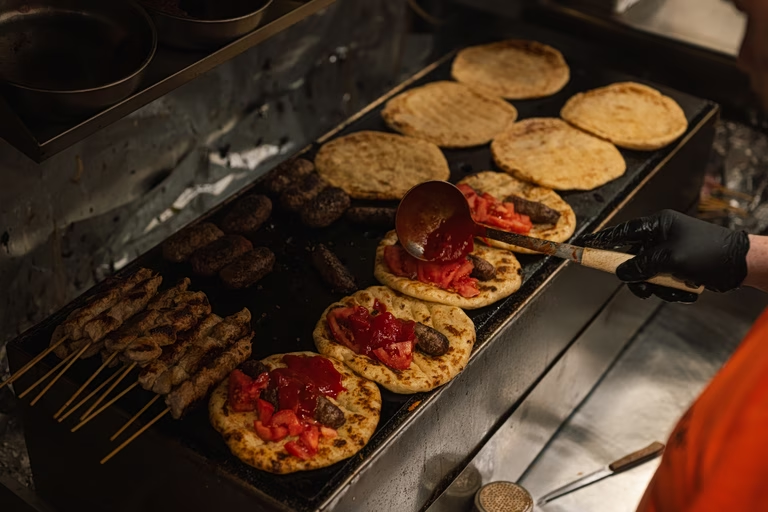
Kostas’ secret sauce, made as it was in the early days using the grandfather’s recipe, which only Tasos and his father know. Photo: Alexandros Alexandris.
So, did souvlaki make you rich in the end?
“No, Dora. No. But I like what I do. And think about it: I studied electrical and mechanical engineering. I could have followed a completely different path, but I stayed here.
“I also have a twin sister. She never got involved in the shop. Quite simply, she didn’t like it. I did, so I stayed.”
What’s your record? How many souvlaki wraps have you managed to make in a single day?
“I think around 700 to 750. But that was a very unusual day because we had two very large orders. It’s not a number we could produce on a normal day.
“That time, we got to the shop at 9 a.m. and spent the day making souvlaki. My father was there, too, so we could get the orders out.”
Over so many decades, the shop has lived through very different eras. Have there been genuinely difficult periods, or have your regular customers always been your greatest source of support?
“I wouldn’t say we’ve experienced any particularly severe crisis. The shop has always had a steady customer base and has never relied exclusively on people who happen to walk by.
“Of course, we have a lot of tourists, especially in recent years, but our foundation remains the same. Business has grown over the past three years, and we’re seeing many more young people. At the same time, people who knew the shop when my father was running it continue to come back. Some are now as old as 90.
“They always ask how he’s doing. They remember him, and that means a lot to us.
“If an 85-year-old comes here to eat the souvlaki he remembers from Kostas, we’re not going to make him wait in line. It’s a matter of respect.
“Then there are all the people who ate here as kids and now bring their own children to try it, ‘so they can learn, too.’ That’s perhaps the loveliest part of all: seeing that relationship with the shop pass from one generation to the next.
“Personally, I’m not interested in turning Kostas into a major tourist brand. It might bring in more money, but I’d rather have our local customers and the people who’ve been coming here for years. I enjoy seeing them.
“That doesn’t mean I treat foreign visitors any differently. They come in, eat, and receive exactly the same service. I never discriminate against anyone.”
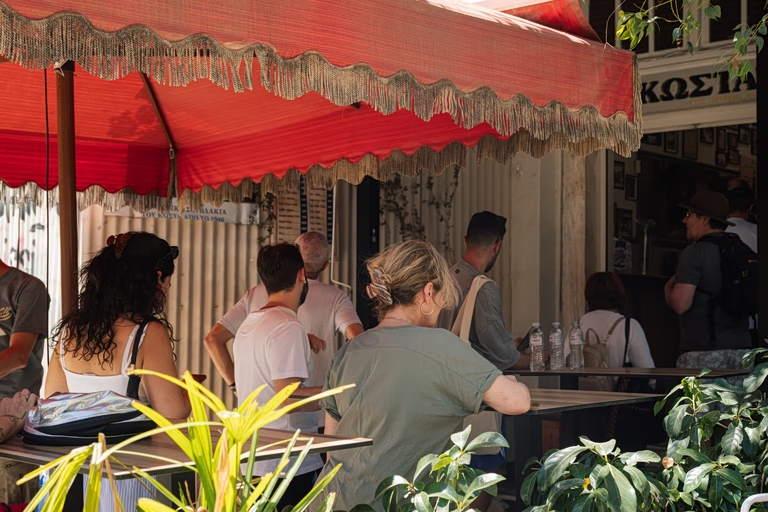
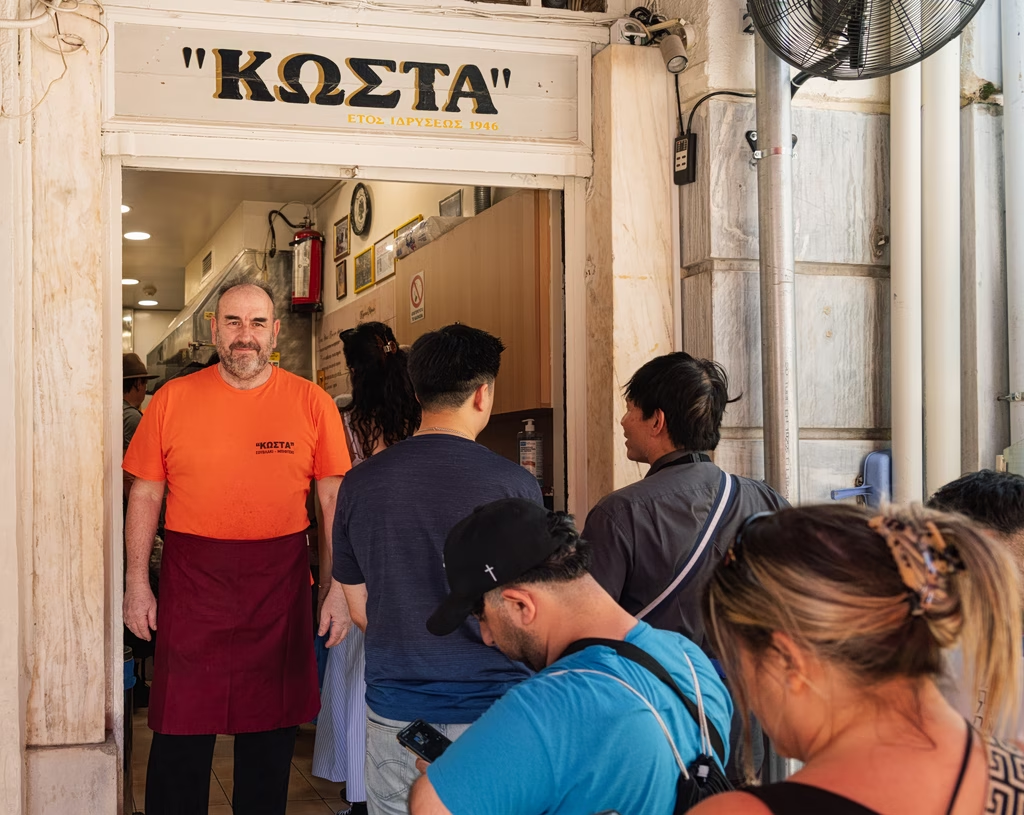
The familiar sight outside Kostas: customers lining up for souvlaki. The shop’s loyal following has remained steady over the years. Photo: Alexandros Alexandris.
You’ve spent all these years in the same spot and watched Agias Eirinis Square change again and again. What do you think of its current state, and what would you hate to see disappear from its history?
“The square hasn’t been at its best lately. A redevelopment project began, then ancient remains were discovered, the work was delayed for a very long time, and there have also been problems with the quality of the construction.
“I don’t want to be the one to judge whether everything was done right or wrong. There are other people responsible for assessing that. But once ancient remains have been discovered, of course they should be brought to light. I’m completely in favor of that.
“What I see today, though, is a square that’s been somewhat neglected. Perhaps it bothers me more because I remember very clearly what it used to look like.
“I have photographs from the days when there was a circular low wall in front of the shop, with a bougainvillea growing all around it. Now I see the fountains lit up in different colors, purple and red at night.
“I also miss the flower shops that used to be part of the square. They closed during the economic crisis, but two are now set to reopen.
“The municipality has repaired the kiosk, which was in terrible condition, and that’s a very good thing.
“Because Agias Eirinis isn’t just a square full of businesses. It has a rich history. The Church of Agia Eirini was Athens’ first metropolitan cathedral, something many people don’t know today.
“There are things here worth learning about and bringing to light instead of letting them disappear. We’ve gotten a little carried away with money and overtourism.”
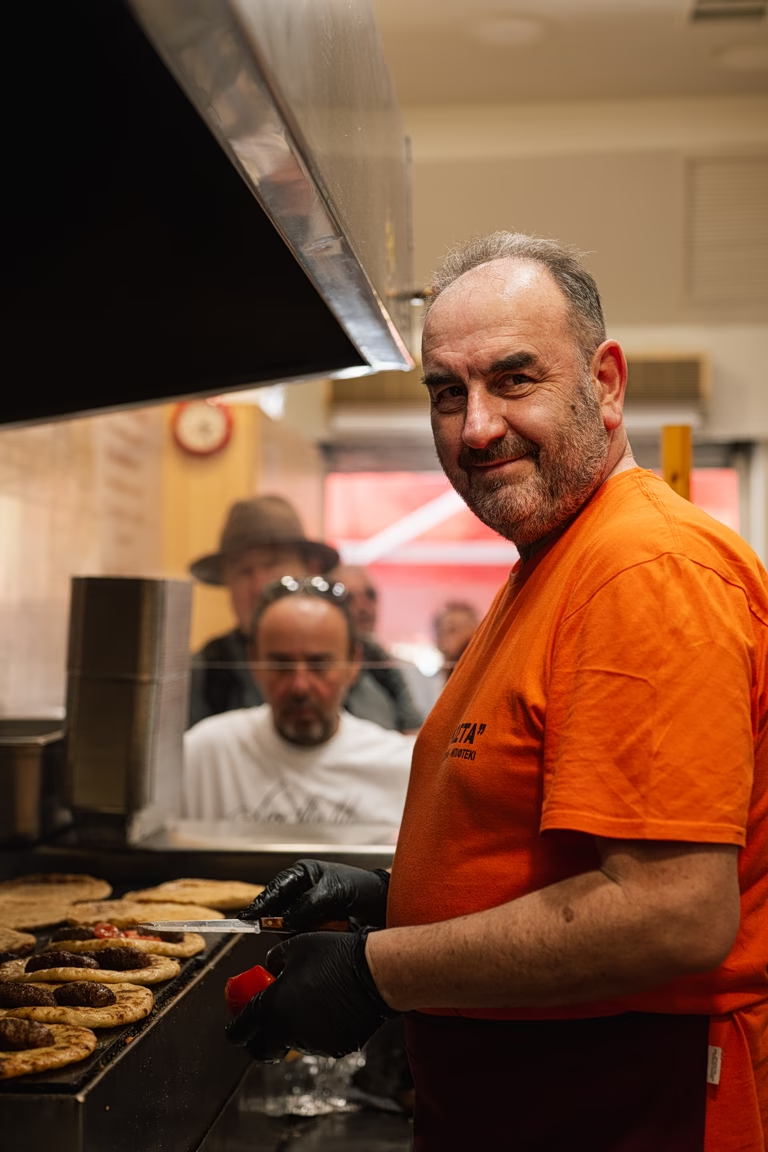
Tasos has spent much of his life in Agias Eirinis Square and has seen it through every stage of its transformation. He hopes one of his two children will carry on the family’s souvlaki tradition and keep the legend of Kostas alive. Photo: Alexandros Alexandris.
You now have two children. Would you like to see the fourth generation behind Kostas’ counter one day?
“I have two children: Konstantinos, who’s 15, and Savvina, who’s 12. They’re still young, but of course I’d love for one of them to take over the shop one day, so that everything we’ve built doesn’t disappear.
“It doesn’t matter whether it’s my son or my daughter. I don’t make that distinction. Whoever wants to continue the business, it would be a blessing for me.
“When a shop has been going continuously for 80 years, it would be a shame to let it disappear. Everyone would miss it.”