Greek Foreign Minister George Gerapetritis on Thursday again issued cast statements towards Ankara – a regular exercise over the past years – amid reports that the Erdogan government plans to pass legislation staking maritime claims in the Aegean and eastern Mediterranean.
In fielding a press question, Gerapetritis merely noted that unilateral actions are “incompatible with the fundamental principles of the law of the sea” and will be dismissed Athens.
The remarks come amid mounting debate in Turkey following leaks – deliberate or otherwise – surrounding a draft law reportedly aimed at formally defining Turkish maritime zones through domestic legislation — a move Greek officials view as both legally baseless and politically provocative. Drawing on reporting and analysis by Greek media this week, Athens is preparing for a new phase in the long-running maritime dispute between the two NATO allies, while attempting to preserve the fragile climate of détente that has characterized bilateral relations over the past year.
“I understand that Turkey deliberately abstained from signing and ratifying UNCLOS,” Gerapetritis said, referring to the United Nations Convention on the Law of the Sea and Turkey’s stance for the past half century. He stressed, however, that the convention’s core provisions form part of customary international law and are therefore binding on all states regardless of formal ratification.
Athens on alert over expected Turkish bill
Greek officials are awaiting the formal publication of the Turkish draft legislation, expected sometime in June, before deciding on a coordinated diplomatic response. According to Gerapetritis, if the proposed language falls outside internationally accepted maritime law, Greece will respond both bilaterally toward Turkey and multilaterally through the European Union and the United Nations.
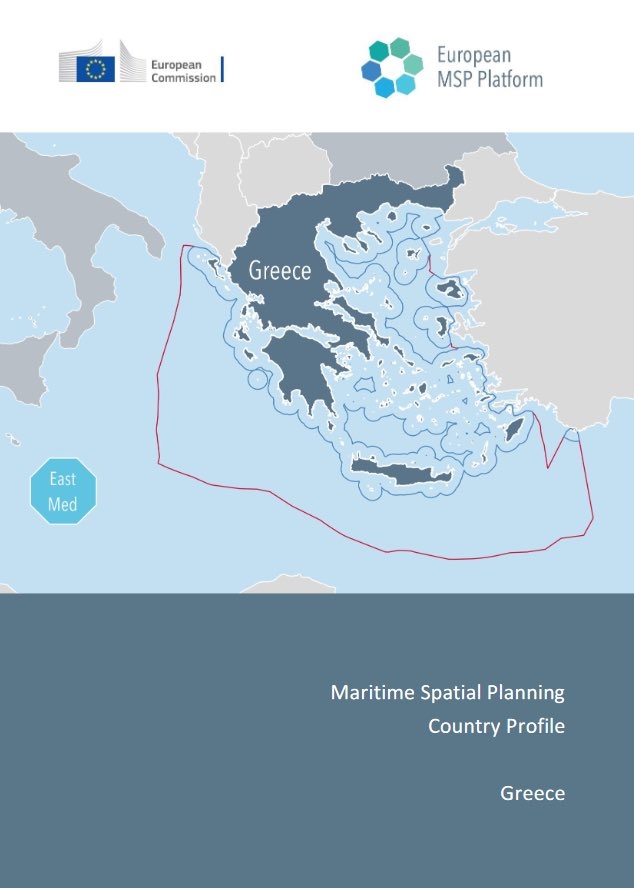
Officials in Athens believe the Turkish initiative is partly a reaction to Greece’s recent efforts to consolidate its maritime claims on the international stage. Particular attention has focused on Greece’s decision to submit its Maritime Spatial Planning map to the EU, marking the first official depiction of the outer limits of the country’s continental shelf and Exclusive Economic Zone. The latter action was mandatory for every EU state.
The move reportedly angered Ankara, especially after Turkey submitted its own competing maritime map to UNESCO, intensifying what Greek analysts describe as a “battle of maps” over the Aegean and eastern Mediterranean.
“If any country chooses to take unilateral measures that, under international law, should be determined through bilateral or multilateral agreement, then such moves will exist purely for domestic consumption and will have no international effect,” Gerapetritis said Thursday during a conference organized by the FT.
His comments came as Turkish academic and political circles increasingly frame the proposed legislation as a concrete expression of the so-called “Blue Homeland” doctrine — Ankara’s expansive maritime strategy aimed at projecting Turkish influence across surrounding seas.
‘Calm waters’ under pressure
Despite heightened vigilance in both the Greek foreign ministry and the office of Prime Minister Kyriakos Mitsotakis, officials insist they do not expect Greek-Turkish relations to deteriorate to the point of irreversible crisis.
Two factors are seen as restraining escalation: the highly unstable international environment and the existence of functioning communication channels between Athens and Ankara.
“It is remarkable how many times both I and my Turkish counterpart have intervened to defuse tensions before they emerged,” Gerapetritis said, referring to regular contacts with Turkish Foreign Minister Hakan Fidan. “This kind of dialogue is absolutely essential, especially in moments like these.”
Still, Greek officials privately acknowledge that codifying Turkish maritime claims into national legislation would represent a significant diplomatic escalation, even if it does not immediately translate into confrontation at sea.
Athens also believes the Turkish move could represent a maximalist opening position ahead of possible future negotiations. Such a framework, however, would leave the two sides with virtually no common ground from the outset, particularly if Ankara continues rejecting the law of the sea as the basis for dispute resolution.
The shadow of Sèvres
The increasingly nationalist tone of Turkish public debate has also alarmed Greek observers. Politicians, analysts and retired military officers in Turkey have repeatedly argued that Greece, Cyprus and Israel are attempting to confine Turkey within what they describe as a “maritime version of the Treaty of Sèvres” — a reference to the 1920 agreement widely viewed in Turkey as a symbol of national humiliation and attempted partition.
“One handful of small islands cannot imprison a country with more than 1,000 kilometers of coastline,” has become an increasingly common refrain in Turkish discourse, highlighting the fundamentally different strategic outlooks shaping policy in Athens and Ankara.
Even as both governments continue to publicly defend dialogue and “calm waters,” the maritime dispute appears once again to be moving toward the center of Greek-Turkish relations — with diplomacy, law and national narratives colliding across the eastern Mediterranean.