Greece’s Regulatory Authority for Railways, known as RAS, has called on Hellenic Train to provide explanations following findings that train seats lacked the required fire-resistance certificates.
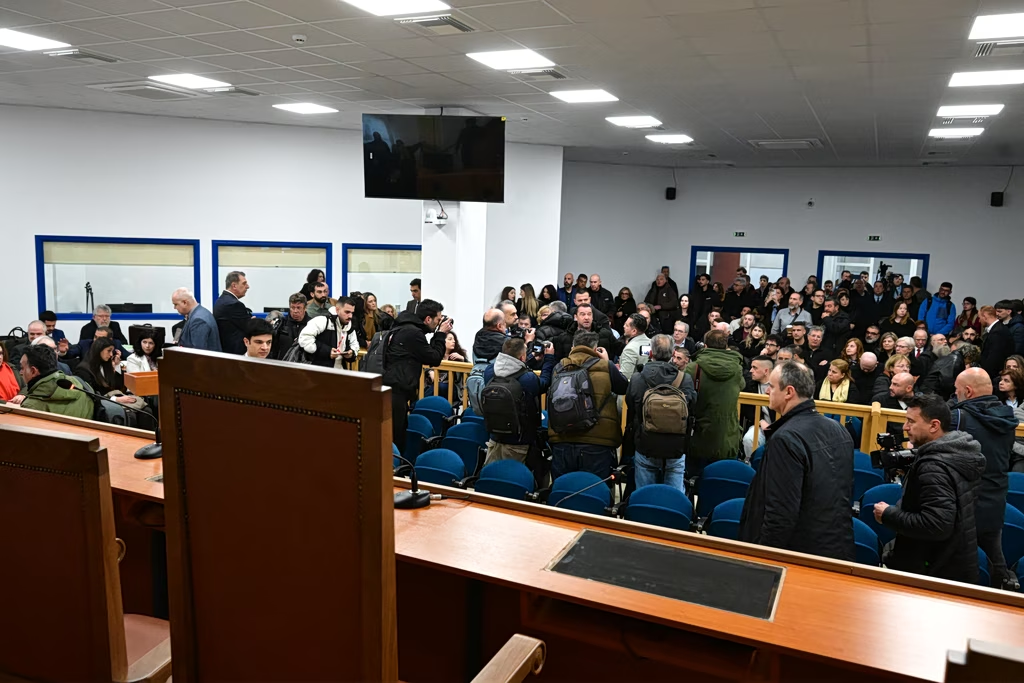
The hearing took place in a tense atmosphere, with relatives of victims of the Tempi train disaster present at the proceedings. The families submitted a request for interim measures, asking for the immediate suspension of passenger train services until the safety of the rolling stock is verified.
The case comes three years after the February 2023 Tempi rail crash, in which 57 people were killed when a passenger train and a freight train collided head-on in central Greece. The disaster led to criminal investigations, public protests, and renewed scrutiny of railway safety standards in the country.
Why the issue matters
The latest proceedings concern whether seats used in passenger trains meet fire-resistance requirements and whether the necessary certification exists.
Fire-resistance standards for train materials are intended to limit the spread of flames and smoke in the event of an accident or fire. In the context of Tempi, the issue is particularly sensitive because the crash was followed by a fire, and investigators and relatives have continued to examine the conditions inside the passenger train after the collision.
According to the RAS findings cited in the proceedings, there were serious shortcomings, failure to comply with required specifications, and problematic procedures related to safety certification.
Hellenic Train attended the hearing and submitted a written memorandum responding to the authority.
Families seek temporary suspension of passenger services
A father of a victim of the Tempi train crash was at the proceedings and called for immediate measures to determine whether the seats currently used on passenger trains are suitable and properly certified.
Speaking after the proceedings and on behalf of the parents of victims, which were mostly youth, he pointed out that the exact number of seats and carriages that may not meet fire-safety specifications has not yet been established. On that basis, the families requested temporary measures seeking the suspension of all passenger train operations until the matter is clarified.
How the RAS decision was formed
The RAS decision followed the examination of a series of documents, including extrajudicial notices submitted by relatives of victims and injured passengers, as well as findings from competent rail-safety bodies.
The material reviewed included reports from EODASAAM, Greece’s National Organization for the Investigation of Air and Rail Accidents, and from the Railway Safety and Interoperability Unit.
The decision was posted on Diavgeia, Greece’s public transparency platform for administrative decisions.
RAS later issued a statement expressing concern over the publicity surrounding the case, saying that its hearing procedures require confidentiality until they are completed. The authority said that the publication of the report in the media risked creating public impressions and possible misunderstandings before the process had concluded.
What happens next
According to available information, Hellenic Train is expected to carry out a full inspection of seats on its trains and submit updated findings to RAS.
The regulator will then assess the company’s responses and the additional material before deciding on any further action.
The case adds another safety-related issue to the continuing follow-up from the Tempi disaster, which remains under judicial and administrative investigation. For passengers, regulators and victims’ families, the central question now is whether the required documentation exists for trains currently in service and what corrective steps will be taken where gaps are found.