 Μake us preferred on Google
 The ban on industrial hemp flower did not put an end to the market for synthetic psychoactive cannabinoids. On the contrary, it has opened a new cycle of adaptations and new products designed to circumvent legislative regulations.
“We didn’t simply wait for developments. We were ready for them.”
This was the opening sentence of a commercial catalogue that began circulating in shops just a few days after the government banned the retail sale of dried industrial hemp flower. The word cannabis had disappeared from the list of new products. In its place were the names of herbs such as Blue Lotus, Damiana, Herbal Blends and Botanical Mixtures.
For most consumers, these names meant absolutely nothing. For those who had been following the market for years, however, they were proof that the next generation of synthetic products was already prepared.
Over the past three years, the market for synthetic cannabinoids has evolved faster than the legislation attempting to regulate it. Every new ban gave rise to a new product; every new product created a new grey area; and every new grey area led to yet another legislative intervention, with the state each time trying to catch up with a market driven not only by chemistry, but above all by demand and profit.
A Basic Misunderstanding
To understand what actually happened, however, one must first clear up a fundamental misunderstanding.
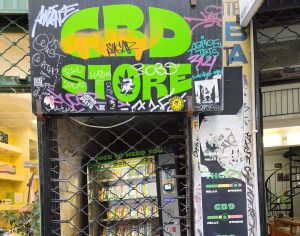
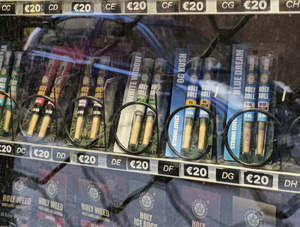
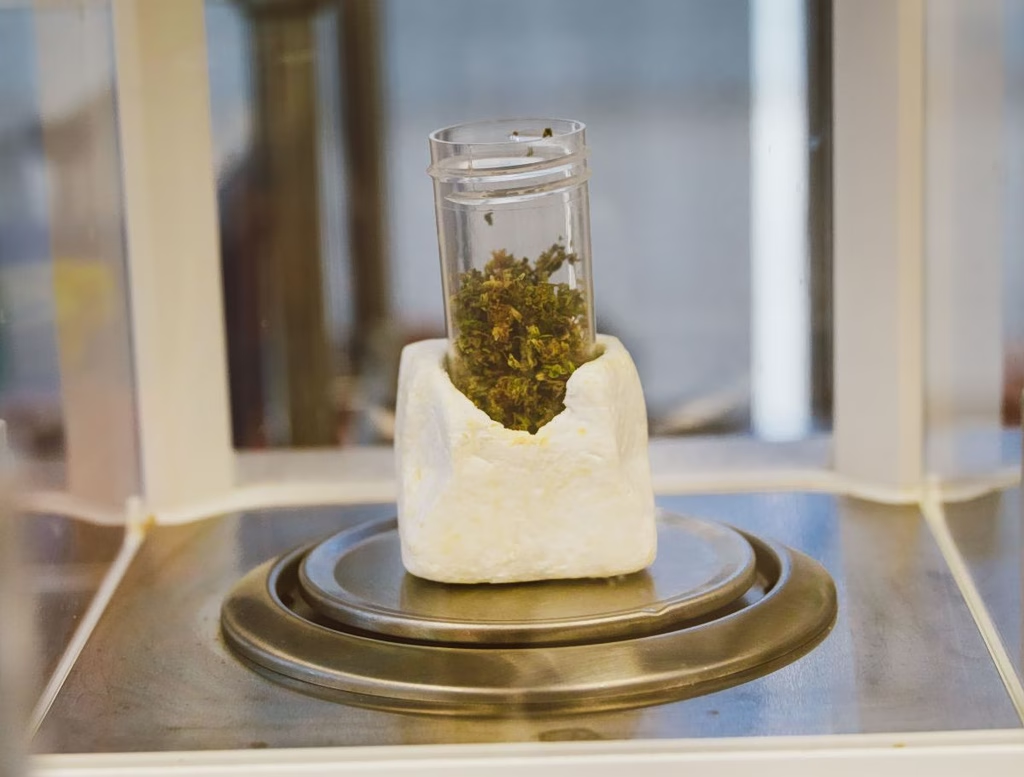
Most of the products sold at retail outlets over the past few years—from kiosks to convenience stores—were, in reality, dried industrial hemp flower sprayed with synthetic or semi-synthetic cannabinoids, that is, chemical compounds produced in laboratories to mimic the effects of THC, the plant’s principal psychoactive substance. Put simply, consumers were not experiencing the effects of cannabis itself, but of a substance specifically designed to produce a similar effect.
When, at the end of May, the government decided to ban the retail sale of dried industrial hemp flower, it was essentially attempting to remove from the market the primary “substrate” onto which these substances were sprayed. By then, however, the market had already prepared its response.
New commercial catalogues immediately began circulating featuring Blue Lotus, Damiana and other herbal blends. Cannabis had disappeared from the packaging, but the underlying logic remained exactly the same.
This development prompted the Ministry of Health to intervene once again. Initially, it issued an interpretative circular clarifying which forms of the plant fall under the ban and establishing the licensing procedure for businesses. A few days later, a new legislative initiative followed, extending the prohibition to any plant-based product intended for smoking or inhalation, regardless of whether it is cannabis or any other herb.
The New Law
“When they said in Parliament that they would spray chamomile, I couldn’t believe they actually meant it. In the end, they really did mean it,” Health Minister Adonis Georgiadis tells To Vima today.
As he explains, the new provision seeks to close the legislative loophole that allowed these products to be marketed. He believes that once the public consultation is completed and the law is passed, by the end of July, the new framework will be fully implemented.
“This game is over. They won’t simply change the plant in order to keep selling the same thing.”
A few days before the latest legislative intervention, the Health Minister himself posted a photograph on his X account of a specific product, presenting it as a typical example of the psychoactive products the new legislation sought to restrict. A few days later, that very same product appeared in a sponsored social media advertisement by a major pharmacy chain (the photograph is in To Vima’s possession).
It was an image that illustrated better than any analysis just how blurred the boundaries had become between what is legal, what is tolerated and what is problematic.
Behind the successive legislative interventions lies another reason why the state is trying to escape quickly from the chemical maze of synthetic substances. Scientists have long warned that synthetic cannabinoids have been internationally linked to serious cases of toxicity, ranging from psychotic episodes and epileptic seizures to cardiac arrhythmias and hospitalizations.
Whether the new legislation succeeds in curbing this market, however, will depend not only on its provisions, but above all on how effectively it is enforced.
“The market changes quickly. Inspections must do the same,” says Giannis Karydakos, Director of the Narcotics Enforcement Division, speaking to To Vima.
His remark captures better than anything else the challenge now facing enforcement authorities. By the time one substance is banned, the market has already begun testing the next one. And by the time the legal framework changes, new products have already replaced the previous ones.
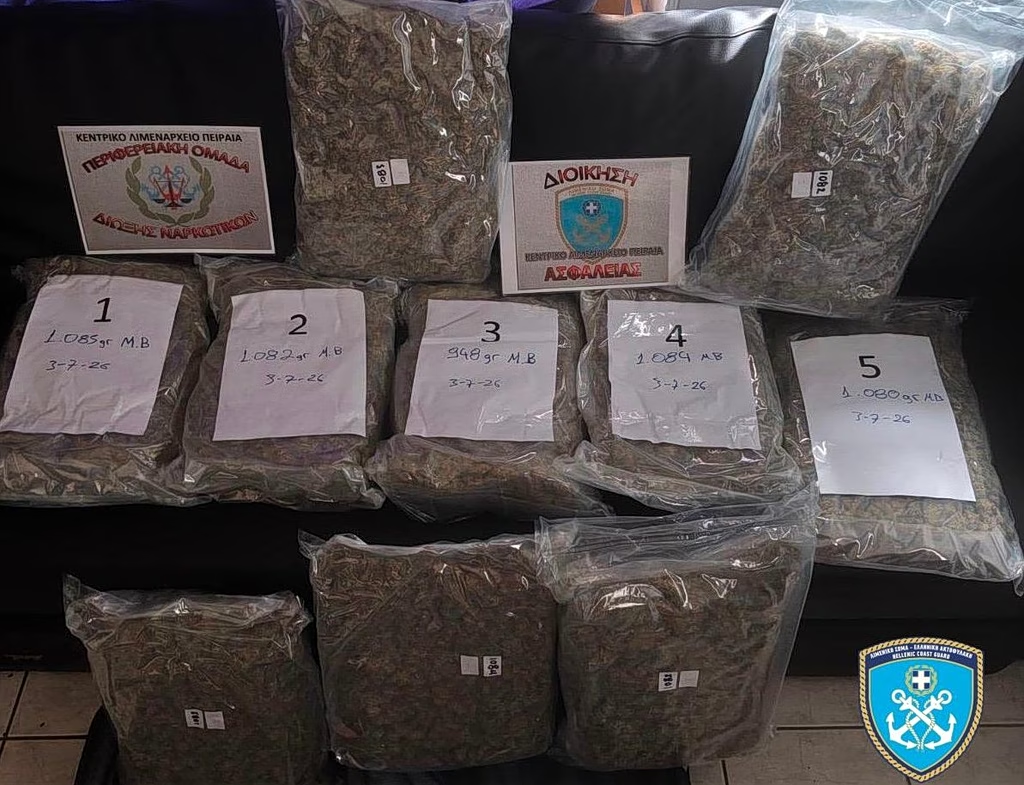
In recent weeks, inspections have been carried out at retail outlets and products have been seized. The next step is laboratory analysis, which will determine whether the confiscated samples contain psychoactive substances.
“Until 19 May, many of these products could legally be sold. From 20 May onwards, the legal regime changed. You cannot treat in the same way a business owner who is trying to return or destroy existing stock and someone who knowingly continues to sell illegal products,” Giannis Karydakos continues.
As he explains, the market is still in a transitional phase. For that reason, every case is being examined carefully until laboratory analyses are completed. Investigations have already expanded to include the new generation of herbal blends, such as Blue Lotus and Damiana, to determine whether they are being used as new substrates for the distribution of psychoactive substances.
The Market Wants Rules
From the perspective of businesses, the key issue at present is not the ban itself, but what comes next.
Babis Hinkiamis, President of the Hellenic Cannabis Businesses Association, argues that the ban on industrial hemp flower primarily harmed businesses that had chosen to operate within the legal framework, while those active in the market’s grey areas adapted almost immediately by seeking new products and new plant substrates.
“The reference to ‘chamomile’ touches on a real issue that we, too, have highlighted from the market’s perspective: anyone acting in bad faith who wants to market psychoactive products will always find another plant substrate. This is now being confirmed with Blue Lotus and Damiana. That is why we believe the solution is not simply more bans, but a clear licensing framework that distinguishes legitimate businesses from those operating outside regulatory oversight. We hope that dried industrial hemp flower will return to licensed retail outlets, under rules that protect both consumers and the legitimate market.”
The coming weeks will show whether the law can catch up with the market—or whether, as has happened repeatedly in recent years, the market will once again outpace the law.