 Μake us preferred on Google
 The two doctors and clinic owners accused in connection with the death of singer Giorgos Mazonakis gave lengthy statements to an investigating magistrate lasting more than 16 hours and into the early morning hours of Wednesday.
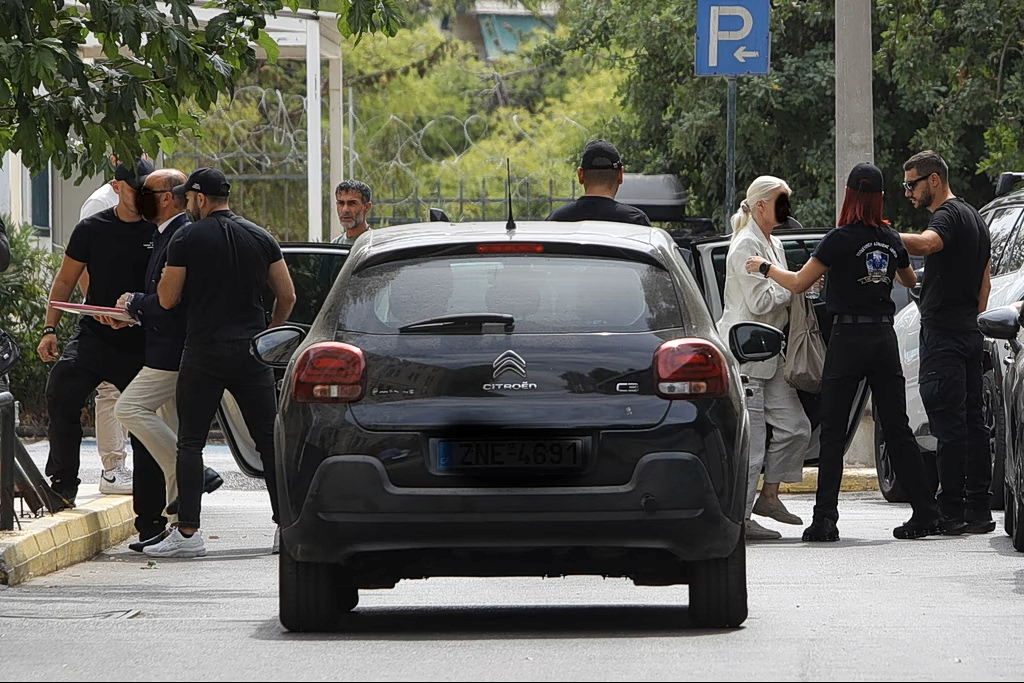
The husband-and-wife physicians, Ilias Theodoropoulos and Ioanna Gaka, were subsequently remanded in custody after denying the allegations against them, including the charge of homicide with possible intent. The case had initially concerned exposure resulting in death before the charges were upgraded, as investigators examined new digital evidence and sought to reconstruct the final hours of Mazonakis’ life.
Following the decision by the investigating magistrate and prosecutor, the two were taken separately to the Kypseli police station to complete the formal procedures before their transfer to a lockup.
During his statement, Theodoropoulos reportedly said he would go on hunger strike if he were sent to prison as part of a pre-trial detention. He is also reported to have maintained that he had become involved in the case without cause and that his actions were motivated by his concern for his wife.
Gaka reportedly spent about eight hours giving her statement before her husband appeared before the magistrate. She denied responsibility for Mazonakis’ death and was questioned extensively about the critical period between repeated alarms from a plasmapheresis machine and the eventual call to emergency services.
Digital records from the machine have become a central element of the ongoing investigation. They reportedly show that the procedure began in the afternoon of Sept. 9 and that a series of alerts were recorded as Mazonakis’ condition deteriorated. Authorities are also examining security-camera footage, computer and mobile-phone data and deleted digital material as they seek to establish a minute-by-minute account of events inside the clinic.
The forensic examination has established myocardial ischemia but has not determined a definitive cause of death. Toxicological and histological tests remain pending. Authorities are also examining whether the Kolonaki medical practice was authorized and appropriately equipped to perform plasmapheresis, a highly specialized procedure.
Investigation Focuses on Alleged Alibi
A separate line of inquiry concerns a medical referral issued at 4:05 p.m., which authorities are examining alongside Theodoropoulos’ account of his whereabouts at the time.
He reportedly said he arrived at the practice at about 4 p.m. and was examining another patient, seeking to establish that he was in a different room and was not involved in the treatment of Mazonakis when the singer’s condition deteriorated. The referral, issued at 4:05 p.m., sent the patient for a gastroscopy and colonoscopy for abdominal pain.
Authorities are examining whether the timing of the referral supports that account or was used to establish an alibi. The question has acquired significance because evidence from the plasmapheresis machine has raised the possibility that Mazonakis suffered cardiac arrest considerably earlier than the emergency call.
The account attributed to Gaka has also raised questions about the timeline. She reportedly said her husband performed CPR on Mazonakis shortly before the call to emergency services, while other evidence under examination has pointed to an earlier deterioration. Previous testimony has likewise produced conflicting accounts of when Mazonakis arrived at the clinic and how long he remained in the treatment area.
Investigators are therefore seeking to reconcile the two doctors, and now defendants’ accounts with the machine records, surveillance footage and other digital evidence. The central issue is the precise sequence of events surrounding the plasmapheresis procedure, Mazonakis’ deterioration, the response inside the clinic and the time at which emergency services were called.