 Μake us preferred on Google
 Jellyfish have returned to Greek waters earlier than expected this year, with sightings already reported across several beaches in eastern Attica. The phenomenon has sparked concern among swimmers and local residents, who are watching the sea fill with these striking—yet often misunderstood—marine creatures.
Following initial appearances along the beaches of Oropos in recent days, jellyfish have now been spotted off the coasts of Nea Makri. According to accounts from residents and bathers, numerous Cotylorhiza tuberculata have been observed in the areas of Zoumperi and Rafina.
Images circulating online show large numbers of jellyfish drifting close to shore. Experts attribute this early influx to the recent rise in temperatures, which appears to favor their premature arrival. The Cotylorhiza tuberculata, commonly known as the “fried egg” jellyfish due to its distinctive shape and coloring, can grow up to 40 centimeters in diameter. Despite its size and conspicuous appearance, it is completely harmless to humans.
This species is pelagic and has an uncertain tolerance to temperature changes. It is most commonly seen during the summer months, with population peaks typically occurring from August through early September, especially in warm and calm waters.
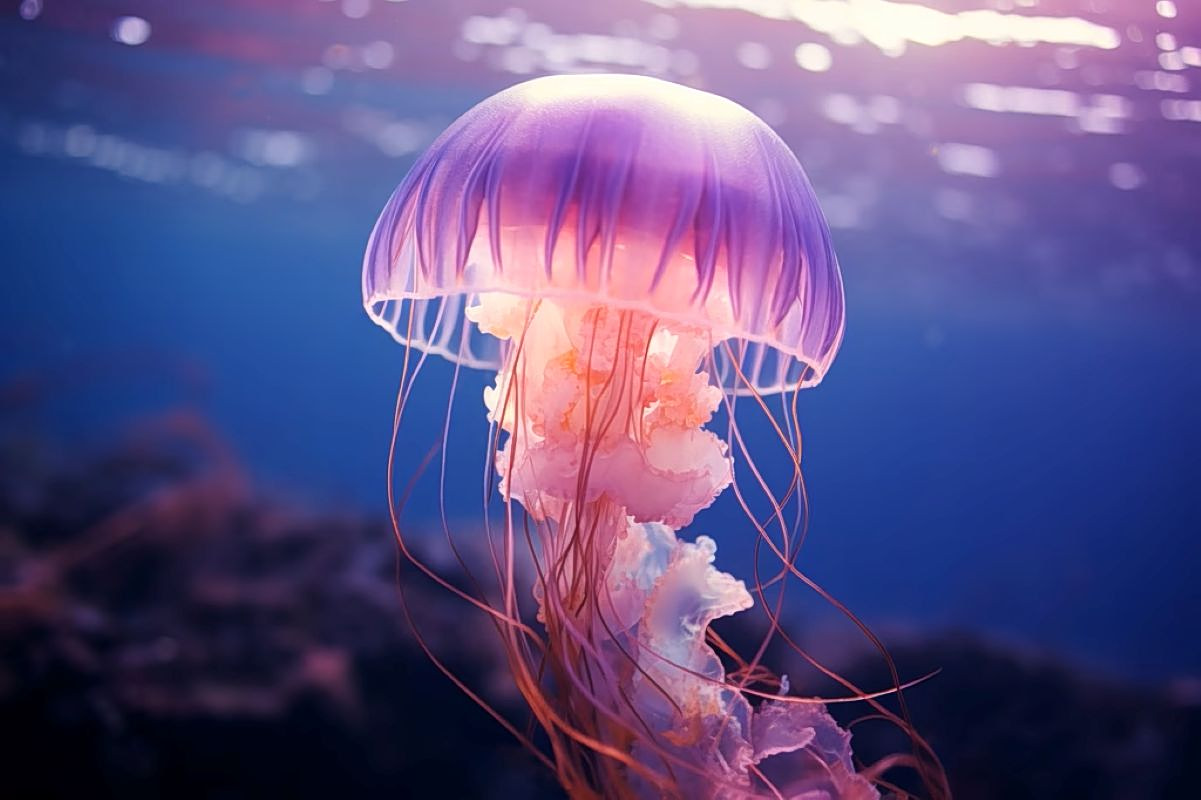
While Cotylorhiza jellyfish are now frequenting the beaches of Attica, millions of purple jellyfish have also been recorded along the coastal stretch from Politika to Dafni in the North Euboean Gulf, creating a striking—and in some cases unsettling—spectacle.