Smoke inhalation from wildfires can place significant strain on the respiratory and cardiovascular systems, with vulnerable groups facing the highest risks, according to the Hellenic Pulmonology Society.
The organization is urging residents near active wildfire areas or regions with elevated air pollution levels to limit their exposure to smoke and airborne particles as much as possible.
Pulmonologist Panagiotis Behrakis explained that the main concern is the presence of fine particulate matter known as PM2.5, which can penetrate deep into the lungs and potentially cause serious health effects.
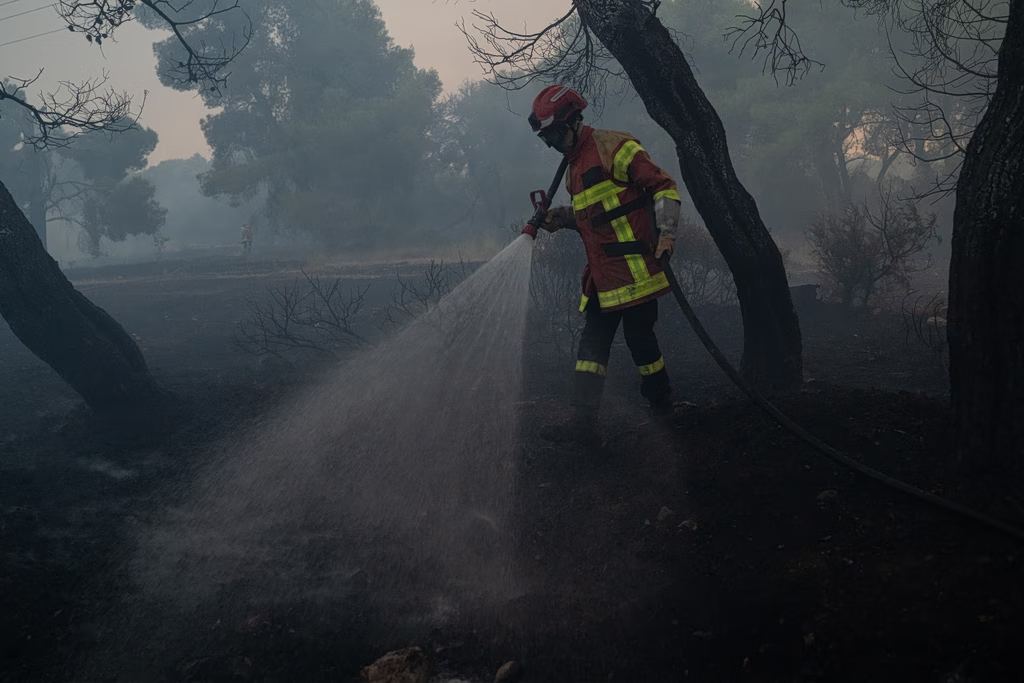
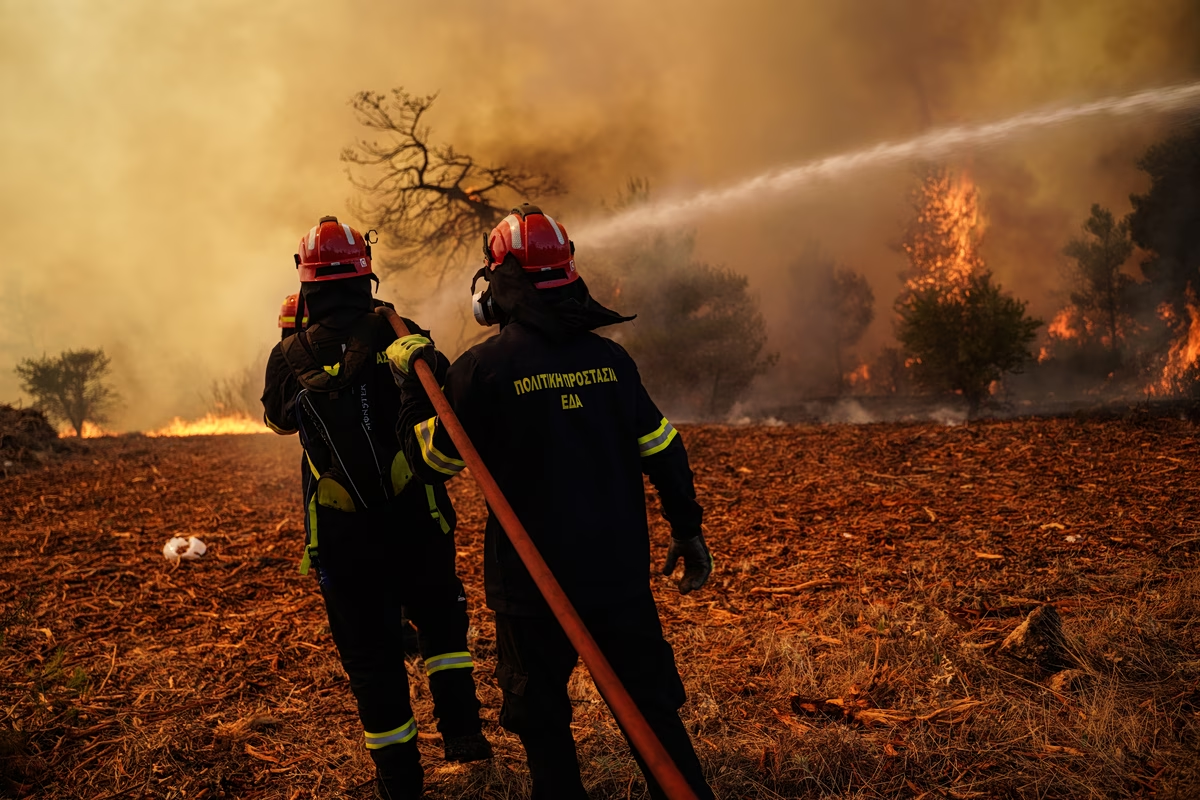
“Areas affected by wildfires have very high levels of particulate pollution,” Behrakis said. “Firefighters and volunteers know they must use appropriate masks that can filter these particles, as PM2.5 has a very high ability to penetrate the respiratory system.”
Children and vulnerable groups face greater risks
Behrakis emphasized that protecting children should be a top priority.
Children’s respiratory systems are still developing, their airways are narrower, and they are more easily irritated by smoke particles. Because they breathe closer to the ground than adults, they may also be exposed to higher concentrations of airborne particles.
Particular attention is also needed for:
- People with asthma or chronic obstructive pulmonary disease (COPD)
- Patients with chronic respiratory failure
- People with cardiovascular diseases
According to Behrakis, wildfire particles can trigger a widespread inflammatory response in the body, increasing the risk of arrhythmias or angina episodes among vulnerable patients.
Avoid physical exertion outdoors
The pulmonologist said the most important protective measure is avoiding physical activity outdoors during periods of smoke exposure.
During intense exercise, people breathe more rapidly and inhale larger volumes of air, allowing harmful particles to travel deeper into the lungs.
He also warned that ordinary surgical masks provide limited protection against very small particles and should not be considered the main form of protection.
Symptoms that require medical advice
The main symptoms that may appear after exposure to wildfire smoke include:
- Coughing
- Wheezing
- Shortness of breath
People experiencing these symptoms, particularly those belonging to vulnerable groups, should contact their doctor immediately.
However, Behrakis said there is no need for everyone exposed to smoke to seek preventive hospital care, as traveling outside could lead to additional exposure to polluted air.
Instead, he recommended staying indoors with windows closed whenever possible.
“The body clears particles, but not without consequences”
Asked whether the body naturally removes inhaled particles, Behrakis said that many are eventually cleared, but “something always remains.”
At the same time, he said there have not been mass hospital admissions for respiratory problems following similar large-scale smoke exposure events.
He warned, however, that the situation would be far more dangerous if wildfires involved industrial facilities, fuel storage areas or plastic factories, as these could release highly toxic chemical pollutants with much more serious consequences for public health.
Long-term environmental and health impacts
Environmental Engineering Professor Dimosthenis Sarigiannis of Aristotle University of Thessaloniki highlighted the longer-term consequences of wildfires for ecosystems, public health and quality of life.
He said wildfires do not leave behind only burned landscapes but can also cause lasting damage to ecosystems.
Repeated fires in Mediterranean environments can undermine their ability to recover. Sarigiannis explained that Aleppo pine trees need 15 to 20 years to develop a viable seed bank in their cones. If they burn before reaching that stage, natural forest regeneration becomes impossible and pine forests can permanently transform into shrubland.
He said this phenomenon is already being observed in parts of Attica and the Peloponnese.
He also noted that the Greek fir does not regenerate after fire and lacks seed structures that would allow recovery, making its loss effectively irreversible over a century-long period.
Wildlife and pollution concerns after fires
The consequences of wildfires also extend to wildlife, Sarigiannis said.
Habitat fragmentation can isolate animal populations, including reptiles and invertebrates, disrupting genetic exchange and threatening their long-term survival. He cited the 2023 fire in Dadia as an example, where important nesting areas for the black vulture were lost.
Sarigiannis also highlighted the dangers of PM2.5 pollution from major wildfires, noting that concentrations have reached up to 190 micrograms per cubic meter, compared with the 10 micrograms per cubic meter level considered safe.
He said particles produced by burning biomass have greater oxidative potential than those emitted by vehicle traffic, increasing the risk of respiratory problems.
Ash and toxic substances remain after flames are gone
The professor warned that wildfires do not only burn forests but can also destroy homes, insulation materials, tires, electronic devices and solar panels, releasing pollutants including dioxins, polycyclic aromatic hydrocarbons and heavy metals.
The ash left behind after a fire can also pose risks and should be removed carefully, using masks, gloves and low-pressure water to prevent particles from becoming airborne again.
Sarigiannis stressed that the effects of major wildfires continue even after the flames have been extinguished.
Human exposure to pollutants can persist for months through the resuspension of ash, possible contamination of water sources and the transfer of harmful substances into the food chain, making protective measures necessary even after a fire has ended.