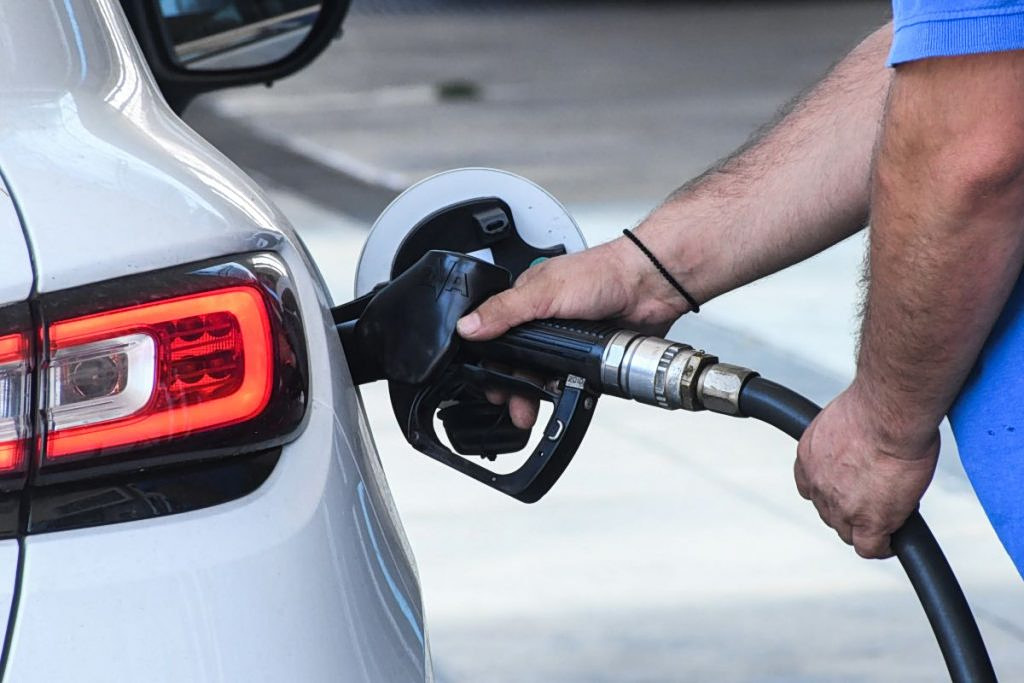
Gasoline prices in Greece remain among the highest in the European Union, with drivers paying an average of about €1.85 per liter for unleaded 95 as of March 9, 2026.
The figure places Greece fifth among the EU’s 27 member states in terms of retail gasoline prices, according to a comparison of fuel costs across the bloc.
The ranking comes as the Greek government considers measures aimed at limiting price increases amid rising energy market volatility linked to tensions in the Middle East.
Taxes drive much of the cost
Analysts say the country’s position near the top of the European price scale is largely driven by taxation rather than only global oil prices or refining costs.
Gasoline prices in Greece consist of three main components: the cost of crude oil and refined products, distribution and retail margins, and taxes. The latter account for the largest share of the final price paid by consumers.
Of the roughly €1.85 per liter paid at the pump, about €1.10 corresponds to the excise duty on fuel, while approximately €0.35 to €0.40 reflects the value-added tax (VAT) of 24%. In total, taxes make up nearly 60% of the final retail price.
Price gap across Europe
Fuel prices vary widely across the European Union. Several countries in Central and Eastern Europe record significantly lower prices.
Bulgaria has some of the lowest gasoline prices in the EU, at around €1.27 per liter. Malta and Cyprus follow at roughly €1.34 to €1.35 per liter, while Slovenia, the Czech Republic, Slovakia and Poland typically fall between €1.45 and €1.50 per liter.
In contrast, the highest prices are found in Northern and Western Europe. The Netherlands ranks as the most expensive market, with gasoline averaging about €2.17 per liter. Germany and Denmark also exceed €2 per liter, while Finland’s prices approach €1.93 per liter.
Fuel taxes across the EU
Across Europe, the European Union sets a minimum excise duty on gasoline of about €0.36 per liter. However, individual countries are free to impose significantly higher taxes.
The average excise duty across the EU stands at roughly €0.55 per liter, meaning that in many countries taxes account for more than half of the price paid by drivers.
In Germany, taxes represent around 53% of the final fuel price, while in France the share is also about 50% to 53%. In Italy the tax burden reaches roughly 55%, and in countries with high energy taxation such as Denmark and the Netherlands, taxes also exceed half of the pump price.