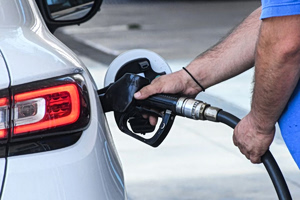
The latest surge comes at the worst possible moment, as the country enters the peak of the summer tourist season. Fuel prices on the islands are breaking one record after another, while drivers in major urban centers are already limiting their movements to cope with rising costs.
In many island regions, the situation is rapidly spiraling out of control. Gasoline prices have already surpassed €2.25 per liter on several islands, while market insiders warn that the €2.30 barrier could be broken within days.
Islands Hit Hardest by Fuel Surge
In the Cyclades, the average price of unleaded gasoline has climbed to €2.26 per liter, while diesel has reached €1.99. Prices have become so high that many travelers now choose to fill their tanks in mainland cities before boarding ferries.
In the Dodecanese, gasoline prices have exceeded €2.20 per liter, while diesel has passed €1.93.
In the northeastern Aegean, particularly on Lesbos, unleaded fuel is approaching €2.14 per liter and diesel €1.90.
For provincial areas, the impact is twofold. Gas station owners on Lesbos report that fuel consumption has plunged by 42%, as soaring prices have collided with the island’s ongoing economic difficulties linked to a recent outbreak of foot-and-mouth disease affecting local livestock and trade.
Pressure Mounts in Major Cities
Prices continue to rise daily in Greece’s major cities as well. In Attica, the average price of unleaded gasoline now stands at €2.11 per liter, while diesel has reached €1.80.
A similar picture is emerging in Achaea and Thessaloniki, where gasoline prices are hovering around €2.10 per liter.
“People are no longer driving as much, traffic has dropped significantly, and prices keep creeping upward every day,” gas station operators said, warning that consumers may have to get used to fuel prices remaining between €2.10 and €2.15 for the foreseeable future.
Industry Calls for Intervention
Fuel market professionals say government measures — including profit margin caps — have failed to produce the expected results. According to industry representatives, the only meaningful solution would be either a reduction in the Special Consumption Tax on fuel or direct intervention in refinery pricing.
Against the backdrop of mounting transportation costs for both residents and tourists, fuel retailers are demanding:
- An extension of the 20-cent diesel subsidy beyond the end of May.
- The expansion of that subsidy to include unleaded gasoline.