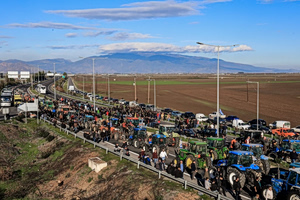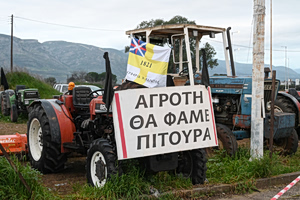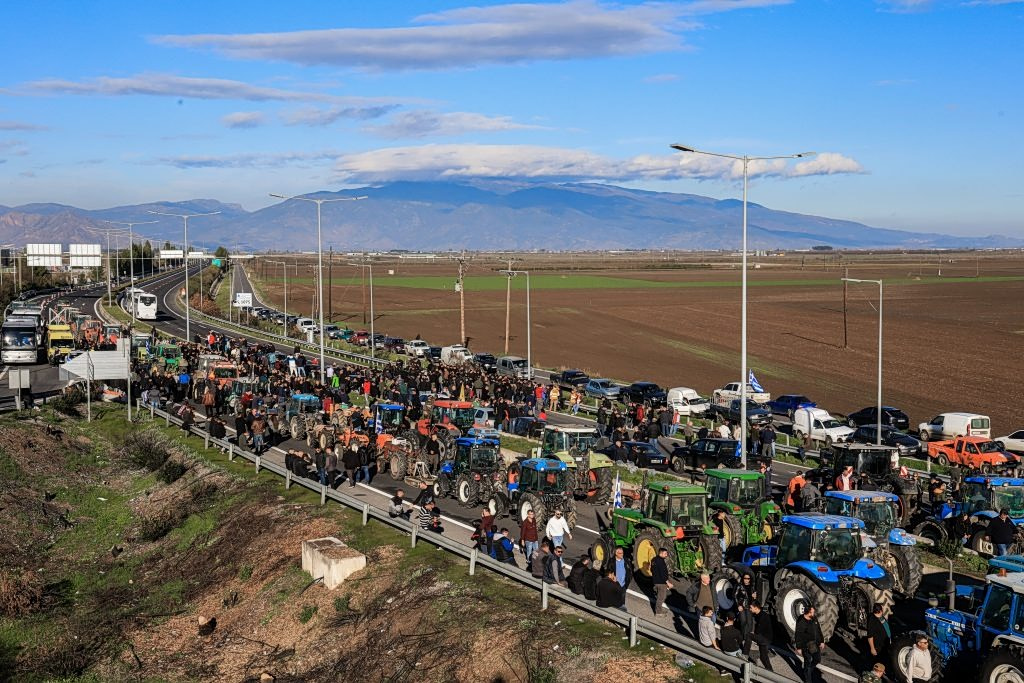
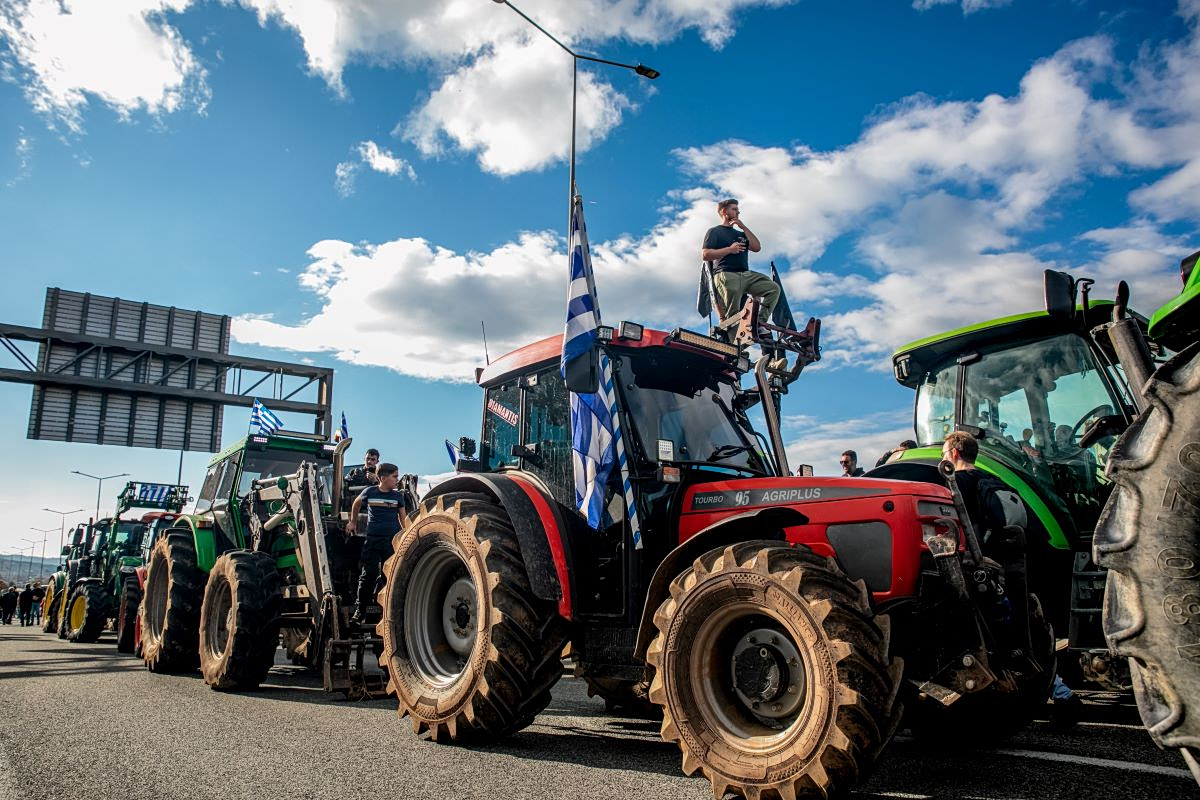
Tensions between Greece’s government and the farming community are rising, as agricultural protests enter a new and more confrontational phase. Nearly 40 days after tractors first appeared on major highways, farmers say they are prepared to escalate their actions unless their demands are fully met, including plans for 48-hour road and border closures later this week.
Farmers argue they are not entering negotiations “as beggars,” stressing that existing government measures fall short of addressing rising costs and long-term sustainability. Representatives at protest sites say proposed fuel tax refunds, rather than broader tax relief, do not adequately support agricultural production.
Protests remain active across large parts of the country. Key transport routes have been disrupted, with highway interchanges, toll stations, and regional roads either partially or fully blocked. In several areas, farmers have announced coordinated actions involving tractors, while authorities have implemented temporary traffic diversions and urged drivers to follow official guidance. Border crossings have also been affected, with restrictions placed on freight traffic at selected customs points.
The government maintains that it has repeatedly invited farmers to dialogue and has already announced a comprehensive support package. Officials emphasize that the measures apply to all farmers nationwide, not only those participating in protests. Government spokespersons have also warned that public tolerance is wearing thin, citing long travel delays and economic disruption caused by prolonged road blockades.
Opposition parties, however, place responsibility on the government, arguing that inconsistent messaging and a lack of trust have driven farmers to the streets. They stress that dialogue requires genuine negotiation rather than unilateral announcements, and warn against policies that deepen social divisions. Concerns have also been raised about the long-term viability of farming, with critics calling for a clearer strategy to support agricultural incomes and prevent further exits from the sector.