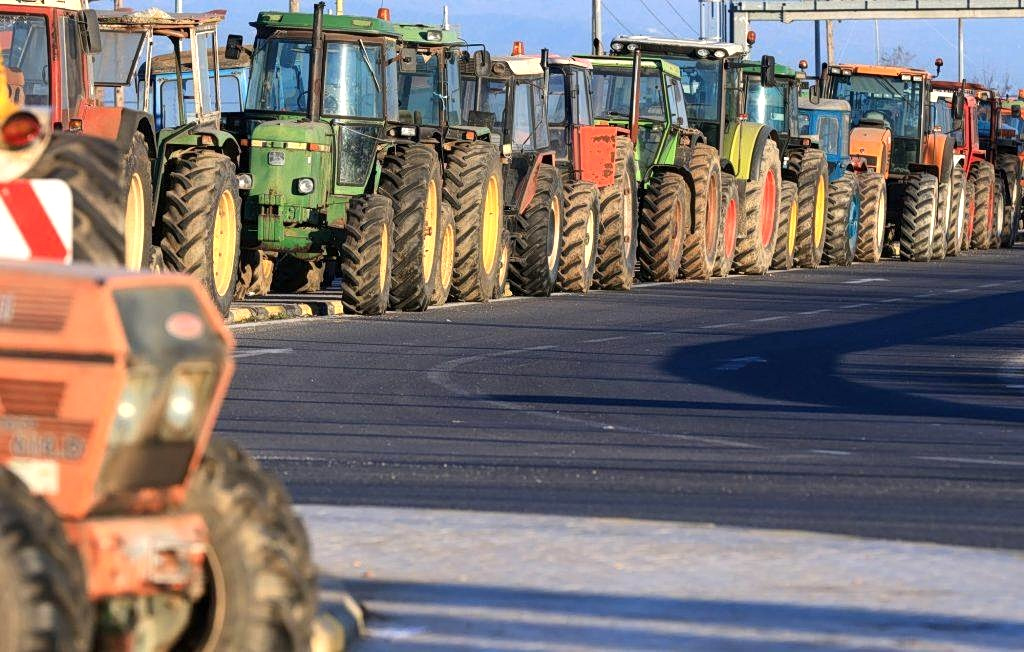
Greek farmers expressed strong dissatisfaction on Wednesday with measures announced by Deputy Prime Minister Kostis Hatzidakis and Agriculture Minister Kostas Tsiaras, saying they fail to address the sector’s core problems.
Representatives of farmers, livestock breeders, beekeepers and fishermen said the announcements fell short, confirming that road blockades will continue nationwide. Protesters argue that none of the measures respond to rising production costs or the structural challenges facing agriculture.
Farmers decided late on Wednesday that they would move ahead with 48-hour road blockades requesting at the same time a meeting with Prime Minister Kyriakos Mitsotakis. In response, the government said that any discussions would take place only when roads are opened and an initial meeting with Hatzidakis and Tsiaras.
Speaking to OT, Kostas Tzellas, president of the United Federation of Agricultural Associations of Karditsa, said anger remains widespread at protest sites. He accused the government of “dishonesty”, claiming its policies will inevitably lead to the “extermination” of farmers and other productive sectors.
“With today’s announcements, the government has clearly told us that within two years it will wipe us out,” Tzellas said. “They are pushing us out of our fields, out of production and off our land.”
Tzellas said government references to European rules and budgetary constraints were simply excuses for inaction.
Measures Don’t Address Real Problems
Echoing those concerns, Dimitris Moschos, president of the Hellenic Livestock Association (SEK), told OT that the measures fail to address the real problems of the livestock sector, fueling frustration and rising tensions at road blockades.
Adding to the pressure, a Supreme Court directive issued earlier on Wednesday instructed local authorities and prosecutors to proceed with arrests, stressing that road blockades and traffic obstructions may constitute serious criminal offenses, including endangering transport safety.
The move contrasts with the Christmas and New Year holiday period, when thousands of travelers were stranded for hours due to similar blockades without intervention.
Moschos warned that blockades would remain in place unless livestock vaccination programs are implemented. “If this situation continues, another 500,000 animals will be lost,” he said, warning that livestock farming could collapse before herds are rebuilt.
He also criticized the government’s pledge to distribute 160 million euros to livestock farmers and cotton and grain producers, arguing the funds originate from the national reserve. “This is our money and it must be returned at the full value of our entitlements,” Moschos said.