
 Μake us preferred on Google
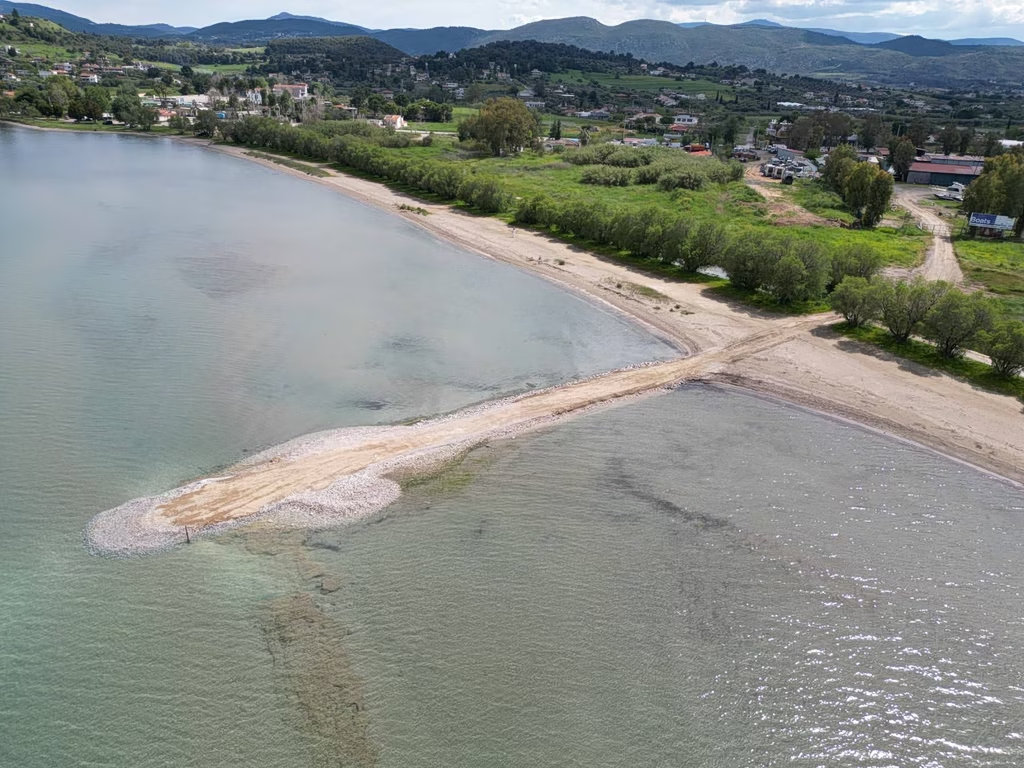
 An unusual phenomenon has been reported at a small lagoon at Makrygiali Beach in Igoumenitsa, northwestern Greece, where the surface of the water has turned a striking pink-fuchsia color.
The unusual appearance, observed along the route toward Bouka, has raised concerns among local residents and visitors and prompted questions about the origin of the discoloration and the quality of the water.
Based on photographs alone, however, it is not possible to determine the cause with certainty, according to thespost.
Salt-loving microorganisms may be responsible
One possible explanation is the rapid growth of halophilic microorganisms, including purple sulfur bacteria, which can give water a distinctive reddish or pinkish color.
Such phenomena are generally observed in shallow, stagnant waters when salinity rises because of evaporation, temperatures are high and oxygen levels are low. The decomposition of plant and other organic material can also contribute to conditions favorable to the growth of these microorganisms.
Another possibility is the presence of the microalgae Dunaliella salina, which thrives in highly saline water and produces red or orange pigments.
However, the intense magenta color has been attributed, according to laboratory analyses from other areas, primarily to purple sulfur bacteria.
Water testing needed
The appearance of the pink color does not by itself indicate the presence of sewage or chemicals, although environmental contamination cannot be ruled out.
Determining the exact cause will require water samples to be collected and analyzed in a laboratory.
The phenomenon should be investigated promptly by the competent authorities of the Municipality of Igoumenitsa and the Epirus regional government to establish whether it is a natural, seasonal microbial phenomenon or a sign of environmental contamination.