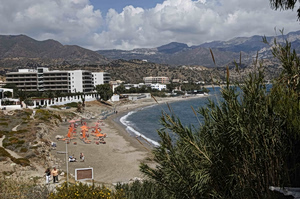
Greece’s Council of State, the country’s highest administrative court, has given the green light for a special urban planning framework tied to a tourism investment on the island of Paros, paving the way for a broader local planning strategy aimed at addressing rapid development.
Paros Mayor Costas Bizas said the municipal council unanimously backed a moderate development scenario, arguing that the Cycladic island has exceeded its carrying capacity, particularly during the summer tourist season.
According to Bizas, the Ministry of Environment commissioned the local urban planning study in 2023 through the Technical Chamber of Greece. The plan designates land uses, including residential, agricultural, tourism and protected areas, as well as archaeological zones.
Following its presentation and consultation with the municipal council, local officials opted for what Bizas described as a balanced approach.
“We chose neither an extreme scenario nor a complete halt to development, but we also do not want the excessive growth the island is currently experiencing,” he said.
Municipality Calls for Stricter Limits
Bizas said the municipality has been advocating stricter construction rules since 2024, including banning new cave-style homes built into hillsides and opposing large-scale tourism developments through special urban planning schemes.
“We believe the island has reached its limits,” he said, noting that one-third of the municipality’s €30 million annual budget is spent on waste management alone.
He also said the municipality found the approximately 500-page planning proposal lacking in key infrastructure projects, including bypass roads and port improvements that local officials consider essential.
Concerns Over Hotels and Protected Areas
Despite welcoming several protective measures in the draft plan, local representatives expressed concern that other provisions could increase pressure on the island’s environment.
Nikos Malatestas, chairman of the municipal committee evaluating the local urban planning proposals, said the new framework strengthens some existing protections by increasing the minimum land area required for construction outside designated planning zones from 8 hectares, a rule in place since 1993, to 10 hectares.
However, he argued that other provisions move in the opposite direction.
According to Malatestas, the municipality had proposed raising the minimum land requirement for new hotels built outside planning zones from 15 hectares to 20 hectares, while keeping the maximum capacity at 80 beds and reducing permitted building density.
Instead, he said, the proposal leaves the minimum land requirement unchanged and increases the maximum hotel capacity to 100 beds.
He also warned that the draft would allow hotels in areas where they were previously prohibited, including certain Natura protected zones, by creating new exceptions for tourism development.
Local officials say preserving the island’s distinctive character has become increasingly urgent as Paros faces mounting pressure from rapid and unplanned development.