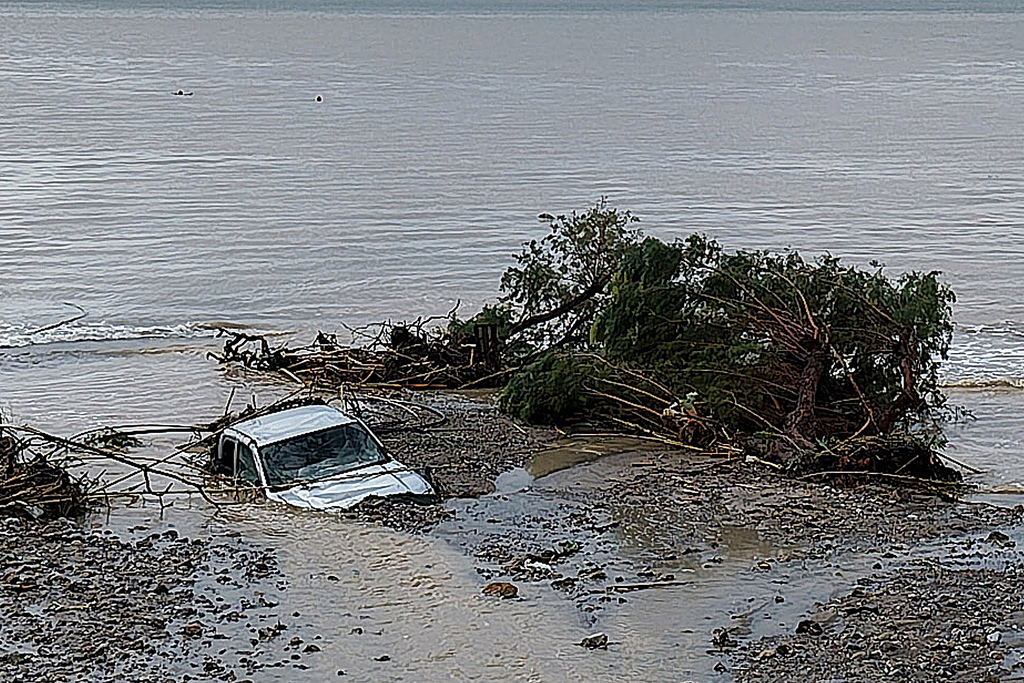
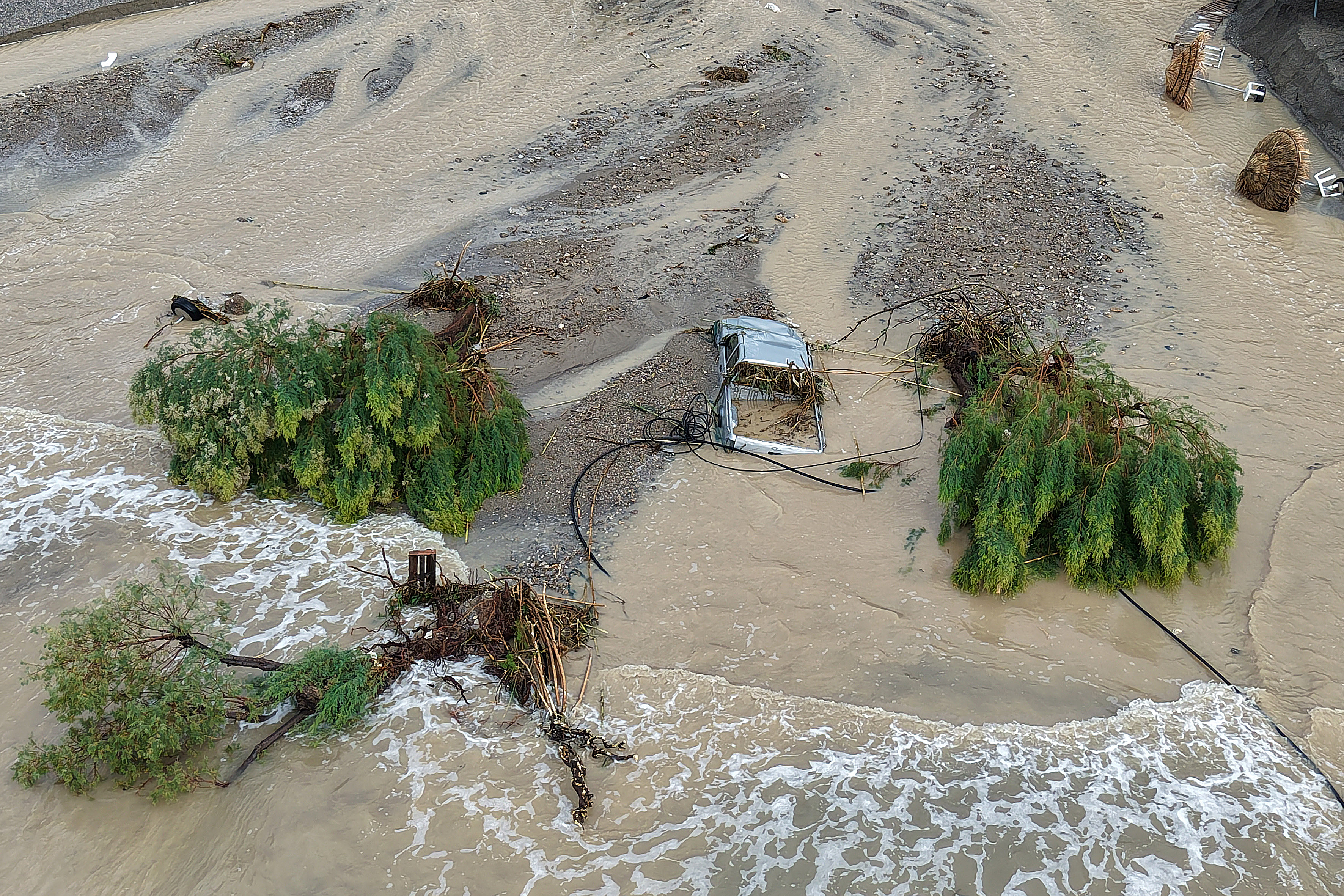
Severe damage, widespread flooding and landslides have been left in the wake of a powerful storm system that has battered Crete since October 1, as the island assesses the impact of exceptionally heavy rainfall on its roads, agricultural land and infrastructure.
The Fire Service’s Operations Center has received more than 400 calls since the weather system began. From October 1 through Monday, firefighters have responded to 204 incidents, including 96 water-pumping operations, seven tree removals and the transfer of 101 people to safe locations.
Some of the most dramatic moments unfolded in the Ierapetra area, where the Fire Service was called to help safely evacuate 47 people, mainly from hotels and short-term rental properties in the Ferma and Koutsounari areas, after Greece’s emergency alert system, 112, was activated to restrict travel.
To support the work of the agencies involved, the European Copernicus Emergency Management Service – Mapping was activated Sunday afternoon (Oct. 4) on the orders of the Secretary-General for Civil Protection, under code EMSR933. The service will use satellite analysis to produce mapping data for the affected areas, which will be provided free of charge to local authorities.
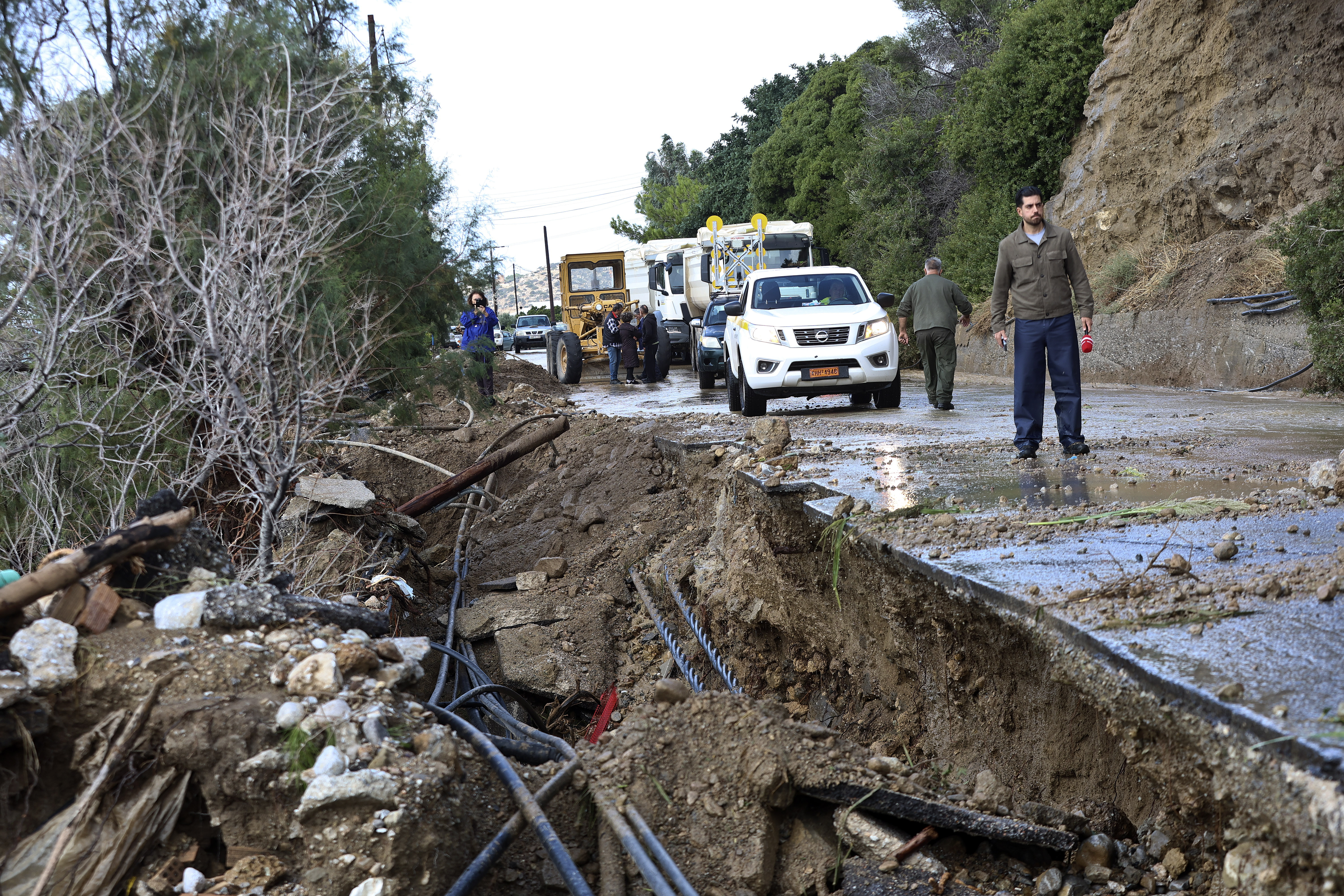
Photo by Kostas Metaxakis.
Extreme rainfall and damage across the region
According to the automatic weather station network operated by meteo.gr, the weather system lasted for five consecutive days, with the highest rainfall totals recorded in mountainous areas. Rainfall reached 91 millimeters at Xyloskalo in Chania and Sempronas, followed by 69 mm at Schinokapsala, 68.4 mm at Kakopetros, 63.2 mm at Askifou, 54 mm at Fourfouras in Rethymno, 53.6 mm at Anogeia and 49.2 mm at Plakias.
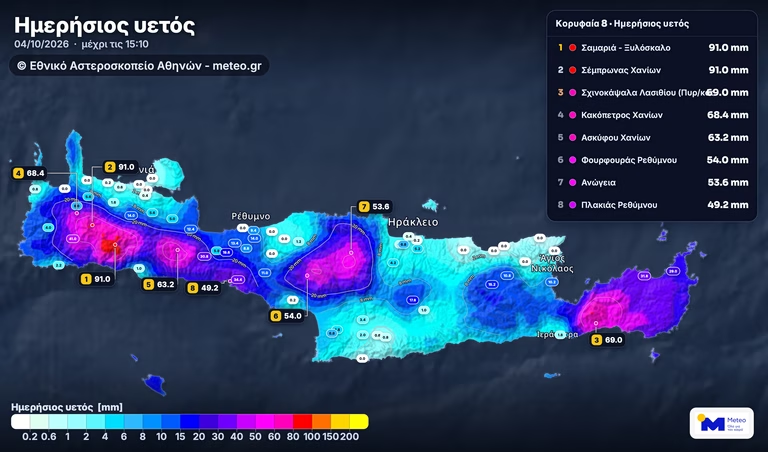
Map of Crete showing daily rainfall on the island on Sunday.
The coastline of Heraklion, from Ammoudara to Karteros and Hersonissos, remains unrecognizable because of rushing water and debris. Serious damage has also been reported in the Municipality of Malevizi, as well as in Anogeia and Zoniana in Rethymno, where roads have become impassable.
Older residents in the affected areas have described the conditions as unprecedented, saying the events have caused a sense of complete despair.
Meanwhile, vast areas of farmland on the Lasithi Plateau have been submerged and turned into mudfields, preventing farmers from reaching their fields even with agricultural machinery.
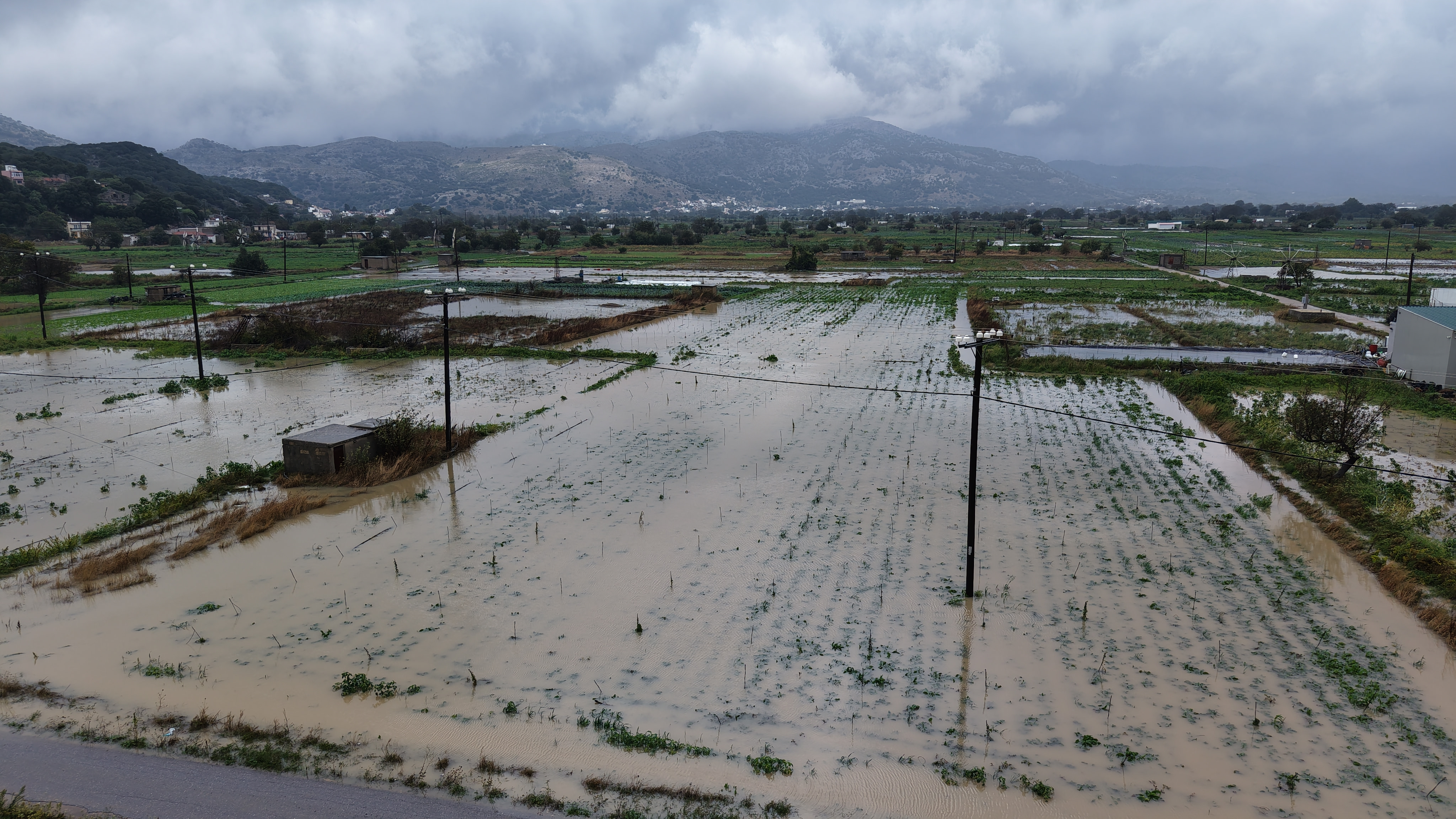
Crops completely inundated in the Lasithi Plateau, Crete. Photo by InTime News
Schools closed in several areas
For the safety of students, teachers and other staff, as well as because of serious problems affecting roads and water-supply networks, authorities have suspended in-person classes at schools in affected areas.
In the Municipality of Amari, all primary and secondary schools will remain closed Monday.
All primary and secondary schools, as well as daycare centers, in the municipal units of Kouloukonas and Zoniana in the Municipality of Mylopotamos will also remain closed Monday and Tuesday. The decision was taken by Mayor Giorgos Klados because of access and sanitation problems.
Schools of all levels and daycare centers in the municipal unit of Geropotamos, however, will operate normally, while municipal authorities continue restoration work.
Government delegation heads to Crete
A large government delegation led by Infrastructure Minister Christos Dimas is arriving on the island Monday to immediately assess the damage and provide relief to those affected.
The delegation also includes Minister for Climate Crisis and Civil Protection Evangelos Tournas; Deputy Minister for Rural Development and Food Giannis Andrianos; Deputy Minister for Climate Crisis and Civil Protection Kostas Katsafados; and Secretary-General for the Restoration of Natural Disasters and State Aid Petros Kabouris.
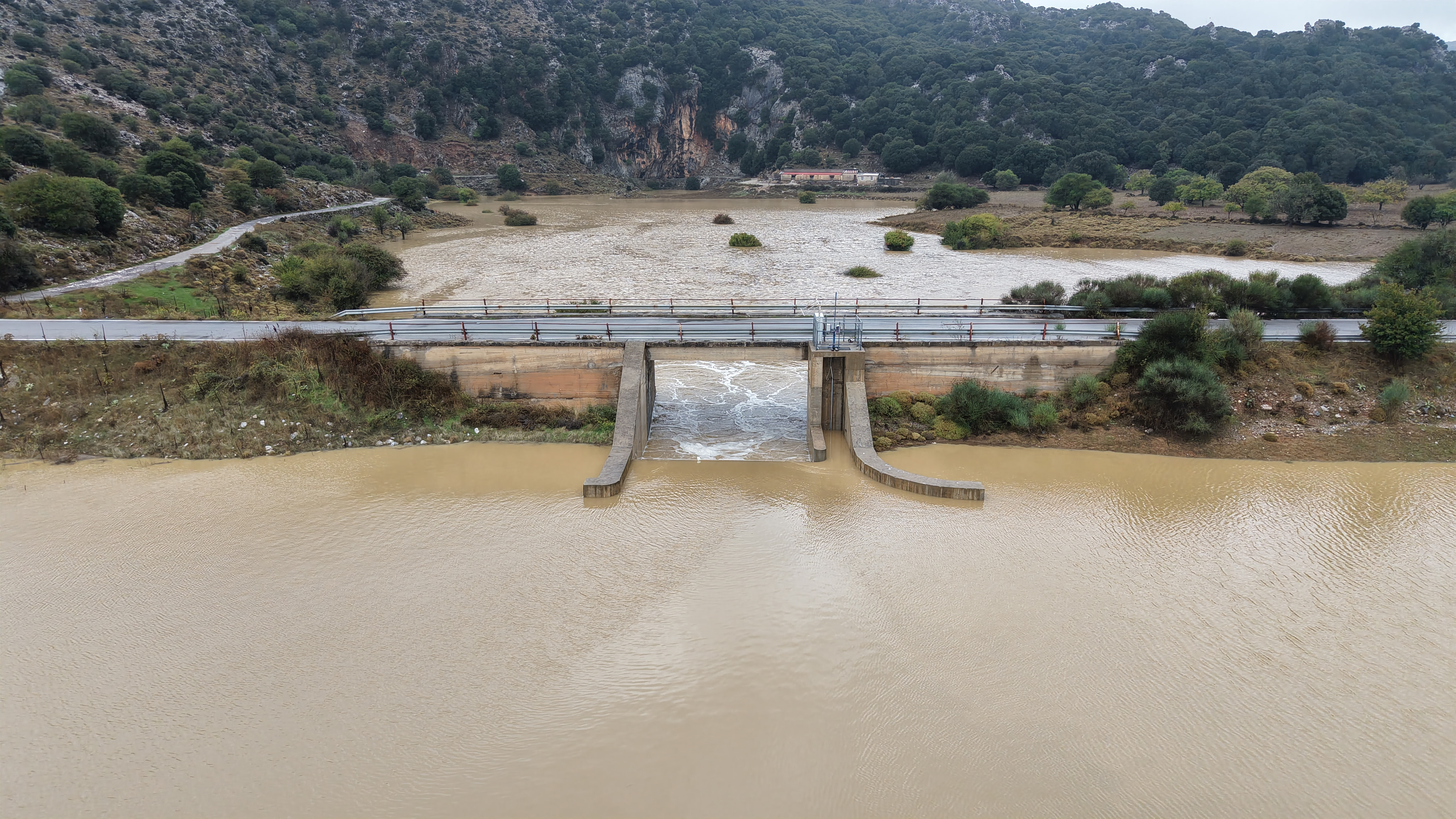
Severe flooding in the Lasithi PlateauCrete. Photo by InTime News
A key meeting with local authorities and representatives of local government will be held at the Region of Crete headquarters at 10 a.m. The delegation will then travel to affected areas in Mylopotamos, Ierapetra and the Lasithi Plateau.
According to Greece’s National Meteorological Service (EMY), the severe weather is expected to weaken significantly from Monday, giving way to sunshine and temporarily cloudy conditions as residents begin trying to return to normal life.