 Μake us preferred on Google
The Nuremberg war crimes trials opened on November 20, 1945. As World War II drew to a close, the full scale of the Nazi atrocities that would come to be known as the Holocaust was coming to light, and there were growing demands that those responsible be held to account.
The result was an unprecedented international tribunal. The location of choice for this tribunal carried deep symbolism. The city of Nuremberg had hosted the Nazis’ huge annual propaganda rallies, and it was there that anti-Jewish laws were passed in 1935. Holding the trials in the city helped mark the definitive end of Hitler’s Third Reich. There was a practical reason too: the city’s Palace of Justice was one of the few large buildings left undamaged by Allied bombing during the war.
Trial Or Execution
Justice in a courtroom was not a given. As the war ended, Soviet leader Joseph Stalin initially proposed executing 50,000 to 100,000 German staff officers. British Prime Minister Winston Churchill considered summary executions of senior Nazis without trial.
The Americans convinced Churchill that criminal trials would work better as, among other things, they would force the crimes to be documented and would prevent future claims that the defendants had been convicted without evidence. Meticulous Nazi record-keeping provided much of the evidence against the defendants, and official documents, along with harrowing eyewitness testimony, opened the world’s eyes to the horrors of the Holocaust.
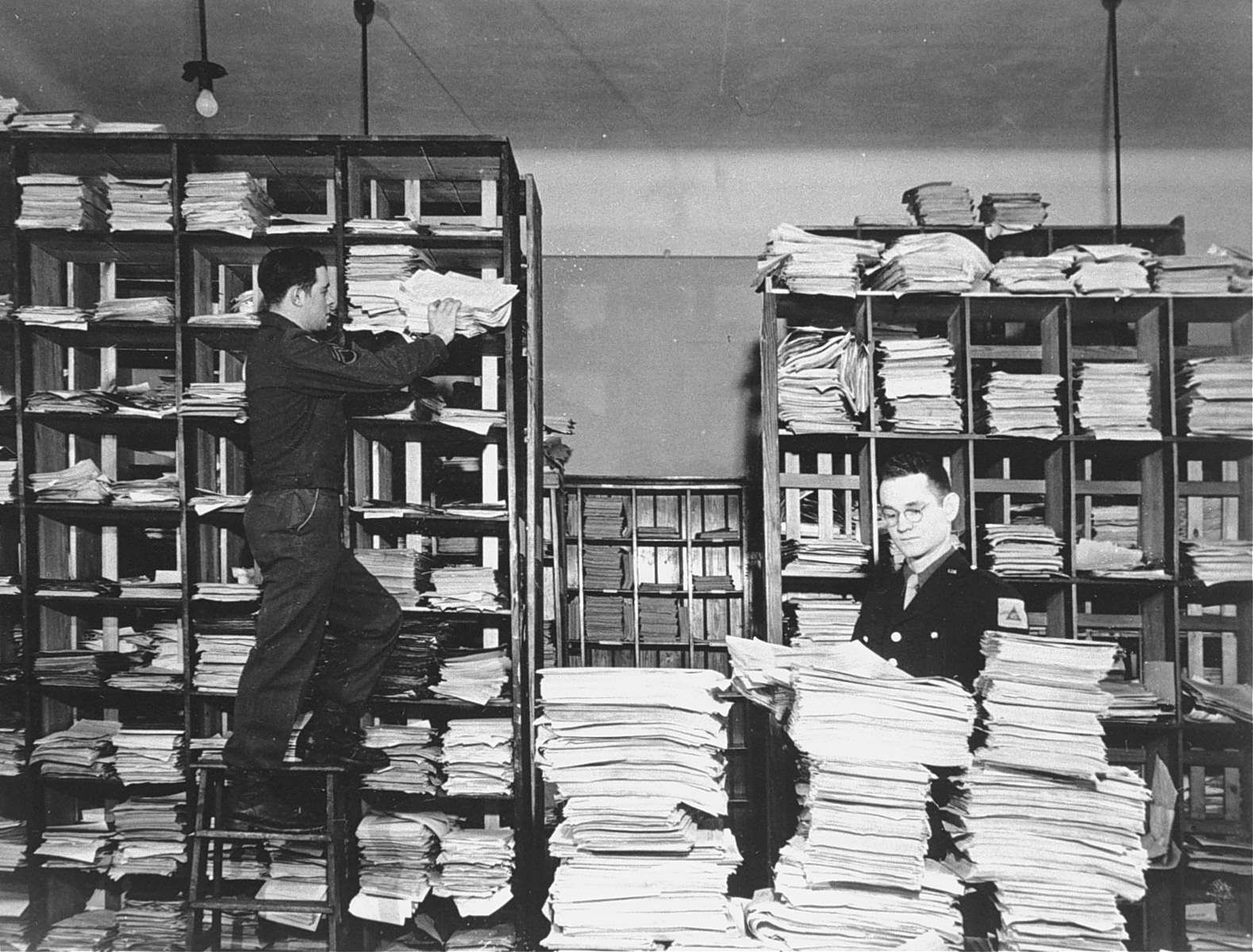
US Army soldiers working with evidence for the Nuremberg trials. Source: United States Holocaust Memorial Museum, accessed via Wikimedia Commons
In all, 13 trials took place in Nuremberg between 1945 and 1949. The defendants included Nazi Party officials, senior military officers, industrialists, lawyers and doctors. They faced charges including crimes against peace and crimes against humanity. The proceedings gave rise to a new term, “crimes against humanity,” which sat alongside “crimes against peace” and “war crimes” on the charge sheet.
The Ones Who Got Away
Several of the most prominent Nazis escaped trial including Adolf Hitler who had taken his own life, alongside his new wife, Eva Braun, in his bunker beneath the ruins of Berlin as the war’s final shots were being fired.
Propaganda minister Joseph Goebbels and his wife, Magda, also died by suicide in the bunker, after poisoning their six children with cyanide. Goebbels had succeeded Hitler as chancellor but held the post for only one day.
Martin Bormann, Hitler’s powerful private secretary, fled the bunker as Allied forces closed in and most likely killed himself when his escape failed. His remains were discovered in 1972 where they had been buried in 1945, and DNA tests confirmed his identity in 1998.
Heinrich Himmler, the head of the SS who oversaw the Gestapo and the concentration camps, directed the murder of some six million Jews and millions of Poles and Soviet citizens. He tried to flee in disguise, yet was arrested in May 22, 1945 by British soldiers at a checkpoint, where his brand-new papers and nervous behavior gave him away. The next day, while in custody in Lüneburg, he killed himself by biting into a cyanide capsule.
Göring In The Dock
Hermann Göring, commander of the German air force, the Luftwaffe, was one of Hitler’s closest allies. He played a central role in creating the concentration camps and the Gestapo, which he later handed over to Himmler. He instructed SS-Obergruppenführer Reinhard Heydrich to organize the “Final Solution,” the plan to murder Europe’s Jews. Heydrich was later shot by Czech and Slovak agents in 1942.
After Hitler’s death, Göring surrendered to the Americans, expecting to be treated as an official envoy. Instead, he was held in a cell until his trial. In court he denied any role in the Nazi atrocities and blamed them on Himmler, who he said had carried them out in secret.
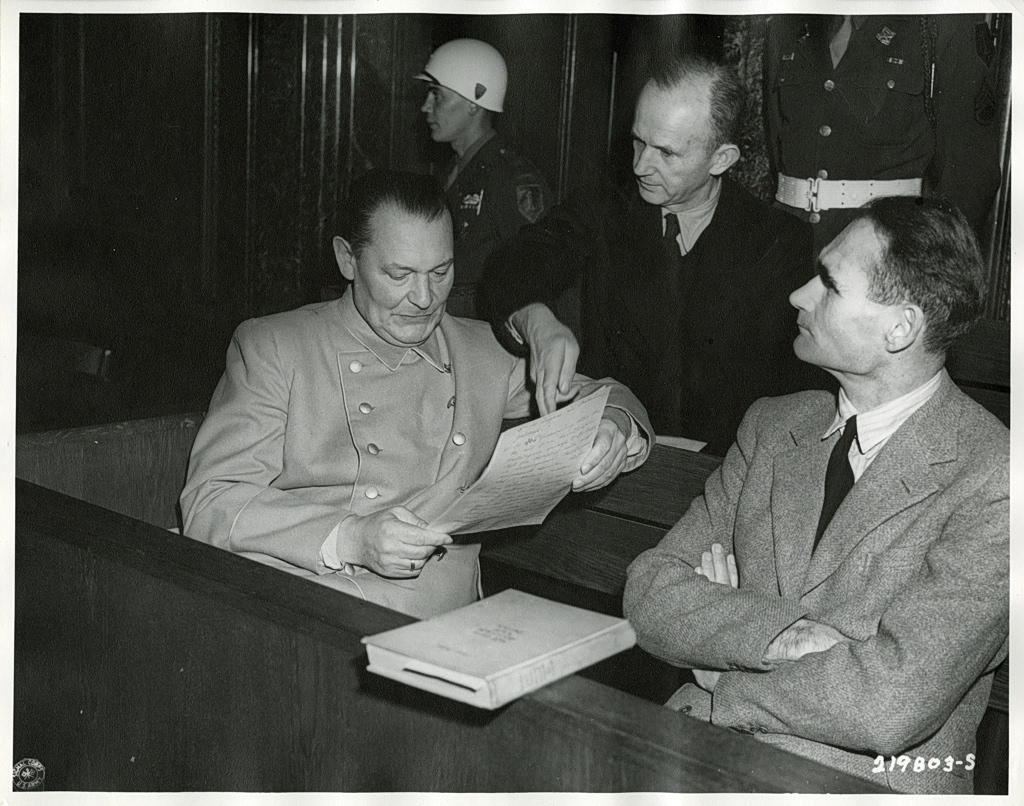
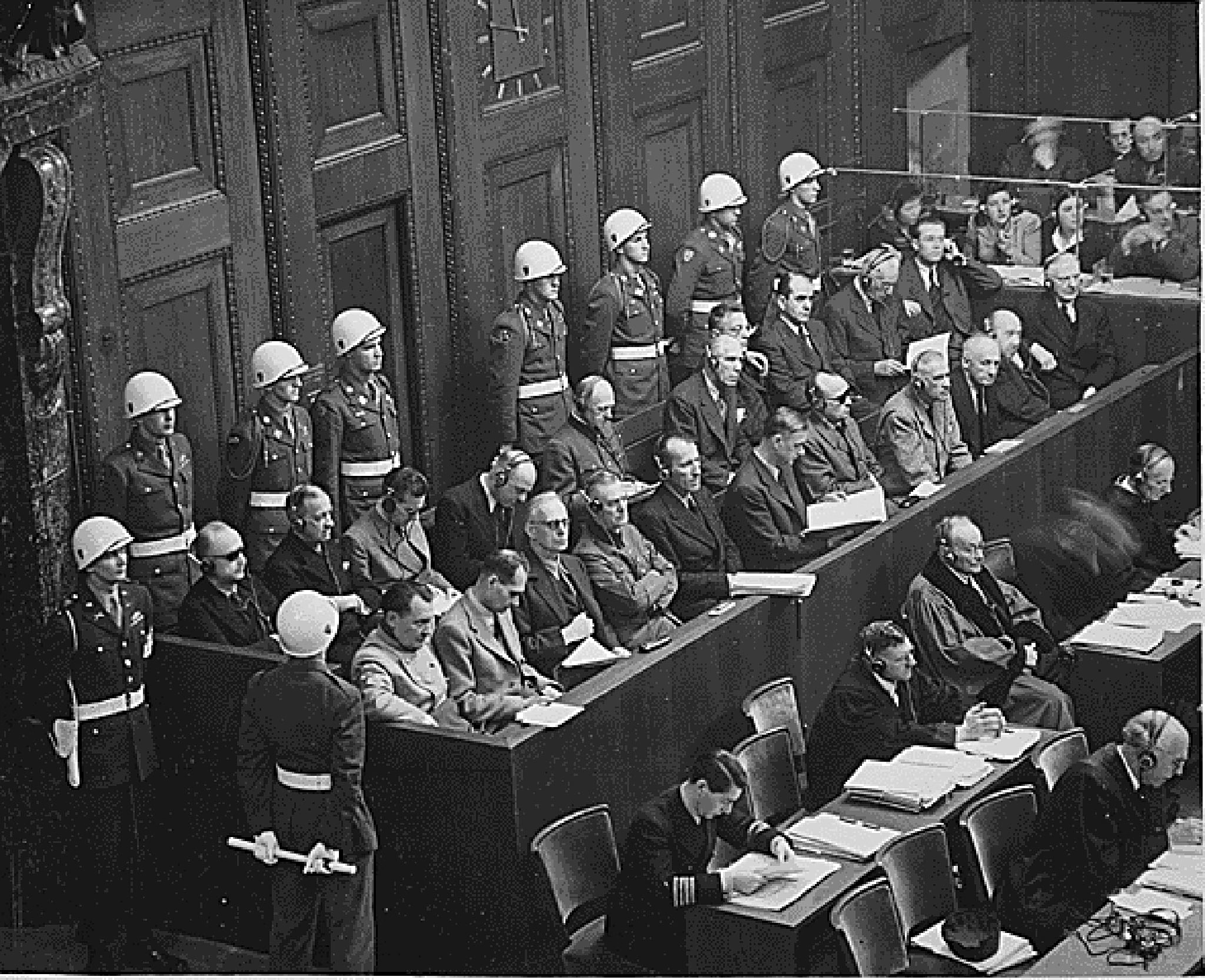
Defendants Hermann Göring, Karl Dönitz, and Rudolf Hess confer, while examining a document, in the dock at the courtroom at the Nuremberg Trials. Two military policemen stand behind them. Source: Harvard Law School Library, Harvard University, via Wikimedia Commons
Göring was the leading figure in the first and best-known of the Nuremberg hearings, the Trial of the Major War Criminals before the International Military Tribunal. Twenty-four individuals were indicted, along with six Nazi organizations deemed criminal, including the Gestapo. Three of them never faced trial: industrialist Gustav Krupp was too frail, Bormann was missing, and labor leader Robert Ley hanged himself before the trial began.
Göring shared the dock with leading Nazis, including:
- Rudolf Hess, Hitler’s deputy.
- Karl Dönitz, head of the German navy.
- Foreign Minister Joachim von Ribbentrop.
- Armaments Minister Albert Speer.
- Wilhelm Keitel, chief of the German High Command.
The Verdicts
After 10 months of proceedings, the verdict came on October 1, 1946. Of the 22 defendants, 12 were sentenced to death, seven received prison sentences ranging from ten years to life, and three were acquitted. Those acquitted were financier Hjalmar Schacht, propagandist Hans Fritzsche and diplomat Franz von Papen. The Soviet judge on the four-man tribunal strongly dissented from the acquittals.
Ten of the condemned men were hanged on October 16, 1946. Bormann had been sentenced to death in absentia.
Göring had asked to face a firing squad rather than the gallows, but his request was refused. The day before the executions, he wrote a note to the Allied Control Council. In it he said he would not let Germany’s Reichsmarschall be hanged and owed no moral duty to accept punishment from his enemies. He had chosen instead “to die like the great Hannibal.”
He then swallowed a cyanide capsule that had been smuggled to him and died within minutes, like Hitler and other top Nazis before him.
A Lasting Legacy
The main trial was followed by 12 further trials between November 1946 and April 1949. Some criticized the proceedings as victor’s justice, since the defendants were tried for crimes that did not exist in law when they were committed. Even so, the trials are seen as a milestone on the way to a permanent international court. Their legacy lives on in the International Criminal Court in The Hague.