 Μake us preferred on Google
 Sharks have patrolled Greek waters since antiquity. Aristotle documented their presence in the Aegean, and the record has only grown richer since. Yet for most beachgoers, an actual sighting remains so unlikely that many are startled to learn just how many species regularly pass through these waters.
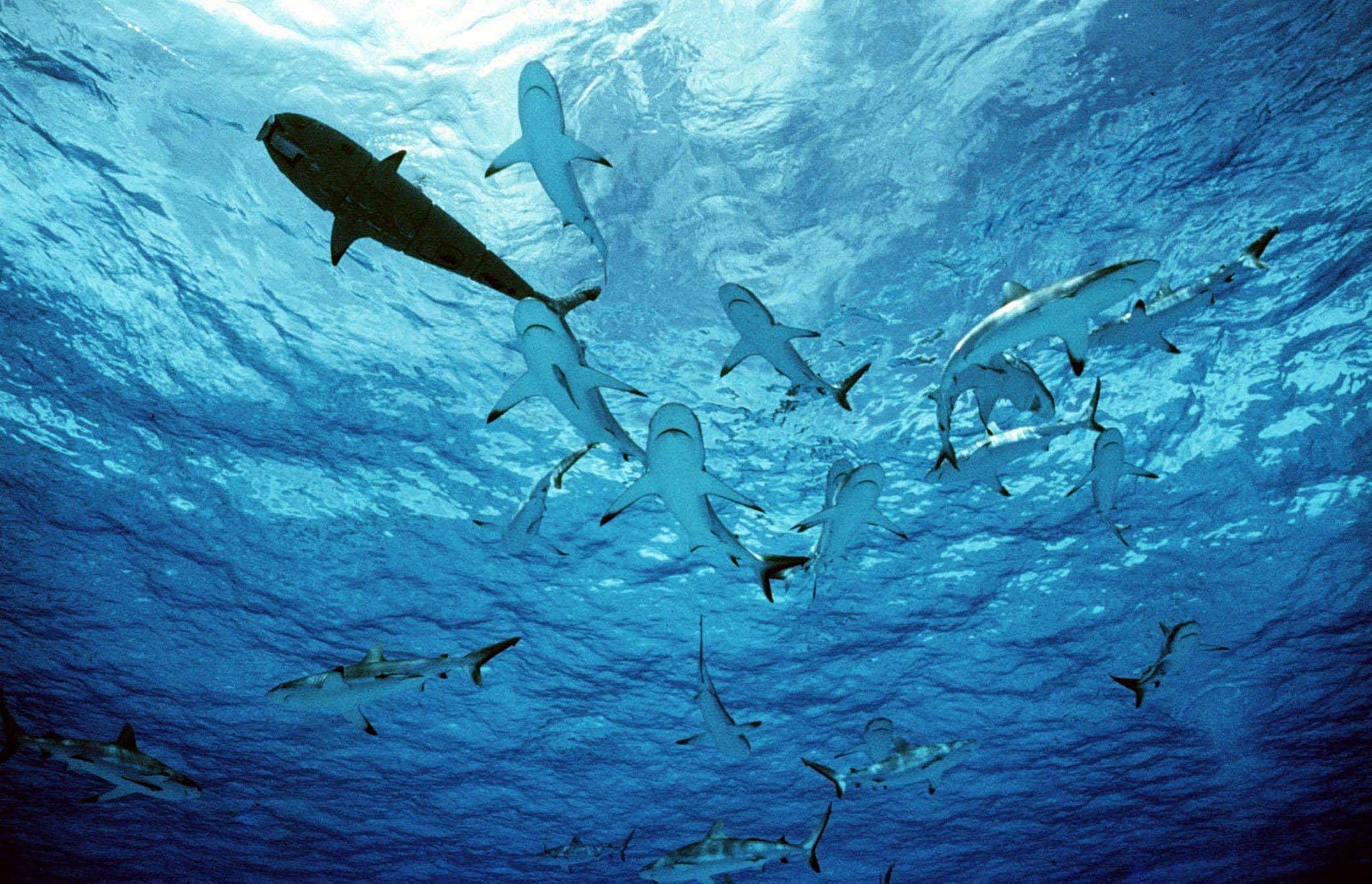
This summer, that conversation is back in the spotlight. Eight shark species have already been logged in Greek seas in 2026, according to the Sharks in Greece monitoring platform, a figure broadly consistent with recent years. Blue sharks lead the count, with 18 recorded encounters through May compared to 13 over the same period last year.
A Richer Picture Than Most People Realize
The broader data put the numbers in perspective. A comprehensive study by the Greek environmental organization iSea, drawing on nearly 90 years of records, documented 4,540 instances of 33 shark species, 29 ray species, and one chimaera in the seas surrounding Greece. Among the species confirmed in Greek waters this year are the blue shark, school shark, dogfish, sixgill shark, great white, shortfin mako, and sandbar shark, with the species mix shifting from one season to the next. Last year, hammerhead sightings were also on record.
“There isn’t a single marine area in Greece where sharks and rays haven’t been recorded,” said researcher Spyridopoulou of iSea. The point is not that the waters are dangerous, but that the animals are far more present than the public tends to assume.
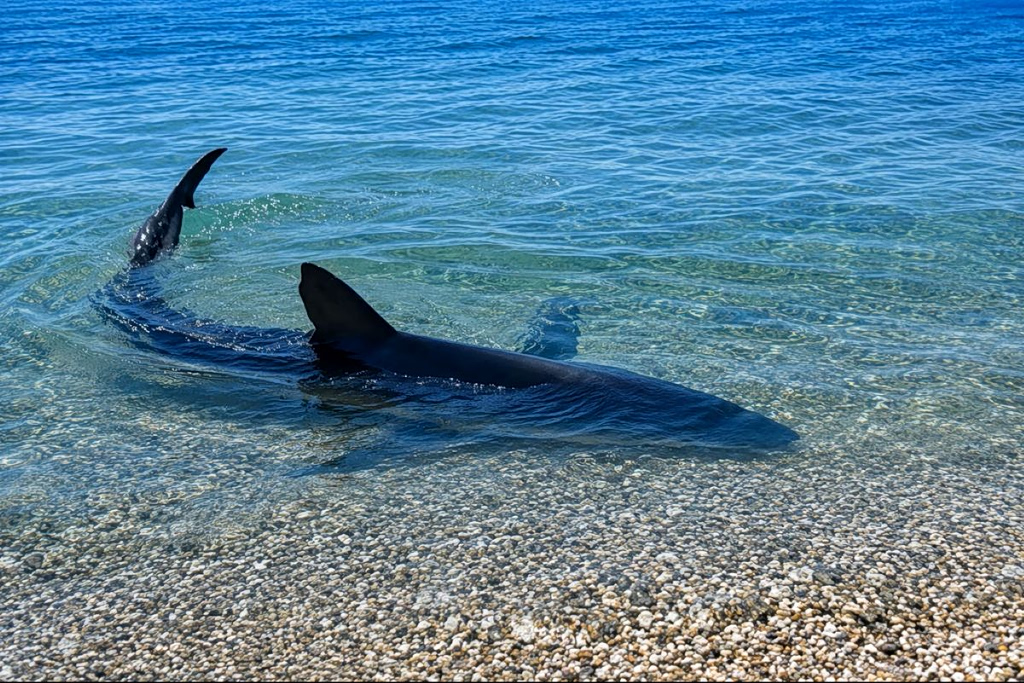
Earlier this year, the conversation became vivid when a large shark-like creature, roughly 1.5 meters in length with its dorsal fin clearly visible above the surface, was spotted in the shallow waters off Kavouri on the Athenian Riviera in March, apparently hunting schools of smaller fish near the shoreline.
A Species Under Pressure
The more urgent story may not be the sharks’ proximity to swimmers, but their rapid disappearance. Marine biologist Christos Taklis, founder of Merman Conservation Expeditions and a collaborator of the Sharks in Greece platform, put the situation plainly: Mediterranean shark populations have fallen by over 50% in recent decades. Fishing is the primary driver, whether through targeted catches, accidental entanglement in nets, or the practice of hauling sharks too quickly from deep water, which can be fatal. Climate change compounds the pressure.
Systematic scientific research into these species has only been conducted in the last two decades, meaning that information on their spatial distribution is still scarce. The iSea dataset, while built partly on citizen reports rather than laboratory-grade observation, is widely seen as a foundation for future conservation work. Between 2010 and 2023 alone, some 2,500 shark and ray sightings were officially recorded, reflecting both genuine presence and growing public awareness.
What to Do If You See One
Greece’s attack record is remarkably thin. The last fatal shark attack on record dates to 1981, and over the last 170 years, there have been only around 20 reported shark attacks in Greek waters, most near Corfu. Compared to other Mediterranean nations, Greece’s figures are low, and the species most commonly encountered pose little genuine threat to humans.
Taklis advises a calm and deliberate response to any encounter: stay composed, keep the animal in your line of sight, and back away slowly without turning around. If a shark moves closer, he recommends gently pushing it away from the body by the snout. Sudden movements, throwing objects, or attempting to grab the animal by the tail are all counterproductive and can provoke a reaction. For the vast majority of swimmers, he notes, the animal will simply move on.
Context matters too. A spearfisherman carrying a catch is in a different position than a recreational swimmer, since the scent of fish can draw curiosity. Beyond that, Taklis puts it simply: most people never see a shark at all, not because the animals aren’t there, but because they tend to avoid exactly the crowded, noisy coastal areas where tourists and locals congregate.