 Μake us preferred on Google
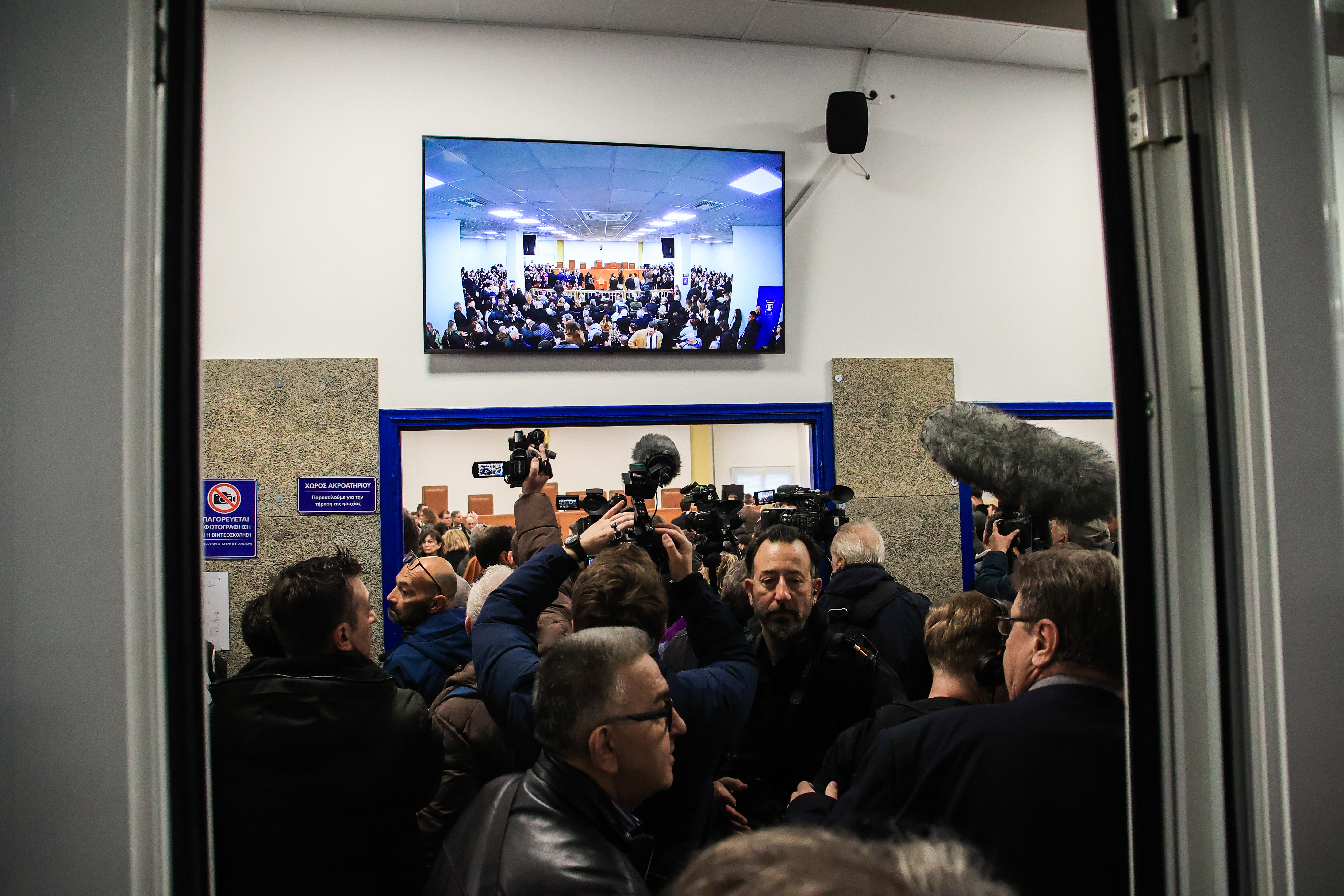
 The trial over the Tempi rail disaster resumes Monday with testimony from relatives of the victims, as the court continues hearing accounts from families who lost loved ones in the crash that killed 57 people.
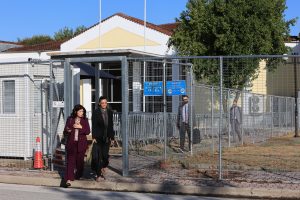
Twenty-five witnesses are scheduled to testify across three hearings this week at the Three-Member Court of Appeals for Felonies in Larissa, central Greece.
The proceedings were interrupted last Wednesday before Panos Routsi, the father of victim Dennis Routsi, could complete his testimony. He became suddenly unwell during the hearing and was taken to Larissa General Hospital.
Before the interruption, Routsi had testified for about an hour, describing the circumstances surrounding his son’s death and his continuing efforts to establish what happened.
“The Wound Remains Open”
Routsi told the court that two trains had traveled on the same track for 12 minutes without anyone realizing what was about to happen.
“We became investigators whether we wanted to or not,” he said, while expressing his respect for and trust in the justice system but questioning whether all those involved had acted as they should.
“The wound remains open. It has not closed. We are still mourning,” Routsi said.
He argued that the disaster could have been prevented, saying that even a single signal could have saved the victims.
“I will not stop until I learn how my child died,” he told the court, adding that the victims’ relatives would continue seeking answers and accountability.
Routsi also told the court that the families could no longer endure what he described as almost four years of suffering or return to a normal life.
Hunger Strike and Requests for Exhumations
Routsi also spoke about the hunger strike he began in Syntagma Square in Athens in September 2025, after special appellate investigator Sotiris Bakaimis completed the investigation that August.
He said he decided to begin the hunger strike after Bakaimis closed the case file and that he had made the decision without telling anyone.
“I had to do something. I could not leave it like this,” Routsi testified.
He also discussed the families’ demands for the exhumation of victims’ remains and additional testing.
Regarding his request for the exhumation of his son Dennis, the collection of a sample and specialized examinations, Routsi said the authorities eventually accepted the requests after initially resisting them.
He described that acceptance as a personal vindication, but said the families soon came to believe that their demands had not produced the answers they were seeking.
“There are many questions that we have not received answers to,” he said. “I do not know if my child is in there. And if it is only my child in there. That is where the whole truth lies.”
Court Rejects Deadline for Stationmaster’s Phone Analysis
The court also rejected a request made Wednesday by a lawyer representing the victims’ side seeking a specific deadline for forensic analysis of a confiscated cellphone belonging to the stationmaster who was working the night shift.
The court had previously ordered the lifting of confidentiality protections and a forensic examination of the device by the relevant department of the Hellenic Police Directorate of Criminal Investigations.
The examination is intended to cover incoming and outgoing calls, SMS and MMS messages, and data applications such as Viber. If deleted files are found, investigators have also been instructed to attempt to recover them.
The lawyer had asked the court to supplement its earlier decision by setting a specific deadline for the Directorate of Criminal Investigations to submit its report.
The prosecutor recommended rejecting the request, arguing that the original decision already instructed investigators to submit the forensic report “as soon as possible.”
The court subsequently rejected the request.