 Μake us preferred on Google
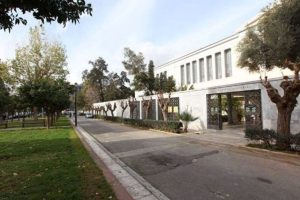
 A young man sits at the keyboard inside the “Hermes” hall and begins to play. It is just before six in the afternoon on the sixth floor of the Athens Chamber of Commerce and Industry (ACCI), and those present are waiting for the clock hands to meet so that the conference titled “The Economy of the Future – Development of the Agri-Food Sector”, organized by the Citizens’ Movement for an Open Society, can begin.
Calmly, almost languidly, the soft jazz notes flow from the keyboard, drifting toward the foyer and accompanying conversations among leading representatives of the business, industrial, and agricultural sectors over biscuits and white coffee cups. A last-minute update, however, disrupts the previously neutral soundscape that had spread through the room like a straight line: Konstantinos Tsiaras, Minister of Rural Development and Food, will not attend the event.
“Tangible damage to Greece’s image”
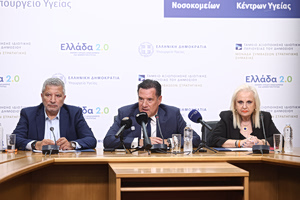
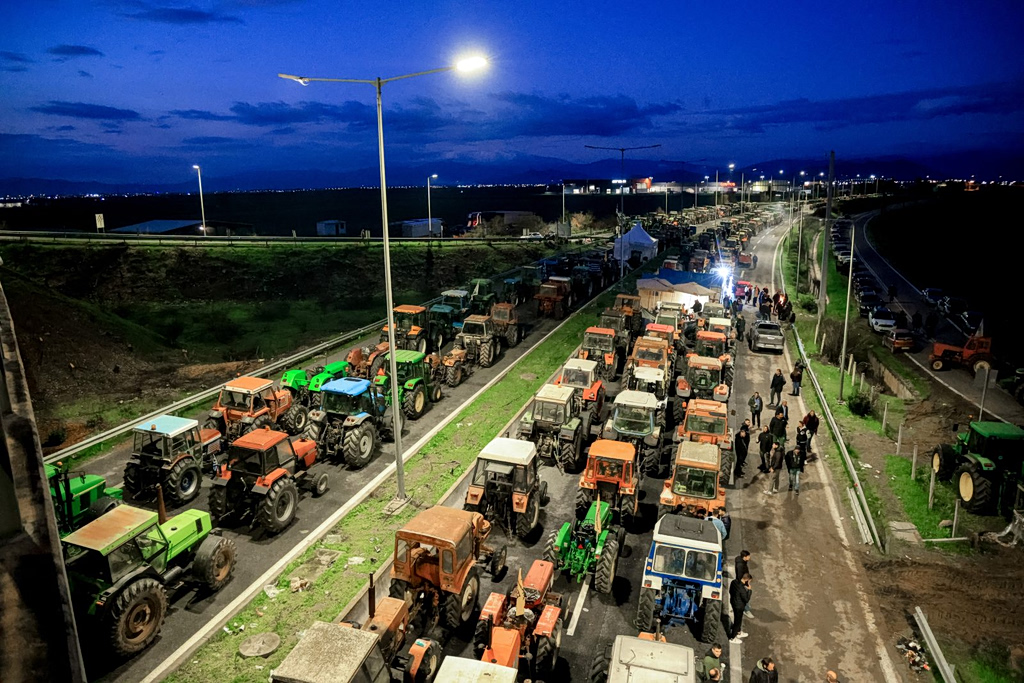
Although the discussion cycle had been scheduled to conclude with him, current developments brought the minister first to the Maximos Mansion and then behind the closed doors of Piraeus Street, where he briefed New Democracy MPs on the problems that had arisen with farmers’ payments, as well as on the strategy for defusing the crisis. Ultimately, his seat is taken by the Deputy Minister of Rural Development and Food, Ioannis Andrianos.
Until that happened, and while the young man at the keyboard tried to restore order after the sudden program change, the elephant named OPEKEPE discreetly swished its tail in the room—something highlighted by the president of the Citizens’ Movement for an Open Society, Panos Karvounis, who stated that “the damage done to Greece’s image is tangible and could dramatically affect the amounts Greece will receive from the Common Agricultural Policy.”
That image, however, is what those who gathered at the ACCI seek to improve on a daily basis through the agri-food sector—presenting not only their views but also their work in the field, with the aim of strengthening productivity, competitiveness, and innovation. And, of course, they spoke about the challenges they face.
One such challenge is sheep and goat pox, which, according to Stefanos Doukidis, has significantly affected the family-owned cheese-making business that has been operating for the past 69 years in Rodopi. The culling of approximately 500,000 sheep nationwide, with border-region Thrace at the epicenter, triggered a chain reaction throughout the cheese-making ecosystem, from farmers to milk processors. As a result, many people lost their jobs—just as they lost their animals. Nevertheless, the business continues to show stability and growth. “There are people who stamped both their first and last social security contributions with us,” Stefanos Doukidis emphasized. “We are proud of that.”
Pride was also expressed by Andreas Dimitriou, president of the Ioannina Agricultural Cooperative “Pindos,” which employs hundreds of workers. Energy costs, however—unlike raw material costs, which remain at a good level—affect even poultry farming, a particularly strong sector. With Ioannis Andrianos now in the audience, Andreas Dimitriou also called for state intervention against the “Hellenization” of imported products, which are often of questionable quality.
Although it is not widely known, the pasta sector exports 50% of its production and thus constitutes a small success story. According to Alexandros Kikizas, CEO of Melissa Kikizas, all pasta industries in Greece rely on domestic agricultural production of durum wheat. At the same time, however, the primary sector—and even the Ministry of Rural Development and Food itself—does not rank among the priorities of successive governments, a point raised not only by Mr. Kikizas but also by the president of SEV, Spyros Theodoropoulos.
“The food industry, which processes agricultural products, is in good shape,” Mr. Theodoropoulos initially stated. “The agricultural sector, on the other hand, appears abandoned and has grown complacent on subsidies. It needs a new productive model and substantial training, because most farmers are self-taught, and this continues from generation to generation. In the coming years, climate change will play a significant role—we need closed-type production, that is, greenhouses. The farmer must think like an entrepreneur; he is not just a cultivator of the land. There is a lack of education.”
Part of this inadequate training is also the refusal to integrate new technologies, such as artificial intelligence, into the primary sector. The producer—where everything begins—is called upon daily to make decisions in the field, whether they concern water, soil, or the crop varieties they wish to cultivate. Although the sector may appear traditional, it conceals an enormous volume of data. Artificial intelligence emerges as a major opportunity and can assist producers and, by extension, the processing chain. The high average age of farmers, however, remains a serious obstacle.
“We’ve been doing something wrong all these years”
“There is human capital, but the age of most producers is high, and this concerns us,” said Ioannis Andrianos. “We must give incentives to young people to produce,” because without education, without new technologies, and without smart agriculture, Greece will never reach exports to countries such as Israel or the Netherlands. “Although we have the potential, we have not utilized it. Clearly, we’ve been doing something wrong all these years.”
In the public sector, the deputy minister said shortly afterward—once again making the elephant in the room discreetly swish its tail—“there are deeply entrenched mindsets that are not easy to change. Reforms were not carried out as they should have been. At OPEKEPE, if institutional safeguards had been put in place in time, we would not have reached where we are today.”
And perhaps, one might add, we would never have heard those particular melodies from the keyboard on the sixth floor of the ACCI while waiting for Konstantinos Tsiaras. The butterfly effect.