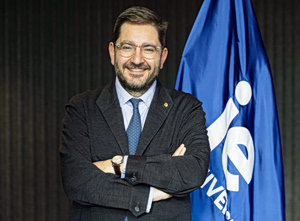
On one of Paris’s sweltering summer days, we met Bertrand Badré, Chair of the Project Syndicate Advisory Board, on the sidelines of the Summit on Media and Democracy in Europe staged by Project Syndicate and the Meliore Foundation.
A leading voice on sustainable finance, Badré believes sustainable economies will shape the future. But after the COVID-19 pandemic, and the wars in Ukraine and the Middle East, climate action is facing growing political resistance, while economic security and competitiveness have moved to the top of the agenda.
In this new global landscape, can sustainability remain the driving force for the future?
I think that, as the Anglo-Saxons say, we are living in interesting times. On the one hand, you get the feeling when you read the news or listen to political discussions that the whole issue of sustainability and climate change has become ideological—to the extent that some people portray it as a “woke” issue. And it’s true, it is becoming political in so far as it is making the position of a number of decision-makers far more difficult, particularly in the business world.
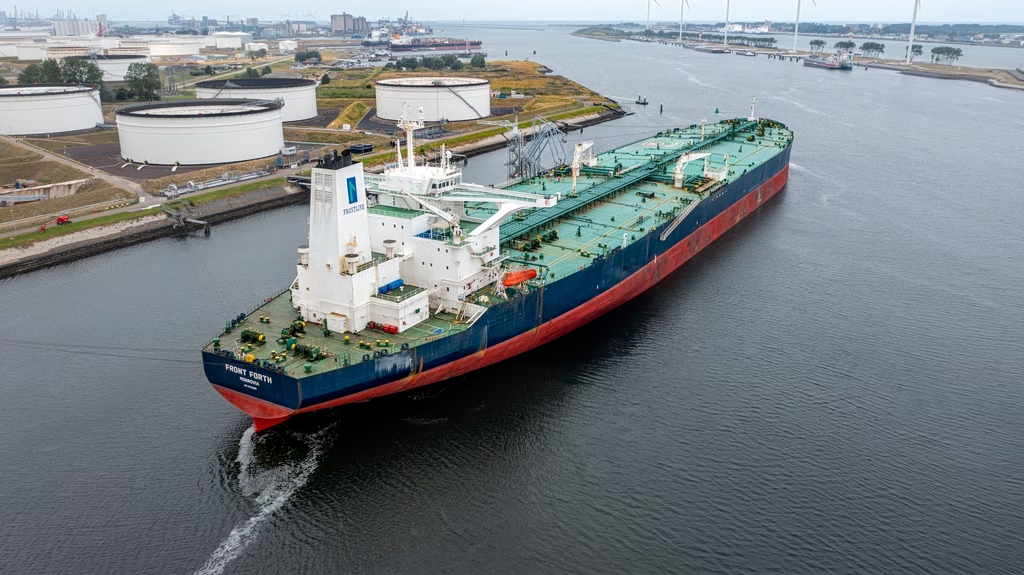
I don’t think any country can reasonably bet today that its future will be based on fossil fuels. Even the Gulf countries—which, of course, want to extract as much value as possible today, while there is still time—are all preparing for the post-oil, post-gas era. What’s more, in the US, Texas is now the leading renewable energy state.
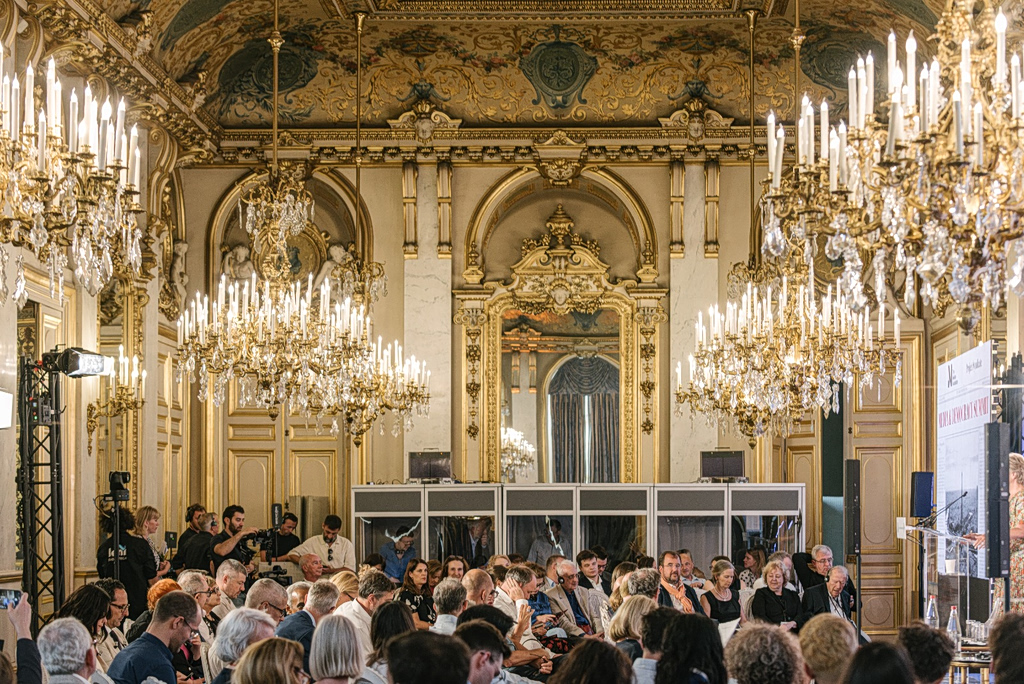
The Summit on Media and Democracy in Europe was held on June 30, 2026 at the historic Quai d’Orsay in Paris, France.
That’s the reality of the situation, so don’t allow yourself to be paralyzed by what you hear. The new global landscape is important, yes, and it is creating tension, stress, and communication issues, along with a degree of slow-down. But the movement has started, even if it is not as fast, as big, or as game-changing as we hoped. I recently met with the CEO of one of the largest French industrial companies, and he told me there is no longer a single month where he doesn’t face a natural disaster at one of his factories. He has to incorporate this reality.
So people do get it. But they have to adapt to the political circumstances. We are at a strange juncture that’s a lot like being at sea: the surface waves have changed direction, which is scary, but the current remains constant underneath.
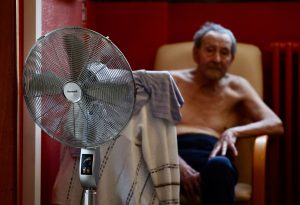
The recurring heatwaves in France have reignited the debate over air conditioning. Is this a sign that we need to rethink our approach to climate adaptation?
This isn’t the real discussion; the real question is whether we are serious about defeating climate change. And more importantly, can we help Africa, Latin America, and Asia make their transition?
That, for me, is the biggest challenge we face today, and one we are not addressing as the EU.
Can the European Union still play a leading role?
Today, we seem to be faced with three very different approaches. The United States has largely stepped back from international climate commitments. The European Union still supports the Green Deal, but is increasingly balancing it against competitiveness, security, and geopolitical concerns. While China is positioning itself as a major player in the green transition.
In essence, China has a very simple message: “We are going to be the first sustainable superpower of the 21st century, with or without you.” Importantly, this goes beyond establishing norms. It’s a trade policy. And it’s an industrial policy.
Currently, they produce 80% of all solar components, 80% of battery components, and 80% of wind components—which is irritating, because it could have been us. Today, 10% of the cars sold in Europe are Chinese electric vehicles. I mean, we could have done the same. And we mustn’t blame China, because we could have done it ourselves. So, can we switch gears? Because I’m convinced that is what we need to do.
Can we switch? Can Europe become competitive again? Because right now we are having to deal with increased defense spending along with growing inequalities.
But we have massive savings. We are underinvesting. Our savings are going to America. That’s what Mario Draghi said: we export all our savings to America. If we can mobilize our savings at home, we will have enough money to do this. It’s a question of coordination, political will, and clear guidance. We are still the largest trade power in the world. We still have top-quality higher education. We are still very industrial, with industrial champions all over Europe.
So, the question is this: can we mobilize these strengths and these assets? Can we stand up and say: “Yes, we can also be a sustainable superpower.” It’s true that this was our ambition ten years ago, but we passed the torch to the Chinese in the meantime. I mean, it terrifies me to see Volkswagen announcing 100,000 layoffs. Do you know what that means in Germany?
Many people are worried about jobs and competitiveness, especially if major economies like Germany are faced with rising unemployment.
This is a moment where we essentially need to unite and do something. That’s easier said than done, I know. If all you do is check your news feed, you’ll be paralyzed. You’ll say, “Game over.” The extreme right is on the verge of power. In France, possibly. In the UK, where the political situation is shifting; and while it’s not the EU anymore, it’s not that far away. And in Germany too, with the AfD. If you look at them one by one, you’ll think we are finished.
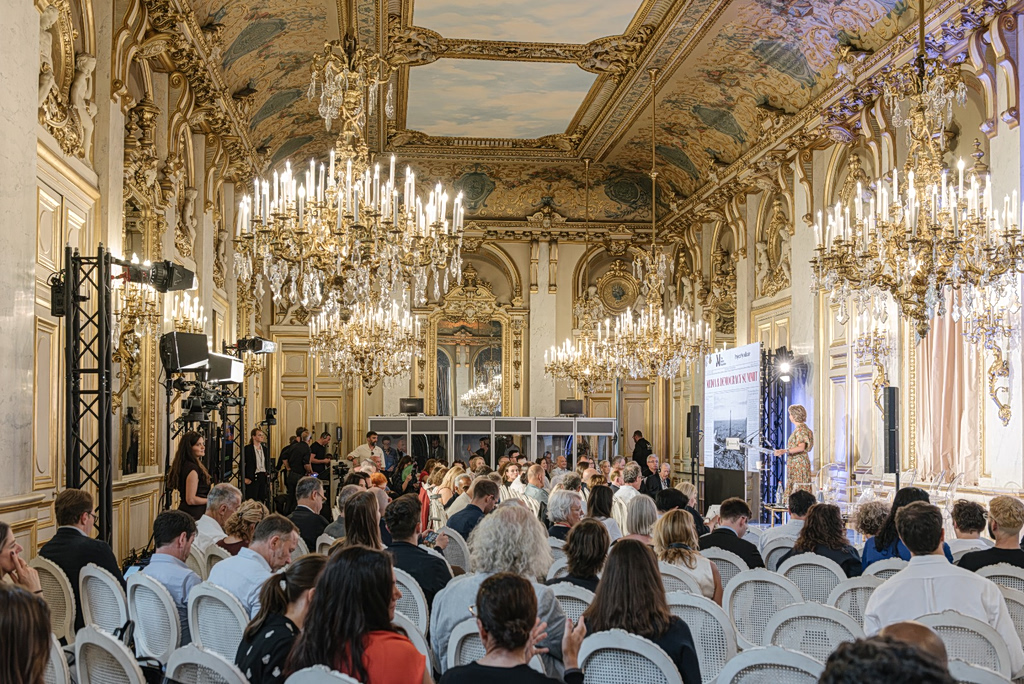
Audience await the keynote speech at the Summit on Media and Democracy.
I don’t want to say I’m optimistic or pessimistic. Like Jean Monnet used to say: “I’m not optimistic, I’m not pessimistic, I’m just committed to act.” So that is what we are trying to do today. My being optimistic or pessimistic doesn’t change anything. But I think we have to tell people—to convince people—that it’s not a lost cause. The war isn’t over; it’s still worth fighting for. To a certain extent, the Ukraine story is fascinating. When I heard that Russia had launched its invasion, I remember saying “My God, those guys are going to collapse within three days.” And now, four years later, not only haven’t they collapsed, they have built the best defense industry anywhere on the planet.
Nothing is inevitable. Why should 450 million Europeans need the money of 300 million Americans to stop 150 million Russians? We are 450 million people living in rich countries with huge savings and an enormous technological and industrial infrastructure. There is no reason to be fatalistic. During COVID, we managed to raise 800 billion euros together. And there is nothing to stop us from doing it again. And maybe this time round, with Germany under pressure, we will come to the table and say, “Let’s discuss it.” As Monnet said, Europe moves forward after each crisis. So maybe this crisis will help us take the next step.
Europeans may be scared, but they still trust Europe. There is no country in which the majority wants to leave the EU. On top of that, you have Norway, Iceland, Montenegro, and a number of other countries clamoring to join. What’s that if not a signal? But we have to make it clear that Europe is more than a Union. It’s our common home.
I come from Alsace, on the German border. My family home was commandeered by the Hitler Youth during the war. But my grandfather, who had every reason to say “I don’t want to speak to the Germans,” always said this to me: “Bertrand, the Rhine River is not a border; it’s a passage. It’s one of the arteries of civilization. So even if we face difficulties, disputes, and struggles, we have to work together.”