 Μake us preferred on Google
Trips to Thessaloniki never cease to surprise us Athenians. The city always finds a way to welcome us, to sweep us up into its unique rhythm and transmit the pulse of its artistic creation. This time around, it was a sunny autumn morning, the kind that makes October feel like an Indian summer.
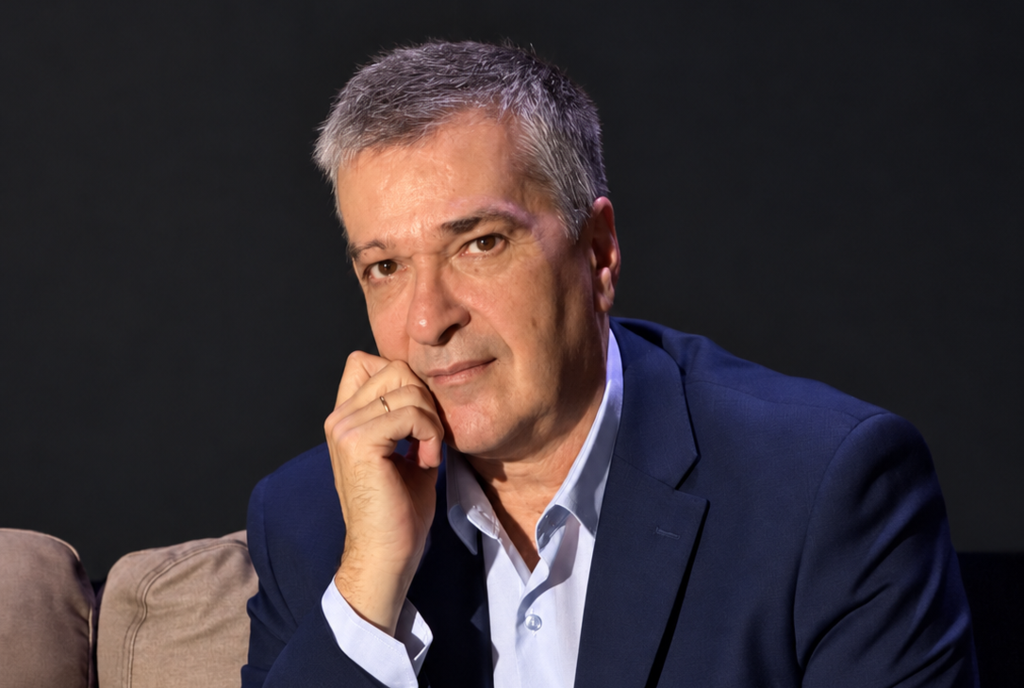
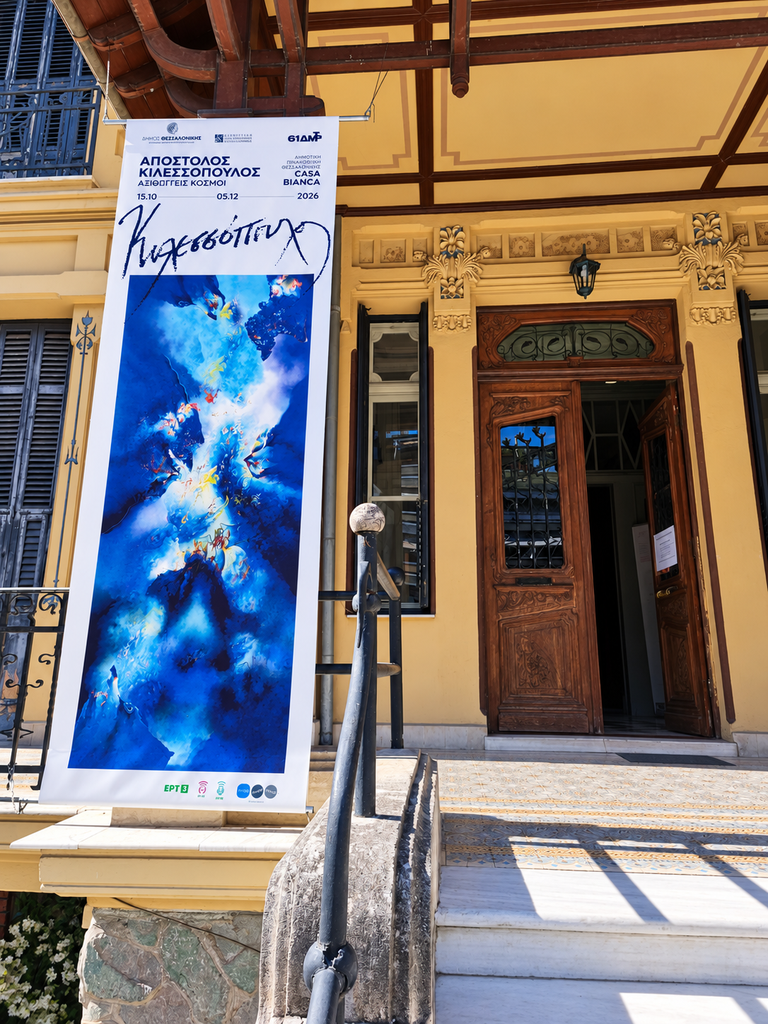
The sun accompanied me on my way to the interview, bathing in light the waterfront, avenues and remaining mansions of a city that continues to converse with its past. One of these, the famous Villa Bianca, now houses the city’s Municipal Art Gallery. I met with Thessaloniki’s Deputy Mayor for Culture, Vasilis Gakis, on the occasion of the Apostolos Kilessopoulos retrospective, Ever-shining Worlds.
PANOS KOUGIAS/TO BHMA INTL EDITION
We spoke about the history of Thessaloniki, the human stories behind its elegant mansions, its artistic heritage, and the future of an Art Gallery that aspires to take art out of exhibition spaces and embed it in the daily life of the city.
The Municipal Art Gallery is celebrating the sixtieth anniversary of its inauguration this year. What historical circumstances brought it into being?
The Municipal Art Gallery was founded as an institution in 1961, but wasn’t inaugurated until 1966, at which time it was housed on the third floor of the city’s YMCA. Thessaloniki had experienced cataclysmic changes in the first half of the 20th century: liberation from the Ottoman Empire in 1912, two World Wars, the arrival of millions of refugees from Asia Minor in the population exchanges of the 1920s, the Civil War and the destruction it wrought. But the late 1950s saw the city embark on systematic efforts to bolster its cultural infrastructure.
The University was expanded, significant cultural institutions were created, the State Orchestra was founded, and in 1966 the first Dimitria festival was held. This was the climate that gave rise to the Art Gallery, which initially shared a space with the Municipal Library.
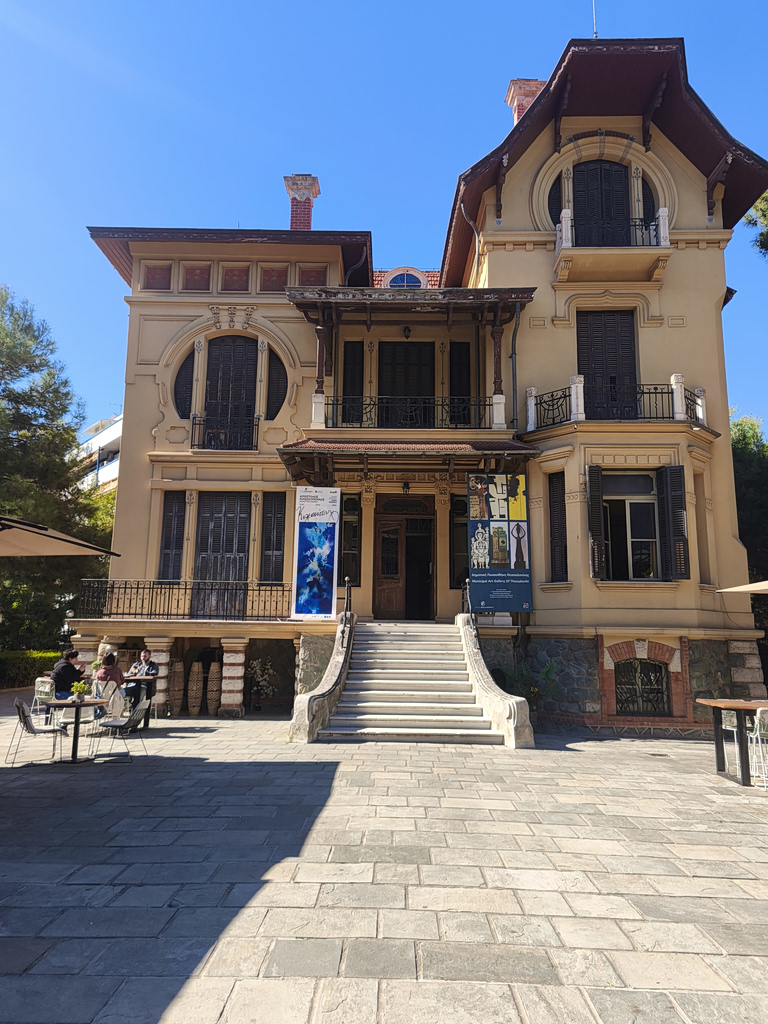
The Villa Bianca, where the Municipal Art Gallery of Thessaloniki is housed. PANOS KOUGIAS/TO BHMA INTL EDITION
Today, the Art Gallery is housed in the iconic Villa Bianca. What’s the secret history of this beautiful building?
Villa Bianca was built between 1911 and 1913, designed by the Italian architect Pietro Arrigoni for Dino Fernandez-Diaz, a wealthy businessman and Italian citizen of Jewish descent who named it after his wife, Blanche. It was located in the famous Mansion District, where the affluent families of Thessaloniki built their magnificent homes.
Its history combines romance with tragedy. The daughter of the family, Alina, fell in love with a Christian army officer by the name of Spyros Aliberti, sparking a scandal among the high society of the time. The two were married in Athens, but would later return to the mansion. During World War II, however, Dino Fernandez-Diaz and his son fled to Italy, where they were murdered by the Germans in 1943. It is a history that encapsulates both the charm and the tragedies of Thessaloniki.
The building also experienced a long period of abandonment. How was it saved?
Villa Bianca suffered extensive damage. Architectural elements were removed, and floors and sections of the roof were destroyed. Its restoration, which was led by Professor Nikolaos Moutsopoulos, was extremely demanding and took place in the context of Thessaloniki’s tenure as European Capital of Culture for 1997. The project proved so successful it was honored with the European Europa Nostra award.
What I find particularly charming today is the way the historic building converses with the contemporary art it houses. Installing a modern artwork beside an old plaster ornament or a light fixture from another era might seem incongruous at first. Ultimately, however, they both serve to shine a light on the other.
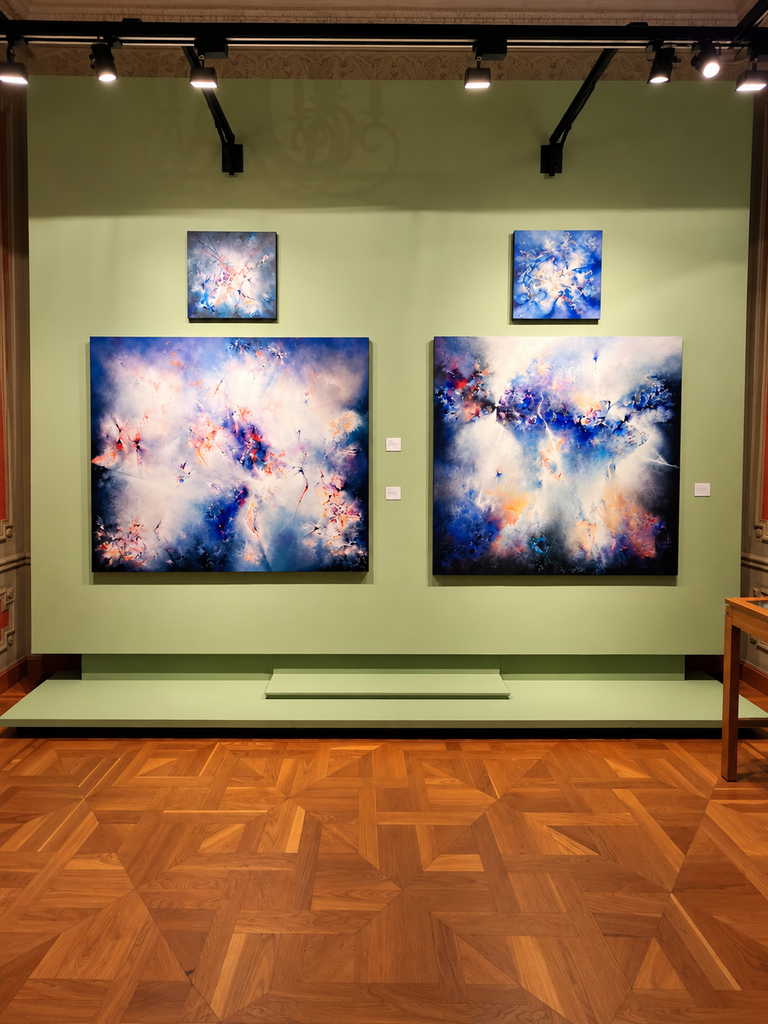
Artwork by Apostolos Kilessopoulos. PANOS KOUGIAS/TO BHMA INTL EDITION
What do the artistic holdings of the Municipal Art Gallery mean for Thessaloniki?
The Municipality has approximately 3,000 works of art in its holdings, dating from the late 19th century to the present day and including important collections of engraving and sculpture as well as Byzantine icons and heirlooms. The over 600 works donated by the family of Nikolaos Gyzis occupy a special place among its holdings.
An Art Gallery is more than an exhibition space; it is also a historical archive. Every painting records aspects of its era and can become an object of research. I also consider it extremely important that we offer artists the opportunity to donate their works and thereby ensure they are conserved, digitized, and shown to the public.
What is your core philosophy when it comes to art’s presence in the contemporary city?
This: we don’t wait for the public to visit a cultural venue—we bring culture into the city’s public spaces. Take the new Glass Art Gallery, for instance. Located on the waterfront not far from the Makedonia Palace hotel, it is a 100-square-meter space where works from the municipal collection are put on display. Its unique feature is that the public doesn’t even have to go inside to see the works—they can view the exhibition simply by walking around the building. You see, we want art to be part of the residents’ daily lives, not an activity that only occurs behind closed doors.
Do you have any upcoming plans for the Art Gallery? Is a larger exhibition space in the cards for the future?
We are constantly seeking new ways to make the most of and present our collections. We are currently designing exhibitions to be shown at the Thessaloniki History Center, which will include more historical content—in the form, for instance, of engravings and prints that depict the evolution of the city. At the same time, we are developing a large, versatile space at the Old Abattoir which will be suitable for both visual arts shows and musical events.
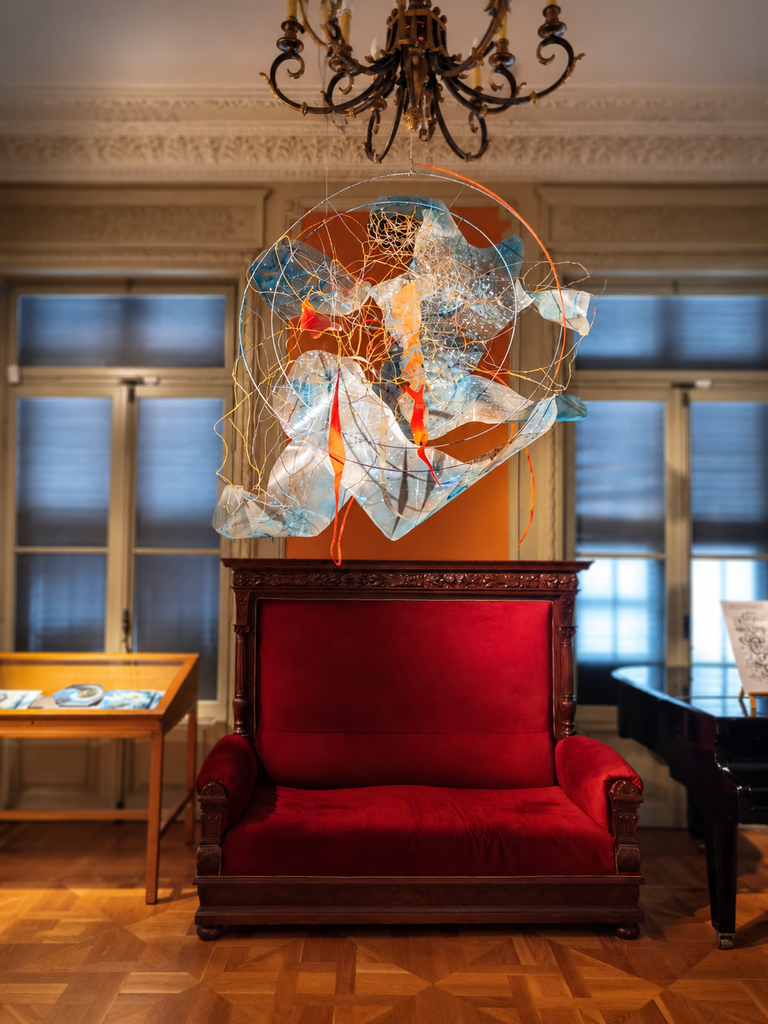
Artwork by Apostolos Kilessopoulos. PANOS KOUGIAS/TO BHMA INTL EDITION
We are hoping to inaugurate the new venue with a major exhibition. There is also a more far-reaching idea to stage temporary exhibitions focused on major bequests and artists’ collections in specially designed spaces. We haven’t yet reached the stage where we can announce anything, but we view it as a highly significant development.
Let’s move on to Apostolos Kilessopoulos. What is it that makes his work so unique?
Apostolos Kilessopoulos is one of the most important artists associated with Thessaloniki. His visual idiom is instantly recognizable: when you see a painting of his, you immediately know who painted it. What astounds me is that so many of his works look like photographs of the universe. They are interstellar images, and yet he began his explorations back in the early 1970s, when our capacity for visualizing the universe was far more limited than it is today. Which is to say there is a profoundly visionary dimension to his painting.
Despite his significance, Kilessopoulos is not particularly well-known to the Athenian public. How do you explain that?
He is an introverted person who never sought the limelight or took part in the promotional mechanisms of the art market. He was also devoted to his educational work, in which role he influenced generations of emerging artists. But his introversion does not mean his work isn’t outward-looking. On the contrary, it has a powerful emotional and conceptual resonance. This retrospective is also a tribute to his long-standing presence in, and contributions to, the city.
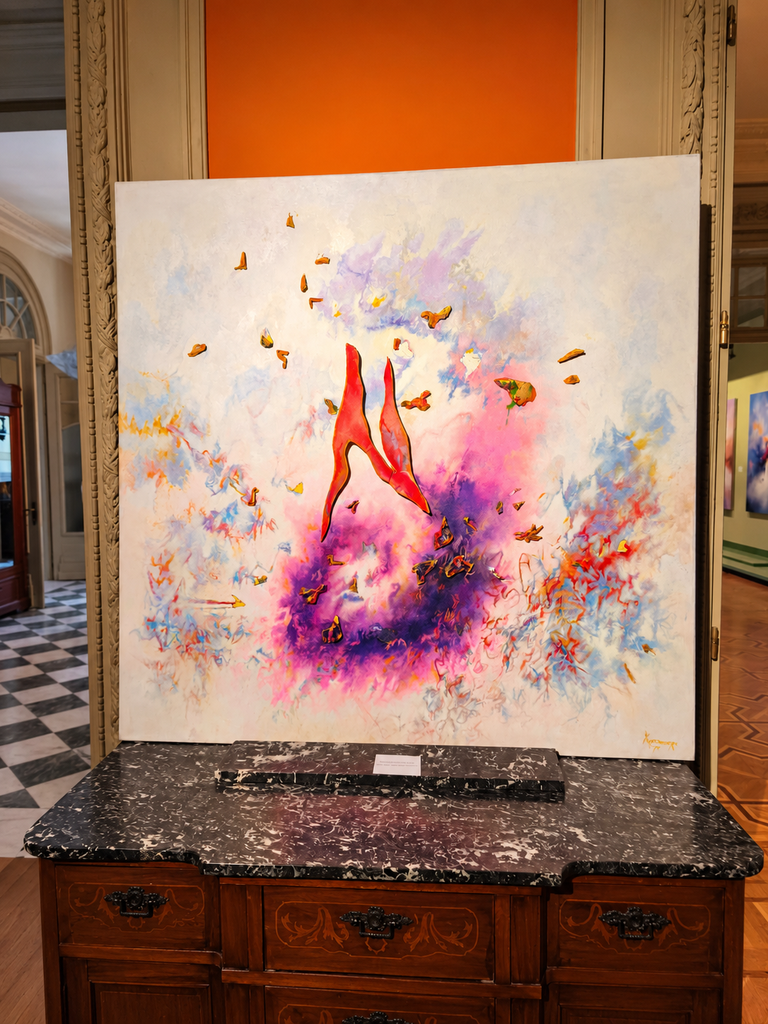
Artwork by Apostolos Kilessopoulos. PANOS KOUGIAS/TO BHMA INTL EDITION
What would you like the visitor to take away from “Ever-shining Worlds”?
That’s always subjective. I don’t think we can dictate what visitors ought to feel when faced with a work of art. Personally, in Kilessopoulos’s paintings, I see a unique relationship between color and space. His compositions often seem to levitate, to transcend the boundaries of the painted surface. Which is exactly where art’s power lies: in creating a different world for each of us.