 Μake us preferred on Google
From Minoan times to the present day, the vineyards of Crete have never fallen silent. It is no coincidence that the oldest known wine press, more than 3,500 years old, was unearthed at Vathypetro. Wine’s place in Minoan life is etched into every palace on the island, from striking amphorae to vast underground storerooms—testament to the starring role it played in Cretan society.
So what would lead a couple from the other side of the world to settle on Crete and try their luck in the fiercely competitive world of winemaking?
Speaking to TO VIMA International Edition, Emma Maidment and Tyson Venables share their story, from the rewards to the hurdles they have faced along the way.
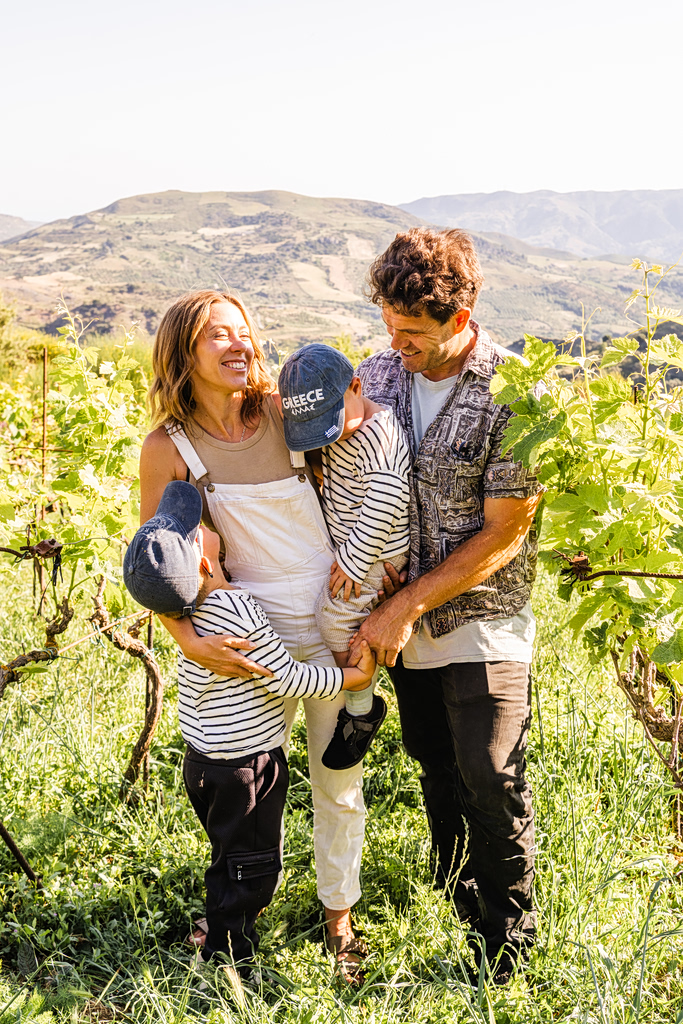
Photo credit: Cristina Nicole
A phone call and a flood
Neither has Greek roots. What brought the Australian husband-and-wife duo to Greece was, quite simply, a phone call. A friend who had moved to the country and bought a property called them to describe his new life. “You should come,” he told them. “I think this could be the place for you.”
“We looked at each other and asked what was actually keeping us in Australia,” they recall. “The honest answer was: not much.”
At the time, the couple was living near Byron Bay, running two businesses, a coaching company and a small-business automation firm, both designed to run from anywhere. That flexibility was a lesson they’d learned the hard way.
A few years earlier, after the birth of their first child, they had faced a choice: go all in on their own businesses or follow the conventional “Australian Dream.” They decided to sleep on it. That night, their town flooded.
“By morning everything we owned was on the street: furniture, photos, all of it,” they say. “It felt like the answer had arrived before we had the chance to second-guess ourselves.”
They went all in. A second son followed the next year, along with the publication of Emma’s book, Find Your Flow (Affirm Press/Simon & Schuster). Then Tyson’s father died, and their perspective on what truly mattered shifted once again.
So when the call came from Greece, they were ready to listen. “We realized there’s never a right time, only now and not-now.”
They sold what was left, bought one-way tickets and told everyone they were going for three months, just to take a look. They never went back. From the phone call to landing in Greece took about a month. Their families were supportive, they say, and while the couple misses them, their relatives love visiting Crete and experiencing life on the island.
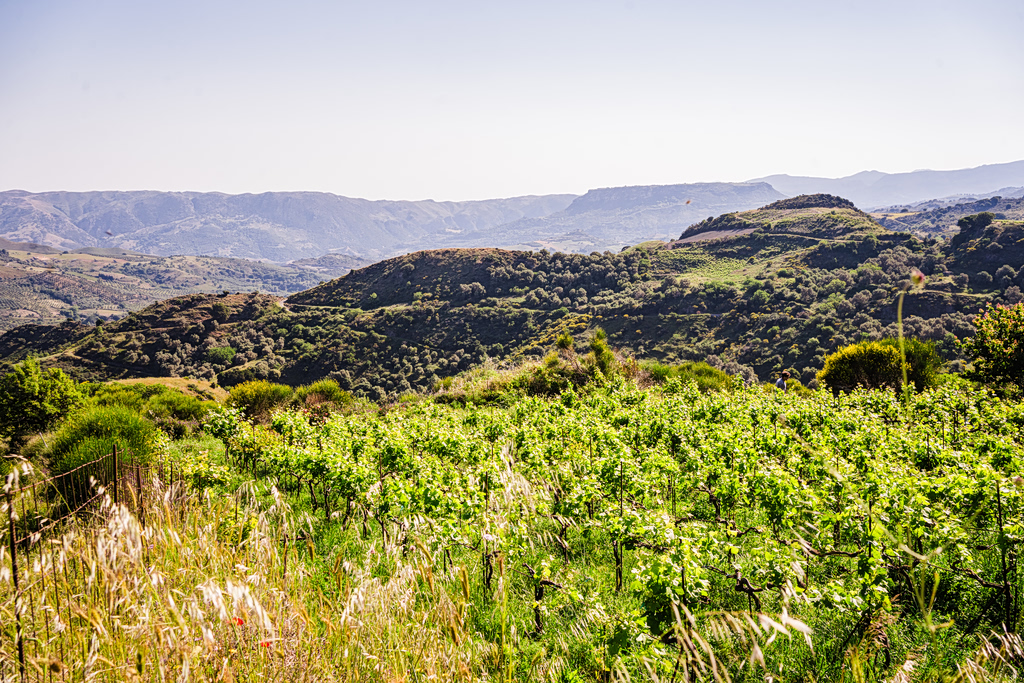
Photo credit: Cristina Nicole
Following the breadcrumbs to Crete
Behind the move lay a vision the couple had shared for years: a life rooted in land, food, wine and community. Their first stop was Paros. “It’s beautiful, but like much of the Cyclades it’s stone, salt and wind,” they explain. “Not much grows there, and we’d come with land and food in mind.”
They admit they hadn’t done much research. Instead, they followed the breadcrumbs of local advice, which all pointed to one place: Crete. The food’s different, they were told, the land’s different; people still farm the old way and there are real mountains. “That mattered to us more than any postcard view,” they say. So they hopped on a ferry.
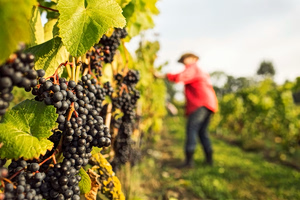
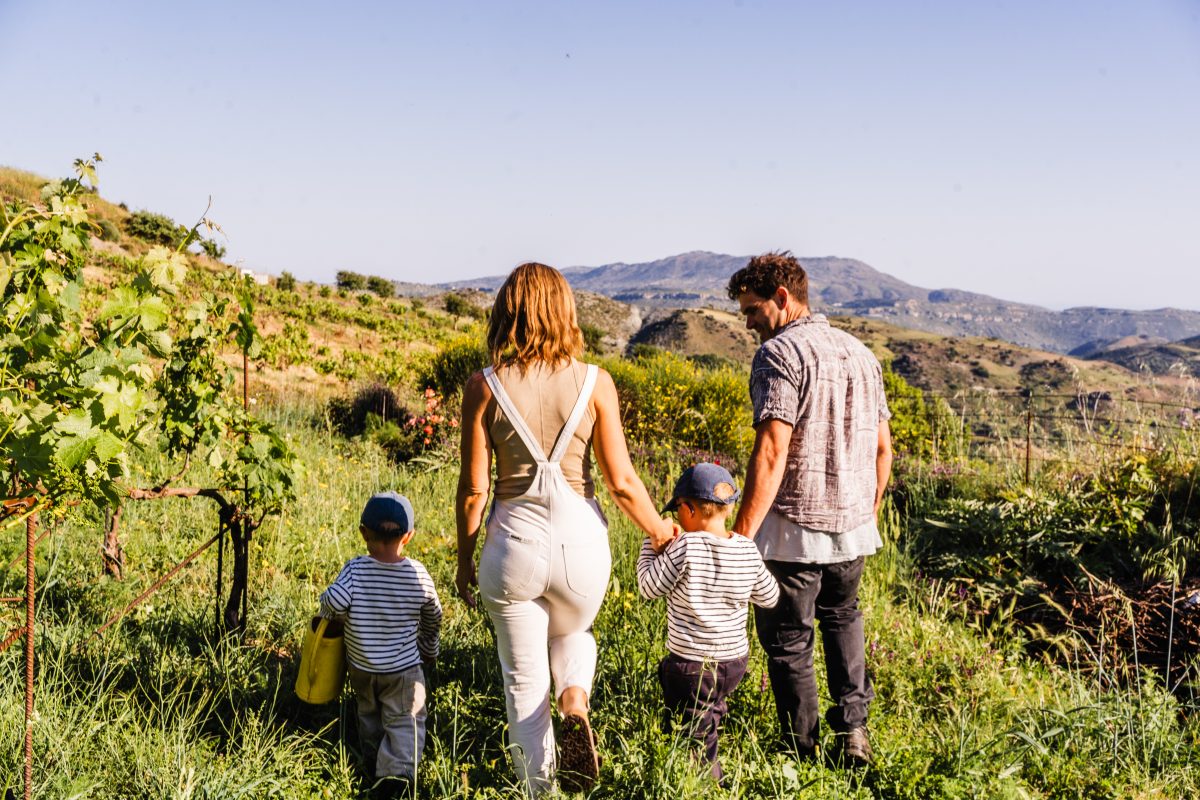
The vineyard they found sits in the Kedros Mountains south of Rethymno, near Spili, beneath Mount Soros, at an altitude of 600 to 700 meters. The elevation brings cooler nights than on the coast, which helps the grapes retain their freshness. The vines had been farmed organically since they were planted, something the couple describes as rare, and exactly what they wanted to build on.
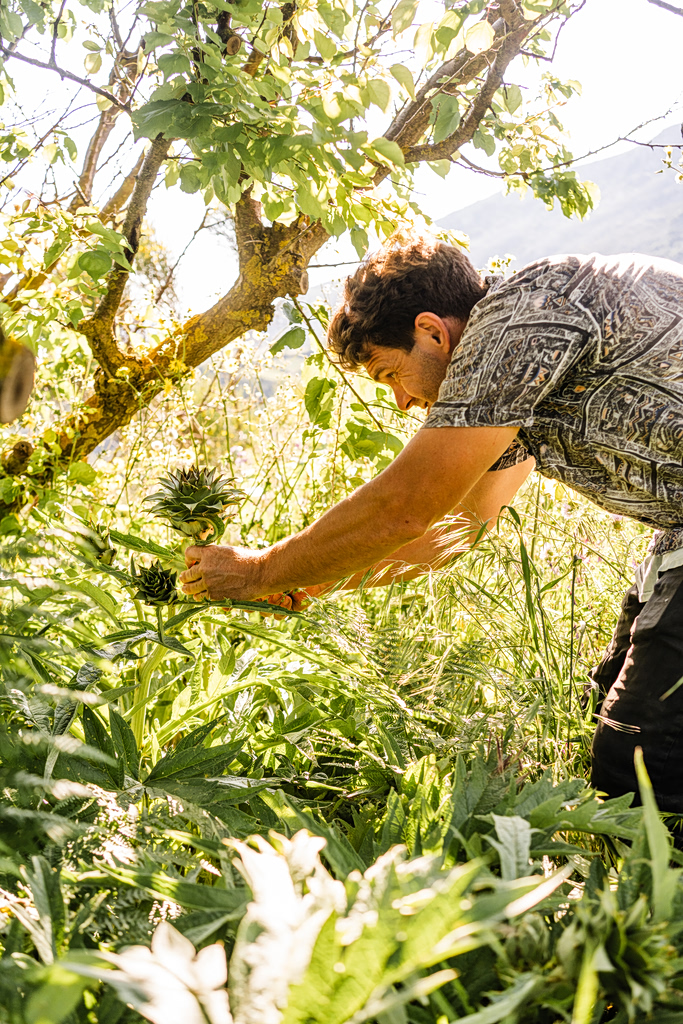
Photo credit: Cristina Nicole
The purchase happened faster than was sensible, they concede. The plan had been to settle in and learn about the place first. But the land came up while their visas were still pending and the paperwork was far from clear. “We’d just spent years learning what happens when you wait, so we bought it.”
‘How hard can it be?’
Neither had any background in winemaking or agriculture. “We thought, how hard can it be?” they say. “It is significantly harder than we thought.”
In truth, they didn’t so much choose wine as the vineyard chose them. Wine had always been part of the bigger picture, but when a small organic vineyard came up for sale on a mountain they loved, it became the foundation of their new life rather than just a piece of the puzzle.
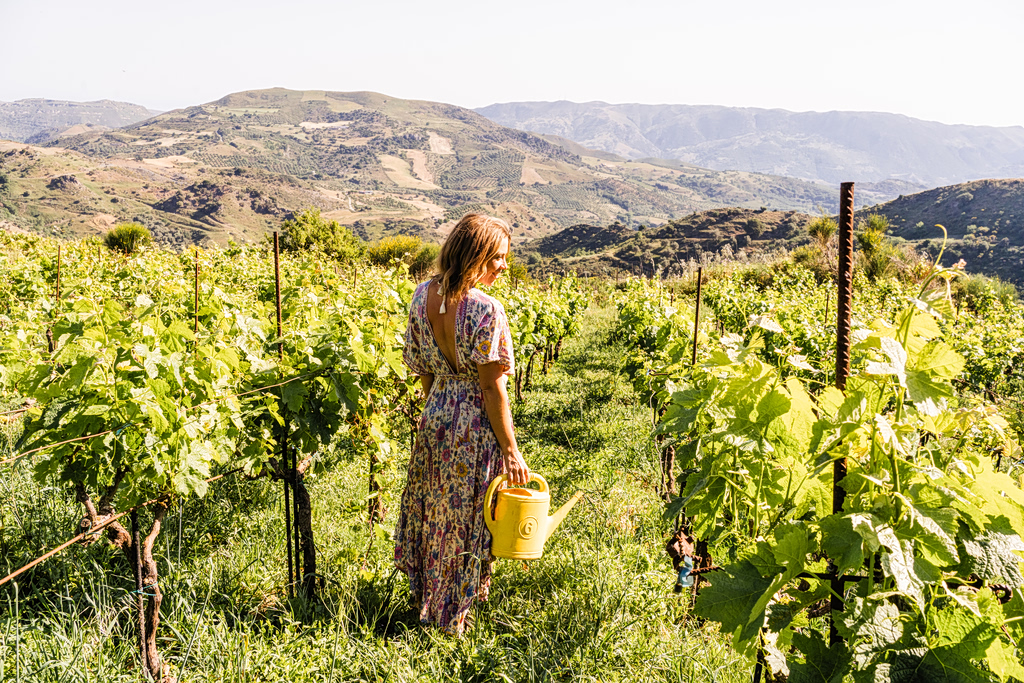
Photo credit: Cristina Nicole
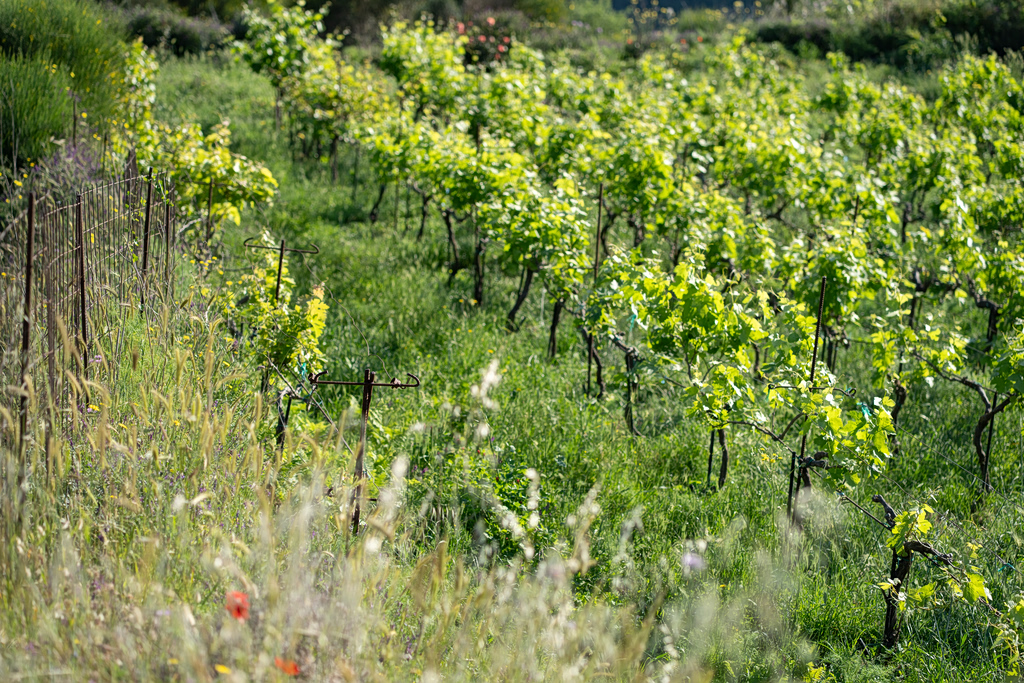
Photo credit: Cristina Nicole
They named the project Kairos. The ancient Greeks had two words for time: chronos, measured time, and kairos, the right or opportune moment that demands to be seized. “That’s how we ended up here, and it’s how a vineyard actually works,” they explain. “You prune, fertilize and pick when the vine, the weather and the moon tell you to, not when the calendar does.”
Their philosophy is low intervention. In the vineyard they follow organic and biodynamic practices: no tilling, cover crops, swales to capture rainwater, compost teas and biodynamic preparations. In the cellar, they use wild fermentation with native yeasts, very little sulfur, and no fining or filtering. “We try to get out of the way,” they say.
They inherited 240 vines across 12 rows, planted around 2014-2015, mostly Shiraz along with Cabernet Sauvignon and Merlot. Their first vintage, in 2025, produced a rosé, a Shiraz and a Cabernet-Merlot blend.
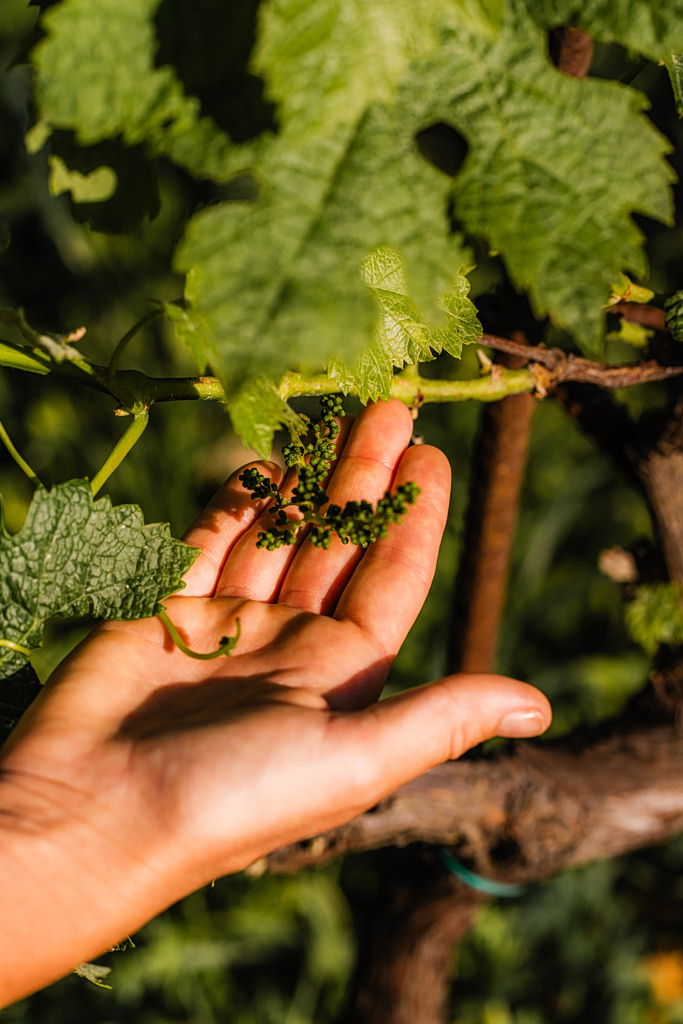
Photo credit: Cristina Nicole
Photo credit: Cristina Nicole
Everything had to be learned from scratch: pruning; canopy, disease and soil management; fermentation, bottling. Their teachers have been local growers, books and above all their own mistakes. They speak warmly of the team at Iliana Malihin, which has a winery and tasting space in a neighboring village. “They have been so generous with their help and guidance,” they say.
Tyson, a systems builder, logs every vine, sugar reading and plant check in an app they built themselves. “Writing everything down is how you avoid making the same mistake twice.”
Mildew, an injury and lessons learned
Setbacks followed. Tyson ruptured his Achilles tendon, mildew claimed half the first harvest, and in 2026 powdery mildew hit 95 percent of the vines, which yielded just 16 kilos of Shiraz. “That one’s on us,” they say. Both failures came from gaps in protection at budburst, so next season begins with a strict spray program and insights gleaned from new soil tests.
“In Crete the sun, wind and heat are generous, but the season punishes you for being a week late,” they say. “But doubt about the work isn’t doubt about the decision, and we’ve never really doubted the decision.”
Siga siga…
The couple is careful to stress that Kairos is not yet a business. “It’s a family project,” they explain. “We have a small vineyard, a first vintage made at home in tiny quantities, and a lot to learn.” Becoming a licensed wine producer is the goal, and when they get there, they want to do it properly rather than rush it. For now, they are documenting and sharing the journey as honestly as they can.
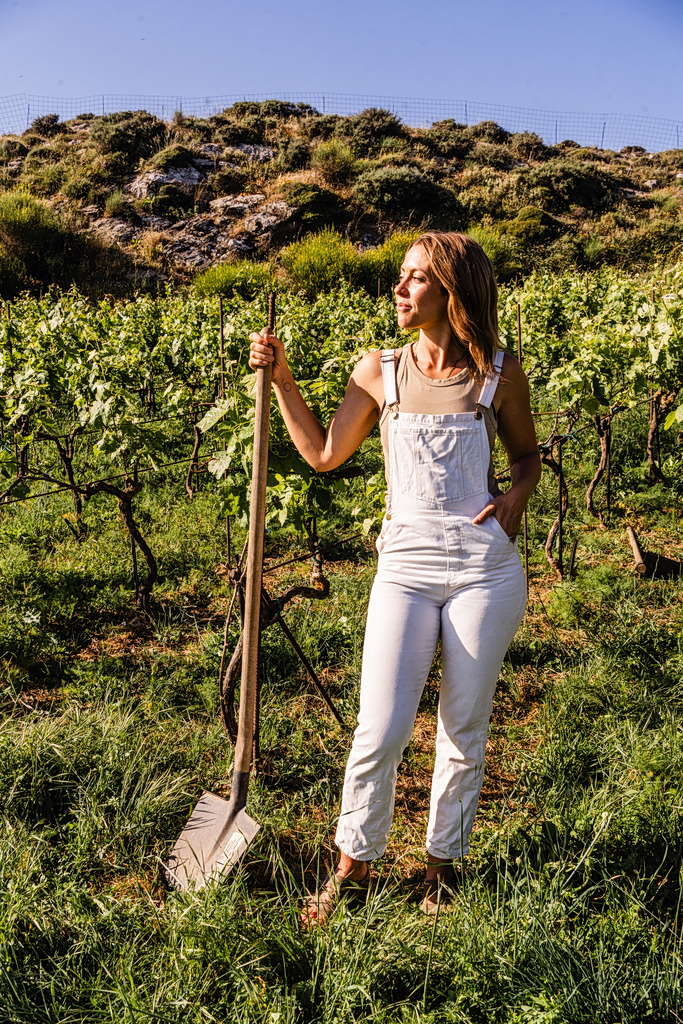
Photo credit: Cristina Nicole
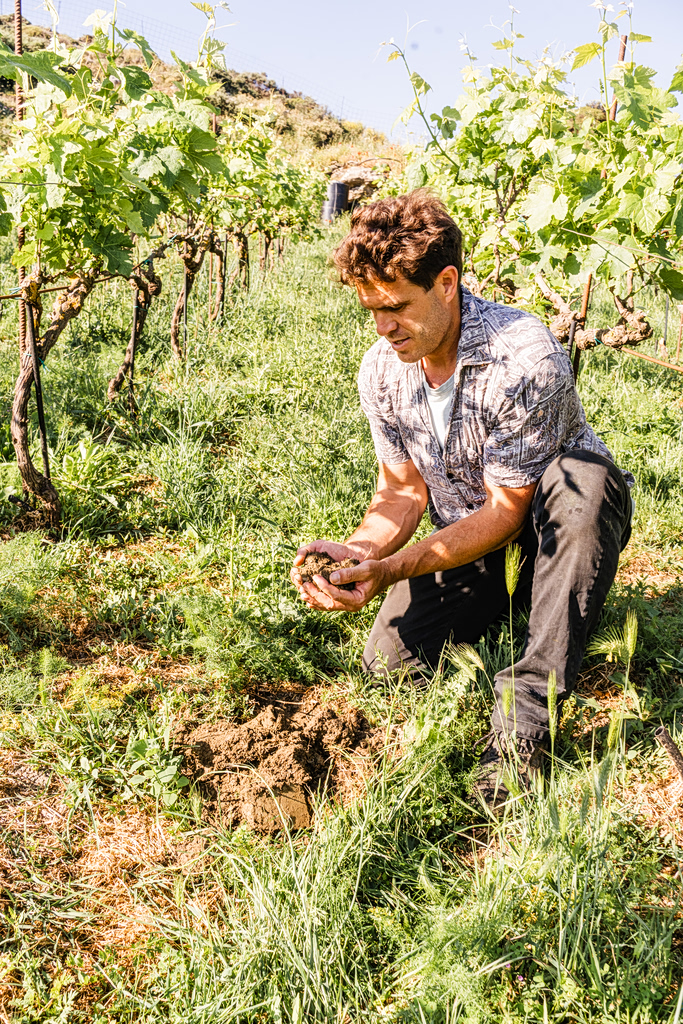
Photo credit: Cristina Nicole
The hardest part has been buying land with unclear paperwork in an unfamiliar system, “and that feeling of signing something in a different language and hoping you got the translation right.”
They remember the notary’s office, folders stacked floor to ceiling. Changing a single date on one document took many visits and over a year, and nothing could speed it up.
“Learning to be patient is the only way to thrive here,” they say. “Things happen in their own time, which has been a challenging lesson to learn.”
Their advice to other foreigners considering a similar path is practical: find a good local lawyer and accountant early, and pay them, because “it’s the cheapest insurance you’ll buy.” Expect everything to take longer than planned, and budget both money and patience accordingly. And remember that relationships move things faster than forms do. “Go in person, be friendly, come back with snacks.”
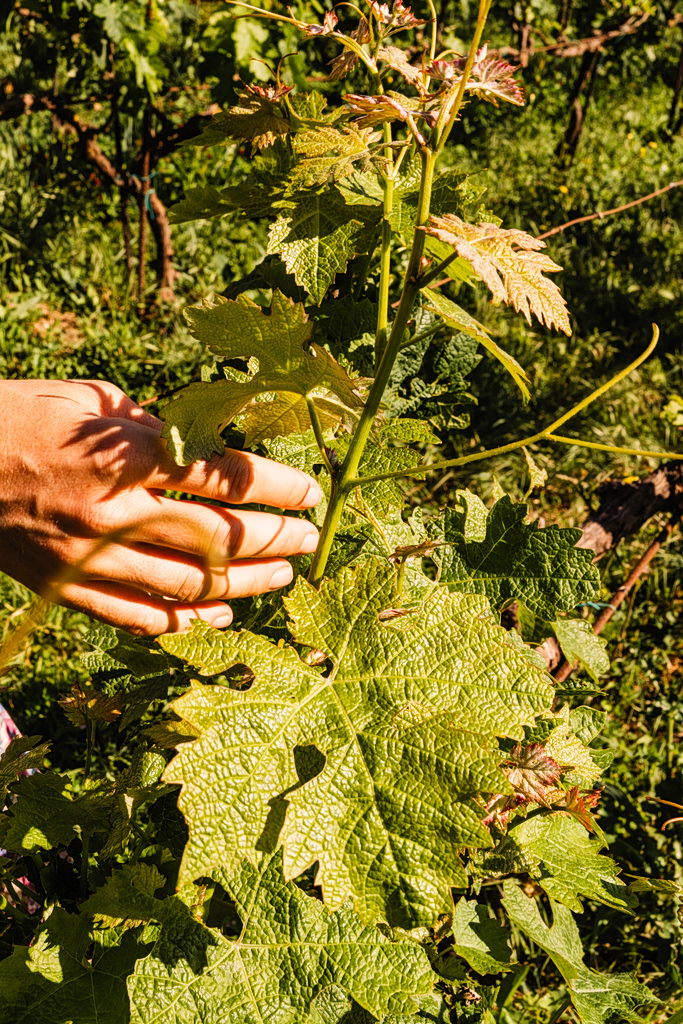
Photo credit: Cristina Nicole
Pace, they say, has been the hardest cultural adjustment. “We come from a world of apps, deadlines and things arriving tomorrow. Here, things happen when they happen: when the right person is in, when the weather allows, when someone has finished their coffee.” Yet it is also what they have embraced most. Siga siga, slowly slowly, has become something of a family motto. “Farming here is tied to the seasons and the moon, and the culture still is too. Which is ultimately what makes it special.”
Lost in translation
When they arrived, their Greek began and ended with kalimera. They now take lessons and are learning… siga siga. In daily life, most of the people they deal with speak English, but none of their neighbors do. “The more Greek words we have, the more we can converse,” they say.
The language barrier has produced at least one memorable adventure. Tyson asked the vineyard’s previous owner whether he knew anyone with organic sheep that could graze the land. Somewhere along the way, the request was understood as Tyson wanting organic lamb to eat.
“Tyson was taken deep into a mountain village to find a sheep farmer, and then to a local organic pig farmer deep in the bushland,” Emma recalls. “All the while he was sending me his location because he had no idea where he was being taken. He has a knack of finding himself on random adventures. In the end we had zero sheep of any kind.”
Earning their place
The local community received them first with curiosity, then with warmth. “We think it helped that we turned up to work,” they say. “People see you on the mountain in the wind, with the kids, getting it wrong and coming back the next day.”
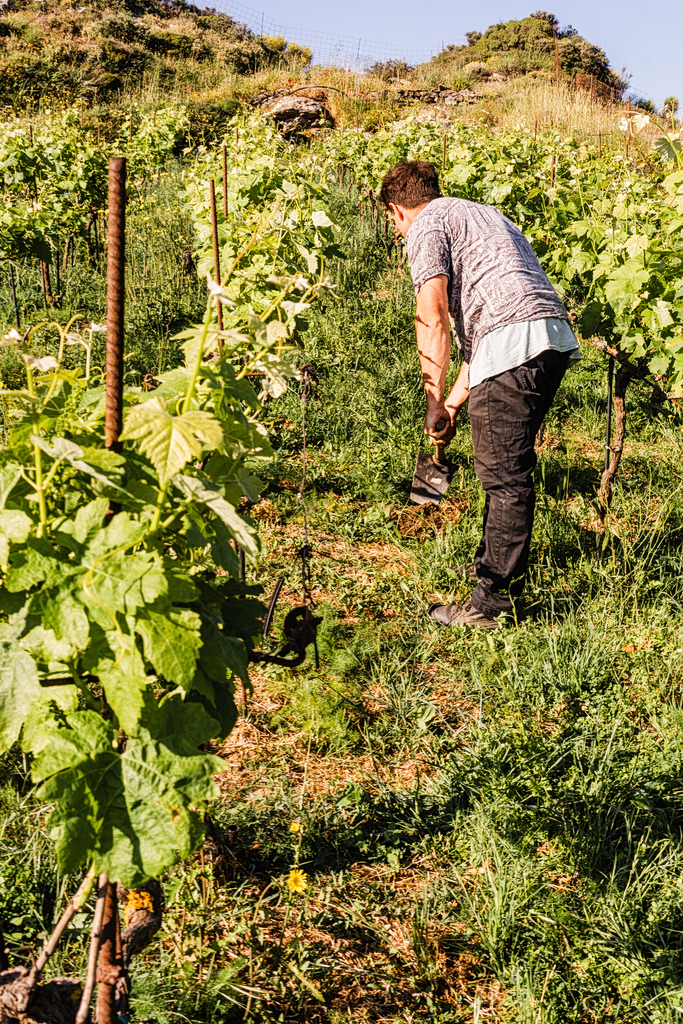
Photo credit: Cristina Nicole
That warmth became unmistakable after Tyson’s injury. Neighbors delivered food, visited him in the hospital, and helped with paperwork and translation. “It really blew us away how willing the locals were to help us when we were in need.”
Since they began sharing their story, Tyson has connected with a host of farmers across Crete and Greece. Beyond the Iliana Malihin team, which offered timely guidance on last year’s mildew, a biodynamic Merlot winemaker from northern Greece has advised him this season on what to look out for and which preparations can strengthen the whole system throughout the year. The local Asergrowth garden center, run by people who live near the vineyard, has also been a great help.
Not everyone is convinced, of course. “Lots of the locals think we are crazy, and we understand why,” they say. “Crete has made wine for around 4,000 years, and we’ve made it for two vintages. We’re not here to tell anyone how to do it.”
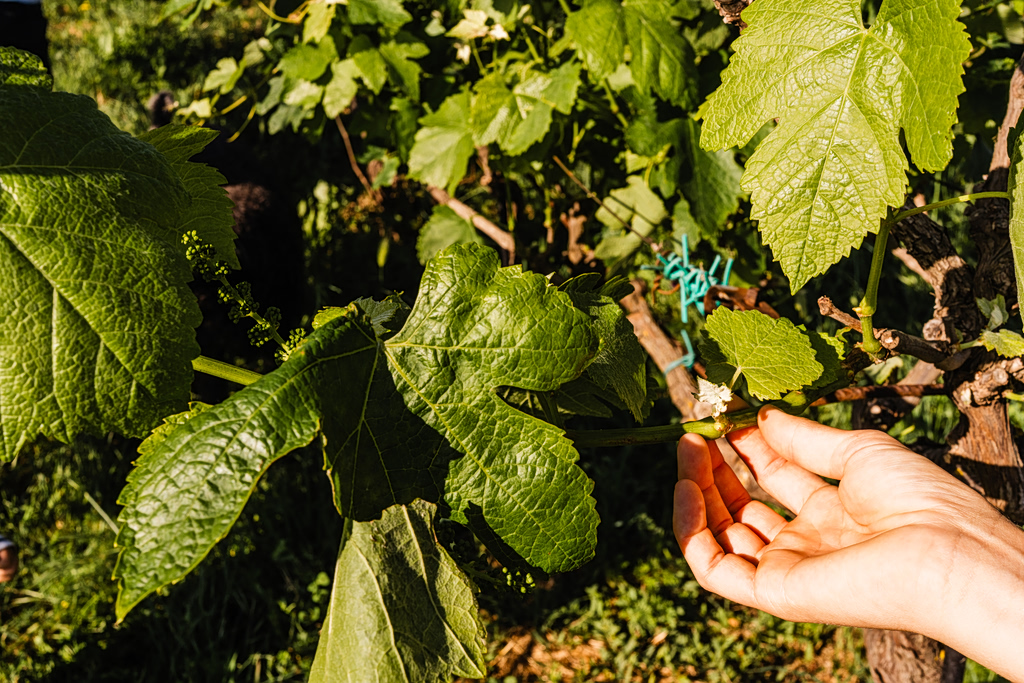
Photo credit: Cristina Nicole
That humility is one reason they are turning to indigenous varieties. Next spring they plan to graft Kotsifali onto the Merlot rows and plant Liatiko for a Shiraz-Liatiko rosé. “It feels right to grow what belongs here alongside what we inherited,” they say. It is also why they talk publicly about their mistakes as much as their successes. “We’d rather earn respect slowly than claim it.”
Roots in the ground
Their two boys, now 5 and 3, have adapted well. They have made friends, are slowly picking up the language and love playing with the village children, even if they can’t always understand each other. The vineyard has been central to how they’ve settled in. “They’re there with us pruning, picking and watering,” the couple says. “They are constantly asking when they can go up.”
What do they miss about Australia? Family, naturally, though relatives visit regularly and FaceTime keeps them close. And, more prosaically, “being able to walk into one store and have everything you need.” In Crete, a single day’s work can require trips to three hardware stores, a farm supply store and an online order.
For now, Crete is home. “The kids are thriving and we love the lifestyle,” they say. “We’ve put roots in the ground here, literally. You don’t graft vines and plant new rows somewhere you’re planning to leave in a hurry.”
The bigger picture
Kairos is only the first step in a larger venture the couple calls Crete Projects, which is still in its early stages: a regenerative farm, food and wine from the land, restored village buildings, and a place where people can come, stay and be part of it all. Wine tourism is built in from the start. “We want people to stand in the rows, taste the wine where it grew, and eat what the land produces.”
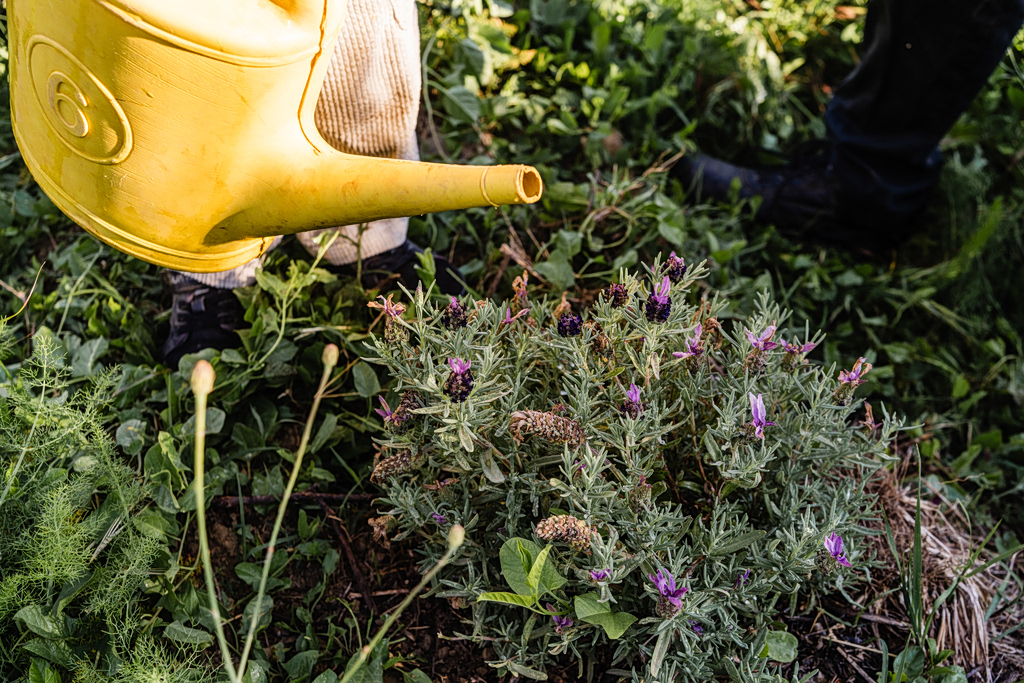
Photo credit: Cristina Nicole
As for the wine, they want to grow carefully, with Kotsifali and Liatiko in the ground, a Shiraz-Liatiko rosé as a second label, “and a small range that sells out because people love it.”
The challenges ahead are real: water on a dry mountain, scaling up without abandoning the low-intervention approach, and doing all of it in a second language. But their definition of success is clear: “Wine we’re proud of, made the way we believe in, shared with good people,” they say. As a family, it is simpler still: “The boys growing up knowing where food comes from, and us building something we’d want them to inherit.”
Would they do it again? “Without hesitation,” they say. “It’s been harder, slower and more humbling than we imagined. But this was the answer to a question we’d been asking for years. We just didn’t know where to look.”
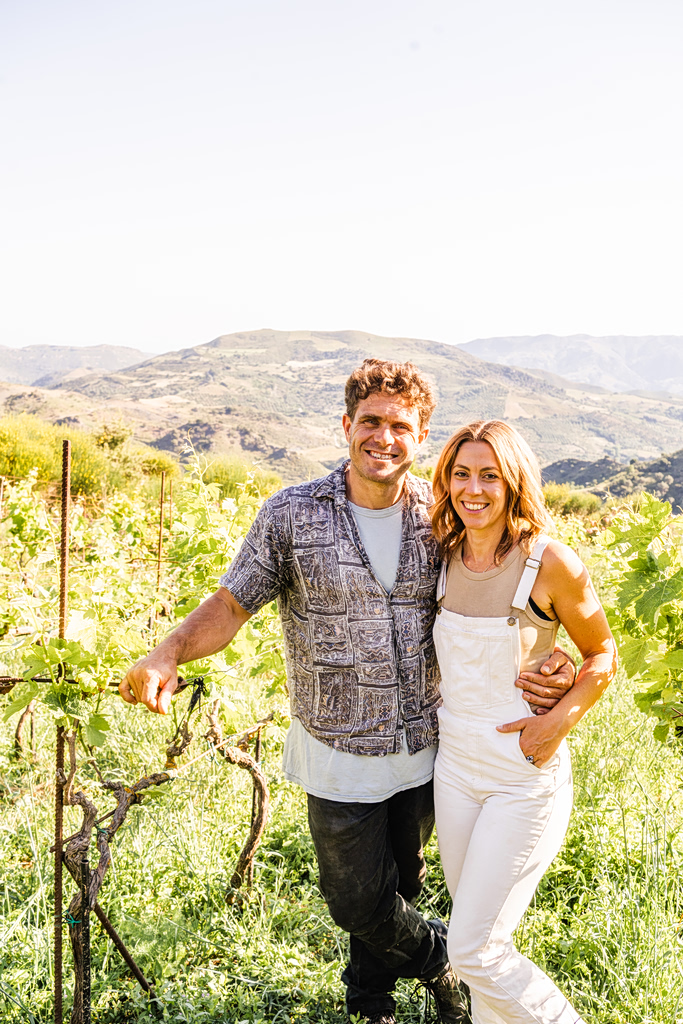
Photo credit: Cristina Nicole