LONDON – Tuesday 22 September. By 9am on a surprisingly warm September morning, a queue had already formed outside one of London’s most famous bookshops on Piccadilly.
Some clutched takeaway coffees. Others scrolled through their phones reading the latest headlines. A few had arrived before sunrise.
All were waiting for the same thing.
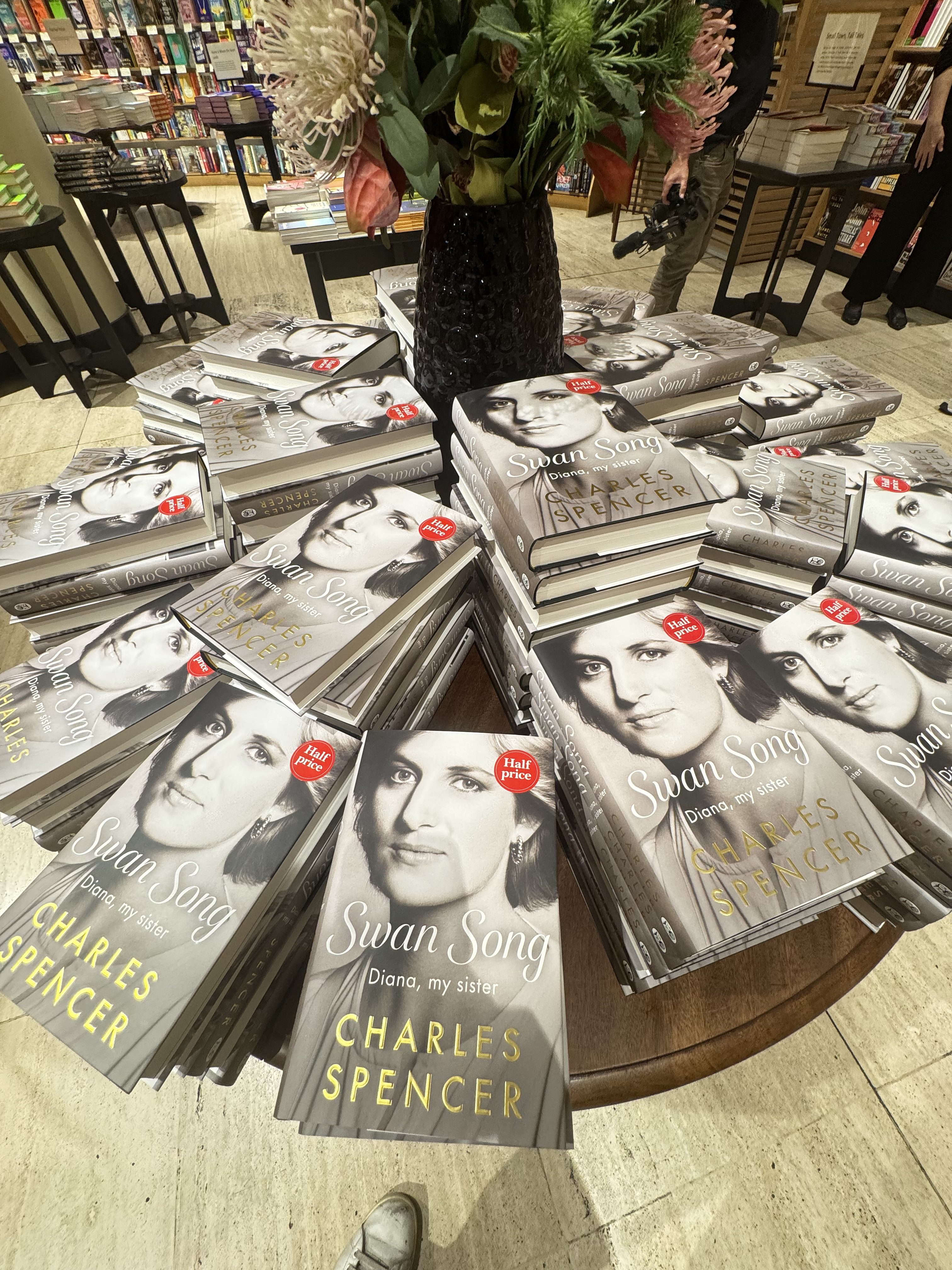
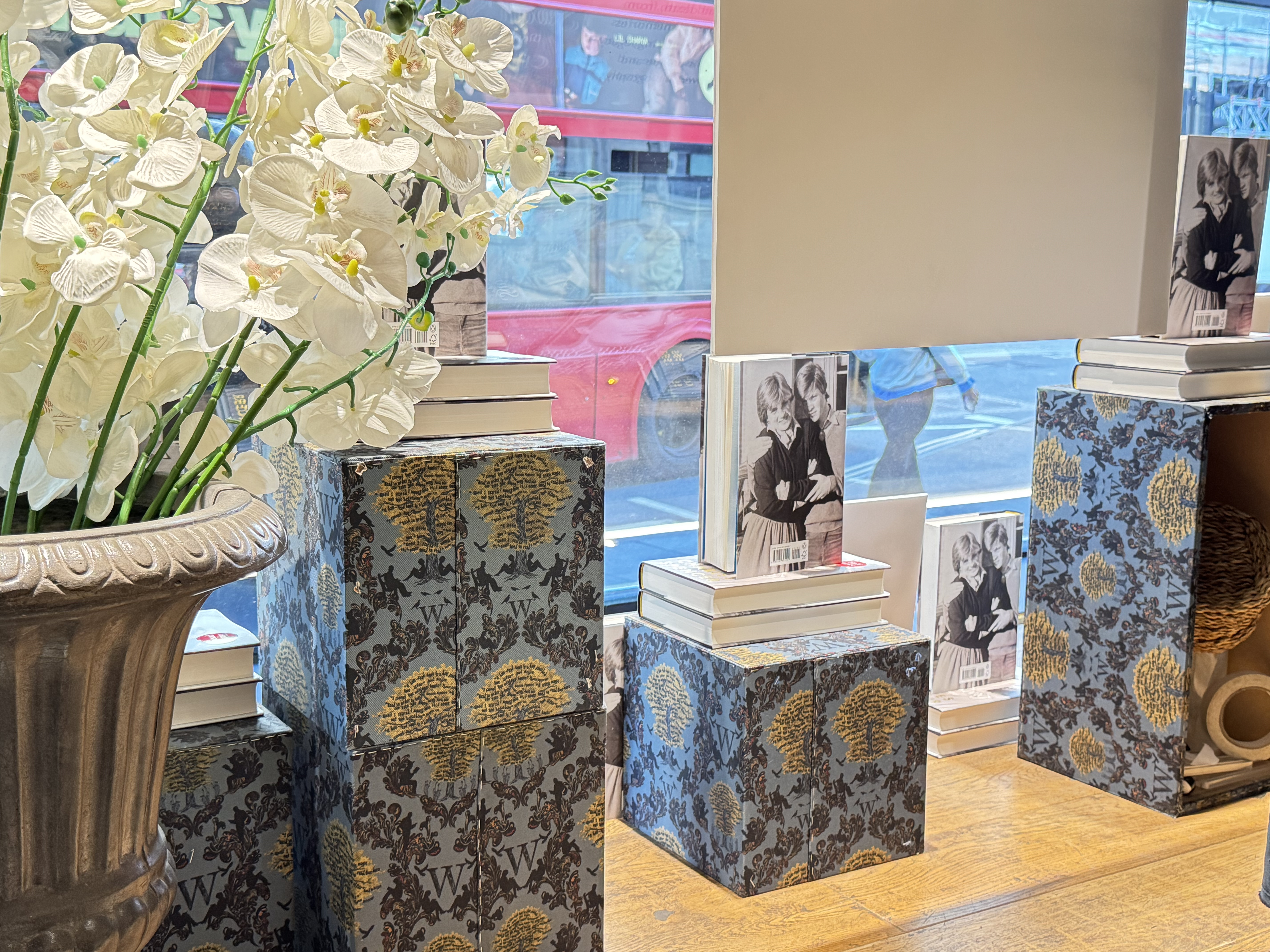
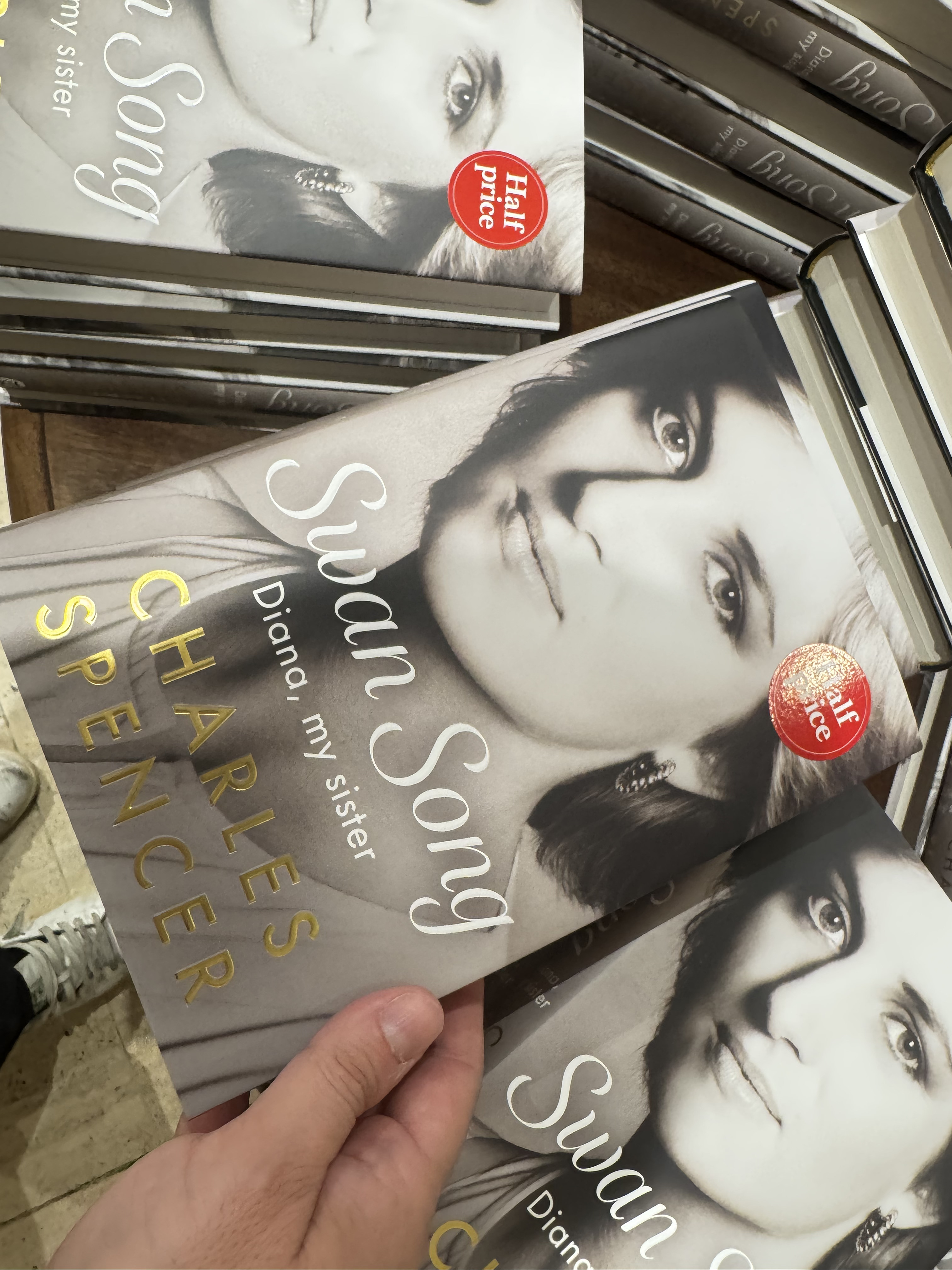
As the doors opened, customers moved quickly towards displays stacked with copies of Swan Song: Diana, My Sister, the long-awaited memoir by Earl Spencer, brother of Diana, Princess of Wales.
Nearly three decades after Diana’s death, Britain remains captivated by her story. Yet few expected a royal memoir to provoke quite this level of controversy before publication day had even arrived.
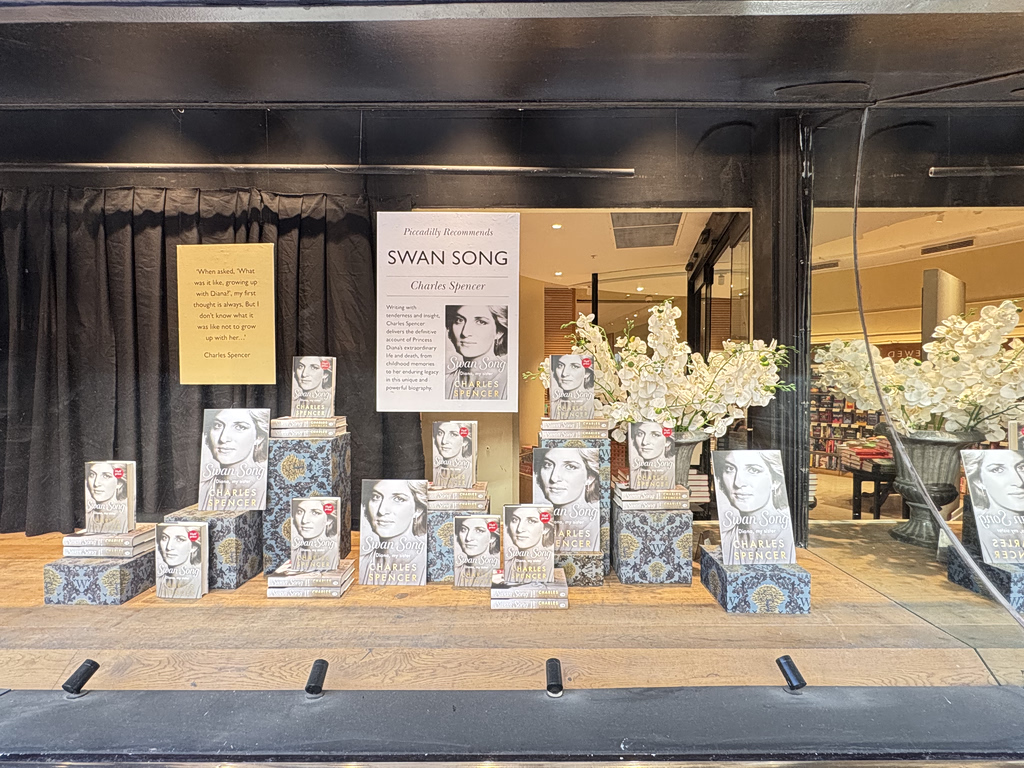
A bookstore displays the newly released “Swan Song: Diana, My Sister” by Earl Spencer in London, England.
Television studios have debated it for days. Newspapers have devoted front pages to it. Social media has become a battlefield between supporters and critics.
Now, as the book reaches shelves across the United Kingdom, questions are being asked not only about its claims but about what they mean for King Charles III and the future of the monarchy itself.
Outside the bookshop, Max, one of the first customers to purchase a copy, explained why Diana continues to hold such a powerful place in the public imagination.
“It is Princess Diana,” he told TO VIMA. “She may have been gone for almost thirty years but I still want to learn everything about her. Her humanity and her radiance have not faded for a single day.”
His sentiment is shared by many.
For a generation that grew up watching Diana’s life unfold in public, and for younger readers who know her largely through documentaries, books and television dramas, Swan Song represents another opportunity to understand the woman who transformed Britain’s Royal Family and whose legacy continues to shape it.
Yet this memoir is far more than a personal tribute.
It is also a direct challenge to long-established royal narratives.
‘Like a lottery winner’
The passages generating the greatest attention concern Earl Spencer’s recollections of the hours following Diana’s death in Paris in August 1997.
In one of the book’s most controversial claims, Spencer describes a telephone conversation with the then-Prince Charles shortly after learning of his sister’s death.
“Unlike my other callers, who were stunned, barely able to articulate their condolences and offers of help, he sounded giddily elated – like a lottery winner,” Spencer writes.
The allegation has dominated newspaper headlines and television discussions across Britain.
In another passage, Spencer reflects on what he believes may have been Charles’s immediate reaction to the tragedy.
“Looking back now, I suspect the prince’s first reaction must have been to think more of how this event might free him to marry the woman he loved, rather than appreciating the loss of one he did not.”
Elsewhere, the Earl recalls an alleged argument regarding funeral arrangements.
According to the memoir, the future King later remarked: “We’ll forget her soon enough.”
The Earl has repeatedly defended the accuracy of his recollections.
Asked during a BBC interview whether he possessed evidence to support his account, Spencer replied: “I told friends and family straight away because it was so monstrous.”
Then he added simply: “I’m telling the truth.”
A highly unusual Palace intervention
The publication has prompted an unusually swift response from Buckingham Palace.
Traditionally, royal officials avoid commenting on books, particularly memoirs and biographies. Yet within days of extracts emerging, a Palace spokesperson issued a statement.
“While we do not comment on books as a matter of principle, His Majesty is mindful that the pain of fraternal grief can cloud reason, affect judgment and colour memory in ways others do not recognise, even many years after such a loss.”
The response itself has become part of the story.
Several analysts told TO VIMA they were surprised that the Palace chose to engage publicly at all.
One senior royal observer described the decision as a significant departure from previous practice.
Others questioned whether the intervention may ultimately have amplified the book’s impact.
‘The public are not buying the Palace spin’
Among those who believe the memoir has already changed the conversation is historian and royal author Andrew Lownie.
“The book has reignited the War of the Waleses from 30 years ago,” he told TO VIMA.
“But this time with social media and a less deferential press the public are not buying the Palace spin.”
Lownie believes Britain has changed dramatically since the 1990s.
“There is a sense that whilst Spencer may have misinterpreted certain aspects, what he says is broadly true.”
For Lownie, the significance of the memoir lies not simply in the allegations themselves but in the public’s willingness to revisit uncomfortable questions about the treatment of Diana and the conduct of those around her.
Thirty years ago, royal communications were largely controlled through traditional media outlets.
Today, millions of readers can debate, analyse and challenge official narratives in real time.
That shift, he argues, gives books like Swan Song a very different impact.
‘We must interpret these memories as subjective’
Not everyone shares that assessment.
Professor Pauline Maclaran of Royal Holloway, University of London, believes readers should approach the memoir with caution.
“The extracts that have already been published are, of course, quite sensational,” she told TO VIMA.
She noted that the publicity surrounding the book appears highly effective.
“They appear to be designing a teaser campaign to engage audiences and ensure that they want to read more – that is, they buy the book.”
Maclaran argues that the most controversial passages should be understood as personal recollections rather than objective facts.
“Earl Spencer has emphasised that describing the King as ‘giddily elated’, and the reasons attributed to this elation, are his own personal judgment.”
“I believe we must interpret these memories as flawed because they are only Spencer’s own subjective opinion and it is well known that he and the King have never been close.”
Her comments highlight one of the central challenges facing readers.
The events described occurred almost three decades ago.
They involve moments of extreme grief, trauma and emotional turmoil.
Determining where memory ends and objective reality begins may ultimately prove impossible.
‘A performance of revenge’
An even harsher assessment comes from Frank Furedi, Emeritus Professor of Sociology at the University of Kent.
“The way I regarded it is that it seems to be a bit like a performance of revenge,” he told TO VIMA.
“There seems to be this almost narcissistic desire to promote yourself by trashing the Royal Family.”
Furedi believes the memoir revisits a conflict that has existed since Diana’s lifetime.
During the 1980s and 1990s, Diana increasingly came to symbolise a more emotionally expressive Britain, while the monarchy was often portrayed as distant and restrained.
According to Furedi, Spencer’s memoir attempts to revive that contrast.
Asked specifically about the claim that Charles allegedly said Diana would soon be forgotten, Furedi expressed doubt.
“Instinctively, intuitively, I would say that this is unlikely.”
“Charles is a political player and would be fairly diplomatic in expressing his views.”
Nevertheless, he acknowledged the limitations faced by all outside observers.
“Obviously you and I can never be 100 per cent sure one way or the other.”
Despite the media attention, Furedi does not believe the book will trigger a major constitutional crisis.
“I think the British public has become slightly desensitised,” he said.
“This is a story that is of much greater interest to the media than it is to people down the road at the pubs and on the streets.”
Diana remains the story
Yet if publication day demonstrated anything, it was Diana’s enduring ability to capture public attention.
The memoir ranges far beyond its allegations about Charles.
Spencer writes movingly about Prince Harry, describing concerns that the young prince lacked sufficient emotional support after his mother’s death.
“He needed Diana’s hugs, of course, and they would forever be denied him,” he writes.
The Earl also revisits disputes surrounding Diana’s HRH title and reflects on moments from her childhood and early adult life.
Throughout the book, however, one theme remains constant.
Diana remains the emotional centre of the story.
Nearly thirty years after her death, she continues to command public fascination in a way few members of the Royal Family ever have.
That fascination is translating into remarkable commercial success.
Speaking to TO VIMA, Kate Skipper, Chief Operating Officer of Waterstones, said demand has been extraordinary.
“From the moment the publication of Swan Song was announced last month, it quickly became our most pre-ordered biography of the year,” she said.
“There has always been a strong market for revelations about the Royal Family, but Swan Song holds particular appeal as a memoir of Princess Diana’s life behind gilded gates, written by her own brother.”
“We anticipate fantastic sales.”
A day the Palace would rather forget
Whether readers ultimately accept Earl Spencer’s version of events remains uncertain.
Some see the memoir as an important corrective to the official history of Diana’s life and death.
Others view it as a deeply subjective account shaped by grief, family tensions and the passage of time.
What cannot be disputed is its impact.
Before most bookshops had even opened their doors, Swan Song had become Britain’s most talked-about publication.
By lunchtime, copies were disappearing from displays across the country.
Nearly three decades after the death of Diana, Princess of Wales, the nation is once again debating her legacy, her marriage and her place in royal history.
For Buckingham Palace, it is an unwelcome return to one of the most painful chapters in modern monarchy.
For publishers, booksellers and readers, it is proof that Diana remains a uniquely powerful figure.
And on a warm September morning in London, as queues stretched along Piccadilly and customers rushed to secure their copies, one conclusion felt impossible to avoid:
Diana’s story is far from over.