 Μake us preferred on Google
 A small and remote Greek island has become the center of a growing dispute over how to balance environmental protection, local development and a decades-old way of life.
The controversy on Gavdos escalated on April 23, when riot police units (MAT) arrived on the island during an operation to dismantle wooden shelters used by people staying on the beaches of Lavrakas and Agios Ioannis.
The demolition of the structures has reopened a long-running conflict between the local authorities and a group of residents and visitors who support a more alternative lifestyle, closely connected to nature and free camping.
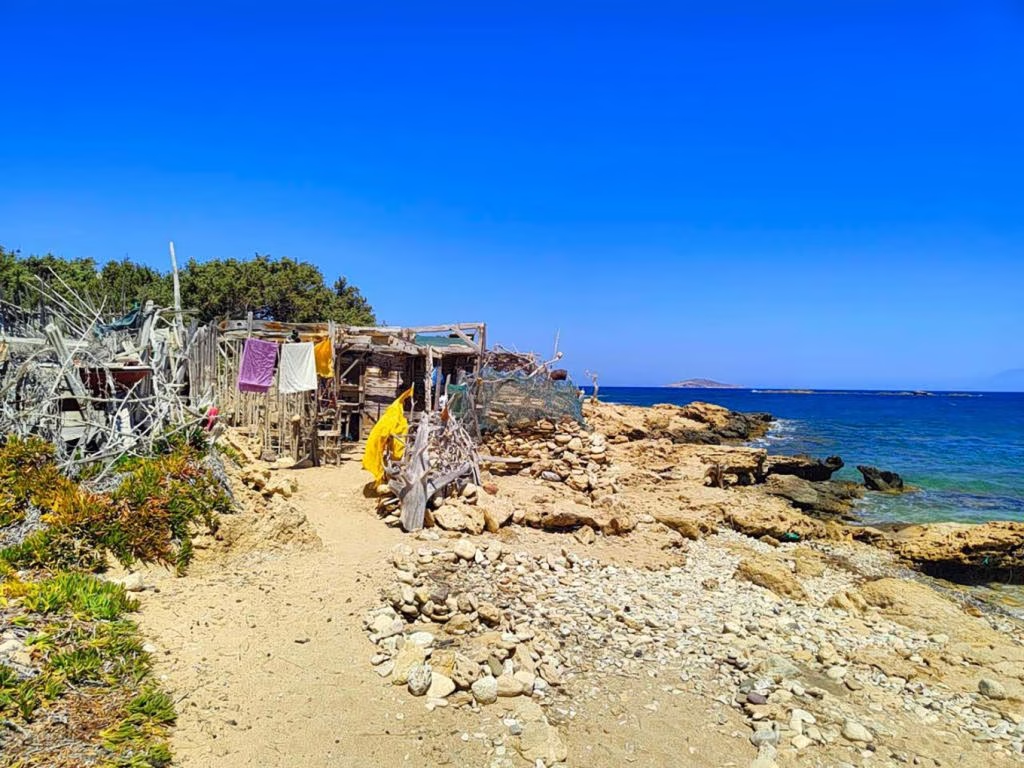
The wooden cabins used by campers were, from the outset, a target of attention for the mayor, Lilian Stefanaki
People who regularly stay in the area argue that the shelters represent a traditional way of living on the island, while the municipality says the structures are illegal and located in a protected area that requires stricter oversight.
A dispute years in the making
The confrontation did not begin this year. Similar attempts to remove the shelters took place in 2022 and 2024, but the latest intervention was described by those affected as far more intense.
Two months after the operation, people who had been living in the shelters remained on the beach, now staying in tents.
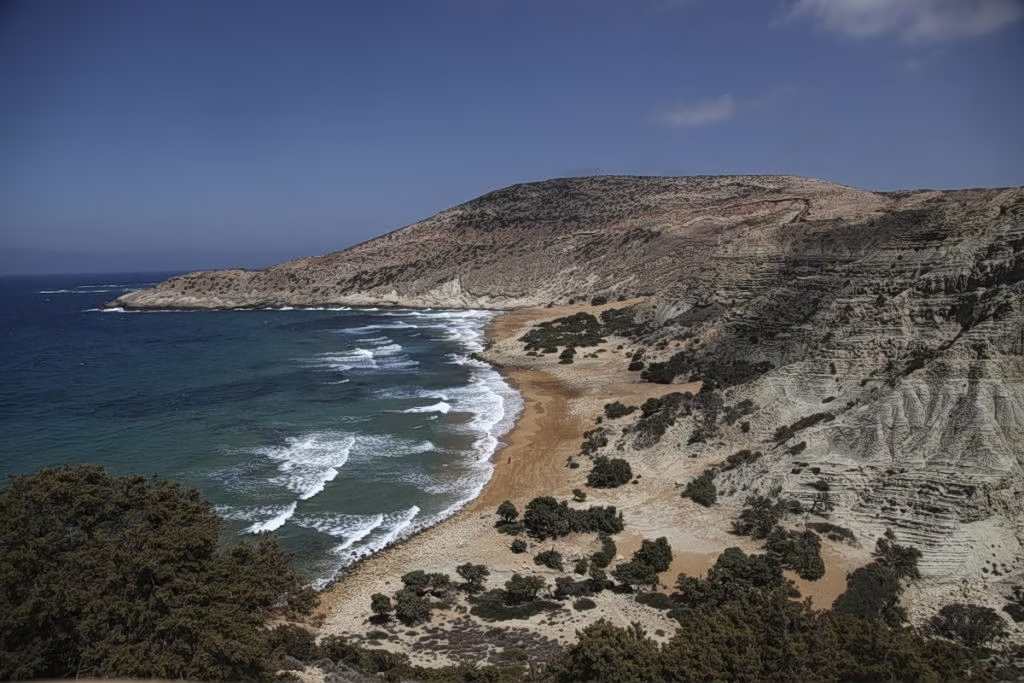
The municipality has said it wants the areas of Lavrakas and Agios Ioannis to operate under a protection model similar to other environmentally sensitive Greek destinations, with special rules for preserving the landscape.
Gavdos is part of the European Natura 2000 network of protected areas, meaning that conservation rules apply across the island.
Municipality cites environmental and archaeological concerns
The municipality argues that the wooden shelters were permanent unauthorized constructions in an area requiring protection. It has also referred to a 2016 document from the Archaeological Service of Chania, which reportedly recorded archaeological remains in the area, including ancient structures, carved features, Roman-era graves and parts of a Roman water system.
According to the municipality, some of the shelters were built using stones from the archaeological site, making their removal necessary.
However, opponents of the demolition reject this claim. Ilias Kyriakopoulos, head of the local opposition, said the shelters were made from wood and fabric and could be easily dismantled, arguing that no ancient materials were used.
He also questioned whether general laws adequately reflect the special circumstances of small, isolated communities such as Gavdos.
Free camping and the island’s economy
Those defending the campers say that free camping has been a key part of Gavdos’ social and economic identity for decades.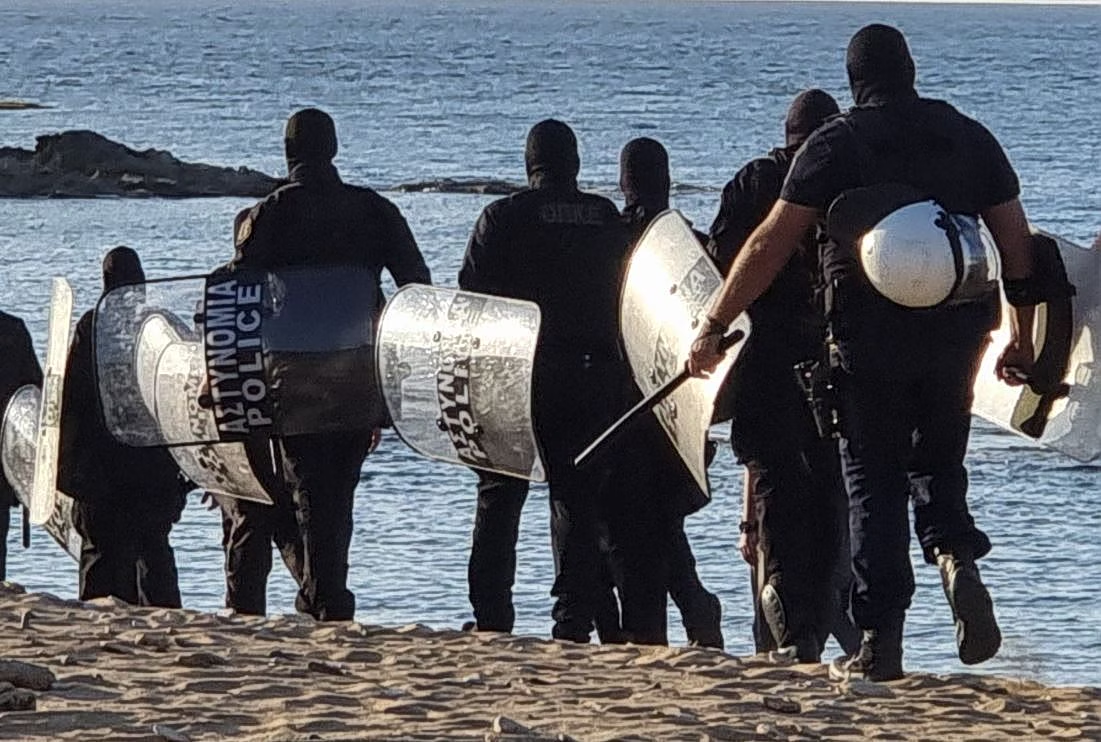
Ilias Papadopoulos, who has visited the island regularly since 1998, said the island’s economy has historically relied heavily on visitors who choose this type of stay, as Gavdos does not have a large-scale hotel tourism model.
Supporters of the campers argue that restricting free camping could fundamentally change the character of the island.
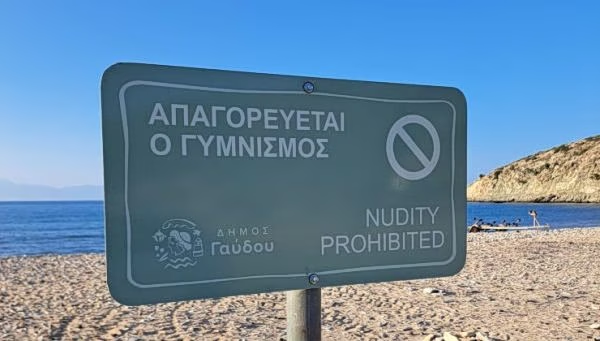
The municipality, however, maintains that camping must follow Greek legislation, especially in protected areas, beaches, forests and archaeological zones.
Dispute expands beyond the shelters
The disagreement reflects a broader tension on Gavdos, where some residents and visitors say they have experienced increasing restrictions in recent years.
Critics of the municipal leadership point to previous disputes involving issues such as beach facilities, regulations and local services, arguing that the island’s unique needs are not being taken into account.
One example raised by residents concerns the struggle to establish a middle school on the island. Efi Georgaka Liougaki, who moved permanently to Gavdos from Athens and later left the island, said she fought for years for the school’s operation after facing difficulties with her children’s education.
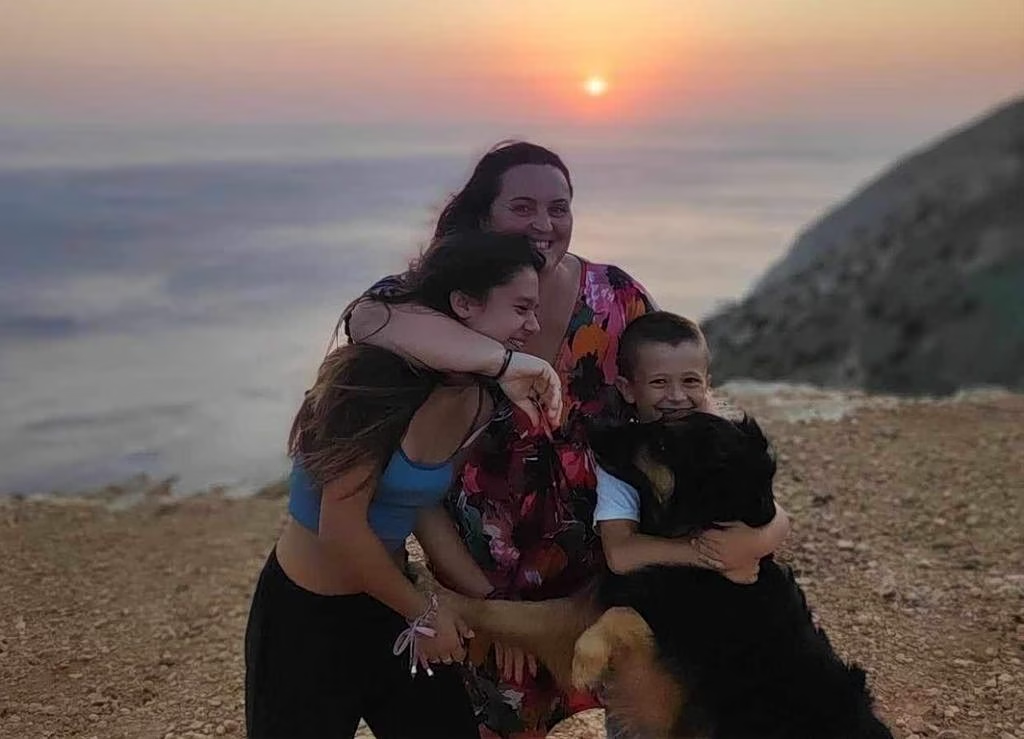
She said she eventually succeeded, but later moved with her children to Heraklion, Crete, describing a difficult social environment on the island.
A debate over Gavdos’ future
For those who remain on Gavdos, the conflict is about more than wooden shelters. They see it as a debate over the future identity of a remote island with limited infrastructure and a small population.
They argue that people who have lived there temporarily or permanently for decades have contributed to the island’s community and environmental efforts.
The municipality, on the other hand, insists that protecting Gavdos’ natural and cultural heritage requires enforcement of existing rules.
The dispute has highlighted a wider question facing the island: whether Gavdos’ future should be shaped around stricter protection and regulation or around preserving the informal, alternative lifestyle that has long attracted visitors to its shores.