 Μake us preferred on Google
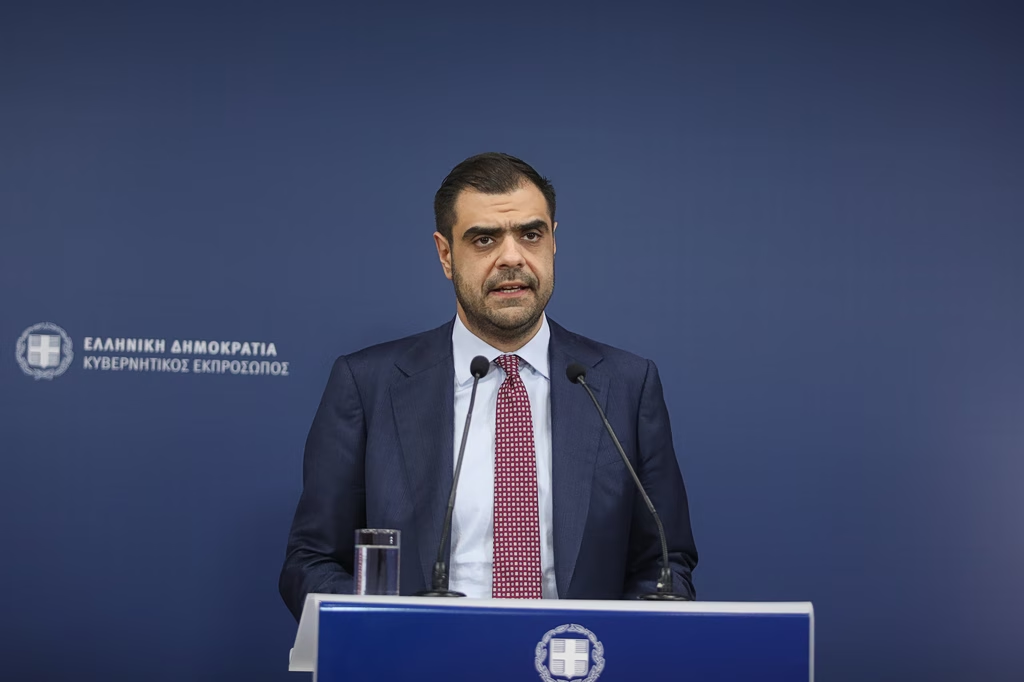
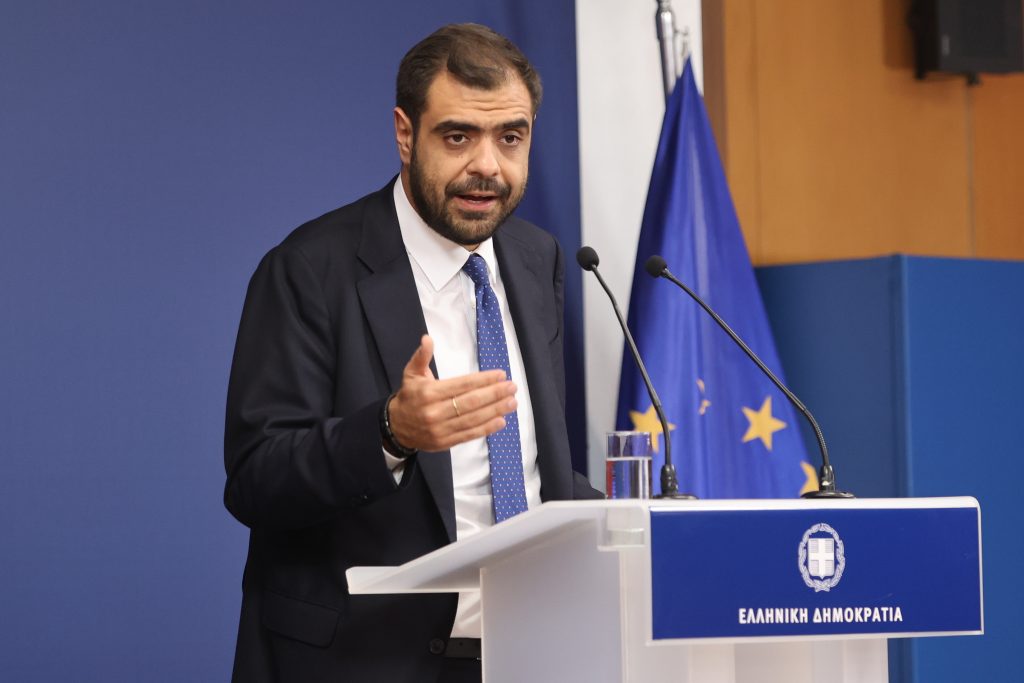
 Government spokesperson Pavlos Marinakis said the government intends to gradually scrap the rule that sets a minimum presumed net business income for freelancers and the self employed, once other measures against tax evasion have had time to work.
Under this rule, freelancers and the self employed are taxed on their minimum presumed income even when their declared earnings are lower, a mechanism designed to curb underreporting of income. It has drawn persistent criticism from professional associations, who argue it can tax people on income they never actually received.
Speaking in an interview with News24, Marinakis referenced comments made previously by Prime Minister Kyriakos Mitsotakis that the rule was never made to be permanent. He tied any rollback to how well separate, already existing measures against tax evasion perform going forward.
Marinakis said there was one phrase in particular worth remembering in the weeks ahead: the prime minister’s argument that the goal was never to keep the rule in place indefinitely. “Once all the other measures to tackle tax evasion are applied and start to deliver results, we should look at removing them gradually, either all at once or one by one,” the government spokesperson said. “As these measures are applied and deliver results, the rule should gradually disappear,” he added.
A package worth more than 1 billion euros
Marinakis said the fiscal space available for the measures the government plans to unveil at the Thessaloniki International Fair (TIF), stands at just over 1 billion euros. He said the intended recipients of the new measures include pensioners, public and private sector employees, and freelancers and the self employed, adding that the goal is to distribute the available funds as fairly as possible.
“The government’s goal is to support pensioners and public employees as much as possible, and not only them but also private sector employees and especially freelancers and the self employed, with whatever extra money we can provide, so that the distribution is fair,” Marinakis said, adding that the measures “will be permanent in nature.”
Marinakis left open the possibility of a new program modeled on My Home, the state backed scheme that offers subsidized mortgages to help young people buy their first home.
Turkey and the maritime parks dispute
On foreign policy, Marinakis used the image of an athlete to draw a contrast between Greece and Turkey. He said Greece’s planned maritime parks were designed strictly within international law, inside Greek national jurisdiction and with European Union approval, and are already producing concrete results. Turkey’s objections and what he called its arbitrary maps, by contrast, are illegal moves with no standing in international law, he said, and often amount to little more than rhetorical theatrics directed at a Greece that has grown stronger through the delimitation of exclusive economic zones, the extension of its territorial waters and its defense procurement programs.
Marinakis also responded to criticism from former Prime Minister Antonis Samaras over the government’s handling of relations with Turkey. He noted that every Greek prime minister in recent decades, Samaras included, met with the Turkish president even during periods of heightened Turkish provocations, in line with the country’s longstanding policy of dialogue. He said it is easy to strike a more combative tone from outside government, and argued that the current administration is combining dialogue with a substantial buildup of Greece’s deterrent capability.