 Μake us preferred on Google
 The Dormition of the Virgin Mary, often known in Greece as the “Easter of Summer,” holds a central place in Kefalonia’s religious life. Across the island, dozens of churches are dedicated to the Virgin Mary; among them, Panagia Kougiana in Vary, the Evangelistria within the Castle of Saint George, and Panagia in Agkonas offer a striking journey through ecclesiastical art, from Byzantine frescoes to the style of the Ionian School.
The thread begins with a record from the Latin Diocese of Cephalonia dating to 1264, which mentions a small church in Vary, Erisos: Panagia Kougiana, the oldest, as far as we know, written reference to a church on the island still in use eight centuries later.
Panagia Kougiana: The Byzantine Beginning
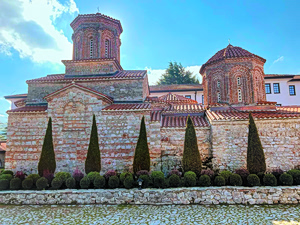
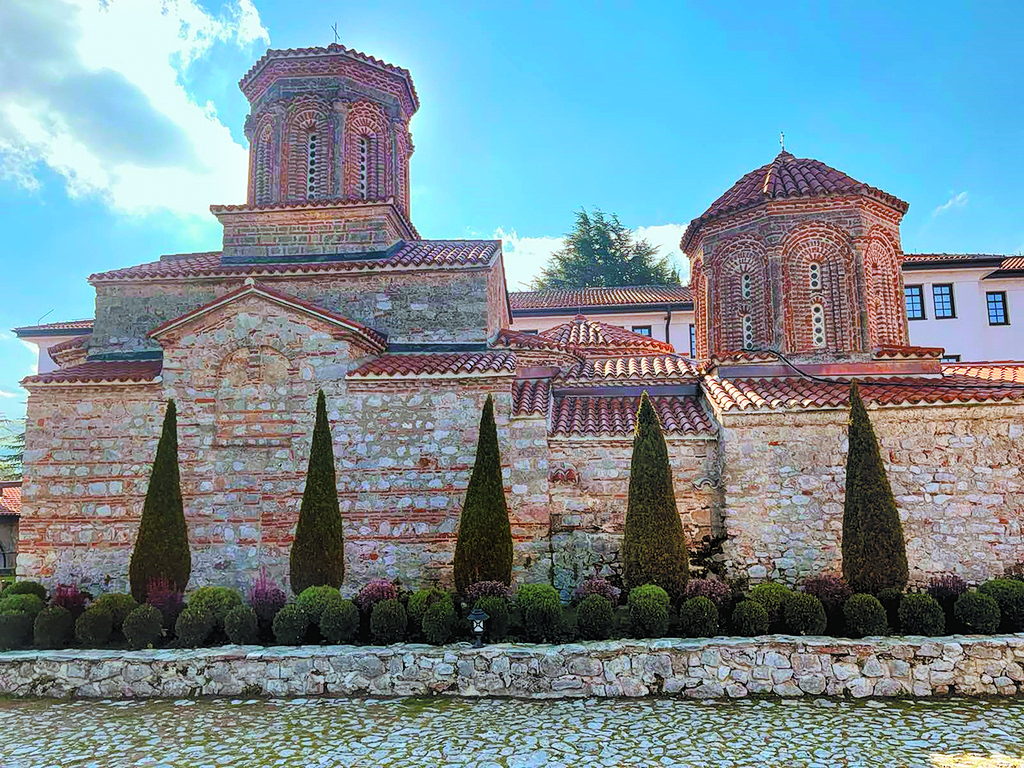
In the village of Vary at the region of Erisos, stands a small building in the shape of a free-standing cross, with a dome. Some scholars date its frescoes to the 11th century. It is the oldest church in Kefalonia in continuous use.
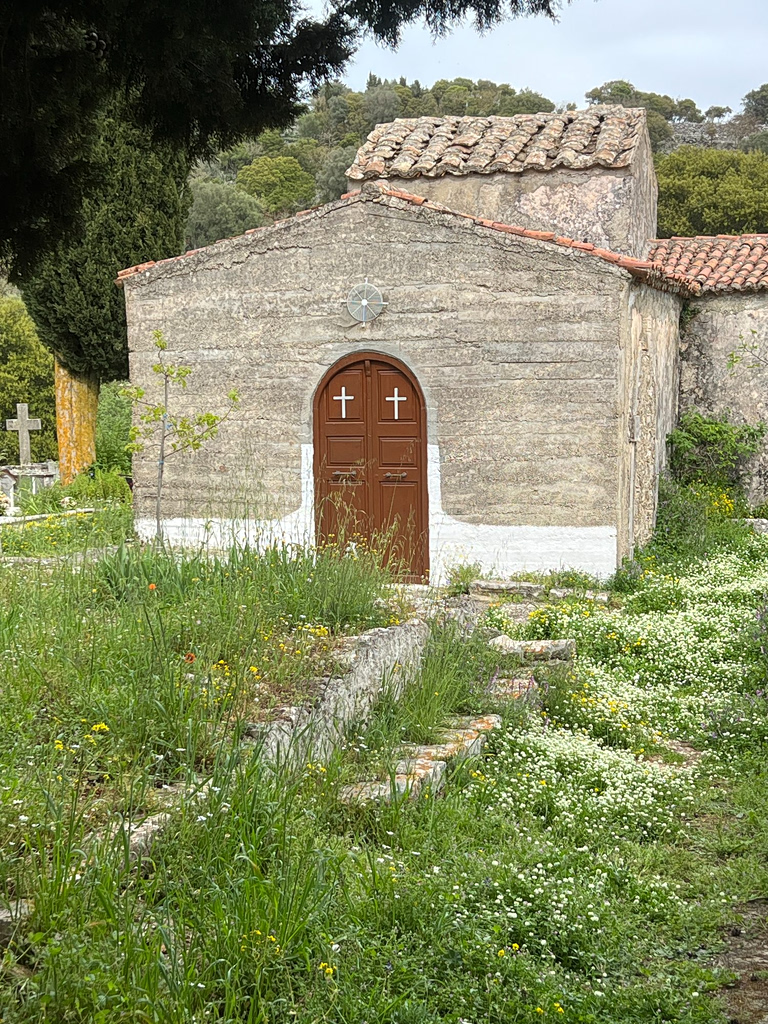
Panagia Kougiana. Photo: Niki Kalogiratou
Here, the art is still distinctly both Byzantine and folk: inside, a rare depiction of the Second Coming unfolds, with the river of fire separating the earthly colors from the luminous Paradise and twelve figures of the damned, such as the usurer, the perjurer, and those who “sleep on Sunday,” all depicted in the traditional costumes of Erisos. Today, the church and its frescoes are deteriorating. Their preservation would protect not only a place of worship, but also one of Kefalonia’s most significant surviving witnesses to its medieval religious heritage.
The church’s name likely conceals a social history. No source explains with certainty the etymology of “Kougiana,” but dozens of small churches on the island were named after the landowning family that built them on their estate as private chapels. This practice had a legal basis: the “patronage right” (jus patronatus), an institution borrowed from Latin Canon Law that the Venetians imposed even on Orthodox churches in the Ionian Islands.
The Church of the Annunciation at the Castle: The Turn Toward the West
Seven kilometers from Argostoli, within the ruined walls of the Castle of Saint George – the first capital of Kefalonia – stands the Church of the Annunciation. A marble inscription embedded in the wall dates to 1580, during Venetian rule; until 1757, when the seat of the diocese moved to Argostoli, it served as a metropolitan cathedral. A single-aisled basilica with a wood-carved iconostasis, it bears strong elements of the Ionian Baroque style; it is the second stop on the route, the point where art changes course.
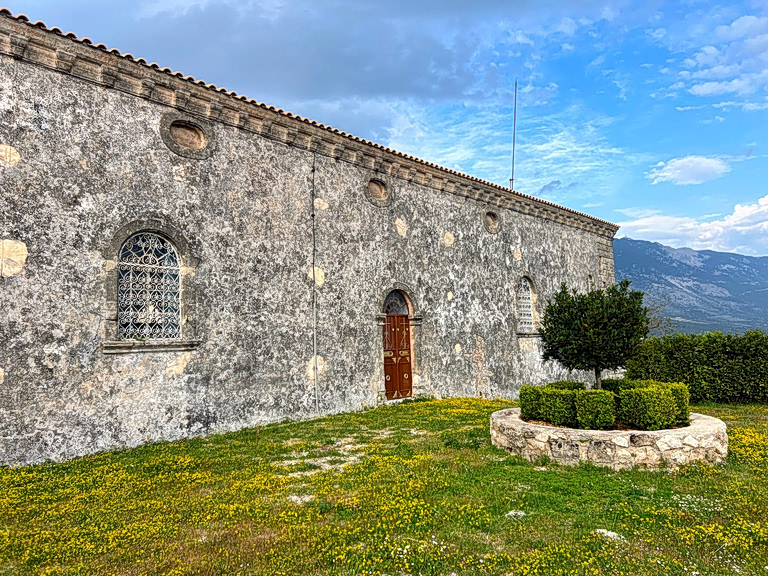
The Church of Evangelistria at the Castle of St. George. Photo: Niki Kalogiratou
The artistic movement that defined it, the Ionian School, emerged in the mid-17th century and flourished until the mid-19th. The Byzantine tradition, with its gold backgrounds and linear features, gave way to the Western, naturalistic painting of the Italian Baroque. A decisive factor was the migration of Cretan painters to the Ionian Islands following the Ottoman conquest of Crete, and especially the figure of Panagiotis Doxaras, who studied in Venice and abandoned the Byzantine technique in favor of oil painting on canvas. Under successive Venetian, French, and British rule, the Ionian Islands became the only place where Greek art openly turned toward the West, and the Church of the Annunciation is one of the most characteristic examples of this shift in Kefalonia.
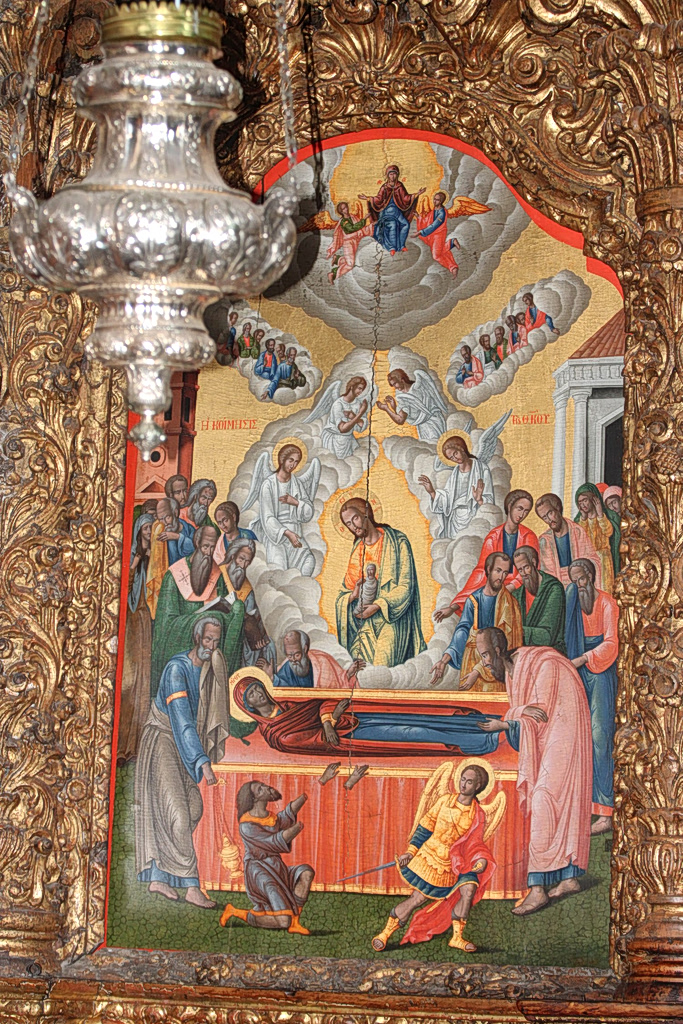
Icon of the Dormition of the Virgin Mary, an example of the Ionian School at Panagia in Angonas. Photo: Niki Kalogiratou
The Castle was battered by the earthquakes of 1636, 1637, and, most devastatingly, 1953. As the parish priest recounts, after the 1953 earthquake, nothing remained standing except the building and the fresco in the sanctuary; local residents took the icons to their homes until they could be returned to their places. The current iconostasis is said to have come from other churches in the Castle, as do the post-Byzantine icons from the surrounding ruined churches that are kept inside.
The Virgin Mary at Agkonas and the Ionian School
The third stop illustrates just how deeply the new style took root. Panagia in Agkonas village, in the northwestern part of the island, at an elevation of 280 meters near Paliki, was built on the site of an 11th-century chapel, where, according to tradition, a shepherd found an icon of the Virgin Mary. The village, which moved to higher ground to escape pirates, taking its saints with it, once had seven churches; this was its cathedral, situated on one of the most beautiful “balconies” of the Ionian Sea, where vespers are held against the backdrop of the sunset.
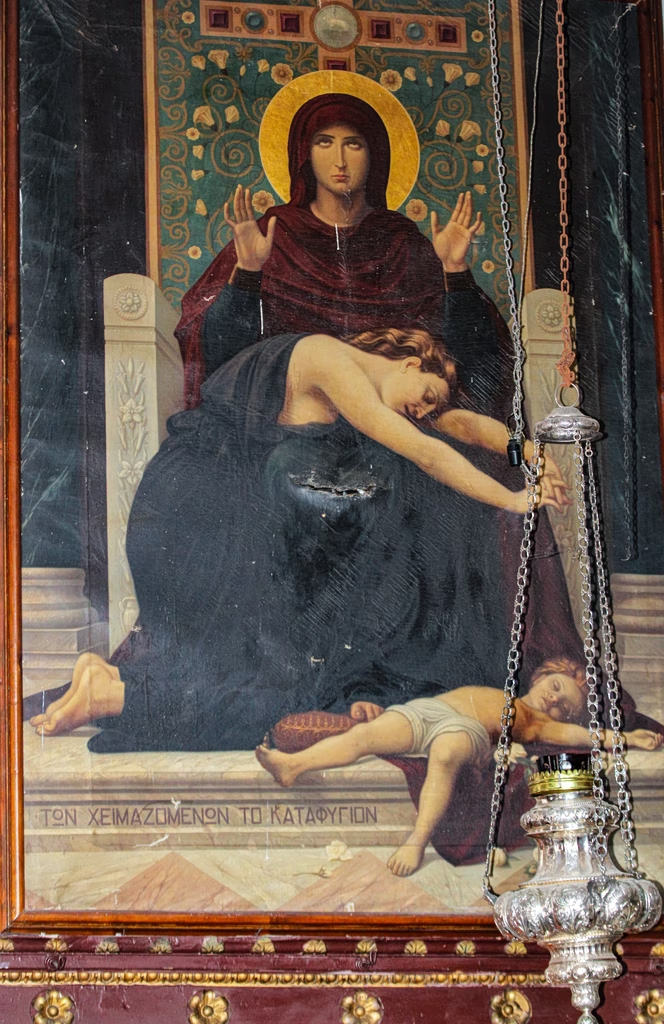
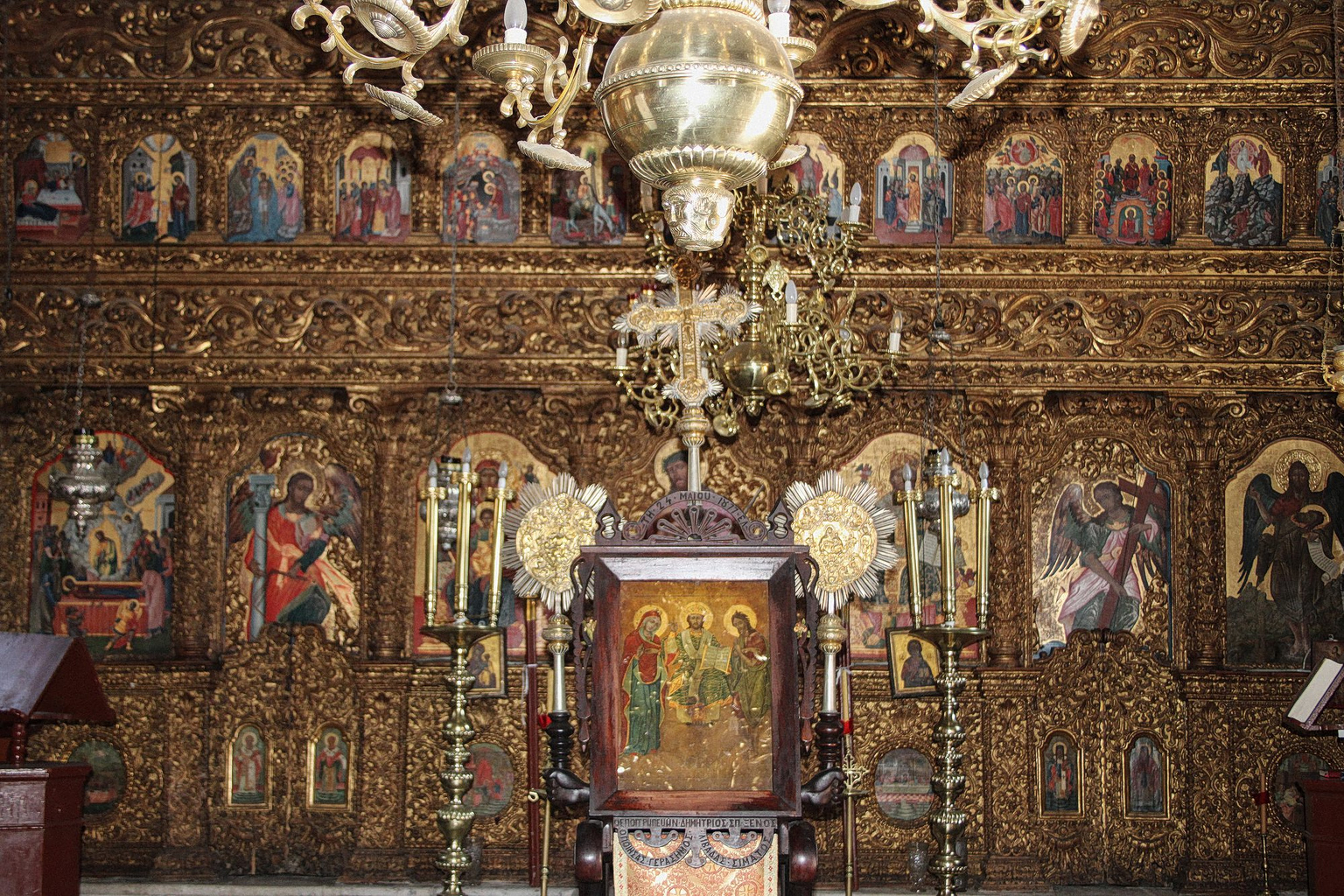
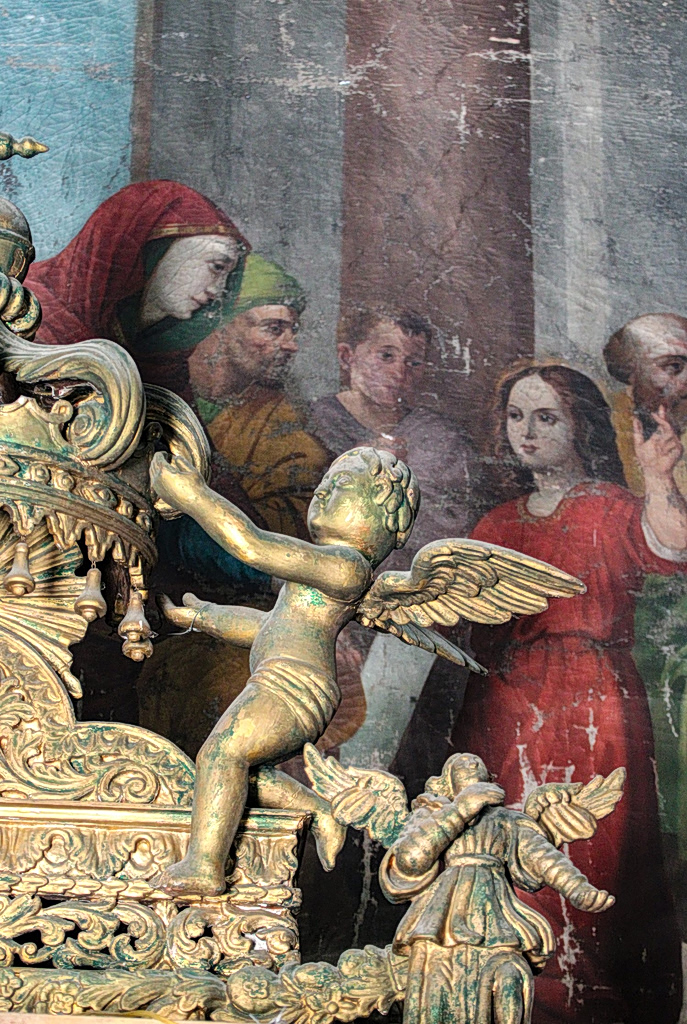
As the linear Byzantine tradition gave way to the Baroque, Western-influenced religious art came to dominate Panagia at Angonas. Photo: Niki Kalogiratou
The present church was built in 1777, a few years after the devastating earthquake of 1767, at the height of the Ionian School’s influence, when the Venetian spirit had permeated not only the urban centers but also the most remote mountain villages. The iconostasis bears the signature of Andreas Sakvinatsos, an iconographer whose work is characterized by a “unique style.” The icons inside, as the parish administrator notes, are painted on canvas and were created by different artists, perhaps because they were donations from different families, each commissioning its own painter. This phenomenon is not uncommon on the island. Nearly two hundred and fifty years later, the murals bear the marks of time and humidity and would benefit from careful conservation.
Ecclesiastical Art on an Earthquake-Prone Island.
The fact that this artistic journey, from 11th-century frescoes to 18th-century canvas paintings, has survived to this day is by no means a given. Kefalonia is in one of Europe’s most active seismic zones. The earthquake of 1636 destroyed nearly every church built before it; the one in 1767 left “not a single bell tower standing on the entire island.” The peak came on August 9–12, 1953: three consecutive earthquakes measuring up to 7.2 on the Richter scale, 455 deaths in Kefalonia, Zakynthos, and Ithaca, and approximately 30,000 homes destroyed.
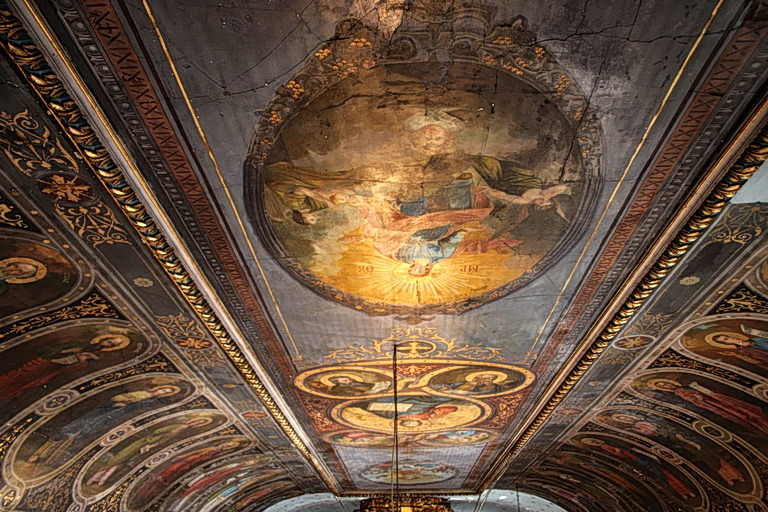
Photo by Niki Kalogiratou
Among the few areas that escaped almost unscathed were those in the northernmost part of the island, while further south, so many other churches – such as the old Metropolitan Cathedral of Argostoli – were completely destroyed. This unending cycle explains why most of the island’s churches are later versions of older structures or have preserved only a fragment of what collapsed: an iconostasis, an icon, a fresco.
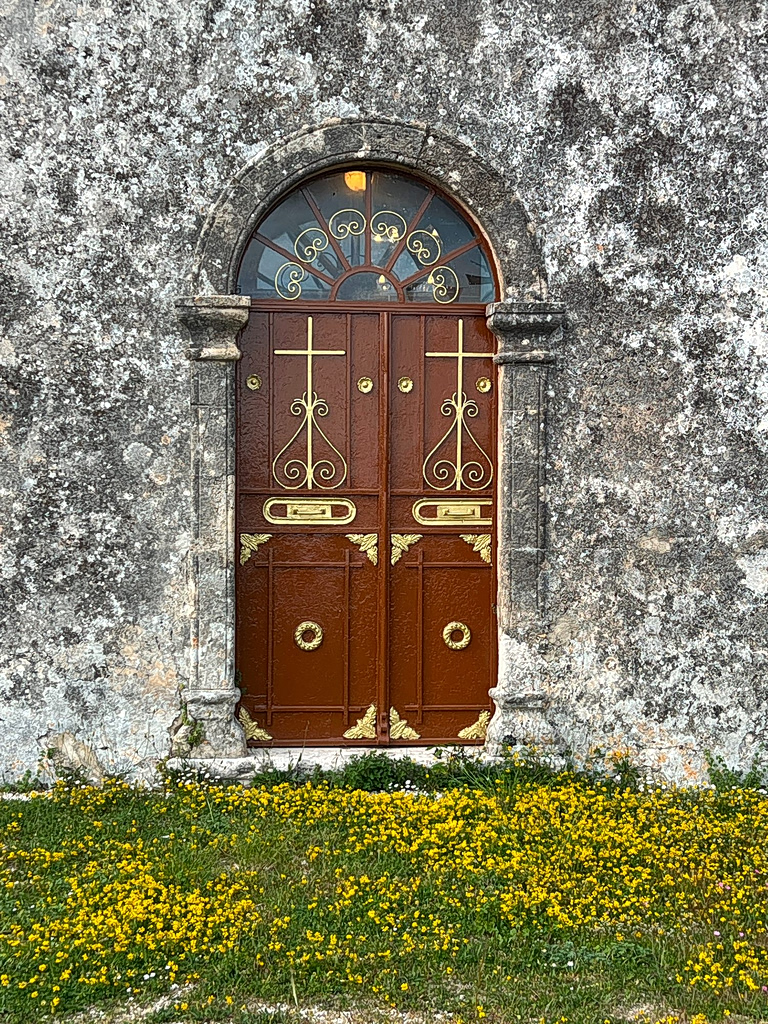
Photo by Niki Kalogiratou
The bells of the three churches are rung each year for the Feast of the Assumption. Their survival – with their frescoes and icons almost intact after centuries of earthquakes – is not merely an artistic legacy; it is living testimony to a continuity that is becoming rare, from the golden backdrop of Byzantium to the oil on canvas. And perhaps that is why caring for them is not a luxury, but an obligation to a history that, quite literally, still stands tall.