 Μake us preferred on Google
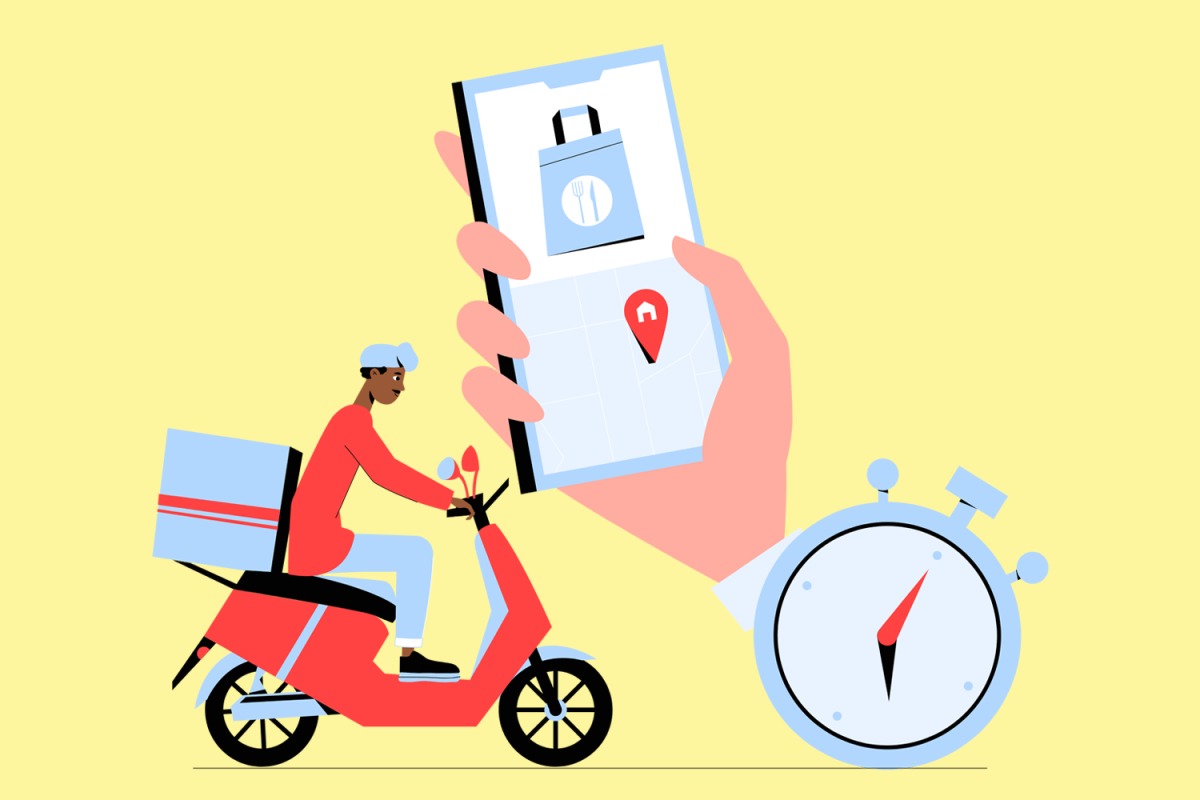
 Stefano, an Italian fine art photographer from Livorno, decided during the pandemic to work as a food delivery rider to boost his income.
At first, he feels a great sense of freedom, as he was working without a boss, without fixed hours, with immediate pay.
Very quickly, however, that promise turns into stress, dependency, and uncertainty in the face of an algorithm that decides, without explanation, his shift, imposes penalties, and even affects his mental health.
It is precisely from this everyday experience of delivery workers on platform apps that the book Algorithms of Resistance (Ropi editions) by Tiziano Bonini and Emiliano Treré takes its starting point. The book analyzes platforms not merely as mechanisms of control, but as spaces where users have the power to develop forms of resistance.
“The narrative of algorithmic omnipotence leads to inaction, nihilism, and despair.”
The two Italian academics examine the ways in which users’ appropriate algorithms to achieve what they want in work, culture, and politics. Against the dominant narrative of algorithmic omnipotence, the authors highlight the potential for user resistance, through actively influencing the outcomes of algorithms

Emiliano Trere, author and distinguished researcher at the University of Santiago de Compostela, Spain, and associate professor in the field of Data Management and Media Ecosystems at Cardiff University, United Kingdom.

Tiziano Bonini, one of the authors of the book “Algorithms of Resistance”, is a professor at the University of Siena specializing in the sociology of culture and communication. The book analyzes platforms not merely as mechanisms of control, but as spaces where users have the power to develop forms of resistance.
What first pushed you to write a book that treats algorithms not only as systems of control, but also as possible tools of resistance?
When we first started planning this book, between 2018 and 2019, we were reading only books that presented a monolithic view of the power of digital platforms, as if we users were merely helpless victims unable to fight back. This narrative is still quite widespread in the media, but no longer within the academic community
You argue that algorithms are not just tools of oppression, but can also be “algorithms of resistance”. How do you define “algorithmic agency,” and why is it crucial to look at what people do to algorithms, rather than just what algorithms do to people?
The field of platform studies has given us powerful tools to understand algorithmic oppression, with scholars like Noble, Eubanks, and Zuboff illuminating how algorithms discriminate and surveil. But in focusing so intensely on what algorithms do to people, the field has left in the shadow the inverse question: what do people do to algorithms? That is the question at the heart of our book.
We define algorithmic agency as the reflexive ability of humans to exercise power over the outcome of an algorithm. Drawing on Giddens’s structuration theory, we argue that humans and algorithmic infrastructures mutually shape each other in a recursive loop. When Deliveroo couriers learn to cancel shifts without losing rating points, or when Uber drivers coordinate via Telegram to trigger surge pricing, they are doing things to algorithms.
And yet we are careful not to romanticize this. As Ien Ang reminded us, we must not cheerfully equate the active with the powerful. What we want is a more honest narrative, one that accounts for both the structural weight of platform power and the persistent, inventive, often microscopic agency that people exercise within it.
It is important to look at what people are doing to algorithms for two reasons:
First, so as not to fall into the ideological trap that leads us to believe these platforms are unassailable, invincible and all-powerful. This narrative leads to inaction, nihilism and despair. Yet we can do many things, both at the micro and macro levels, by regulating them appropriately.
Second, it gives us a more realistic and less pessimistic view of ourselves as human beings: we are not completely passive subjects, nor are we so easily manipulated.
In the introduction, you follow Stefano, a courier in Livorno, whose initial enthusiasm for the platform turns into dependency and anxiety. Why did you choose to open the book with such a story?
We chose Stefano precisely because of his ordinariness. He is a forty-three-year-old art photographer from Livorno who downloaded Deliveroo during the first COVID-19 lockdown after losing his freelance work. He fixed an old bicycle and started riding. The first week felt like freedom, with nearly 300 euros earned, no boss, and no obligations. A month later, he was anxiously checking the app for shifts, feeling dependent on a system he barely understood.
What his story captures is the full arc of the platform experience: the initial seduction of autonomy, then the slow discovery of dependency and opacity. He did not understand the algorithm until a colleague in the local couriers’ WhatsApp group explained that missing one shift had cost him two rating points. That small drop changed everything: worse shifts, less income, a punishment never announced by any rule. But the story is not only one of victimization.
Without that WhatsApp group, Stefano told us, he would have already quit. The group was his introduction to collective algorithmic intelligence and solidarity: shared, informal, bottom-up knowledge about how to navigate a system designed to keep workers isolated and compliant.
You use the concept of the “Moral Economy” to explain the clash between platforms and users. How does this concept help us understand why a platform calls a practice “gaming” (cheating) while a worker calls it “optimization” or even survival?
The British and Marxist cultural historian Edward Palmer Thompson argued in 1971 that the English food rioters of the past were not irrational mobs. They were acting according to a coherent moral vision: bread had to have a “just price,” and merchants who violated it deserved public punishment. He was distinguishing between two competing moral economies, not declaring one more moral than the other.
We apply this logic to platforms: Deliveroo, Uber, and Instagram embody a specific moral economy: neoliberal values of competition, individual optimization, and data extractivism. When a courier games the algorithm to get better shifts, the platform calls it cheating. When an Instagram creator joins a pod to exchange likes, the platform calls it inauthentic behavior. But from the users’ perspective, these are acts of survival or fair compensation, “fair” or “just” responses to a system that arbitrarily reduced their earnings or visibility. As we write in chapter 2: gaming is in the eye of the beholder.
The problem is that the power to define what counts as gaming is not equally distributed. Platforms have enormous institutional authority to impose their moral vocabulary, as they can de-platform, shadow-ban, or penalize. What our book tries to do is give voice to the other moral economy: the one workers and creators articulate in their WhatsApp groups, and to show that this alternative moral vision is not random, but deeply coherent.
You found couriers building “algorithmic alliances” through private WhatsApp and Telegram groups. How are these digital spaces becoming the new “factory floors” for organizing and solidarity?
The gig economy was explicitly designed to prevent collective organizing: workers are isolated, legally classified as independent contractors, each facing the algorithm alone. What surprised us in our fieldwork was that workers had spontaneously recreated something like a collective space in the digital realm. The WhatsApp and Telegram groups we observed among couriers from China to Italy functioned as informal unions of a new kind — spaces for sharing what we call the “algorithmic imaginary”: collective theories about how the platform actually works, built through shared experience and daily trial and error.
These groups also produced what we call algorithmic alliances — human-to-human solidarities organized around resisting the algorithm. The clearest example are collective log-outs of Chinese and Mexican couriers in order to protest against the platforms, or to artificially inflate the price of an order, or to ensure that even those couriers who had not received any orders during the day could earn some money. This is collective action that turns the platform’s own algorithmic logic against itself, that is resistance through the algorithm, not just against it.
However, we are careful not to overstate this. These groups are fragile, precarious, and do not replace formal union organizing. But they show, empirically, that the isolation platforms engineer is never total neither easily accepted by the workers.
In your chapter on culture, you describe visibility as a battleground. Has visibility—the constant effort to be “seen” by the algorithm on Instagram or TikTok—now become a form of labor in its own right?
In chapter 4 we argue that visibility has become the central currency of platformized cultural work. For musicians, photographers, and creators, visibility is no longer a byproduct of good work — it is the work, or at least inseparable from it. We frame this as “visibility labor”: the continuous, exhausting effort to be seen by the algorithm, to understand its preferences, and to organize collective practices that might game or boost it.
The Instagram pods we studied illustrate this well. These private groups, on WhatsApp or Telegram, coordinate the systematic exchange of likes and comments within minutes of each post’s publication, in order to trick the engagement algorithm into amplifying their content. Members develop elaborate rules and reciprocity norms. It is organized, rule-governed labour, even if nobody calls it that. Members feel pride at beating the system, but also guilt and exhausted.
Most importantly, this generates an arms-race dynamic: platforms detect pod behaviour and update their algorithms; users adapt; platforms adapt again. The cost of staying visible keeps rising. It is a visibility treadmill that benefits the platforms far more than the workers running on it.
Looking at movements like the Indignados or #BlackLivesMatter, how has the “repertoire of contention” for protesters changed in the age of algorithms?
Charles Tilly’s concept of “repertoire of contention” describes the historically specific set of collective action forms available to movements at a given moment. Our argument in chapter 5 is that we are living through a major transformation of these repertoires, driven by algorithmic logic. Movements like the Indignados and #BlackLivesMatter were among the first to develop what we call algorithmic activism: trending hashtags, coordinated posting, content optimized for platform recommendation, all deployed alongside traditional street protest. The algorithm became part of the repertoire.
But this is deeply ambivalent. Platforms reward engagement and virality regardless of political content, which means algorithmic tactics can amplify progressive movements just as easily as far-right populism or authoritarian propaganda. We call this the “agnosticism” of algorithmic activism: the same tools are available to movements with radically opposing agendas. The Indignados and the alt-right both learned to game trending topics.
This agnosticism is one of our most politically urgent findings. Algorithmic literacy, namely understanding how platforms shape what gets seen, is no longer a technical skill but rather a political necessity for any movement that wants to survive and grow in the current media environment.
You are very explicit about your positionality as white, male, Italian, first-generation academics working in institutions of the Global North. How did that self-awareness shape both your method and your conclusions?
We are explicit about this in the introduction: both of us are white, cisgender, Italian men, first-generation academics now working in institutions of the Global North. By the time we conducted this research, we had accumulated enough cultural, social, and economic capital to make informed choices about our platform use. Most of our interviewees had no such luxury. The couriers we followed did not choose Deliveroo; many had no viable alternative. That asymmetry is not incidental but constitutive of the research relationship.
We also share a background as media and political activists in the late 1990s and early 2000s, which made us instinctively attentive to forms of resistance that operate below the threshold of formal organization. We own the sympathy that background produces. Howard Becker’s observation that “we cannot avoid taking sides” is one we take seriously.
Methodologically, this pushed us toward transparency and epistemic humility: we made our theoretical commitments explicit from the start, and we submitted our findings to some of our interviewees, including couriers Nadim and Bruna from Florence, for review and correction. What we cannot fully resolve is whether our sympathy for resistance sometimes led us to overestimate its significance. We hope our framework, which explicitly acknowledges that agency does not equal power, guards against the worst of that risk.
What questions did the book leave unanswered that you would like other researchers, journalists, or activists to take up?
The most significant gap is the Global South. Despite including cases from India, Mexico, China, and the Middle East, the empirical heart of the book remains European. The conditions of gig work and activism in contexts shaped by colonial legacies or authoritarian governance cannot simply be mapped onto frameworks developed primarily in Italy and the UK. We need researchers embedded in those contexts, not just applying our framework but testing and transforming it.
A second gap concerns what happens after microresistance. We document everyday tactics with ethnographic richness but say less about the conditions under which tactics can become something more durable and structurally transformative. We would like labour organizers, activists, and legal scholars – especially in countries where gig worker organizing has already produced legal victories, like Italy and Spain, to explore this question further.