Who isn’t impressed by Santorini and its spectacular caldera, formed thousands of years ago by the massive eruption of its notorious volcano?
For more than 30 years, islanders have honored that very volcano with an annual festival celebrating the force that helped make Santorini one of the world’s most visited and sought-after destinations, and its caldera among the most photographed landscapes on Earth.
TO BHMA International Edition spoke with Santorini Mayor Nikos Zorzos about the importance of the Santorini Volcano Festival (Ifestia Festival), and why the event remains so significant to the island.
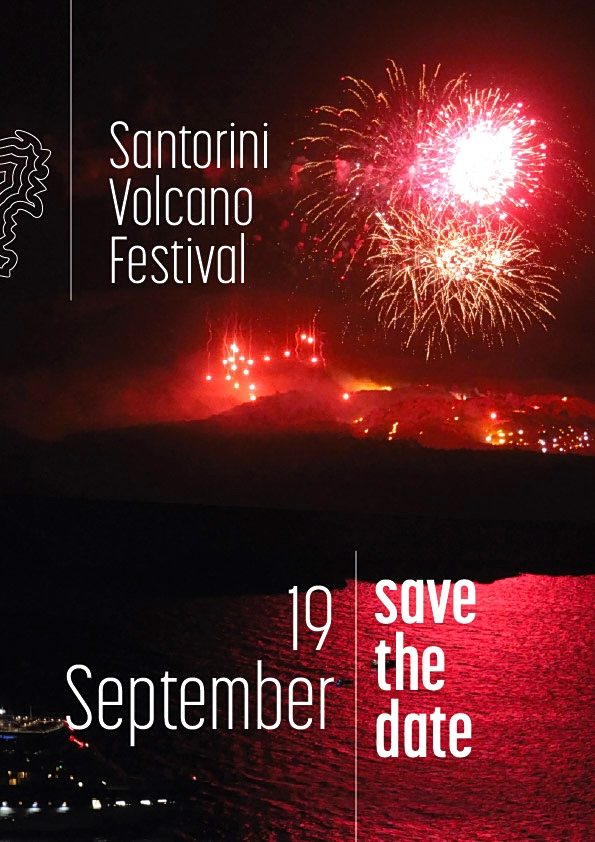
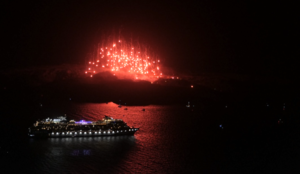
The Santorini Volcano Festival (Ifestia) began in 1991 as a way to remember and highlight the power of the volcano that shaped the famous Greek island and its culture. Photo: Municipality of Thira
“The volcano isn’t just a spectacular backdrop to Santorini. It is at the core of the island’s natural and cultural identity. It sculpted the caldera, the terrain and the landscape, but also influenced the architecture, the crops and, overall, the way the island’s people lived and created,” Zorzos explains.
The Santorini Volcano Festival began in 1991, he says, as a way of keeping this relationship alive. “It’s not just a spectacle. It’s a way to remember and highlight the power of the volcano that shaped our home and forms an integral part of our identity.”
More than just an image
Santorini hardly needs an introduction to attract international attention. Its beauty speaks for itself. Over the past 50 years, the island has undergone a remarkable transformation: from a small, dry Cycladic island that suffered immensely in the devastating 1956 earthquake, to one of Greece’s most visited destinations.
But for Zorzos, the challenge is to ensure that visitors see more than Santorini’s postcard-perfect image.
“Yes, Santorini is one of the most recognizable locations in the world,” he says, “But the goal is to show what lies behind this image.”
This philosophy is reflected in the Ifestia Festival, which continues to evolve more than three decades after its launch. “We want Santorini to be more than a photo. We want visitors to know its story,” Zorzos says.
The Volcano Festival, which this year takes place on September 19, recreates the dramatic volcanic eruption that shaped Santorini’s caldera thousands of years ago. After sunset, the night sky will erupt with a spectacular fireworks display inspired by the island’s volcanic past.
But there is more to the event than just fireworks. New technologies and mediums are being used to tell Santorini’s story, with a drone light show adding another layer to the spectacle.
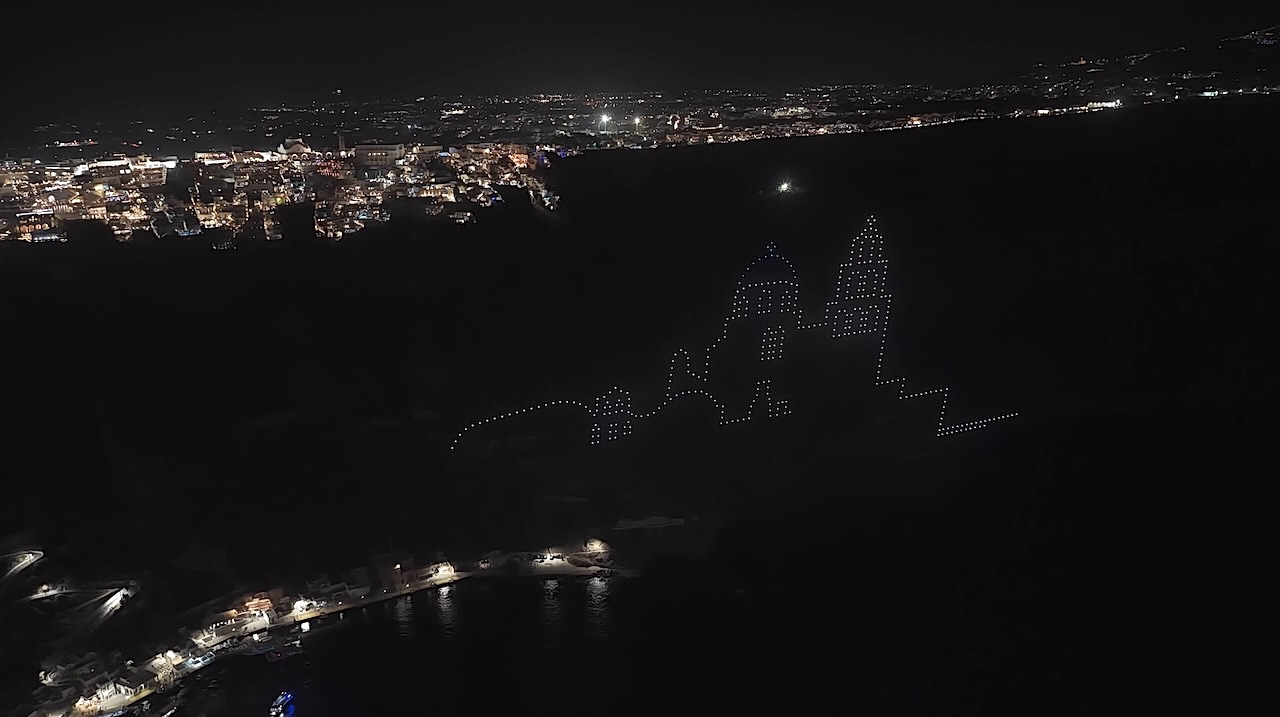
For the first time last year, in addition to the firework display, a drone light show added another layer to the spectacle. Photo: Municipality of Thira
“Last year, we used drones to present unique aspects of our history, culture, tradition, and gastronomy,” Zorzos says.
Each year also brings a new theme. In 2026, the festival will highlight Santorini’s tourist routes and museums, among other subjects.
A volcano museum takes shape
Earlier this year, TO BHMA International Edition discussed the long-standing proposal for a Santorini volcano museum with George Vougioukalakis, former head of the Hellenic Survey of Geology and Mineral Exploration (HSGME) and former president of the Institute for the Study and Monitoring of the Santorini Volcano (ISMOSAV).
Vougioukalakis explained that a wealth of data, research, and documentation is already available for such a museum. He went on to explain that the Santorini caldera is among the most thoroughly researched and closely observed volcanic systems on Earth. Its activity has been monitored continuously for decades and continues to intrigue scientists worldwide.
Speaking at an event at the Acropolis Museum last year, Vougioukalakis confirmed that multiple proposals had been submitted over the years, with some approved and, in certain cases, partially implemented.
Now, Zorzos tells TO BHMA International Edition, there has been “a very concrete and positive development” in this direction. The municipality has secured 1.3 million euros in funding for the creation of the Santorini Volcano Documentation and Information Center. The center will be housed in a restored historic mansion in Exo Gonia, and serve as a modern hub for geological and volcanological information and education.
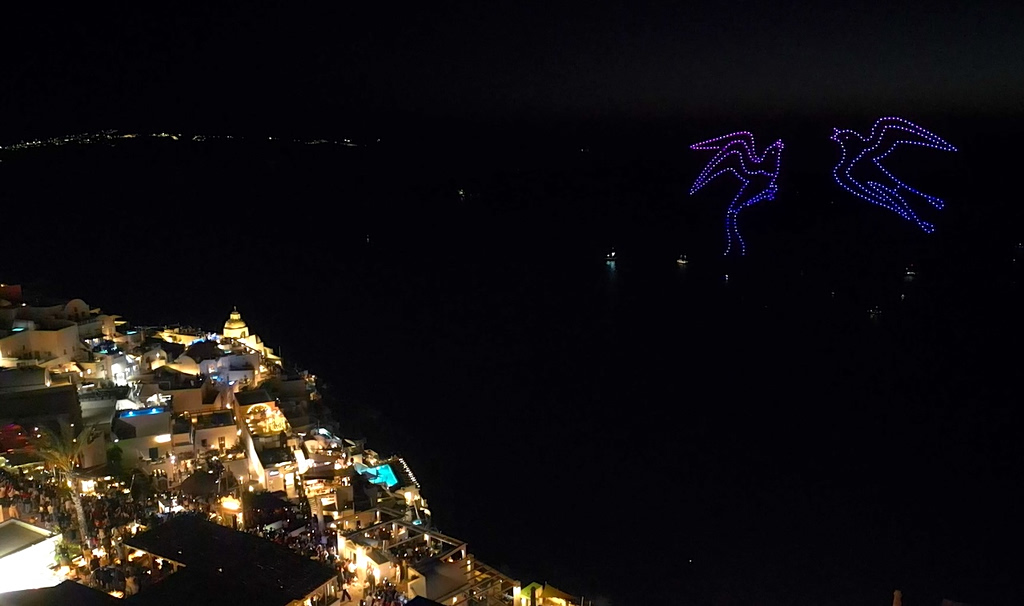
For more than 30 years, islanders on Santorini have honored the volcano with the annual Ifestia Festival. Photo: Municipality of Thira
“This cutting-edge center will be dedicated to the geological and volcanic history of Santorini, with exhibits, interactive applications and audiovisual material focused on the volcanic complex and the Minoan Eruption,” the mayor explains.
“Santorini really needs this,” he adds. “Visitors shouldn’t just see the volcano; they need to understand its impact.”
Beyond the fireworks
Three decades after it began, the annual Santorini Volcano Festival continues to draw visitors from around the world, introducing them to the island’s geology, history, and the enduring influence of volcanic activity on local culture and identity. In fact, it has evolved into one of Santorini’s signature cultural events.
We asked Mayor Zorzos what he hopes visitors take away from the show. “I would like them to leave with a sense of awe, deeply moved, and eager to get to know Santorini better.”
For Zorzos, the show is a means to something deeper. “I don’t want the experience to stop at the spectacle. I want visitors to see the caldera in a different light the next day; as something more than just a globally recognizable landscape, but as a place with history, culture, and an identity that continues to evolve.”
The Santorini story
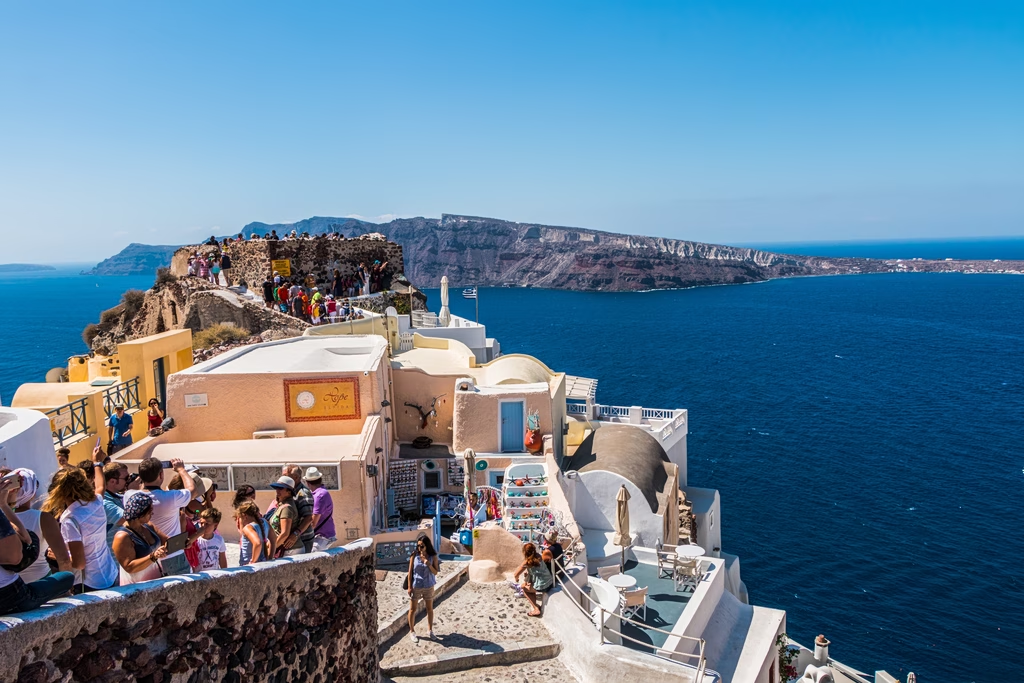
Santorini owes much of its extraordinary beauty to a catastrophe. The island we see today is part of a much larger volcanic system. Around 3,600 years ago, Thera—the ancient name for Santorini—experienced one of the most powerful volcanic eruptions of the last 10,000 years. Ash and volcanic debris were hurled into the atmosphere, enormous tsunamis swept across the Aegean, and as the volcano’s underground magma chamber emptied, the center of the island collapsed into the sea, creating the vast water-filled caldera we see today.
Alesya Avs / Shutterstock.com
In fact, Santorini’s volcanic story is far from ordinary. Recognized as one of the world’s 16 Decade Volcanoes by the International Association of Volcanology and Chemistry of the Earth’s Interior (IAVCEI), Santorini is one of the largest calderas in the Mediterranean. Recognizing its geological importance, the International Union of Geological Sciences (IUGS) has included the Quaternary Santorini Caldera among its 100 Geological Heritage Sites worldwide.
So Santorini’s dramatic cliffs, rising almost vertically from the sea, are actually the exposed walls of this ancient volcanic crater. The main island, together with Therasia and tiny Aspronisi, forms the rim, while the volcanic Kameni islands (Nea and Palia) rise from the caldera’s center.
Volcanic activity has continued to shape Santorini down the millennia. Even the name of the island’s Ifestia Festival reflects this heritage—it comes from Hephaestus, the ancient Greek god of fire, volcanoes and metalworking.
The Ifestia Festival takes place on September 19 after the famous Santorini sunset. Visitors to the island are invited to experience a celebration inspired by the volcanic forces that molded the breathtaking landscape they see around them. The best views are from the villages overlooking the Kameni cliffs, including Oia, Firostefani, Imerovigli, and Fira.
The Santorini Volcano Festival is organized by the Municipality of Thira – GEOTHIRA S.A. – Loula & Evangelos Nomikos Foundation.