 Μake us preferred on Google
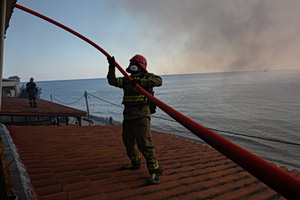
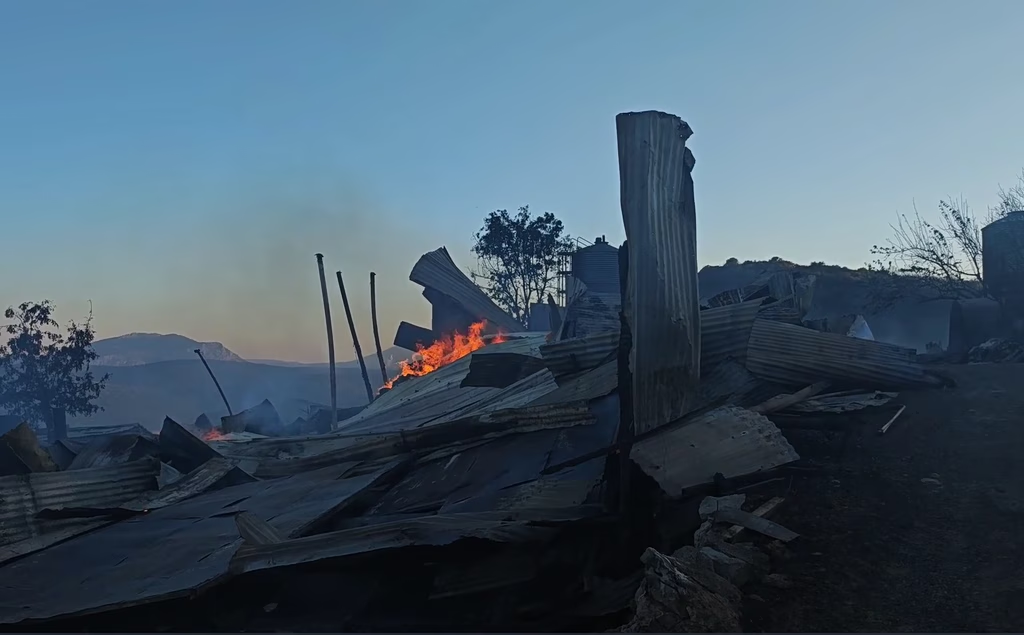
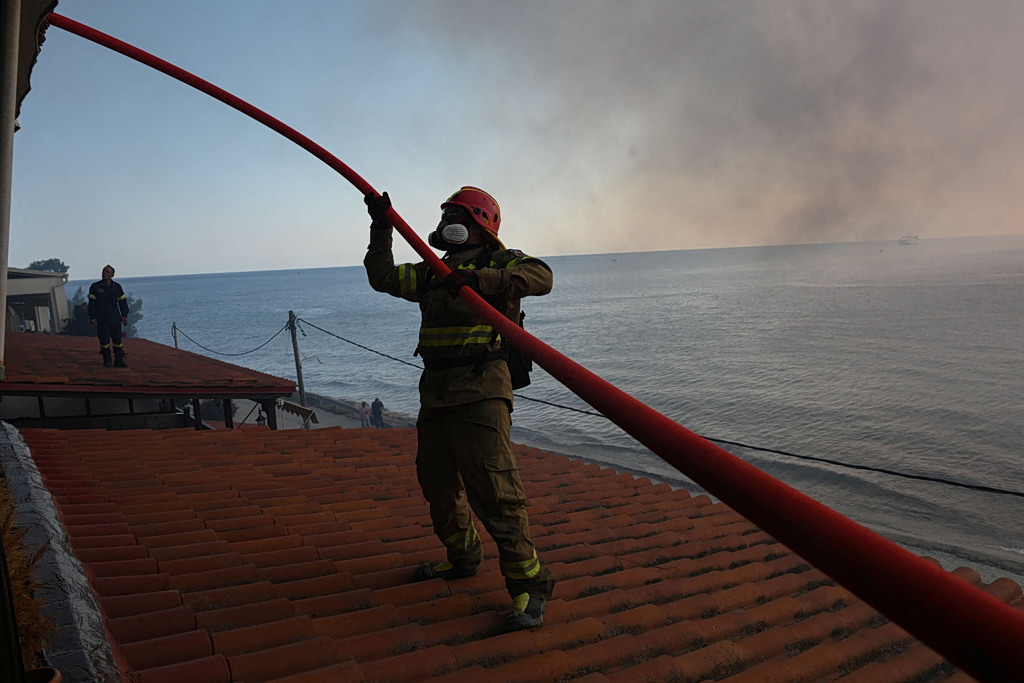
 Devastating wildfires caused extensive damage across Europe this summer. In numerous European Union countries, the area burned was above the 2006-2025 average. Severe fires were still being reported in September. A wildfire that broke out in late August in the Trapezitsa mountains near the northern Greek town of Konitsa was brought under control only after almost three weeks. In early September, a major fire also broke out west of Sarajevo in Bosnia and Herzegovina. In Croatia, a large wildfire ravaged the island of Brač, affecting more than 3,000 hectares.
Europe’s wildfire problem is growing – and so is the search for ways to prevent fires from spreading. One approach is far from new: animals that systematically eat vegetation that could otherwise serve as fuel.
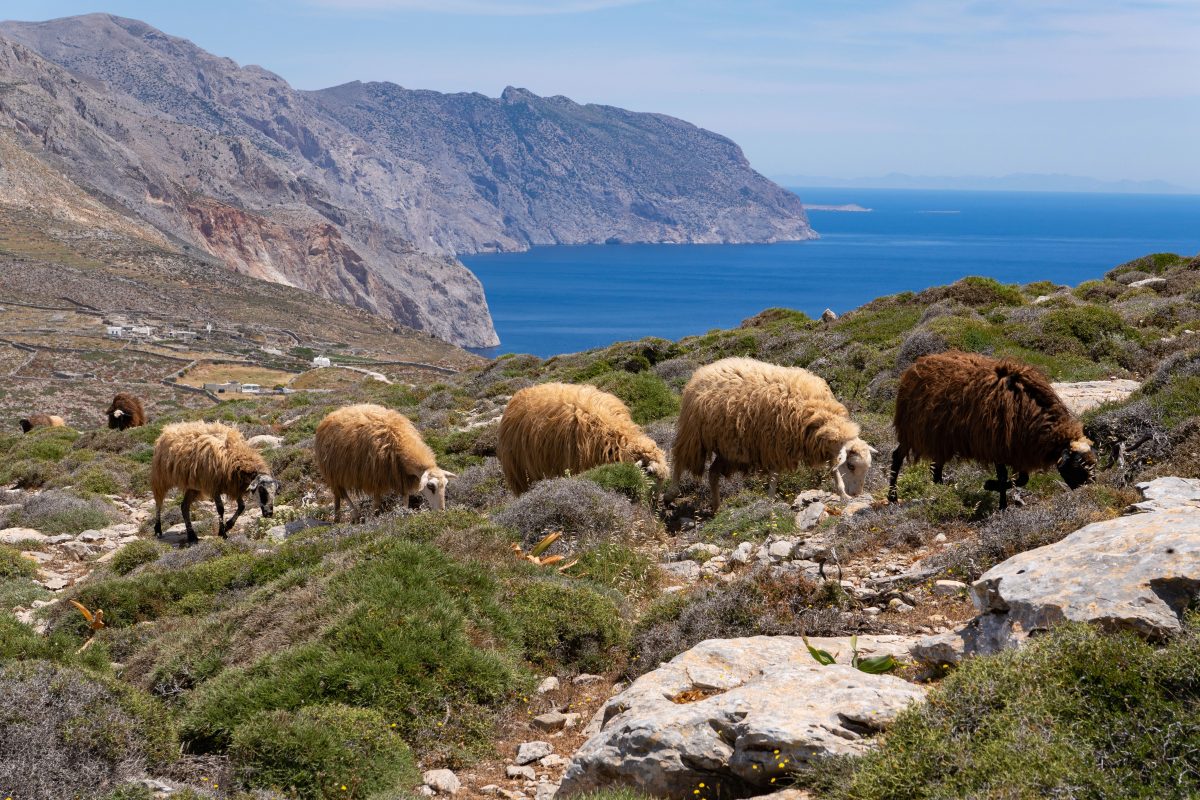
Targeted grazing could play an important role, according to research. Sheep, goats and other livestock can reduce the amount of combustible vegetation while also helping to maintain a more open landscape.
What grazing animals can do
Scientist Elsa Varela Redondo of the Spanish National Research Council (CSIC) considers the scientific evidence for the benefits of targeted grazing relatively strong. Modelling has shown that fires can spread more slowly and with less intensity in actively managed landscapes, she says. Grazing is one element of this approach, alongside tree cultivation and landscape mosaics.
“Small ruminants are able to reduce biomass by grazing, browsing and trampling,” says Varela Redondo, who specialises in sustainable rural management and forestry. This can help control the shrub layer and reduce so-called ladder fuels – layers of vegetation that can allow a surface fire to reach tree canopies.
Grazing can also have another benefit, according to Varela Redondo. “It can help to recover pasture land with more herbaceous species that are less flammable and can act as a natural fuel break.”
But how the animals are used is crucial. “Skilled management, with high density of animals per hectare over small periods of time is the key to attain the desired result,” Varela Redondo says. The animals therefore need to be deployed precisely where their effect is required. “Small ruminants are not inherently good or bad. It all depends on management,” she adds.
Combining grazing with other measures can also be useful. Varela Redondo points to experiences in which grazing has been combined with mechanical vegetation management or controlled burning. Herds, however, are not machines for removing biomass. They need to be managed by experienced shepherds.
That is particularly relevant to Mediterranean countries such as Greece, where extensive livestock farming was part of the landscape for centuries.
Wildfire researcher Gavriil Xanthopoulos, a former research director for forest fires at the Hellenic Agricultural Organization DIMITRA, describes the historical role of grazing as significant. In his view, it not only reduced the amount of combustible vegetation but also kept clearings and paths open and helped maintain rural communities.
“A large part of the worsening of wildfires today is due to the shift to livestock being kept in stables, which goes hand in hand with rural depopulation,” Xanthopoulos says.
Where shrubland once stood at around 0.5 to 1.5 metres in height and was interrupted by gaps, he says, dense vegetation of more than two metres can now be found in many areas.
Greece is turning to grazing again
Greece has also recognised the role of grazing at a political and legal level. A law adopted last February explicitly identifies controlled extensive and semi-extensive grazing as an instrument of wildfire prevention. The approach involves planned and repeated management designed to reduce combustible vegetation and create areas that can help slow fires. Greece’s National Adaptation
Strategy had already recommended controlled grazing in 2016 as a way of reducing undergrowth and flammable vegetation.
The approach is not, however, a substitute for other forms of wildfire prevention. Xanthopoulos argues that where enough extensive livestock farmers remain, they need grazing plans, advice, infrastructure and financial support. Where there are too few livestock owners, programmes would be needed to rebuild grazing capacity.
He also sees a potential role for livestock farmers beyond landscape management. Depending on their age and experience, they could participate in prevention and firefighting operations and could even be employed as “seasonal firefighters”.
The risks of grazing
However, grazing requires careful planning. Too many animals on an area can damage vegetation and soil. Overgrazing can hinder natural forest regeneration, weaken trees and create additional ecological problems over time.
Xanthopoulos also points to a historical downside. Livestock owners sometimes used fire to encourage fresh vegetation for their animals. In his assessment, such fires caused by livestock owners accounted at times for around 10 to 20 percent of fire causes in Greece.
Grazing therefore needs to be regulated and adapted to local conditions. Xanthopoulos is certain, though: “Grazing can and must play an important role in reducing wildfire risk.”
Spain shows how it can work
Spain has developed some of Europe’s most established grazing programmes. In Andalusia, the RAPCA programme has been using sheep and goats since 2005 on public forest land. The animals reduce vegetation and help maintain firebreaks. Priority is given to areas where fire-protection infrastructure and traditional livestock farming already exist, while shepherds receive financial compensation for their work.
Other Spanish regions have adopted similar approaches. Madrid uses sheep, goats, cattle and horses and expanded its programme to 3,750 hectares this year. In Catalonia, the digital SilPas platform is being used to identify areas where grazing could be particularly useful. On Gran Canaria, 40 livestock-farming families are participating in a similar programme this year.
Portugal is also combining grazing with other forms of vegetation management. A similar project is currently taking place in Germany, too. EU-funded projects have shown that targeted grazing can reduce the accumulation of combustible material.
In southern Europe, the issue goes beyond individual forests. When agriculture is abandoned, shrubs and other vegetation spread, while the people who once managed these landscapes disappear. Alongside climate change, the European Commission therefore identifies land-use changes, the abandonment of traditional agriculture and the accumulation of biomass as important factors behind the rising wildfire risk.
Europe’s wildfire problem is getting worse
The need for such preventive measures is growing. According to the European Forest Fire Information System (EFFIS), 669,118 hectares in the EU had been affected by fires by September 16. That was less than in the record-breaking year of 2025, but well above the 2006-2025 average. Particularly striking was the increase from July onwards: during some weeks in August, the burned area was more than three times the average of the previous two decades.
Greece has also experienced the extreme conditions. Climate Crisis and Civil Protection Minister Evangelos Tournas said in June that the climate crisis had changed the conditions under which wildfires develop. High temperatures, drought and strong winds were creating increasingly difficult circumstances.
In early September, Tournas said that 3,250 fires had been recorded in his country since the beginning of the fire season in May. Four particularly large fires had accounted for around two-thirds of the total burned area.
But the wildfire threat is no longer confined to the traditional Mediterranean hotspots. According to a European Commission report published in mid-August, large areas burned not only in Spain, Italy and France. Countries including Belgium, Germany, the Netherlands, Slovakia and Estonia also recorded unusually large burned areas compared with their long-term averages.
Grazing is not a ‘silver bullet’
The European Commission now explicitly lists extensive grazing as one possible form of land-based wildfire prevention. “Through active and sustainable land and forest management, they [Farmers and forest owners] reduce fuel build-up, maintain open and mosaic landscapes and help limit the spread and intensity of fires,” the Commission says.
Yet the precise effect of targeted grazing cannot be determined for every fire. Varela Redondo points out that it is difficult to establish whether the measure reduces the number of fires that start in the first place. Wildfires have many different causes.
The link with fire intensity, however, is clearer, she says. “We know that the severity and therefore the potential damage are reduced due to the reduction in biomass.”
The regional government of Madrid, which recorded two major wildfires this summer, reported lower fire intensity on several previously grazed areas. “In fact, in many areas woody vegetation primarily trees remained unaffected by the fire. In some cases, the grazed area clearly delineates the perimeter of the fire.” Firefighters were also able to use the areas as safe working zones during firefighting operations.
Xanthopoulos likewise attaches considerable importance to reducing fuel through grazing. But he also stresses its limits. “Of course, this is not a silver bullet,” he says. In combination with other benefits, such as supporting local communities and improving access for emergency services, however, he believes the cost-benefit ratio can be favourable.
Grazing could therefore become one component of modern wildfire prevention, particularly in regions where the abandonment of traditional agriculture has allowed combustible vegetation to accumulate.
It cannot replace firefighters, emergency services or other forms of prevention. The challenge is instead to use an old form of land management in a targeted way – in the places where it can make Europe’s increasingly fire-prone landscapes more resilient before the next flames arrive.