 Μake us preferred on Google
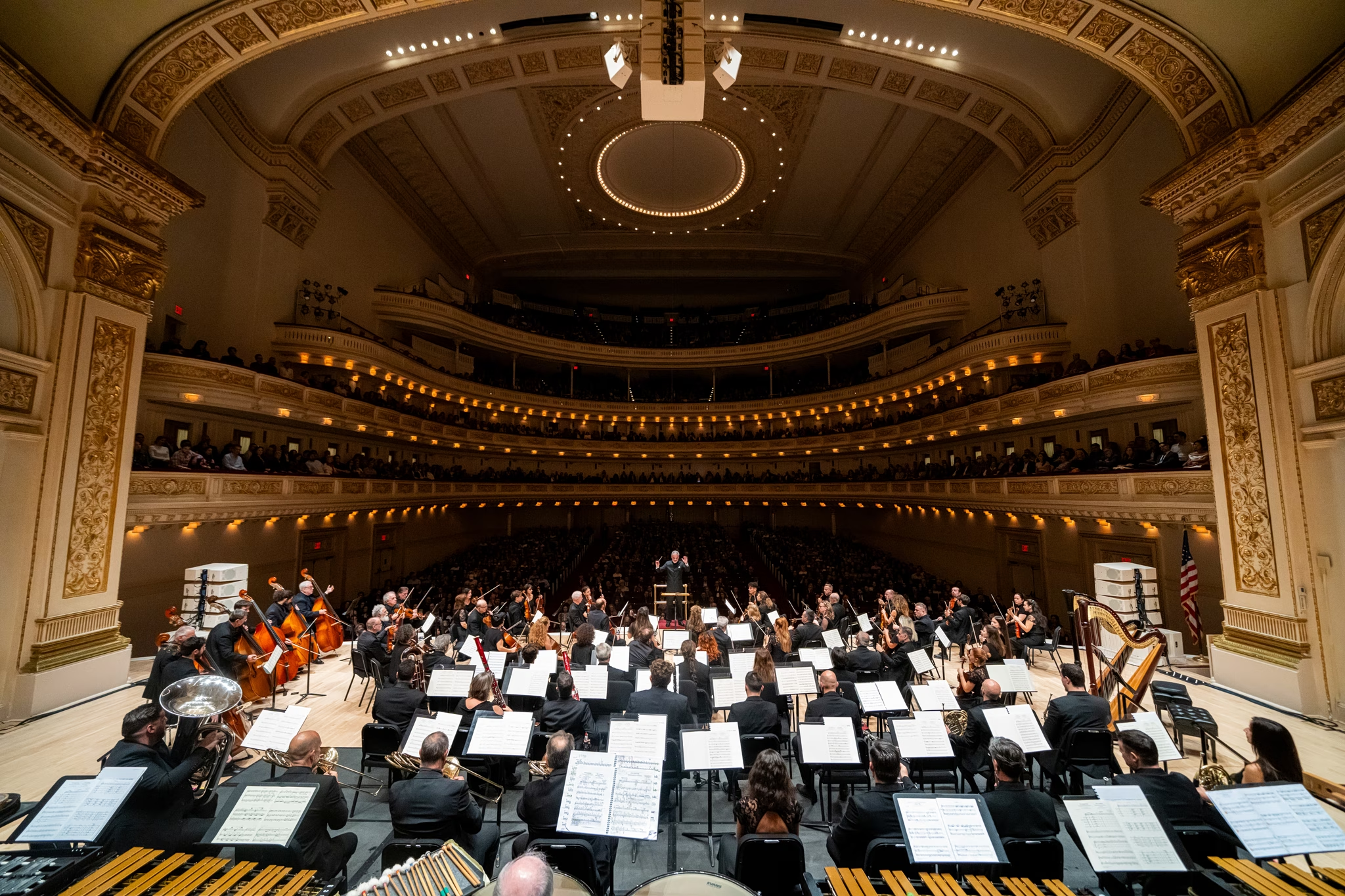
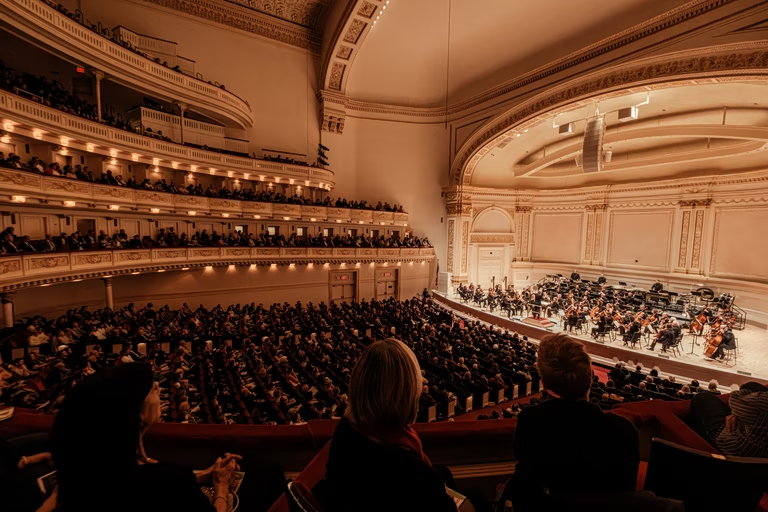
 With a donation from the Stavros Niarchos Foundation (SNF) to strengthen its international artistic outreach, and Capital CleanEnergy Carriers and Evangelos Marinakis as its official corporate partners, the Greek National Opera made its New York debut with its orchestra last night.
The setting was the iconic Carnegie Hall, and the guiding spirit was the timeless, universal vision of Nikos Kazantzakis.
The concert, “Nikos Kazantzakis: An Odyssey in Music”, took place in the packed historic hall with the support of Culture Minister Lina Mendoni and financial backing from the Ministry of Culture. It was part of the commemorative events marking 30 years of philanthropic activity by the SNF.
The event was held under the auspices of the Consulate General of Greece in New York and the Greek Orthodox Archdiocese of America, with support from the John S. Latsis Public Benefit Foundation, Libra Philanthropies and Atlantic Bulk Carriers Management Ltd.
It may sound strange, but even the date seemed symbolic. Exactly 80 years earlier, on October 15, 1946, Nikos Kazantzakis had written to his friend, writer Pantelis Prevelakis, about his hope that his tragedy “Melissa” would be staged in the United States.
That autumn, he also revisited in his correspondence, plans for a trip of his own to America, which he would ultimately never make. His works, however, would cross the Atlantic and find their voice there, going on to lead lives of their own.
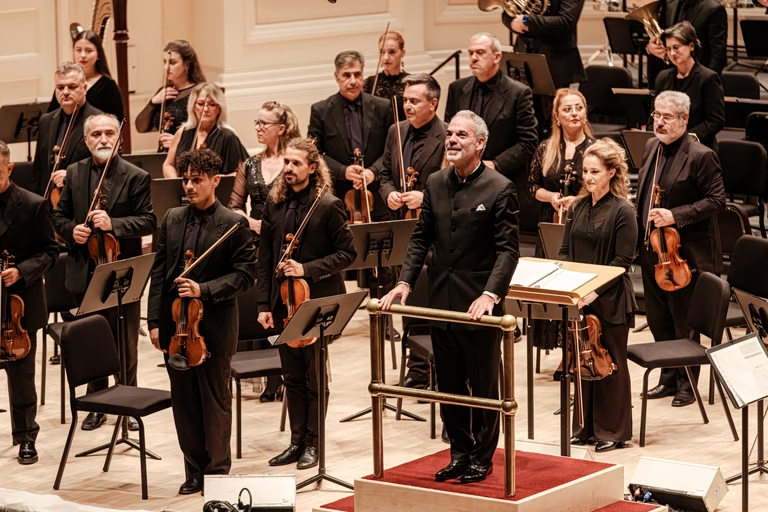
Eighty years later, on precisely the same date, the Cretan writer’s name dominated the poster at the entrance to Carnegie Hall. The Greek National Opera presented a musical odyssey through his world, guided by compositions by Manos Hadjidakis, Mikis Theodorakis, Nikos Skalkottas, Dimitris Mitropoulos and the Greek National Opera’s artistic director, Giorgos Koumendakis. These composers came from different generations and backgrounds, and the program brought them into dialogue through Kazantzakis and Crete.
There was another commemorative dimension to the Greek National Opera Orchestra’s first performance on American soil. The year 2026 marks 80 years since the first publication of “The Life and Times” of Alexis Zorbas. The novel was published in New York in 1953, while in 1968 its protagonist came to life on Broadway in “Zorba”, the musical by John Kander, Fred Ebb and Joseph Stein, directed by Harold Prince.
Between these two encounters came Michael Cacoyannis’ film, starring Anthony Quinn and featuring music by Theodorakis.
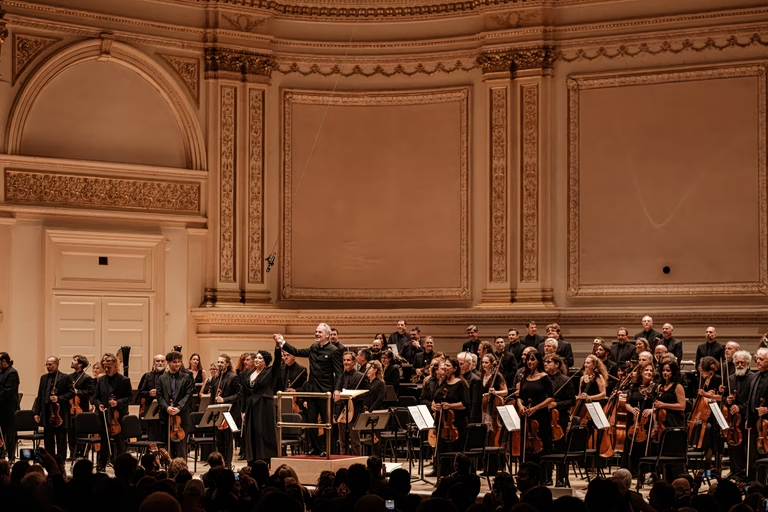
At the Carnegie Hall concert, the program highlighted the breadth of this musical affinity. Kazantzakis was the central thread, and Crete the common ground: sometimes through his characters, sometimes through the dances and sounds of an island that the composers approached along different paths.
Theodorakis, Hadjidakis and the Emotion of the Greek Language
In 1966, Hadjidakis had engaged with Kazantzakis’ work through “Captain Michalis”, composing music for the stage adaptation of the novel of the same name. Sixty years later, soprano Maria Kostraki brought the work to the stage with the Manos Hadjidakis Ensemble. For many, this was the evening’s high point. Hadjidakis’ music gives the world of “Captain Michalis” an almost tangible sense of intimacy: freedom, desire and sacrifice are filtered through melody, taking on a personal, human scale.
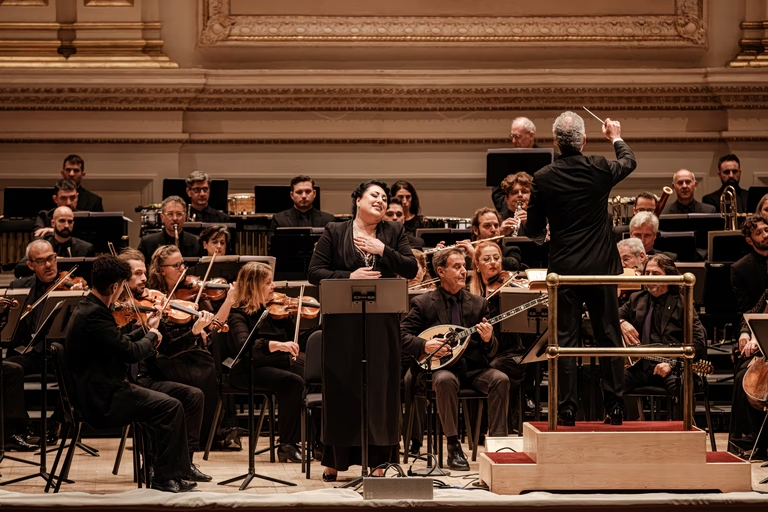
In the second half of the concert, mezzo-soprano Anita Rachvelishvili performed excerpts from Theodorakis’ “Zorba”, a familiar work recognizable from its very first note. Its music carries something deeply personal for every listener. The Georgian singer moved the audience with her performance in Greek, bringing her own voice and presence to the encounter between music and language. In the New York concert hall, the Greek words seemed to carry an additional emotional weight.
Under the musical direction of Vassilis Christopoulos, the Greek National Opera Orchestra became the bridge between the program’s different musical languages. “Amor Fati”, for example, by Giorgos Koumendakis, received its American premiere and offered a different way into Kazantzakis’ world. Written in 2007 to mark 50 years since the writer’s death, the work brought Cretan music and its distinctive melodic phrases into the orchestral setting without using traditional instruments.
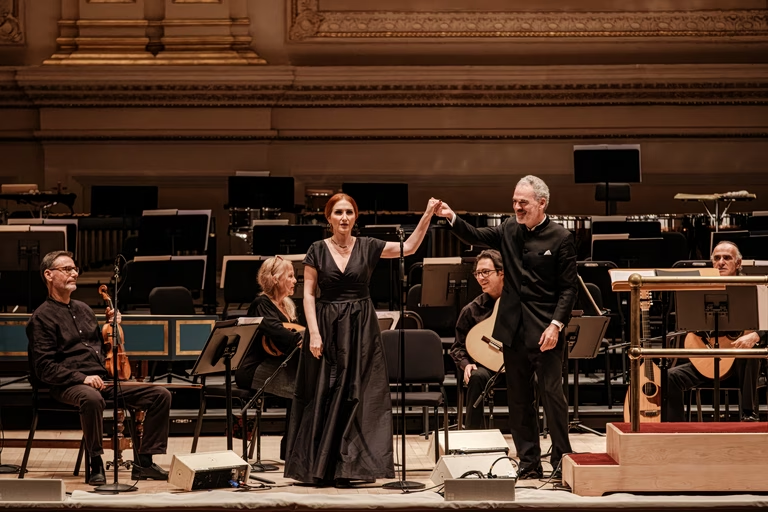
Skalkottas’ three “Cretan Dances” and Mitropoulos’ “Cretan Festival” completed this musical journey. For New York, Mitropoulos is also a familiar figure in the city’s own musical mythology, thanks to his tenure with the New York Philharmonic. The inclusion of his youthful “Cretan Festival”, orchestrated by Skalkottas, thus added another connection between the Greek National Opera, New York and, of course, Crete.
From Early Reading to Bringing Kazantzakis to New Audiences
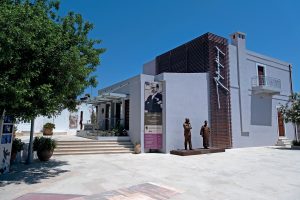
Crete, a constant presence throughout the program, is also the starting point for Evangelos Marinakis’ relationship with Kazantzakis. Both his parents came from Heraklion, while his father, Miltiadis, was the one who gave him his first books by the writer when he was young. This early reading experience continued and eventually took on a practical dimension: since 2014, Marinakis has supported the Nikos Kazantzakis Museum in Myrtia as its major sponsor.
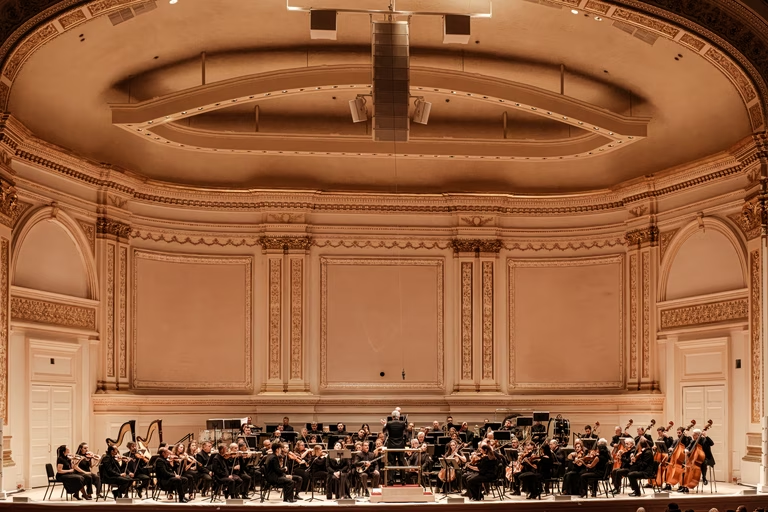
His active contribution to the Greek National Opera’s Carnegie Hall debut connects efforts to preserve the writer’s legacy in his homeland with the promotion of his work to new audiences.
At the end of the concert, the melodies of “Zorba” swept the audience into a spontaneous, collective response. Everyone clapped rhythmically along with Theodorakis’ music. The rhythm moved from the stage into the hall, transforming listening into participation. Kazantzakis never made it to America himself. His Zorba knew the way.
Photos: Giannis Antonoglou.
Main photo: Stephanie Berger.