 Μake us preferred on Google
 After nine years, potentially millions of dollars in deposits and considerable hype, the Tesla Roadster is finally ready to launch—which it did.
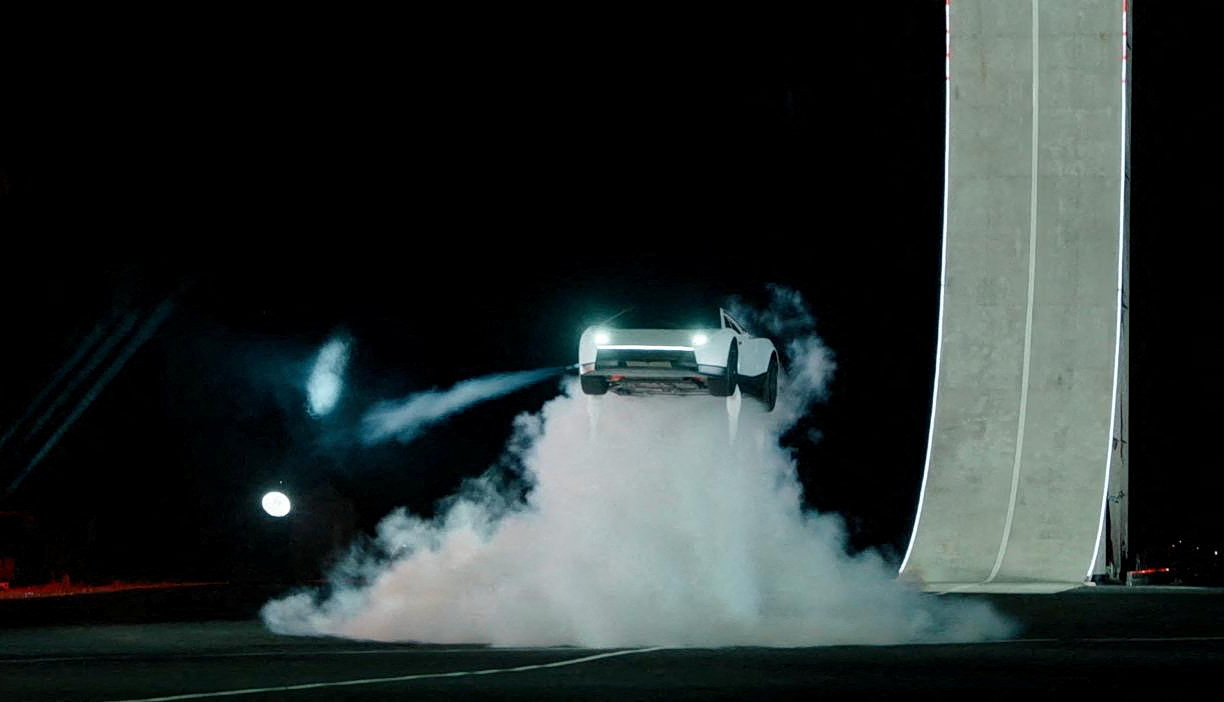
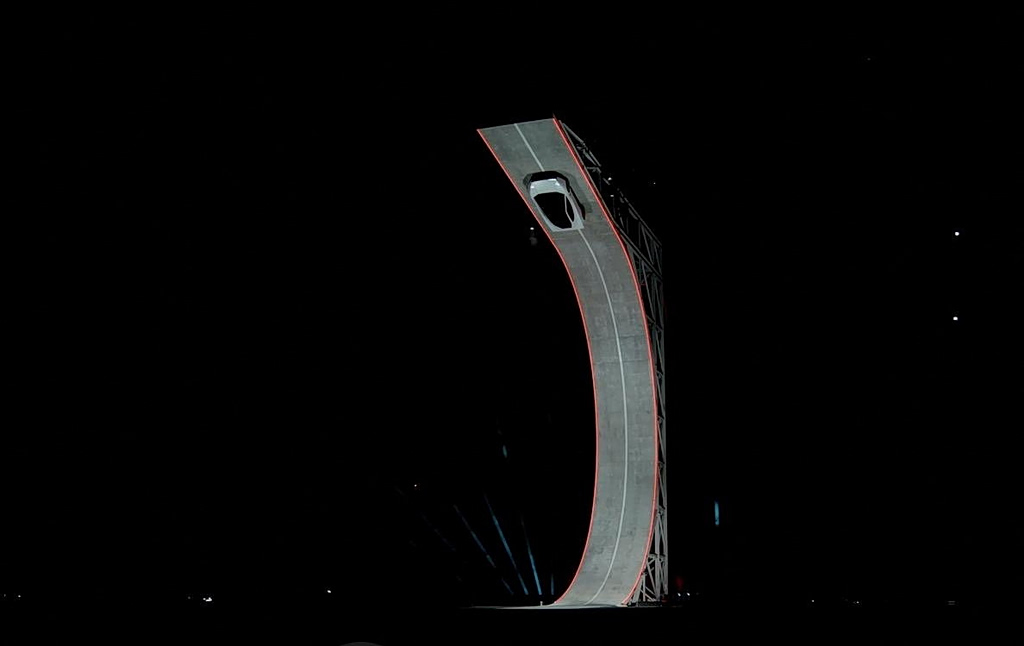
The electric automaker on Thursday unveiled its second-generation sports car with a flourish of engineering prowess. Using SpaceX rocket technology, the angular sports car climbed a curved ramp and hurled itself to a controlled landing. Later, it leapt over five other Tesla vehicles while twisting in the air.
The demonstration was held before a crowd of Tesla enthusiasts—some of whom paid $250,000 to reserve the car nine years ago—at a SpaceX rocket test site facility in McGregor, Texas.
Flanked onstage by his top executives for design and engineering, Chief Executive Elon Musk claimed the Roadster would eventually be the “only manually driven car that Tesla makes” amid a pivot to autonomous driving and robotics.
But customers who put down hefty deposits nearly a decade ago will still have to wait a bit longer for the Roadster. Musk said the car enters production in 2028. “Actually, for real,” he said.
Some key details were missing, however. At the event, onlookers shouted to Musk, asking for a price tag, but their cries went unanswered.
Musk also demurred when asked how it might be street legal. “Yeah, depends on your street, but it’ll be a viable car,” he said.
Turns out the future does have flying cars https://t.co/6fexPp6SXI
— Elon Musk (@elonmusk) October 16, 2026
Still, the Roadster’s debut had the air of an outdoor concert, complete with fog and red laser lights as content creators flanked a main stage. In the background: the towering, backward-curving ramp structure not unlike a skateboard halfpipe, which the car launched up before coming back down and going back up again.
Tesla unveils its long-delayed Roadster nearly a decade after first revealing a next-generation version of its original electric sports car, at a launch event in Waco, Texas, US, on October 15, 2026, in this still image taken from a handout video. Tesla/Handout via REUTERS
To do so, Tesla engineering VP Lars Moravy said the Roadster uses “a fan suction system” underneath to increase grip and downforce. Not long after that, the Roadster jumped through the air—as Musk long promised—using a pair of compressed-air thrusters.
With the thrusters engaged, Tesla claims the Roadster can go from a stop to 60 miles an hour in about one second. Executives boasted a top speed of over 230 miles an hour.
Thursday’s event in Texas was actually a reboot of sorts for the Roadster.
Tesla showed off a prototype of the car in November 2017 and started taking deposits of $50,000—or $250,000 for a limited “Founders Series” model—from customers who wanted to get in line to buy one.
The Roadster was slated to start production in 2020, but the plan never materialized.
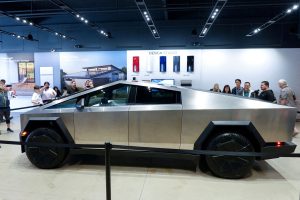
The Roadster presented on Thursday looked much different than what was unveiled in 2017. It now features sharp angles, not unlike the polarizing Cybertruck, in contrast to the sleek, curvaceous sports car that the company teased for so long.
Tesla’s moving forward with the long-planned sports car represents a slight rekindling of its core auto business. In recent years, the company has put driver-operated cars on the back burner in favor of advancing autonomous vehicles and robotics .
Moravy called the Roadster the world’s first flying car and “the last best driver’s car.”
The car is a sequel to the original Tesla Roadster, the automaker’s first vehicle, released in 2008. That Roadster—an extensively modified Lotus sports car powered by batteries—proved Tesla’s thesis that electric cars could be fun and desirable, and helped propel the company to making more mainstream vehicles.
Whatever the final price, the Roadster should compete in the upper echelon of luxury and performance cars alongside Porsche , Lamborghini and Ferrari.
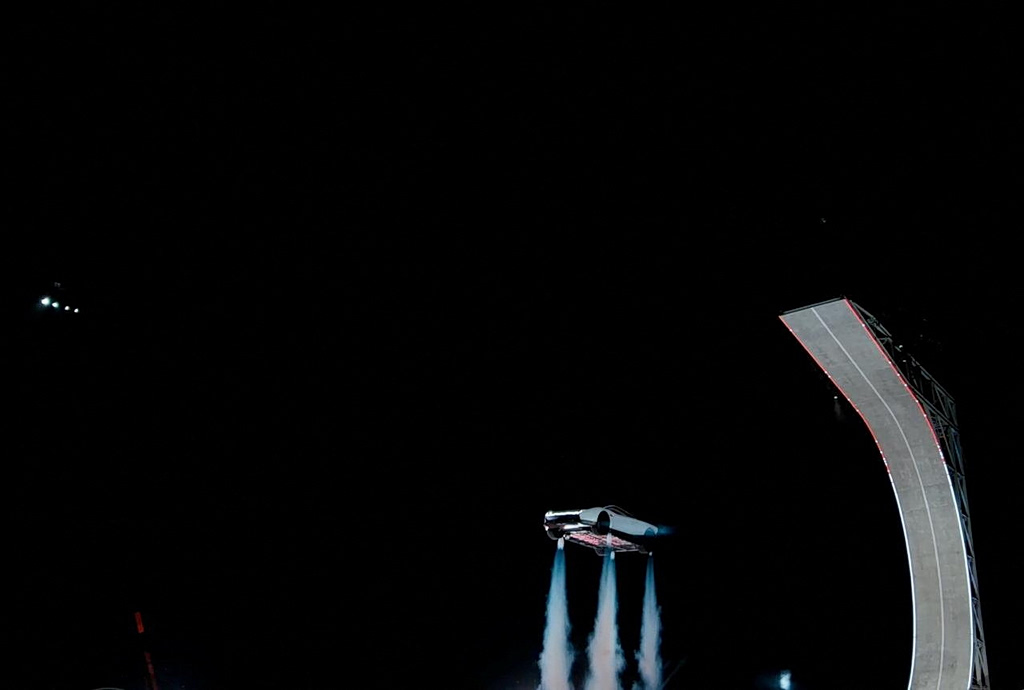
Tesla unveils its long-delayed Roadster nearly a decade after first revealing a next-generation version of its original electric sports car, at a launch event in Waco, Texas, US, on October 15, 2026, in this still image taken from a handout video. Tesla/Handout via REUTERS
In volume, it isn’t expected to be a significant contributor to the company’s overall car sales, but it could make a meaningful dent in the company’s top line revenue, according to a note Thursday from Battle Road Research, an independent firm.
Write to Christopher Otts at christopher.otts@wsj.com