 Μake us preferred on Google
 It’s that one song you remember from childhood, when your Greek grandparents would pull you into the crazy dance on Easter Sunday. Today, those same notes bring a smile to your face. You extend your hand and set off toward the concert stage. Along the way, others join you. Soon the music is in full swing: clarinet, outi, lyra and daouli drum booming out the rhythm of songs that go back centuries. A circle forms and widens. Young Greeks and foreigners in sneakers and hoodies hold hands and the traditional dance takes off!
Scenes like this are now very common. Not only at summer concerts and “panegyria”, Greece’s outdoor village festivals, but in clubs and bars, and even aboard island-bound ferries. Traditional Greek dance, once seen only at weddings and Easter celebrations, is enjoying a quiet revival, with millennials and Gen Z eager to take the lead.
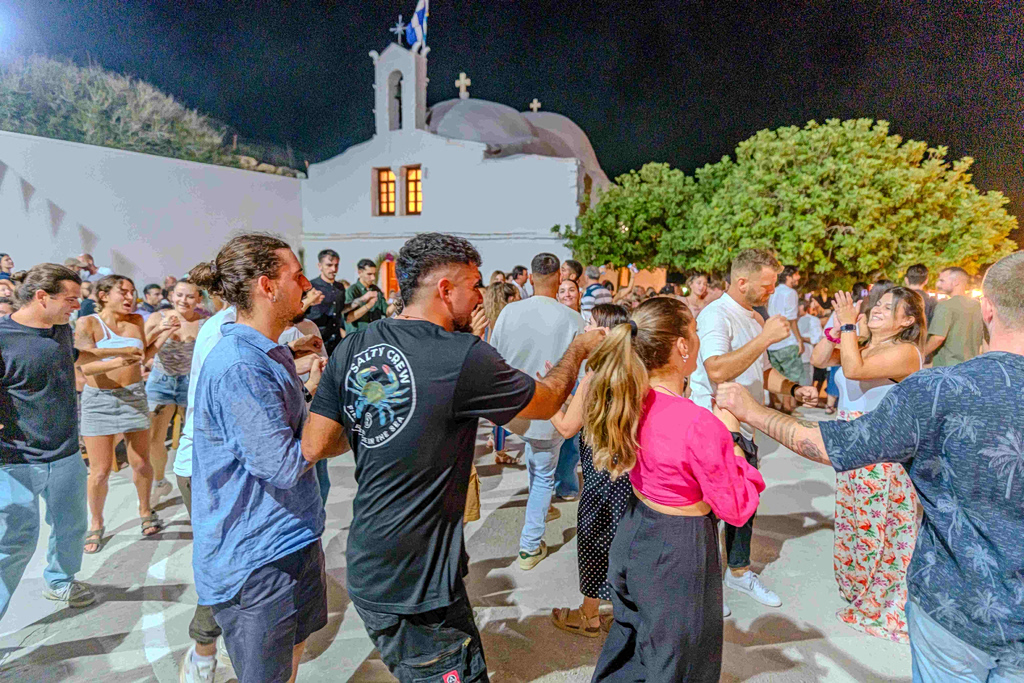
A scroll through social media confirms this. Dozens of TikTok hashtags are now dedicated to Greek folk song and dance. Schools and local clubs offering traditional dance lessons are popping up in cities and towns. Festivals and competitions are taking place across the country, from Antiparos and Crete to Trikala and beyond.
TO BHMA International Edition spoke with dance instructors, school owners, singers, and young dancers, all of whom expressed a deep passion for tradition and dance. Their stories reveal it’s more than nostalgia. It stems from a deeper need: to connect, to share, to feel part of something larger than ourselves.
Who is Leading the Revival
This turn toward traditional Greek dance has been gathering momentum over the past decade.
Petros Kottis discovered Greek folk dancing in university. “What impressed me most was that this was something people of all ages could participate in,” he tells TO BHMA International Edition. “Over time, I found myself falling in love with dance and started researching the traditions behind it.”
Now 35, Kottis runs his own dance club, “Plefsis Paradosis”, which he opened with friends in 2017. Today, he teaches traditional Greek dances to people of all ages and skill levels, work he describes as deeply fulfilling.
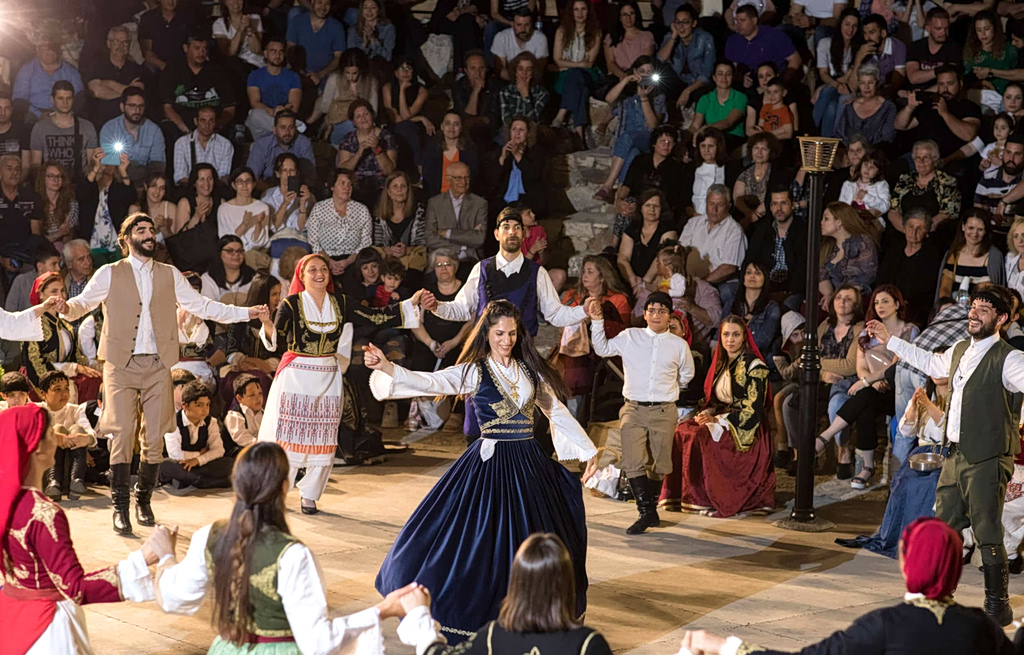
Young dancers in traditional outfits dancing the Maleviziotis, a folk dance of Crete. Photo: Greek Culture Ministry
“It’s obvious that there has been a shift toward this type of entertainment,” Kottis says. “Festivals are full of young people now. Dance venues too.”
Part of the reason, he believes, was economic. “During the financial crisis, people had to find alternative ways to have fun as other options became prohibitive,” he explains.
“As household budgets tightened, restaurants gave way to “koutoukia” (small taverns), cocktails to Greek spirits like tsipouro and ouzo, and nightclubs to panegyria.”
“Tradition has deep roots,” he adds. “And even now that we’ve come out of the crisis, the interest continues to grow.”
Although Kottis acknowledges that social media has helped increase visibility, he does not see it as the main driver. “There is an energy in a Greek dance that is unique,” he says. “You can’t find it anywhere else.” And this is evident in his students’ eagerness to take part in performances and competitions. “People really enjoy it. It motivates them to improve and strengthens their sense of belonging.”
A Release From Daily Routine
For Nancy Peristera, 32, traditional dance offers something that is becoming increasingly difficult to achieve: focused presence. She works in a corporate strategy department and has been taking traditional Greek dance lessons for the past two years. “It’s a rewarding experience on many levels,” she says. “I disconnect and focus my mind and body on one thing and one thing alone: moving and listening to the music.”
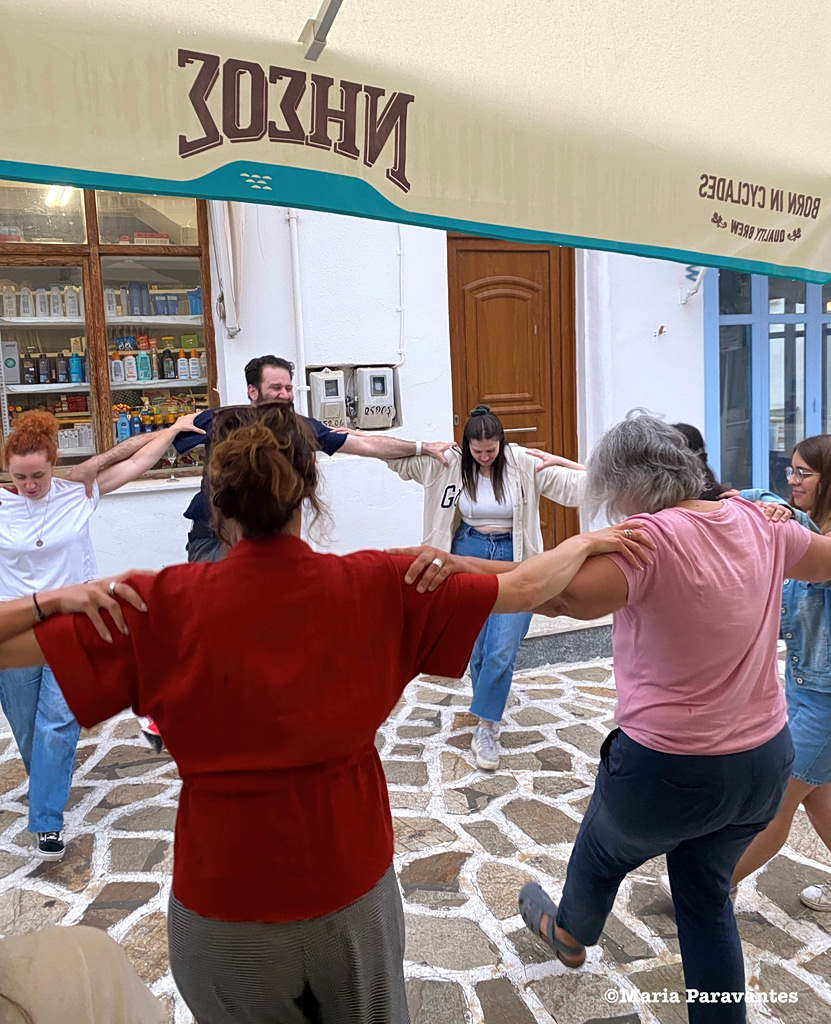
A group of friends dance in a side street for fun. Photo: Maria Paravantes
It may sound simple, she adds, “but it’s extremely demanding and at the same time deeply comforting”.
Peristera tells TO BHMA International Edition that her interest in Greek folk dancing began as she searched for a creative outlet, something that could offer relief from the intense rhythms of everyday life and work.
“I was inspired by the traditional dances of my childhood,” she explains. “They always washed away the stresses and strains and left me feeling carefree, which is something I need even more in my adult life.”
She also appreciates the variety and authenticity of Greek music, especially traditional music, in its original form or as it has changed over time. “By singing and dancing, I experience it more fully and, in my own small way, I honor it.”
An unexpected gift, she says, has been the connection. “The interaction and cooperation with so many different and wonderful people surprised me. It reminded me how simple it can be to connect and have fun.”
She initially joined classes with her sister “as an excuse to see her more often,” but what emerged was something more enduring. “I found a beautiful and sincere group of friends that grows, changes, unites, and moves forward. And that is truly valuable.”
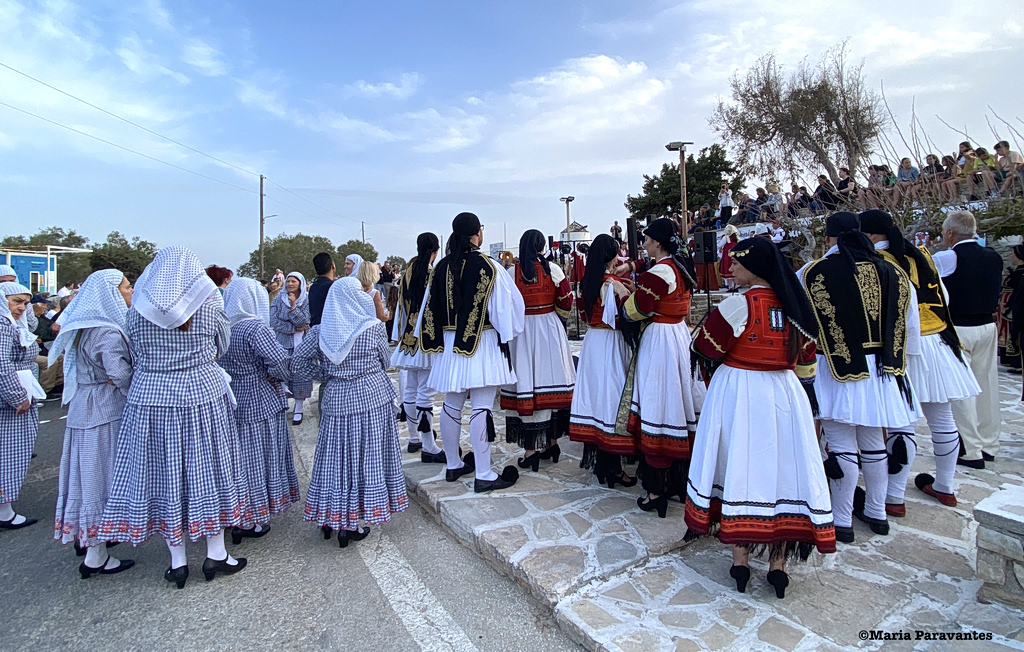
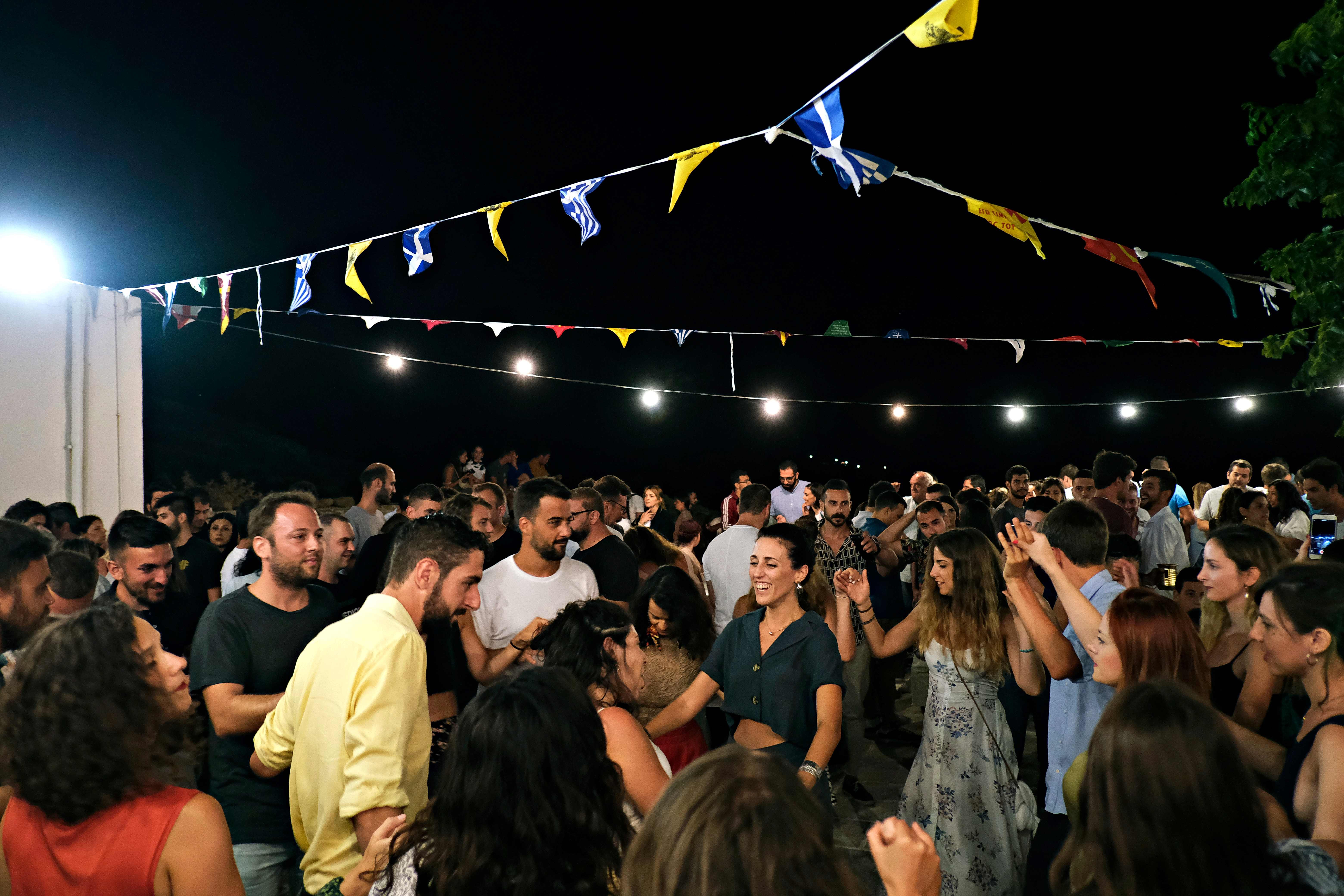
Dance groups wait their turn during the annual Traditional Greek Dance Festival on Antiparos, Greece. Photo: Maria Paravantes
Asked whether tradition is outdated, Peristera is quick to note that the “old” often brings what modern life lacks. “By going back, I find the authenticity and simplicity that are missing today.”
“Lately, there’s been a push to make everything mainstream,” she says. “We’re losing uniqueness. Creative expression is becoming homogenized. I find that deeply exhausting, dystopian even.”
This is why tradition resonates with her. “It motivates me to seek the essence of things. It reminds us of who we are and grounds us in a world that’s changing at breakneck speed.”
Dance as an Expressive Outlet
A similar longing for community and reconnection led 36-year-old Sofia Chatzigeorgiou to take up Greek folk dance about a year ago.
After several years of living abroad, she felt increasingly distanced from Greek culture. What she missed most was the sense of togetherness: the warmth of the Greek “parea”. “I really missed that feeling,” she tells TO BHMA International Edition.
The first time she participated in a group performance, the realization hit her. “That’s when I understood how much I wanted to belong.”
Performing, she explains, goes far beyond memorizing steps. Each appearance requires learning the history behind the dances, sourcing and wearing traditional costumes specific to each region.
By day, Chatzigeorgiou works in research and development for a major pharmaceutical firm. The pace is demanding, and dance offers balance.
“On one level, I’m learning the music, the movements, the stories these dances tell,” she says. “On another, the performances allow me to express myself creatively and experience the joy of being part of something collective.”
Chatzigeorgiou also loves the costumes and is fascinated by the ‘fashion’ of past eras. “Wearing these outfits makes the experience even more meaningful.”
For her, what began as a pastime has developed into something much deeper. “When I dance, I feel like I’m communicating with older generations,” she explains. “I become a link in a long chain that continues through time.”
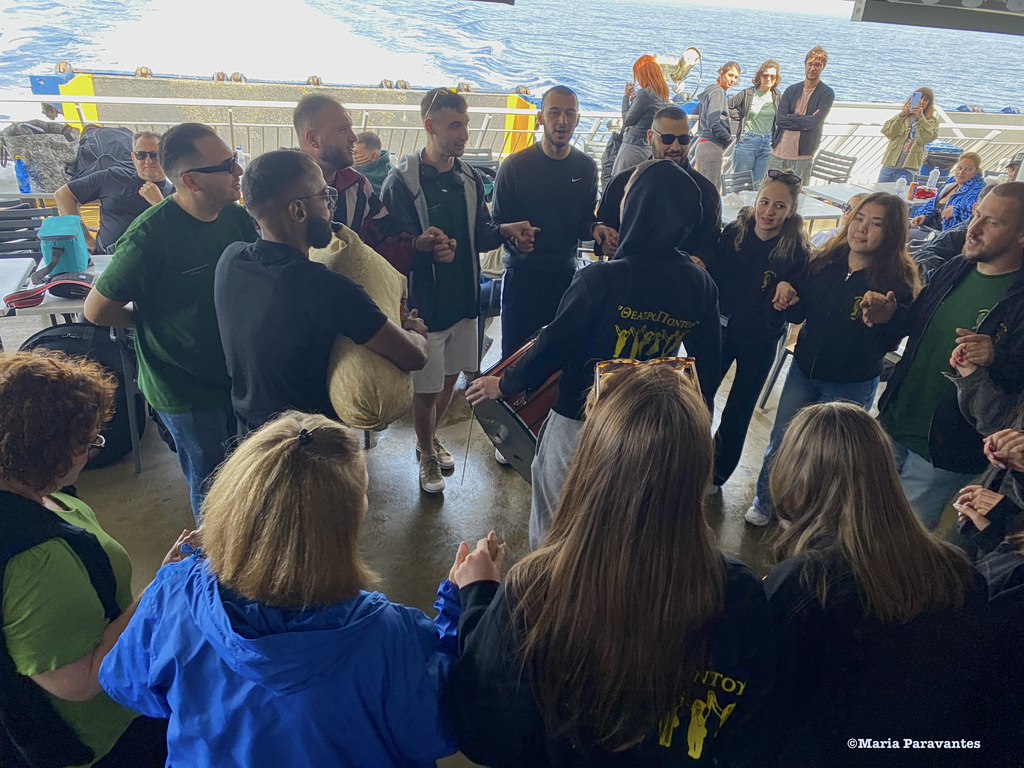
A traditional Greek dance group in action during the ferry ride to Antiparos island for the annual Traditional Greek Dance Festival. Photo: Maria Paravantes
Reconnecting With Greek Roots
For Evangelia Vezyraki, traditional dance is far more than a sequence of steps. It’s a resilient expression of memory, identity, and collective belonging.
Vezyraki runs one of the largest traditional dance schools in Sitia, Crete, and is a founding member of the Argastiri Sitia Diktynna Cultural Association. Since 2018, the association has organized the Diktynna Festival of Culture, Tradition & Arts, helping establish Sitia as a cultural hub.
She opened her dance school in 2013 with a clear mission: to preserve and promote the traditional dances of Crete and Greece to the world. More than a decade later, that vision is finding an increasingly eager audience.
“The number of students keeps on growing every year,” she tells TO BHMA International Edition. “There’s a genuine desire to learn traditional dances and to understand what they represent.”
She’s also noticed a shift in the cultural life of Crete. “In recent years, more young people have begun to participate in local celebrations,” she says. “Ten years ago, that was far less common.”
For Vezyraki, the reason is clear. “There is a deeper need to reconnect with roots and origins. Dance is memory. It’s history. It’s a shared language. A constant point of reference.”
In an increasingly digital and fragmented world, the traditional Greek dance circle offers something elemental. “Young people feel part of a collective that doesn’t judge or isolate them,” she explains. “It embraces them.”
Greek Folk Song Finds TikTok
This revival in Greek tradition is playing out online as well. TO BHMA International Edition reached out to Nikolas Psarras, a 42-year-old singer and musician who also teaches Greek folk song. Like many of his generation, his youth was filled with pop, rock, and metal. Gradually, however, he found himself drawn to what he calls “the treasure trove” of traditional Greek songs.
Today, Psarras’ popularity on TikTok reflects a wider cultural shift. Wearing a simple T-shirt, lute in hand, he sings Greek folk songs, noting lyrics and region. His 13.4k followers regularly like and share his performances, spreading Greek traditional music beyond its usual circles.
“TikTok has helped these songs travel,” he says. “But what surprises me most is who’s listening. It’s everyone from 15-year-olds to pensioners.” The younger listeners discover something new; my older followers reconnect with their past. “Greek folk song has a kind of magic,” he says. “I see it every day in the reactions and messages I receive.”
Psarras believes this renewed interest, particularly among younger crowds, has come to fill a deeper void. “Young people are searching for authenticity; for something solid and genuine to lean on. Tradition carries something real. It holds our truth.”
@nikolas.psarras #paradosi #greekmusic #dimotika #thraki #musiciansoftiktok ♬ original sound – Νικόλας Ψαρράς
And so the circle of the traditional Greek dance widens, one step at a time. Hands linking generations. Connection driving history forward.