Improving cruise passenger arrival procedures and the visitor experience while safeguarding residents’ quality of life was the focus of a high-level meeting this week between Santorini Mayor Nikos Zorzos and Cruise Lines International Association (CLIA) Eastern Mediterranean Regional Director Maria Deligianni.
The meeting brought together representatives of cruise operators, the Santorini Port Authority, the Loula & Evangelos Nomikos Foundation, which operates the island’s cable car, the Cyclades Chamber of Commerce, and other tourism stakeholders to discuss ways to better manage cruise passenger flows and address operational challenges on the popular island.
Talks followed recent changes announced by the Municipal Port Fund of Thira regarding cruise passenger disembarkation procedures. Under the new regulations which went into effect on June 1, 70% of the island’s daily limit of 8,000 cruise passengers are directed to the bay of Fira, while the remaining 30% disembark at Athinios Port.
CLIA has expressed concern over the implementation of the measures, arguing that the changes were introduced without sufficient notice or prior consultation with cruise operators, resulting in operational disruptions and additional costs. The association warned that uncertainty surrounding port procedures could affect cruise planning and potentially impact Greece’s reputation as a cruise destination.
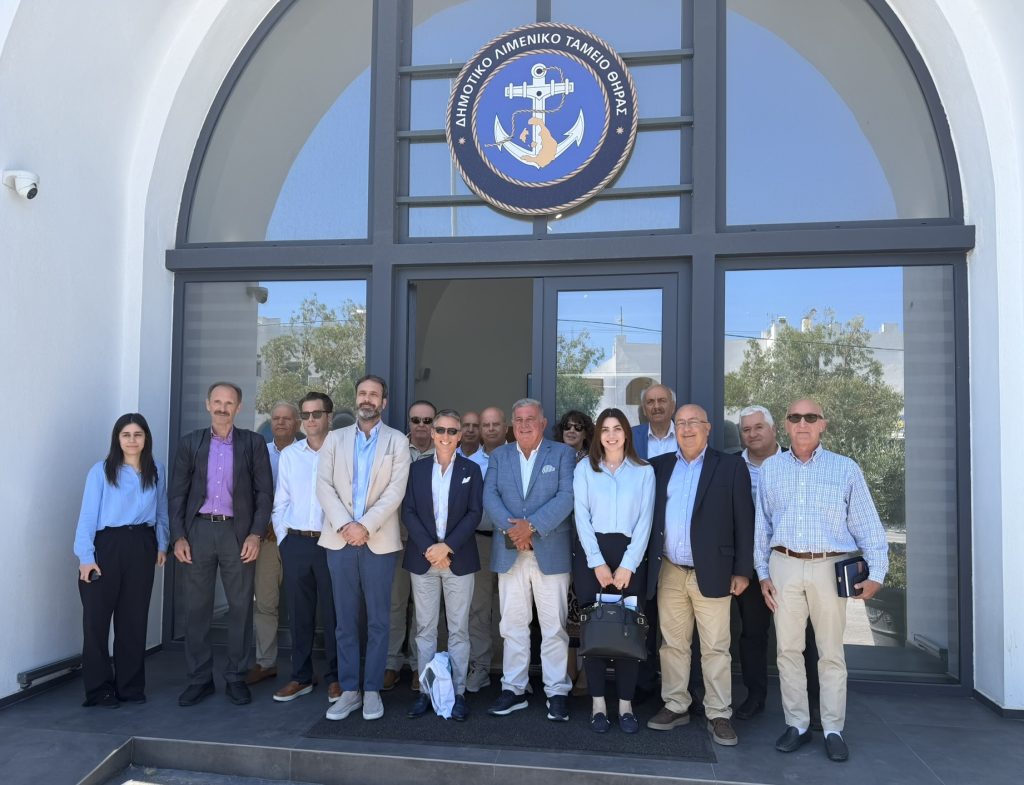
Photo: Municipality of Thira
The cruise industry requires stability, predictability and cooperation to support its continued development, CLIA has said, with the organization’s President and CEO Bud Darr previously voicing concerns over the recent decisions.
According to a statement issued by the Municipality of Thira, this week’s discussions were constructive and reflected a willingness from both sides to work toward practical solutions. Mayor Zorzos emphasized the importance of cruise tourism to Santorini’s economy and local community, while stressing that future growth must be compatible with preserving the island’s unique character.
“Cruise tourism is an important pillar of the local economy, but its development must be guided by the need to protect Santorini’s identity and long-term attractiveness as a destination,” he said.
On its part, CLIA reiterated the cruise sector’s economic contribution to the island and highlighted the need for long-discussed infrastructure and management measures, including the implementation of a repeatedly announced Berth Allocation System, which industry stakeholders argue would improve planning and the distribution of ship arrivals.
Other proposals discussed were the introduction of time slots and other coordination mechanisms aimed at ensuring the gradual and safe movement of passengers, reducing congestion at key points on the island and enhancing the overall visitor experience.
Santorini has introduced a series of measures in recent years to address overtourism and manage growing visitor numbers. These include a daily cap of 8,000 cruise passenger disembarkations and a 20-euro levy for visitors which went into effect last year. Authorities say the measures are intended to protect infrastructure, improve crowd management and support the long-term sustainability of tourism at one of the world’s most visited destinations.
Earlier this year, Royal Caribbean opened it’s first exclusive beach club in Europe on Santorini. The Royal Beach Club Santorini on Vlychada Beach, welcomes guests through paid, full-day shore excursions offered across the company’s Mediterranean itineraries. Access is exclusive to passengers sailing with Royal Caribbean International and Celebrity Cruises.