 Μake us preferred on Google
 Ninety years ago, Berlin opened the most politically charged Olympic Games in modern history. Nazi Germany welcomed athletes from around the world, staging an imposing display of peace, order, and unity. Behind the Olympic flags, though, the swastika already flew high, and Hitler’s suffocating presence loomed over the entire event.
On August 1, 1936, Berlin was dressed in its Olympic colors. Flags covered buildings and avenues, military units marched through the city, thousands of members of the German youth lined the streets, and more than 100,000 spectators packed the newly built Olympic Stadium.
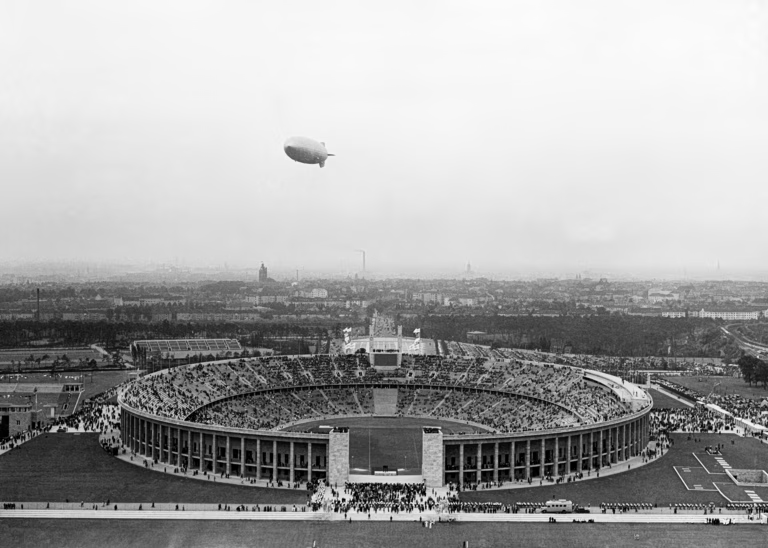
Panoramic view of the Berlin Olynpic Stadium during the opening ceremony of the games of 1936, with a zeppelin in sight above.
The opening ceremony of the 11th Olympiad was designed as a spectacle on an unprecedented scale. Behind the image of peace and international unity, though, lay a carefully orchestrated machine of Nazi propaganda. For a few weeks, Germany tried to present the outside world with the face of a peaceful, hospitable, and disciplined nation.
In Greece, early coverage focused on the arrival of the Olympic flame. For the first time in the history of the modern Games, the flame had been lit at ancient Olympia and carried by relay to the host city.
“The Apollonian Light of Olympia”
On August 2, 1936, the newspaper Eleftheron Vima ran with a headline:
“Berlin welcomed, with emotion and enthusiasm, the Apollonian light of Olympia, as an immortal symbol and lesson of the Greeks.” The article went on:
“Greek thought has, since yesterday, turned toward Berlin […] It reaches us as the distant echo of a national and religious rite performed by the youth of the entire world, its gaze turned toward Greece and toward the sacred ground from which the sacred Apollonian light — the Olympic torch — set out, a symbol and lesson of bodily and spiritual strength.”
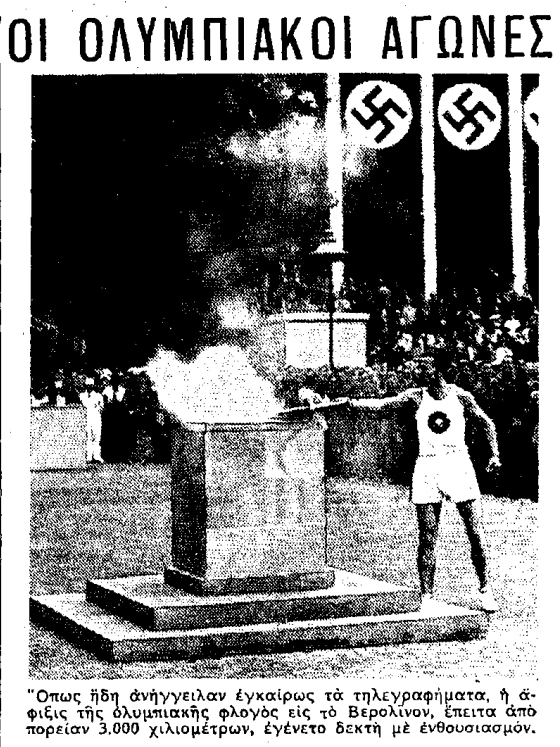
The image reads: “As has already been reported through the telegrams, the arrival of the Olympic flame, after travelling for 3.000 kilometers, has been received with enthusiasm”. Athinaika Nea, August 7, 1936, Historical Archive of To Vima | Ta Nea
The first modern Olympic torch relay was designed by German sports official Carl Diem. The flame was lit at ancient Olympia on July 20 and, after crossing Greece, Bulgaria, Yugoslavia, Hungary, Austria, and Czechoslovakia, arrived in Germany. The route from Olympia to Berlin has remained ever since one of the most recognizable rituals of the Olympic Games.
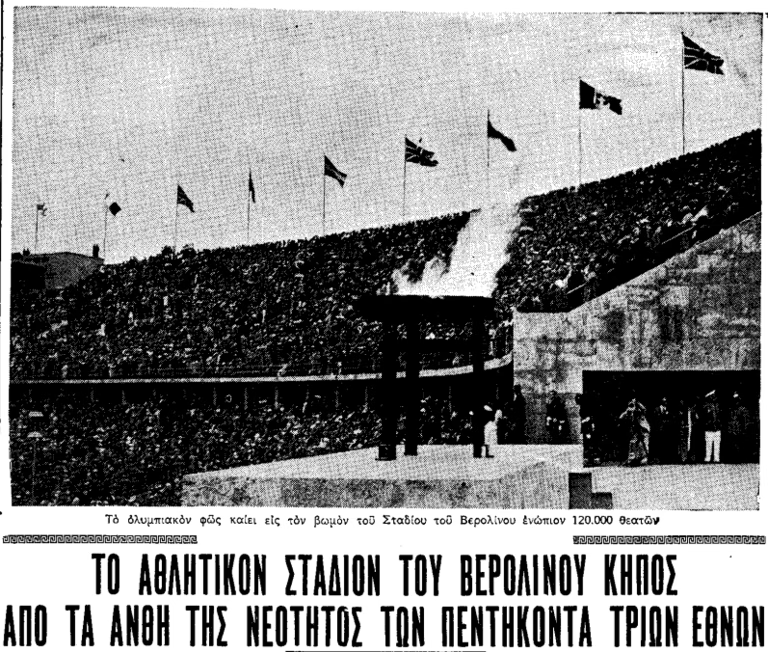
Hitler’s City
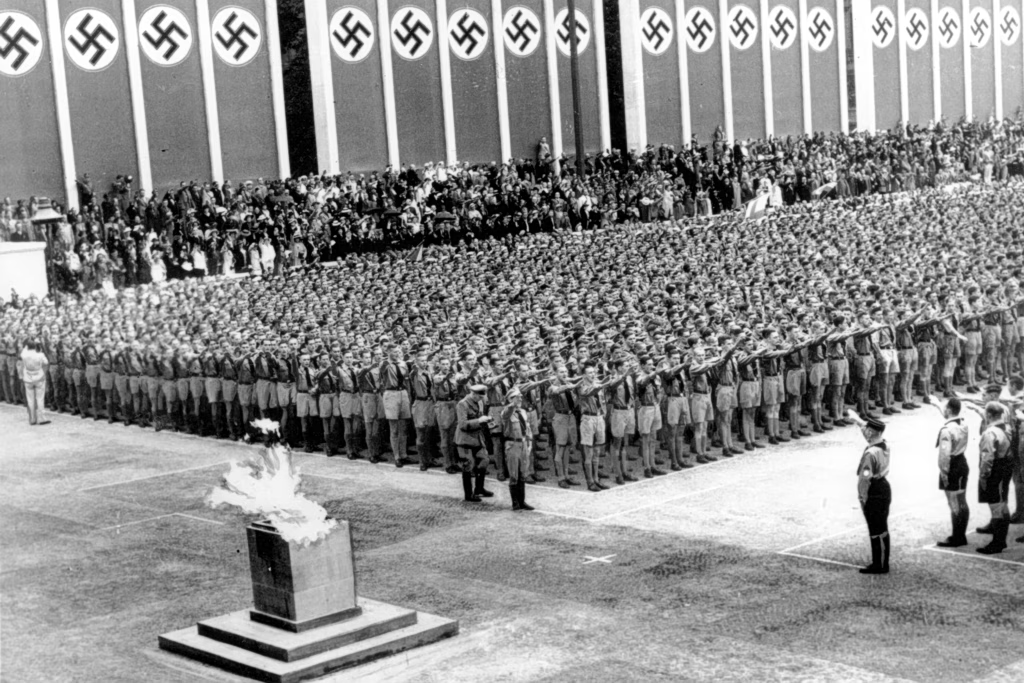
From the early afternoon of August 1, according to the paper, Berlin echoed with the German national anthem, marching songs, and cheers for the chancellor. At the center of the ceremony stood German youth. Tens of thousands of young men and women had gathered at the Lustgarten, where regime officials spoke, including Propaganda Minister Joseph Goebbels. A greeting to the athletes followed, ending in a single word: “Peace.”
That invocation of peace was part of the image the regime wanted to project. The link drawn between ancient Greece and modern Germany served to support the racial myth that the Third Reich was heir to a supposed “Aryan” ancient Greek civilization.
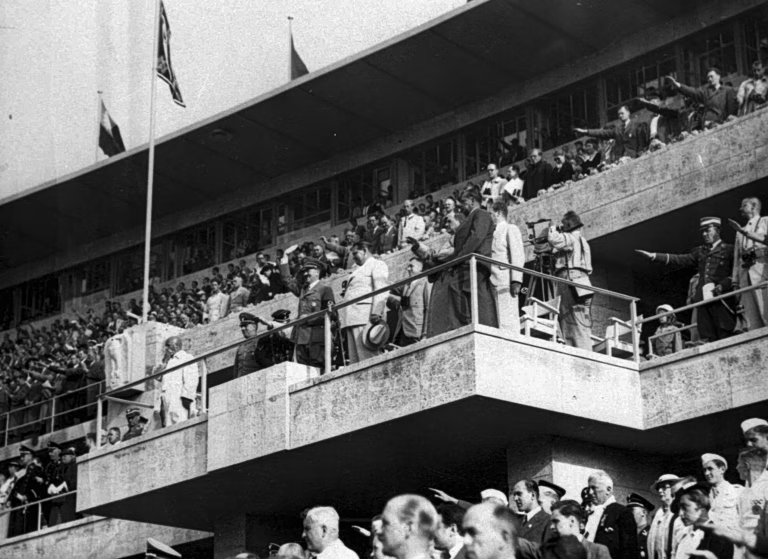
Adolph Hitler on the balcony of dignitaries, in the Berlin Olympic Stadium.
The Führer’s Speech
“Germany gladly and joyfully undertook the mission of preparing the present Games in a form as close as possible to the great idea and the noble traditions of the classical Greek Olympiads.
“I hope that I have thereby helped to strengthen the ideal from which these noble Games must draw their inspiration: the ideal of a renewed understanding among peoples. The founding principles of the Olympiads, reappearing today before the eyes of the world, have a sacred origin.”
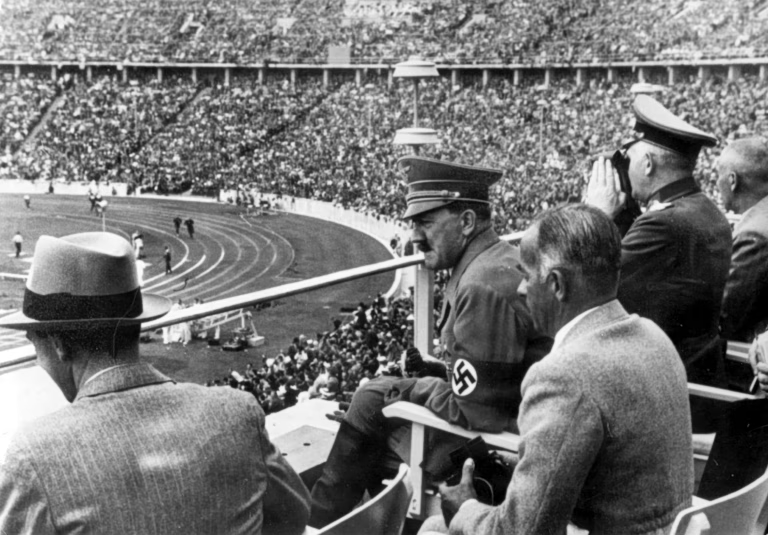
Joseph Goebbels, Adolf Hitler, head of German sports Hans von Tschammer und Osten, and War Minister Werner von Blomberg watch the 1936 Olympic Games from the officials’ box in Berlin.
In the same speech, Hitler also announced the resumption of German excavations at ancient Olympia, presenting them as work that would keep alive the memory of the 1936 Games and restore to humanity the sacred center of ancient Greek worship.
At the very moment these declarations of peace and understanding among peoples were being made, Germany had already enacted the racial Nuremberg Laws, excluded Jews from much of public life, and turned sport and youth organizations into tools of ideological indoctrination.
Spyros Louis and the Olive Branch
Greece’s presence at the ceremony was especially notable. Leading the Greek delegation was Spyros Louis, winner of the marathon at the first modern Olympic Games in Athens in 1896.
Eleftheron Vima reported:
Wearing a traditional fustanella, the 63-year-old Olympic champion presented Hitler with an olive branch from Olympia. Today, that image carries a more layered symbolism: a representative of the Olympic tradition handing the symbol of peace to a dictator who was preparing Europe for war.
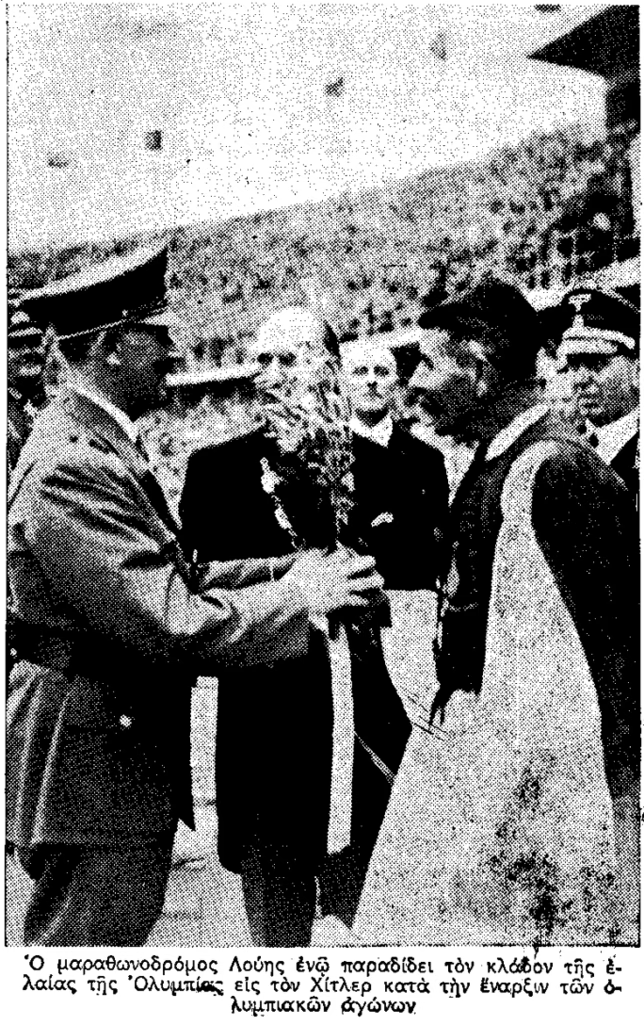
Photo reads: Marathonrunner Spyros Louis as he presents the olive wreath to Hitler, during the opening ceremony of the Olympic Games”. Eleftheron Vima, August 4, 1936, Historical Archive of To Vima | Ta Nea
“Heil Hitler” From Entrance to Exit
On August 12, 1936, journalist Christos Kavafakis wrote in Athinaika Nea about how thoroughly Hitler’s name and image dominated everyday life in Germany:
“How many times a day do Germans today exchange these two words. Everything in the name of Hitler! Even their ‘good day.’ […]
“You walk into a restaurant, a pastry shop, a dance hall, any dancing venue at all; you are greeted with ‘Heil Hitler,’ which in German mouths sometimes becomes ‘Ha-er.’ You get up to leave. On your way out they will see you off with ‘Heil Hitler, long live Hitler!’ […]
“Germany has set up an idol, Adolf Hitler, and worships it. There is no factory, office, center, or… remote corner that does not have the Führer’s image, most often paired with the famous maxim: ‘You are nothing. Your people are everything.’
“It is unbelievable how the shadow of one man falls over a great country, from one end to the other […] It is hard to separate, in this hysterical cry of Germany — Heil Hitler — how much is compulsion and propaganda, and what proportion is spontaneous expression.”
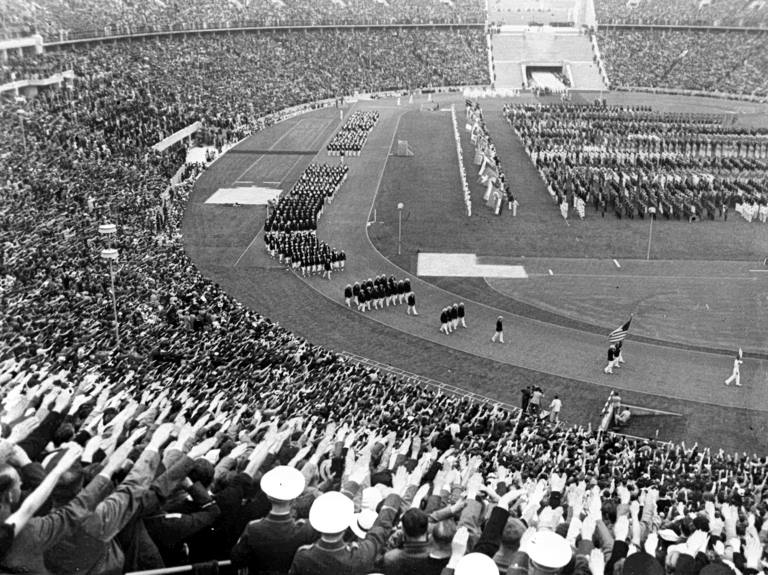
Parade at the Berlin Olympic Stadium, during the opening ceremony of the XI Olympic Games.
“Germany Reminds You More of Lycurgus Than of Pericles”
A few days later, on August 17, 1936, Nikos Lanitis described in Eleftheron Vima the packed stadiums, the flag-draped city, and the Olympic altars still burning. He then posed the critical question: was the Olympic spirit truly present beyond the Stadium?
The answer, he suggested, lay in the barracks, the airfields, and the Hitler Youth marching through the streets in military step. He wrote that:
“‘The rule of the one man’ is felt in your every step […] All of Germany bears arms.” The image of the country did not evoke open, democratic Athens, but the military society of ancient Sparta:
“Germany reminds you more of Lycurgus than of Pericles. The Spree has been transformed into a Spartan Eurotas, where the youth of Germany are being prepared for some hypothetical Thermopylae.”
The Triumph of Jesse Owens
The biggest crack in the image of “Aryan supremacy” came inside the stadium itself. African-American athlete Jesse Owens won four gold medals: in the 100 meters, the 200 meters, the long jump, and the 4×100 meter relay. He emerged as the defining figure of the Games, his performances refuting Nazi racial theory outright.
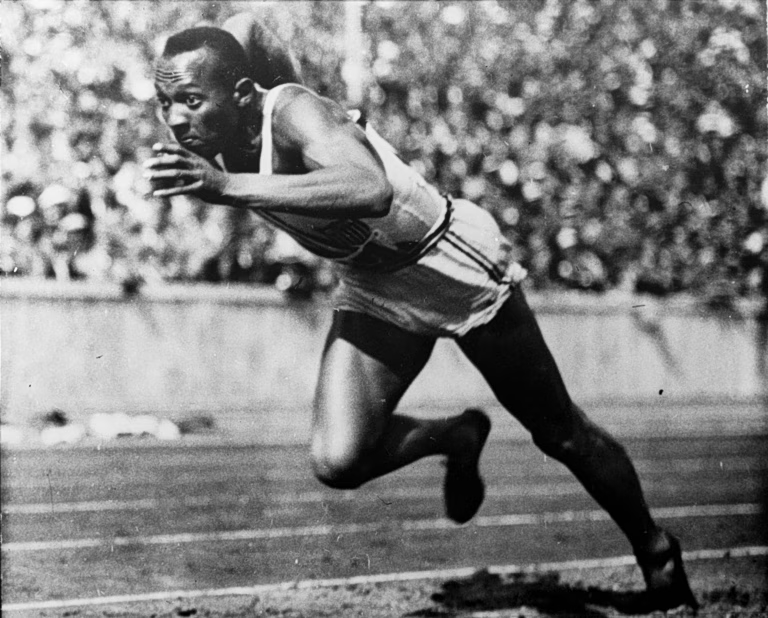
American track and field athelete Jesse Owens sprinting at the Berlin Olympics
On August 10, 2000, sports writer V. Skountis wrote in Vimasport that Owens’s four gold medals forced the Führer to disappear from the stadium’s official box and placed the son of an enslaved man from Oakville at the pinnacle of resistance to Nazi racist propaganda.
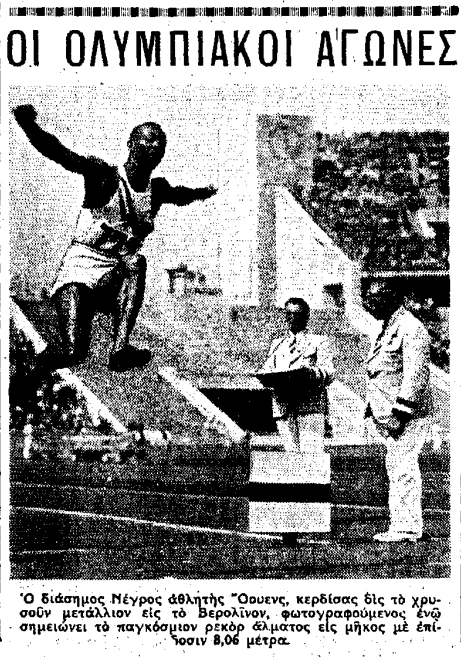
Photo reads: “The famous black athelete Owens, who won the gold medal in Berlin is here photographed as he achieves the long jump global record of 8,06 meters”. Athinaika Nea, August 10, 1936, Historical Archive of To Vima | Ta Nea
Born on September 12, 1913, in the cotton fields of Oakville, and raised amid the steel mills of Ohio, Owens was one of eleven children of James Owens, who had been enslaved. On May 25, 1935, with broken ribs and having gone to Michigan merely to support his teammates at the Big Ten regional meet, he gave in to temptation and competed anyway, winning four gold medals and setting four world records in just 46 minutes.
Forty years later, President Gerald Ford, presenting him with the Presidential Medal of Freedom, said Owens had achieved what generals, politicians, journalists, and ordinary citizens could not: he had driven Hitler from the Stadium.
Owens’s friendship with German long jumper Luz Long also remained one of the most powerful images of the Games. Long helped his rival avoid disqualification in the long jump qualifying round, and when the American won the final, the two athletes took a victory lap of the stadium together. The image of a white German and a Black American embracing in front of the Nazi flags expressed everything the official ceremony claimed to stand for, and everything the regime, in practice, denied.
The Light That Didn’t Dispel the Darkness
The Games concluded on August 16, 1936. Germany won the most medals, and the organization and hospitality impressed much of the foreign press and visiting public. The Nazi regime had managed, at least for a time, to appear more peaceful and humane in the eyes of the international community.
Just days after the Games began, on August 4, Ioannis Metaxas imposed a dictatorship in Greece. Three years later, on September 1, 1939, Germany’s invasion of Poland would set off the catastrophe of the Second World War.