 Μake us preferred on Google
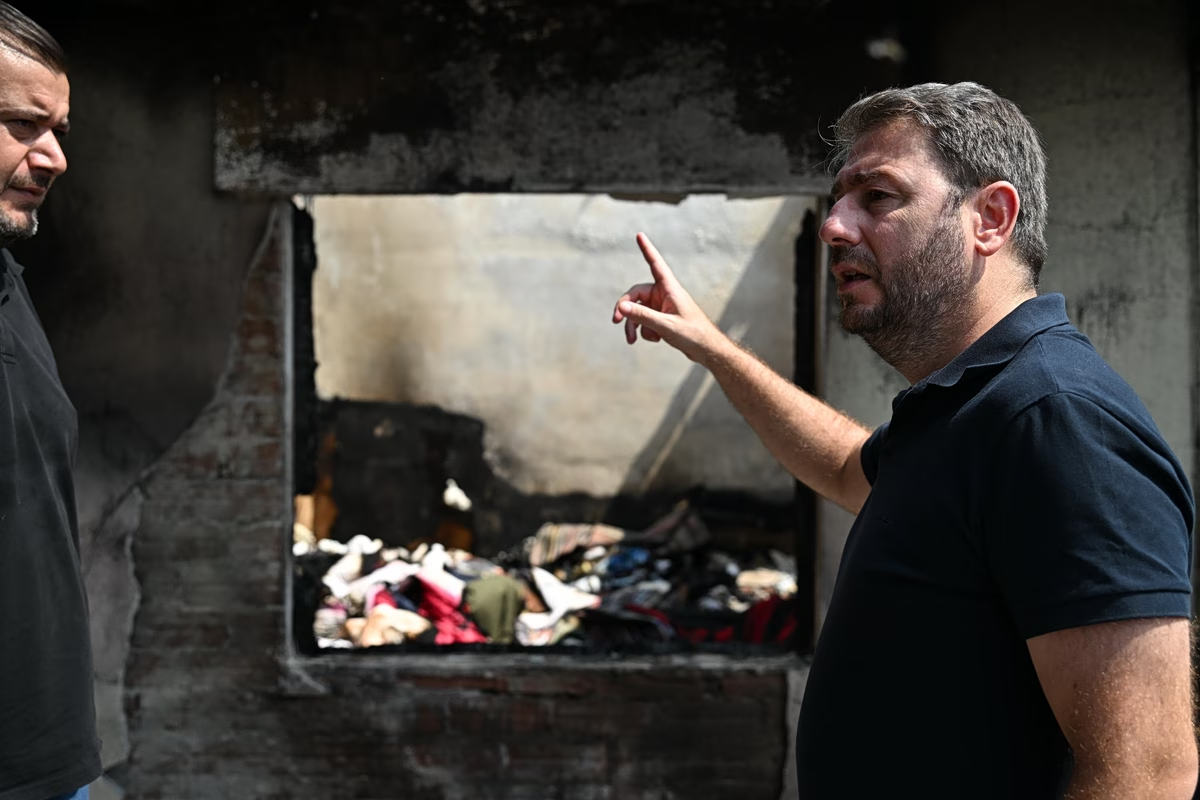
 Nikos Androulakis, leader of PASOK – Movement for Change, will visit fire-stricken areas of the Boeotia region on Tuesday, August 4. At 11:15 a.m. he will travel to Xironomi, where he will meet with residents and community president Efstathios Kefalas in the town square.
He will then head to Domvraina, where at 12:45 p.m. he will hold a meeting with community president Konstantinos Bougias and affected olive growers and livestock farmers at the town’s cultural center.
“Five Losses on the Front Line Don’t Allow for More Triumphalism”
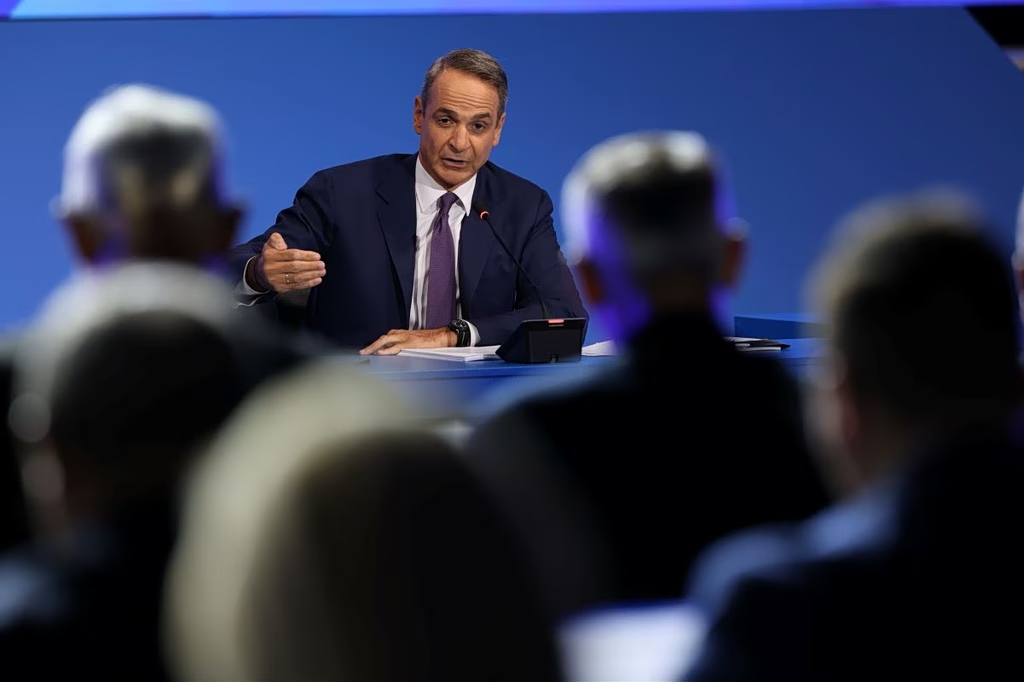
In a joint statement, Argolida MP and PASOK’s parliamentary spokesperson on Climate Crisis and Civil Protection, Andreas Poulas, and the party’s Climate Crisis and Resilience coordinator, Michalis Chalaris, raised what they called pointed questions about the state mechanism’s readiness for the fires and how heavily publicized Civil Protection programs actually performed, while also raising the issue of the five deaths and the tragic collision of two helicopters at Psatha.
“Five people from the operational front line were lost. The least we owe them is not to carry on as if nothing happened,” they said, adding that what’s needed is “accountability, not communications management.”
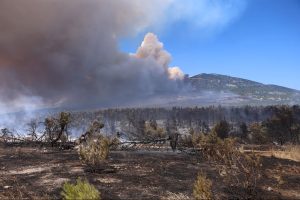
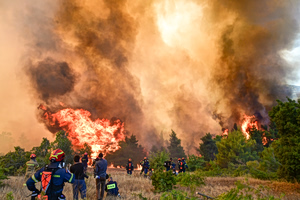
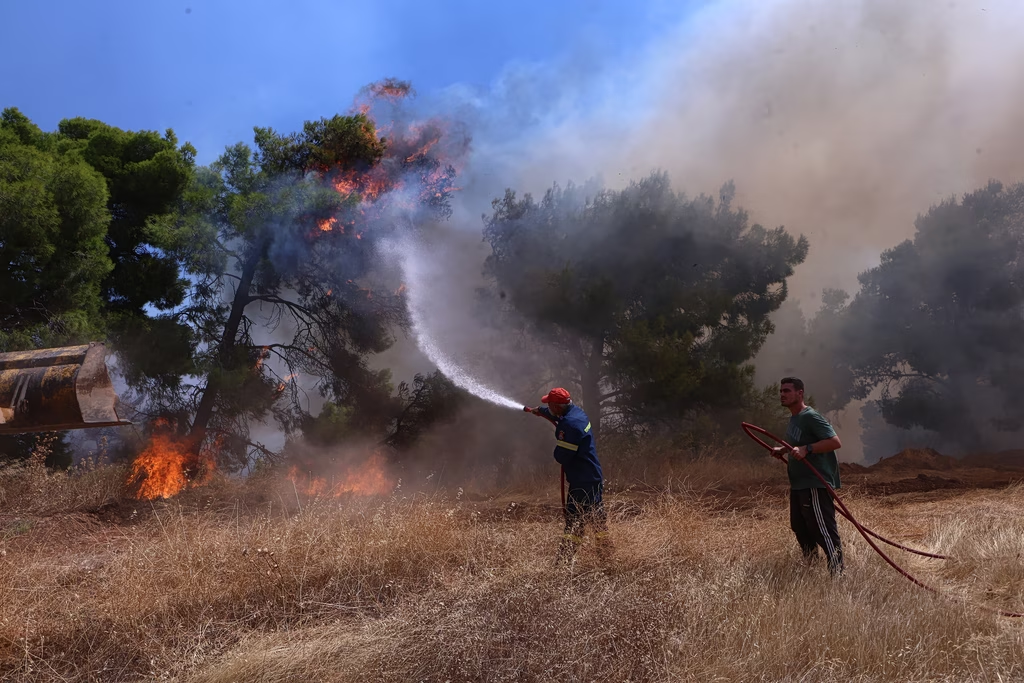
The major fires of recent days have left behind enormous environmental, social, and economic damage. From the Attica-Boeotia region, where available estimates put more than 110,000 acres of land reduced to ash, to Argolida, Crete, Kefalonia, Arta, and other parts of the country, thousands of acres of forest and farmland were destroyed, homes and farm storage buildings suffered serious damage, and crops, olive groves, greenhouses, and livestock facilities were wiped out, while critical infrastructure came under severe strain.
Within a matter of days, the country is mourning five people from the operational front line: three firefighters and two members of the aerial firefighting crew. This is not a statistic. These were people out in the field, in conditions of extreme danger, working to protect lives, property, communities, critical infrastructure, and the natural environment.
The statement expressed the officials’ deep sorrow and sincere condolences to the families, loved ones, and colleagues of those lost, adding that their thoughts are with firefighters, aircraft crews, volunteers, EKAB (the national emergency medical service), police, the armed forces, local authorities, and the citizens still going through this ordeal.
Right now, they said, the priority is protecting human life, supporting those affected, and ensuring the safety of responders. But precisely because front-line workers are being mourned, they said they have a duty to speak plainly: it cannot be that every spring officials say the state mechanism is fully prepared, only for the same images, the same gaps, the same breaking points, and the same loss of life to repeat every summer.