 Μake us preferred on Google
 The famous song from the Spanish Civil War, “No pasarán” (“they shall not pass”), opens with the line “The Moors brought by Franco want to enter Madrid” and continues with “As long as there are militiamen, the Moors shall not pass.”
In modern Spain, the use of the word “Moros” (Moors) in that song draws sharp criticism, since many assume it refers disparagingly to citizens of the neighboring country and is racist.
Spain’s Strongholds in Africa
In reality, though, the term was most likely used by participants in the Spanish Civil War to point to something well known at the time: that Franco led the July 1936 coup with the Spanish Army of Africa at its spearhead, the mixed force of Spaniards and local troops Spain used to hold onto its possessions in Spanish Morocco. In the years before the civil war broke out, that force had been considerably built up because of the Rif War, which had ended about a decade earlier, along with additions of local conscripts (Regulares) and “volunteers.”
The Regulares were formed as a unit in 1911 and consisted mainly of Berbers, while officer positions were always held by Spaniards. Their two main “strongholds” were, and still are (yes, the unit still exists), Spain’s two principal possessions, or rather its two best-known enclaves in Africa, which have been part of Spain since 1497 and 1580 respectively: the now-autonomous cities of Ceuta and Melilla. That is why both Ceuta and Melilla effectively became the starting points of the coup led by Franco, Mola, and Sanjurjo against the Second Spanish Republic.
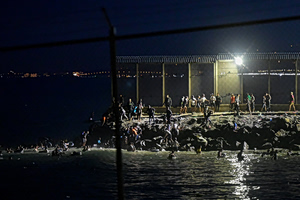
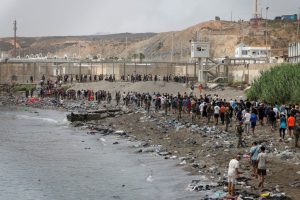
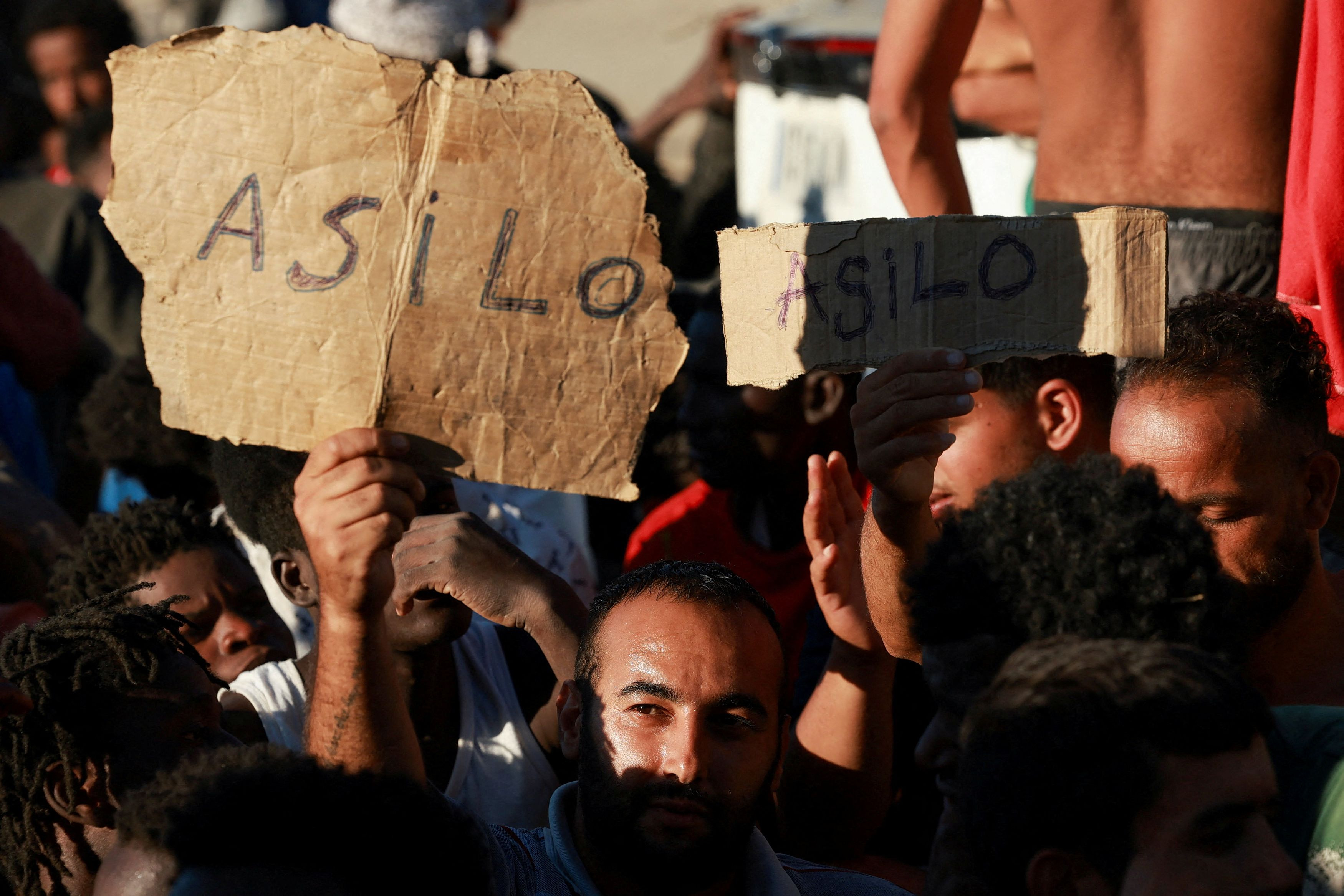
All this, along with the fact that it was Franco who recognized Morocco’s independence in 1956 while keeping Ceuta, Melilla, and a handful of other Spanish possessions as “sovereignty territories” (plazas de soberanía), is crucial to understanding what’s really at stake on Africa’s northern coast, an issue tied for years to waves of migration from Africa toward Europe, with the latest incident occurring just last week.
Over €300 Million on Fences and Surveillance
Over the past three decades, Spain has spent more than €300 million shoring up Ceuta and Melilla against mass irregular entries into the EU, and on building up and maintaining security and surveillance infrastructure (SIVE). Spanish governments, regardless of political stripe, have not budged an inch on the question of Spanish sovereignty over the plazas de soberanía, despite what Morocco would like, and for two decades have poured huge sums into these territories.
It began back in 1993, when the Spanish government of the day built the first border fence, a wire barrier 8.3 kilometers long, followed in 1996 by a second, 10.5-kilometer fence in Melilla. Around that time, migration from sub-Saharan Africa toward the EU, and specifically Spain, was starting to grow, as more and more migrants arrived drawn by Spain’s economic growth, with the two cities only gaining “autonomous city” status in 1995. The fences were reinforced in 1995 and 1998 with EU funding, since the original structures were easy to get around, and Spanish authorities have invested in periodic upgrades ever since.
Clandestino
Tellingly, around that same period Manu Chao sang, in his song “Clandestino,” that he’d gone to work in a city up north and left his life somewhere between Ceuta and Gibraltar. Up to that point, there were essentially no physical borders separating Ceuta and Melilla from Morocco, only lines on maps and agreements between Morocco and Spain. That fact alone shows just how disconnected from reality the international far right’s accusations against Sánchez and his supposed “open borders” policy really are, just as the rumors that pushed thousands of Moroccans to try to scale the Ceuta fence or swim around it had no basis in reality either. Spanish and European border policy can, by all appearances, be summed up in the title of that Spanish Civil War song: “No pasarán.”