 Μake us preferred on Google
 A total solar eclipse delivered spectacular views to millions of people as the rare phenomenon plunged parts of the world into darkness for a few seconds, with northern Spain among the areas experiencing the event.
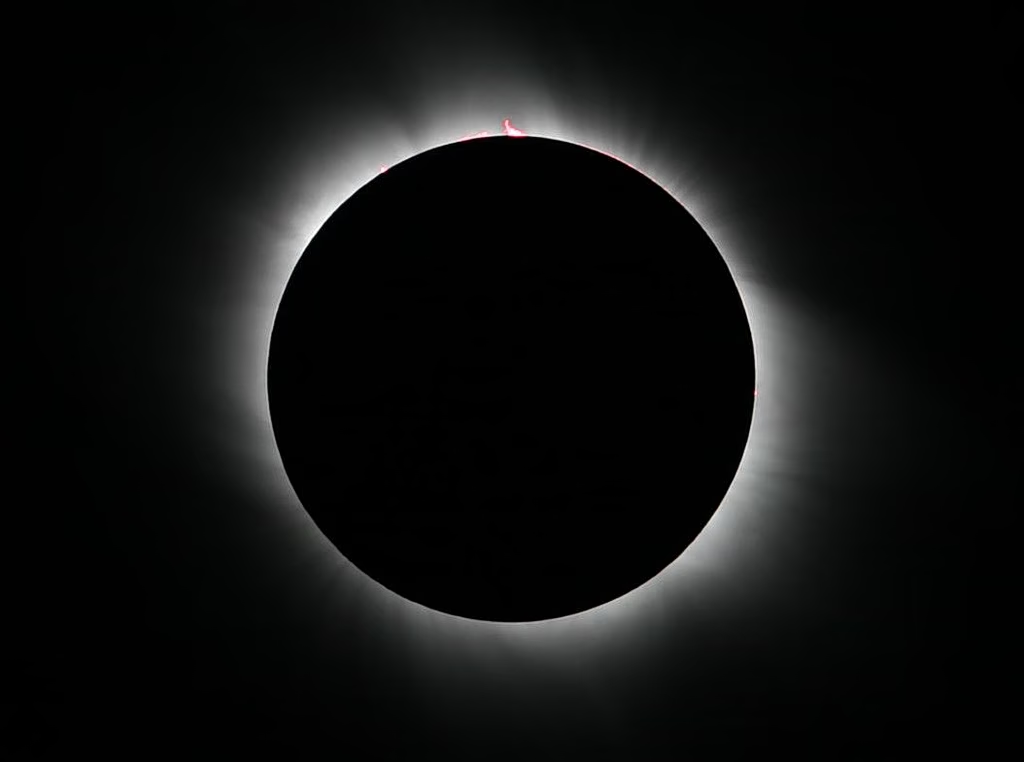
The moon completely covers the sun during a solar eclipse near the northern Spanish town of Reinosa, August 12, 2026. REUTERS/Victor Fraile
Spain was at the center of the spectacle, with the government estimating that as many as 6 million people traveled to areas within the path of totality. The eclipse occurred shortly before sunset, creating a striking celestial display.
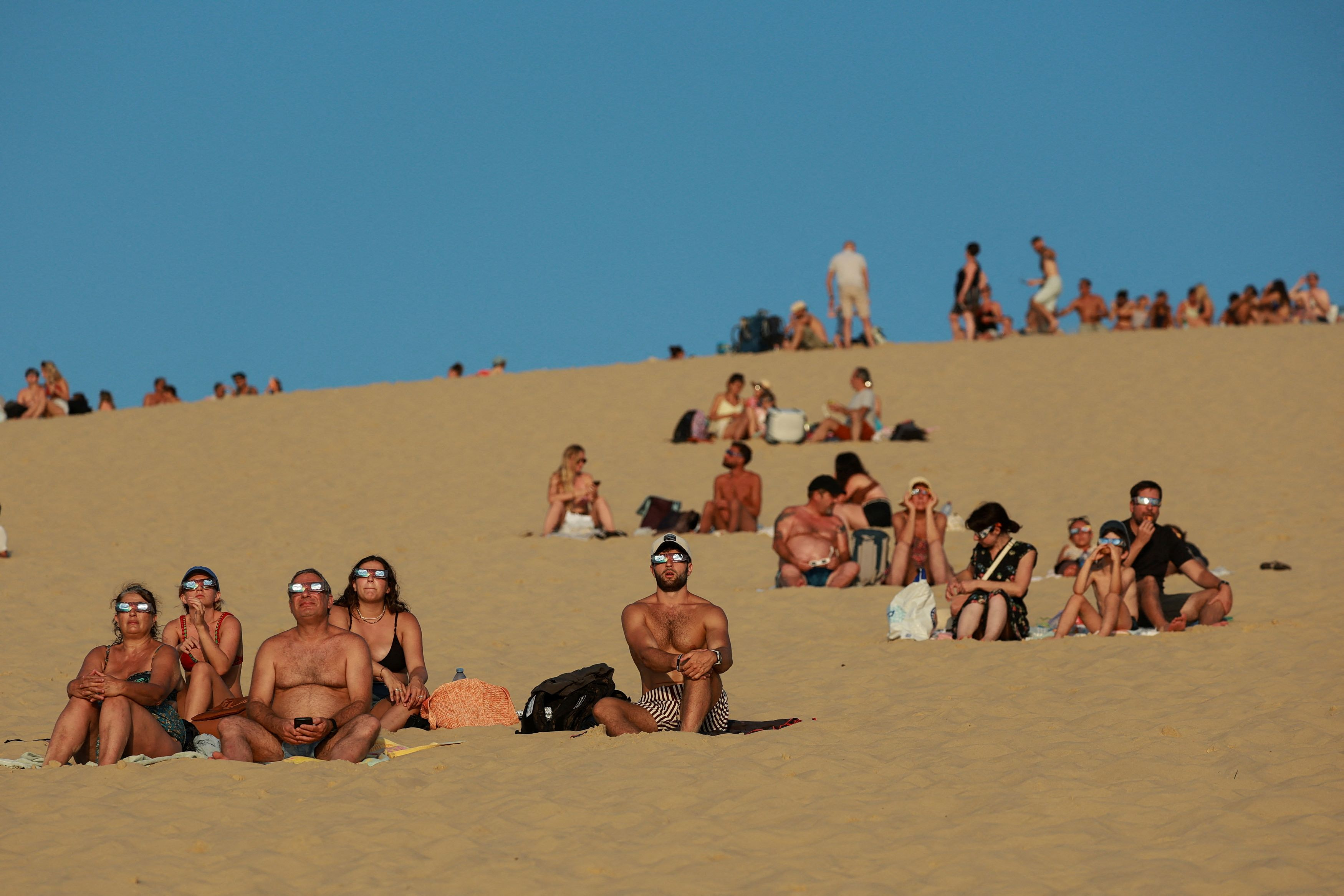
People watch a partial solar eclipse through protective glasses from the Dune of Pilat in La Teste-de-Buch near Arcachon, France, August 12, 2026. REUTERS/Stephanie Lecocq
The country drew the largest concentration of eclipse watchers, with tens of thousands of people gathering at organized viewing locations. Palencia, Zaragoza and parts of Mallorca were among the main viewing hubs.
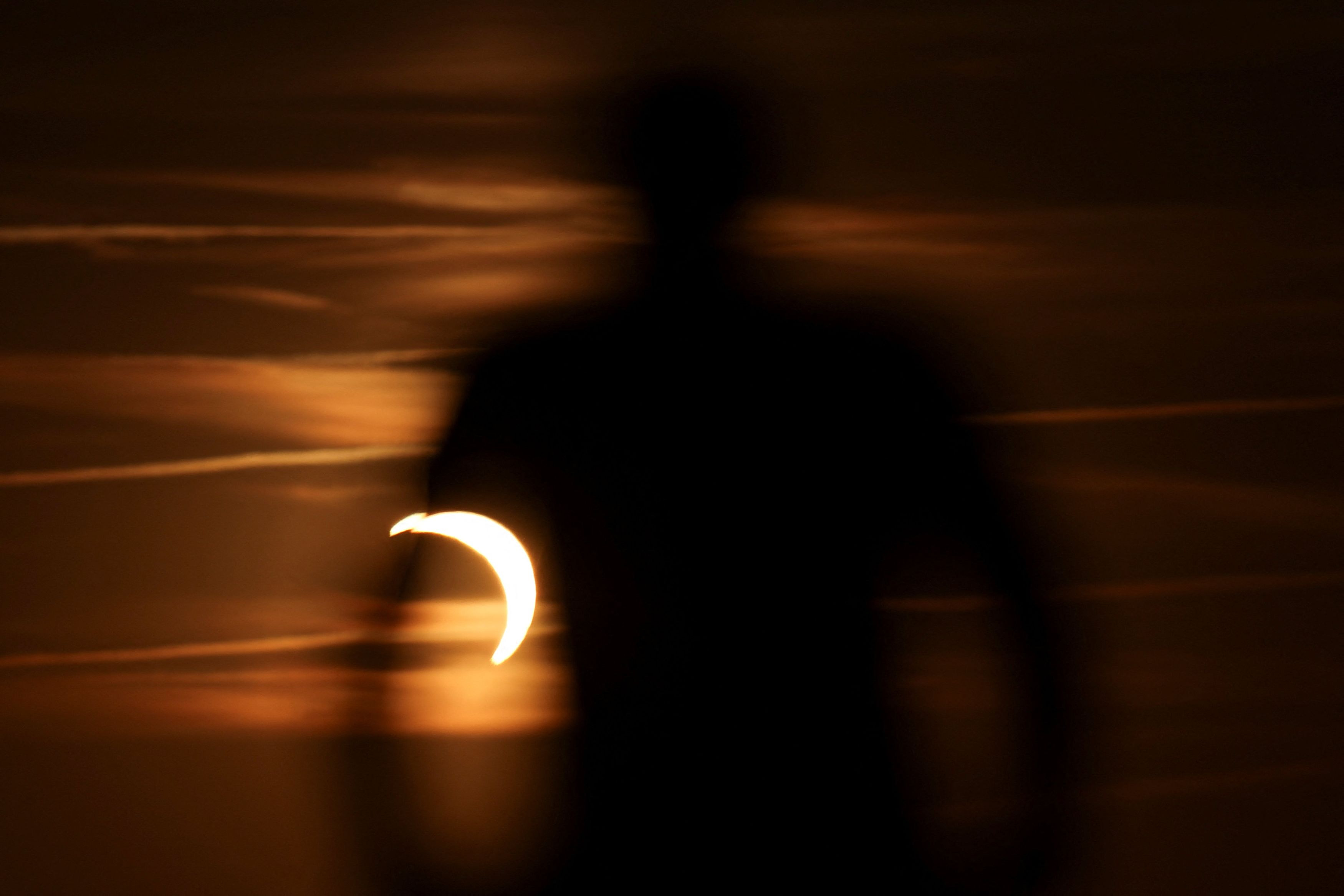
A person stands during the partial solar eclipse at Tempelhofer Feld in Berlin, Germany, August 12, 2026. REUTERS/Maryam Majd
The rare astronomical phenomenon, the first of its kind in Europe since 2006, began over Russia at around 8 p.m. Greek time before crossing the Northern Hemisphere and passing over Greenland, then continuing across the Atlantic Ocean.
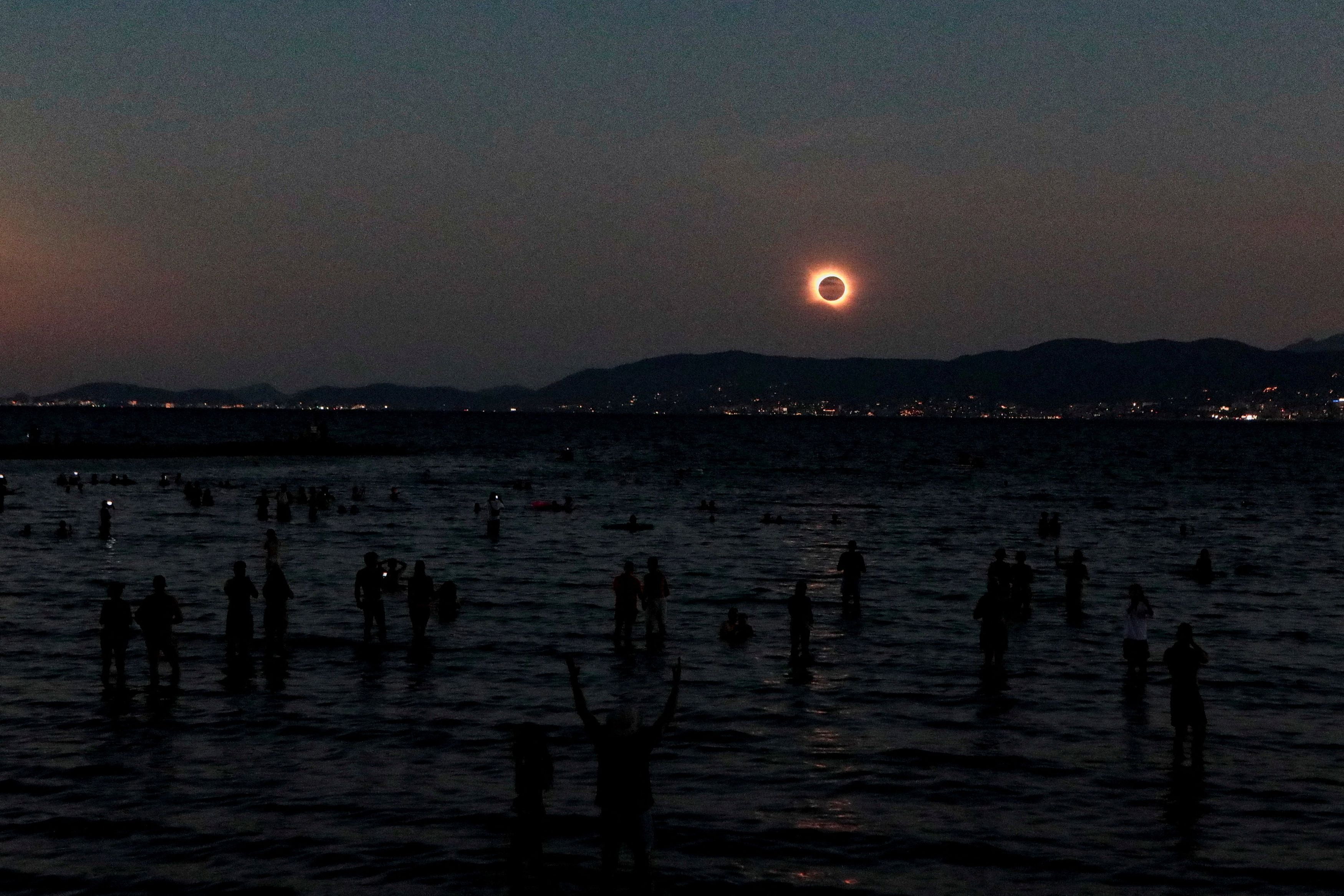
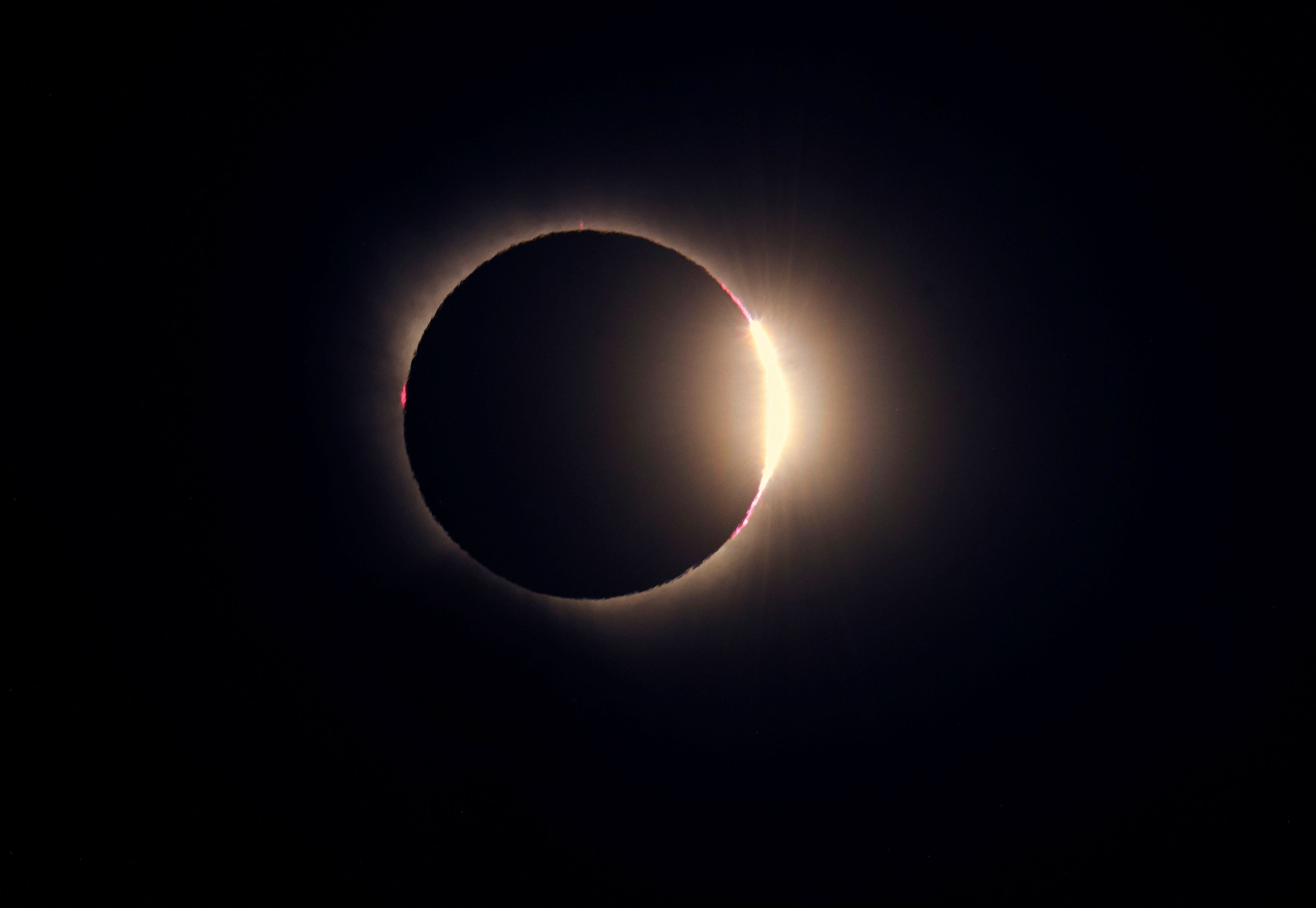
The “diamond ring” effect appears as the moon moves across the sun during a total solar eclipse, as seen from El Arenal beach in Mallorca, Spain, August 12, 2026. REUTERS/Francisco Ubilla TPX IMAGES OF THE DAY
The eclipse was visible from part of Iceland and along a path stretching across Spain, from Oviedo to Palma de Mallorca via Burgos, north of Madrid, before disappearing at around 9:30 p.m.