 Μake us preferred on Google
 There is something about Sinafi that feels less like a new business and more like a headquarters for the people who never left Exarchia, the central Athens neighborhood long associated with its distinctive social and cultural life.
They have built something fancier, perhaps something more “wow,” but not because they needed to establish themselves in a neighborhood where they already belonged. They built it to make it a little easier for visitors to understand what the people who live and spend their time here have in mind: how they have fun, how they share a table, and how they express their philosophy through a place of their own.
I remember wandering around the city with my people. Whenever someone I didn’t know joined the group and was introduced to me, one phrase would almost always come up: “He’s one of ours. From our crowd.”
Anyone who didn’t belong to the broader Exarchia area might not have understood the gentle conspiracy behind those words. And that was probably for the best. We had no reason to explain who “one of ours” was.
But Sinafi gives me a reason to try to explain what we really meant.
Because behind a few delicious dishes and cocktails lies an entire culture that shapes the way people meet here: the story of people who never had to wait for Exarchia to “change” before they could love it. People who know what solidarity and caring for one another mean here, what real fun looks like, what a drink with substance should be, what music can keep you out until morning, and what food belongs in the middle of the table, ready to be shared.
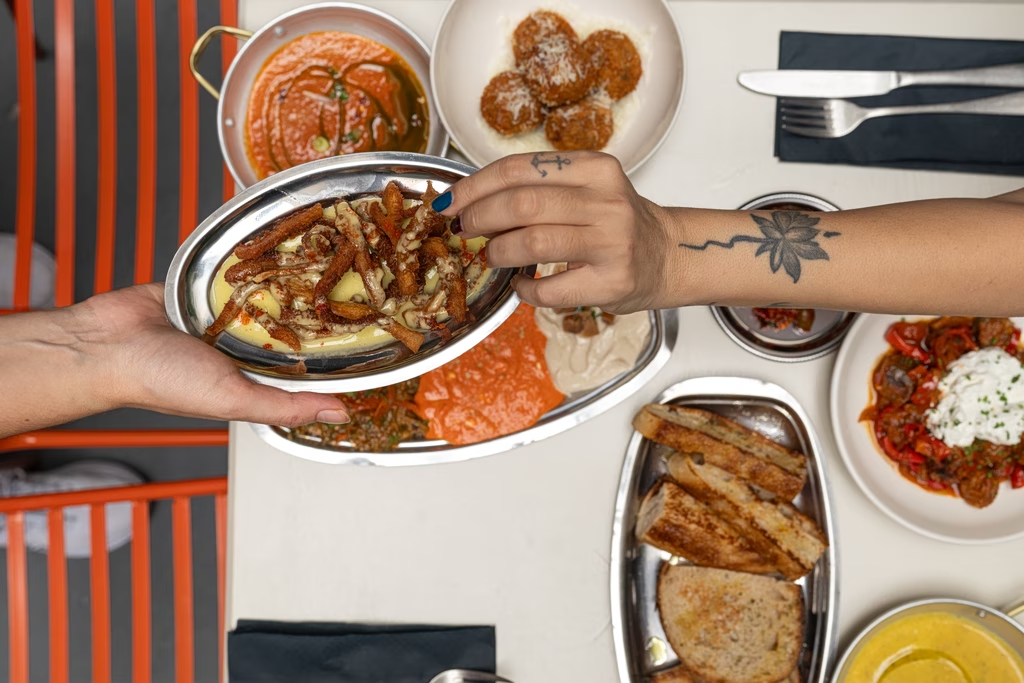
Flavors meant to be shared around the table — the kind loved by people who love Exarchia. Photo: Alexandros Alexandris
Over the past week, I read a lot of articles about Sinafi. So I deleted the piece I had written myself: something more detached, descriptive and focused on the food. I decided instead to speak the language of the crowd.
If nothing else, I have always felt part of this story. And so, when I walked into Sinafi, it felt as though some friends had built the place for me, too.
Sinafi is, above all, about its people
We often write that restaurants and bars are defined by their people. The phrase has become such a cliché that it may have lost some of its force. In this case, however, it is absolutely true.
Sinafi could easily have been a business created by a group looking for another successful venture. But things are somewhat different here.
Of course, the people behind Sinafi want to build something that succeeds. But the project is much more than a good business idea. In fact, it is their answer to an Athens that has changed its face in recent years, lost some of its balance and is trying to find itself again — all at a time when the circumstances are very different from those of 10 or 15 years ago.
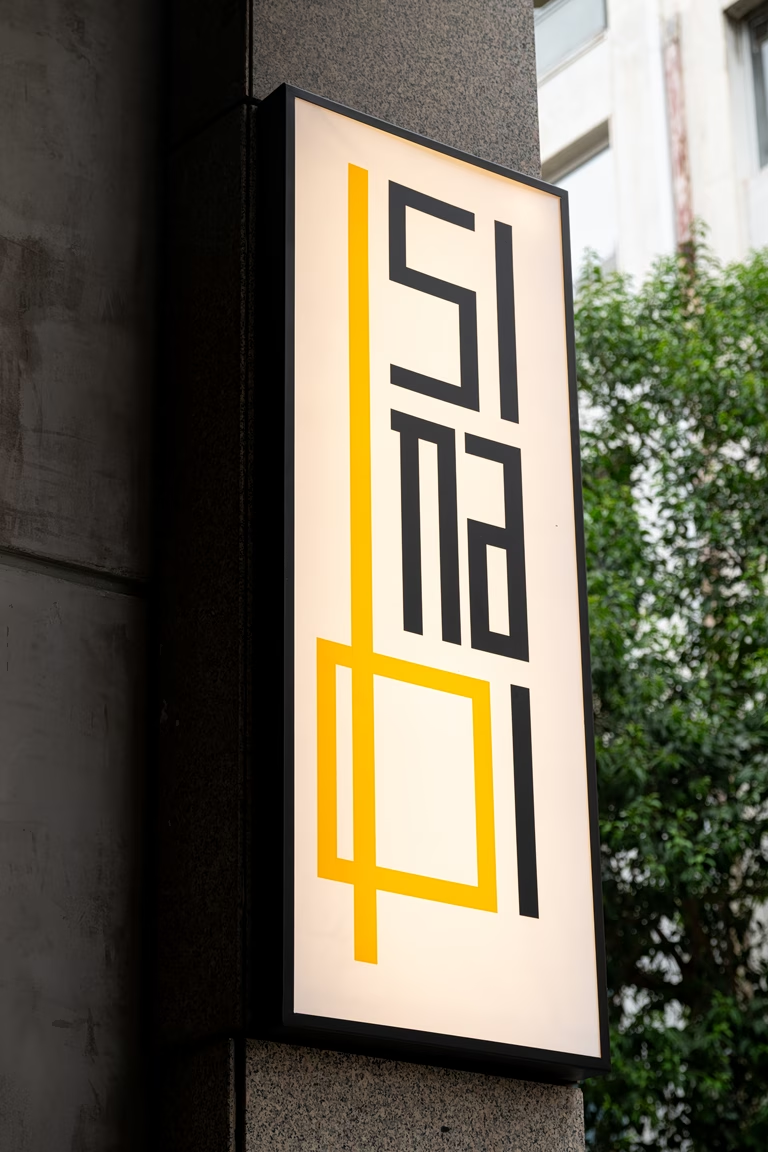
Sinafi is a group’s response to an Athens whose face is changing. Photo: Alexandros Alexandris
Back then, we went out to drink heavily and came home only after putting on our sunglasses and eating a morning tiropita, the classic Greek cheese pie.
Now, younger people are playing by different rules, and we have to prove that we can still be good players — that we know how to turn the game around and score from the halfway line.
And for years now, the “outsiders” have also been writing their own story in the neighborhood.
I use the word “outsiders” because, as Phaedra Mavroeidi-Svana, Sinafi’s head chef, rightly says, Exarchia was always something of a Gallic village: a place where, when someone arrived from another part of the city, everyone would turn their heads and could easily ask, “Whose are you?”
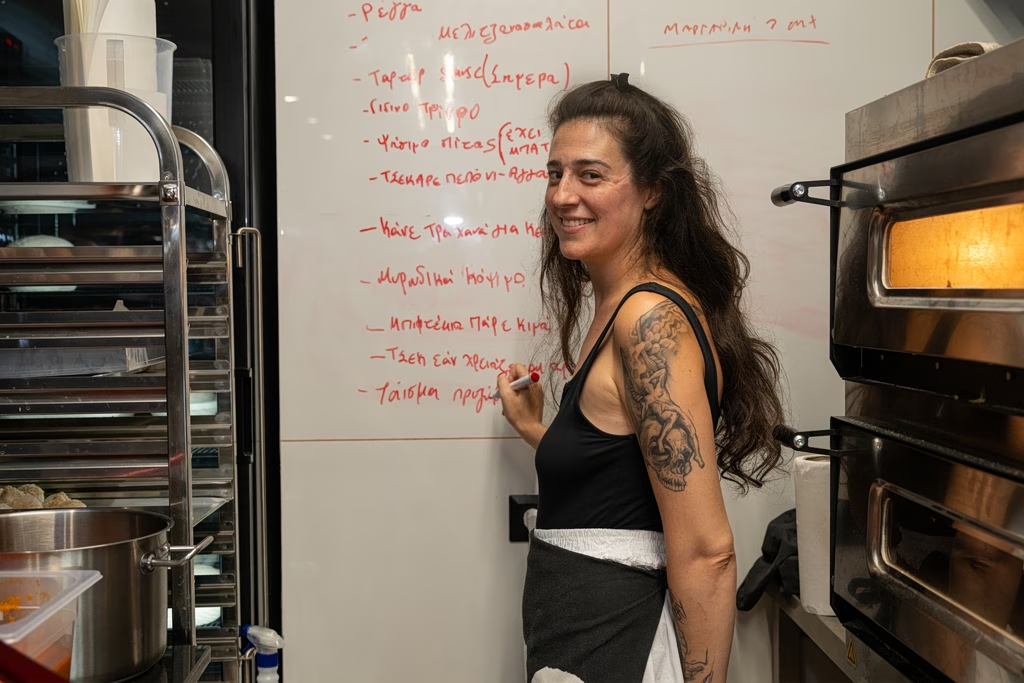
Phaedra Mavroeidi-Svana, sourdough bread expert and head chef at Sinafi. Photo: Alexandros Alexandris
But we could not stubbornly hold on to that picturesque side of the neighborhood. By now, we know that we are all going to live through this story together. And the best thing we can do is write a new chapter of its history together, too.
So, who exactly is Sinafi?
First there are Achilleas Poulimenos, Akis Papadopoulos, Charis Salipas and Fontas Tazes.
The first three already share a history dating back to Kokkino Loto, while Fontas has known and worked with them even longer. They know one another, have worked together in different combinations and have shared the same neighborhood for years.
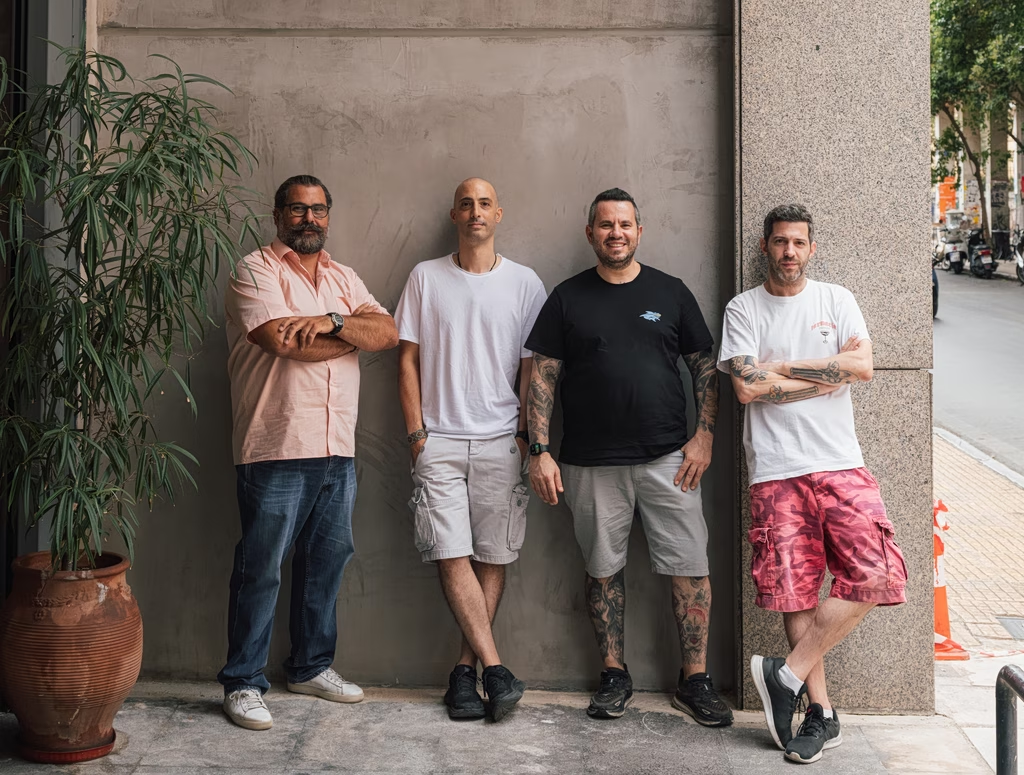
Charis Salipas, Akis Papadopoulos, Achilleas Poulimenos and Fontas Tazes: Exarchia locals, colleagues and friends, the Sinafi crew. Photo: Alexandros Alexandris
Then there is Phaedra Mavroeidi-Svana, working in the kitchen alongside Filippos Alexiou. There is Anastasia Papadopoulou, Achilleas’ wife, who runs the dining room with the team. And there are all the other people you meet from the moment you step into the courtyard.
Everyone has a role and a story of their own, but they have joined forces to create a small planet where you can land in the morning for coffee and, much later, realize you have absolutely no reason to leave.
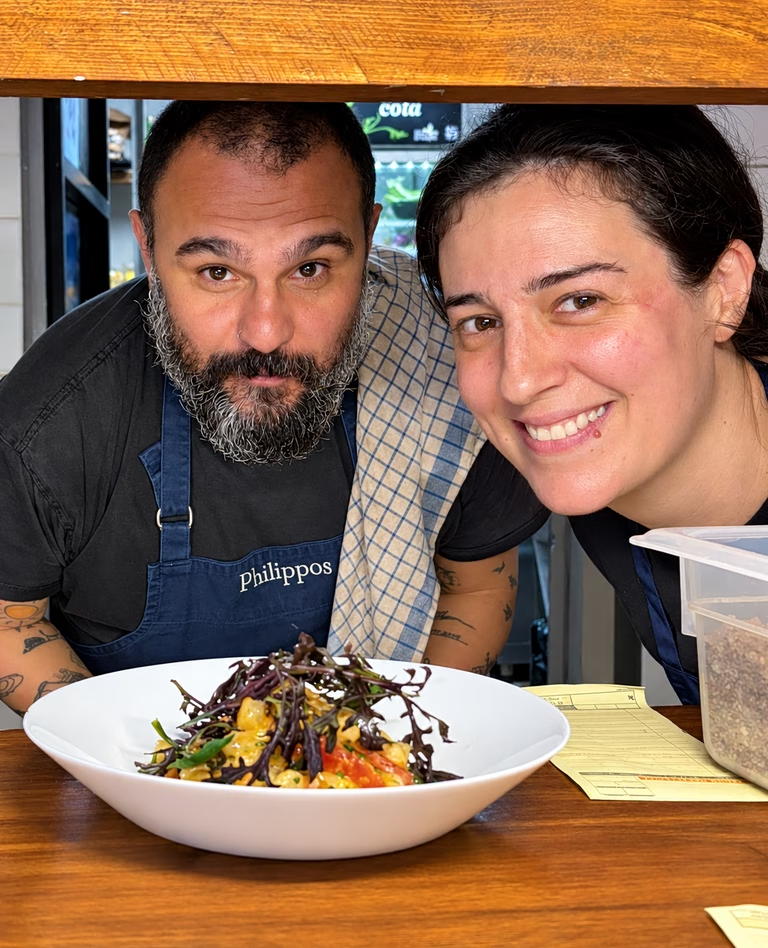
Filippos Alexiou and Phaedra Mavroeidi-Svana in the Sinafi kitchen. Photo: Alexandros Alexandris
The bar and its courtyard
I first went to Sinafi a few days after it opened to have dinner with my friends, and I returned on the day of the photo shoot. I had been looking forward to it, I won’t hide that.
I knew how long the team had been working on the project, but I hadn’t expected to find, behind a passageway off Charilaou Trikoupi Street, a space that would make me feel so comfortable and at home so quickly.
The courtyard has an openness and simplicity that fit Exarchia. Orange chairs add color, plants spread throughout the space, and as the hours pass, the lighting changes along with the mood of the place.
You want to sit down, relax and let the day unfold without checking your watch. That is something that rarely happens in this city, where everyone is always rushing to get somewhere or accomplish something.
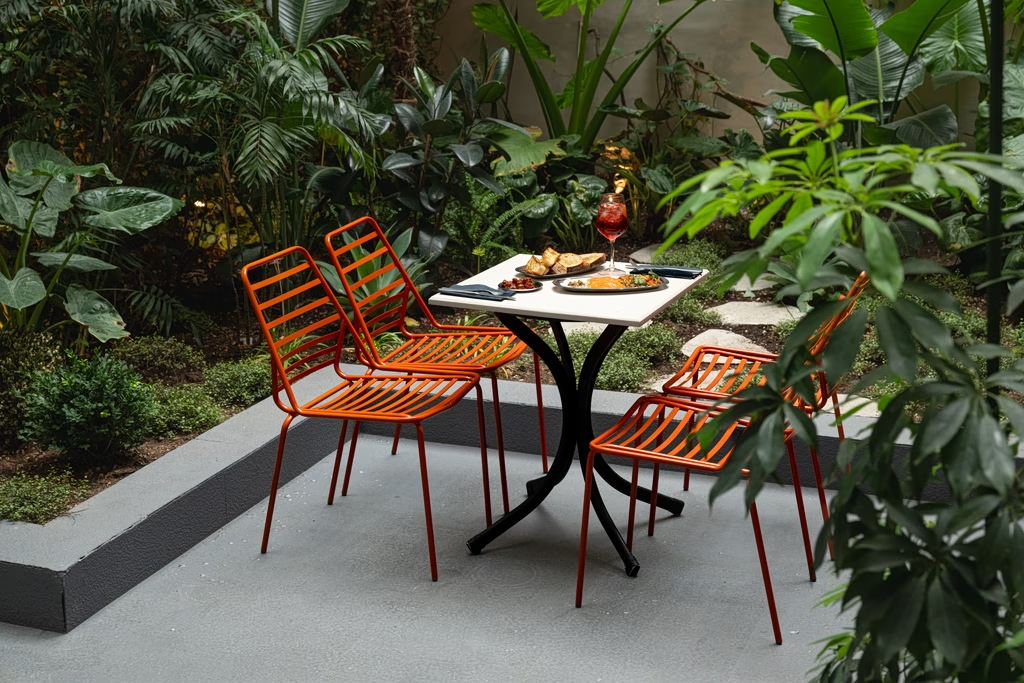
The green Sinafi courtyard breaks up the gray concrete surrounding it. Photo: Alexandros Alexandris
And before we talk about anything else, let’s stop at the garden.
I have a particular fondness for people who intervene creatively and sensitively in the urban landscape. I consider those who can breathe life into spaces submerged in concrete grayness to be great artists.
Achilleas created the garden together with his friend Kelly Milarokosta of Terra Textura. They have known each other since they studied landscape architecture.
Large green plants and climbing vines give the space a subtly exotic quality — beautiful without feeling out of place or excessive. Those of us who live in the city center know that gardens found or created here can easily become part of our everyday lives. Besides, in a country like Greece, it makes sense that we want to spend as much time outdoors as possible.
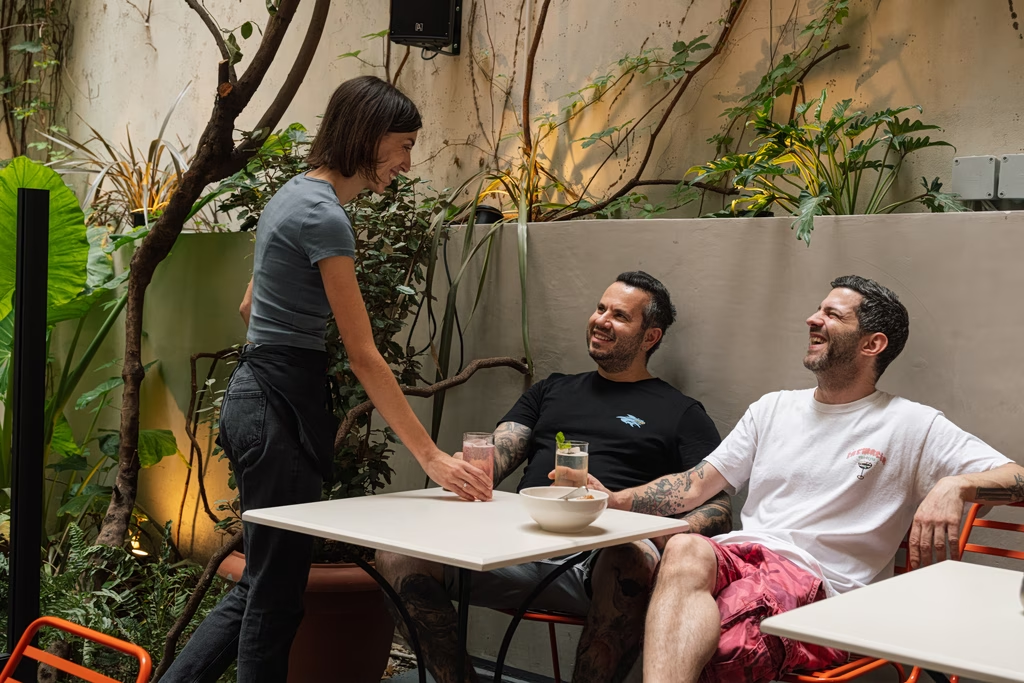
Anastasia Papadopoulou, Achilleas and Fontas in the beautiful courtyard. Photo: Alexandros Alexandris
The venue itself was found almost entirely through neighborhood connections.
Charis’ stepfather knew the previous owner and knew that the team was looking for a space in Exarchia. When he learned that the property was becoming available, he put them in touch.
He knew the courtyard as a regular himself. He had sat there and knew its history.
Before Sinafi, a café had operated in the same spot for about 27 years, where neighborhood regulars came to drink their Greek coffee. The previous owners’ charcoal brazier was the one thing the new team could not keep because there wasn’t enough room. But they do serve Greek coffee.
And so the old regulars have returned to their old haunt, and Sinafi is becoming a favorite place for them, too.
Everyone who belongs can find a place at Sinafi.
The bar is the heart of the place
Sinafi is, first and foremost, a bar. That makes sense, given that the team has spent a large part of its lives behind bars.
If we were to divide up their roles, we would start with Achilleas and Akis. For years, they have been studying carbonated cocktails, and at Sinafi they are giving new versions to familiar drinks such as the Margarita, Mojito and Paloma, which are served from taps.
The difference is not simply that they add a little soda at the end. They carbonate the entire cocktail, making the bubbles part of its flavor.
The result is a fresher, lighter drink without sacrificing its body or character. Some of these options also contain less alcohol, reflecting a time when younger people drink differently from previous generations — while those of us who are older are also beginning to seriously consider ordering something lighter and more refreshing without giving up on an interesting drink.
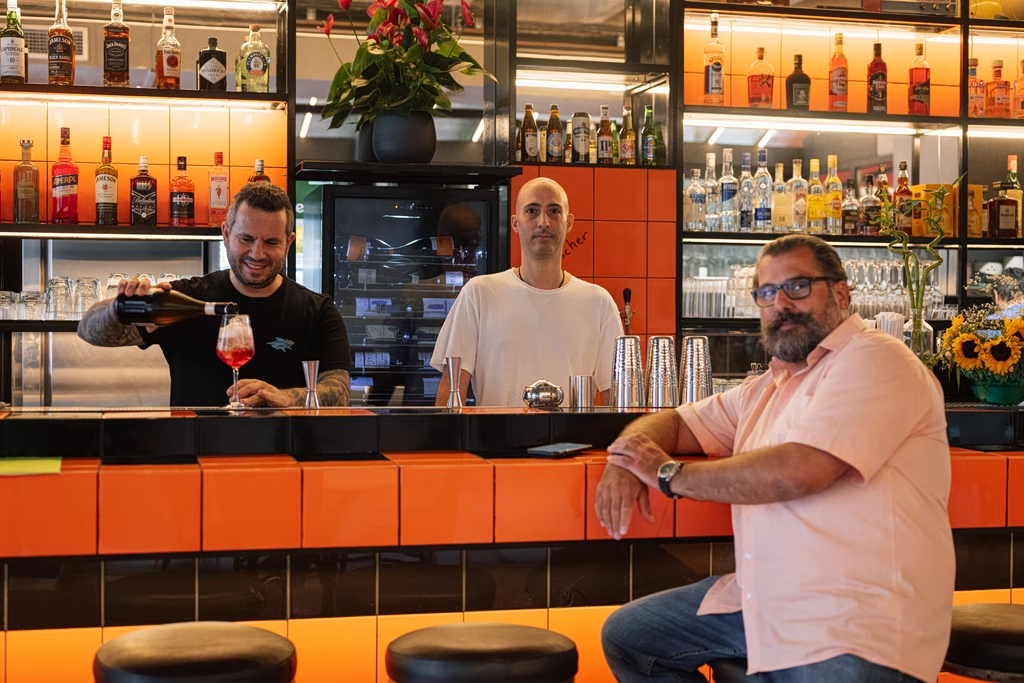
Achilleas, Akis and Fontas work as a team both behind and in front of the bar. Photo: Alexandros Alexandris
Fontas and Achilleas have devoted the same attention to classic cocktails. An Old Fashioned, Dry Martini or Negroni has to be made the way it deserves, with quality spirits and careful attention to details that can otherwise seem obvious.
Charis moves just as comfortably within the team, often taking care of coffee while also supporting the wine station every day.
The bar therefore does not simply change shifts as the day progresses. It continues to set the rhythm of the place.
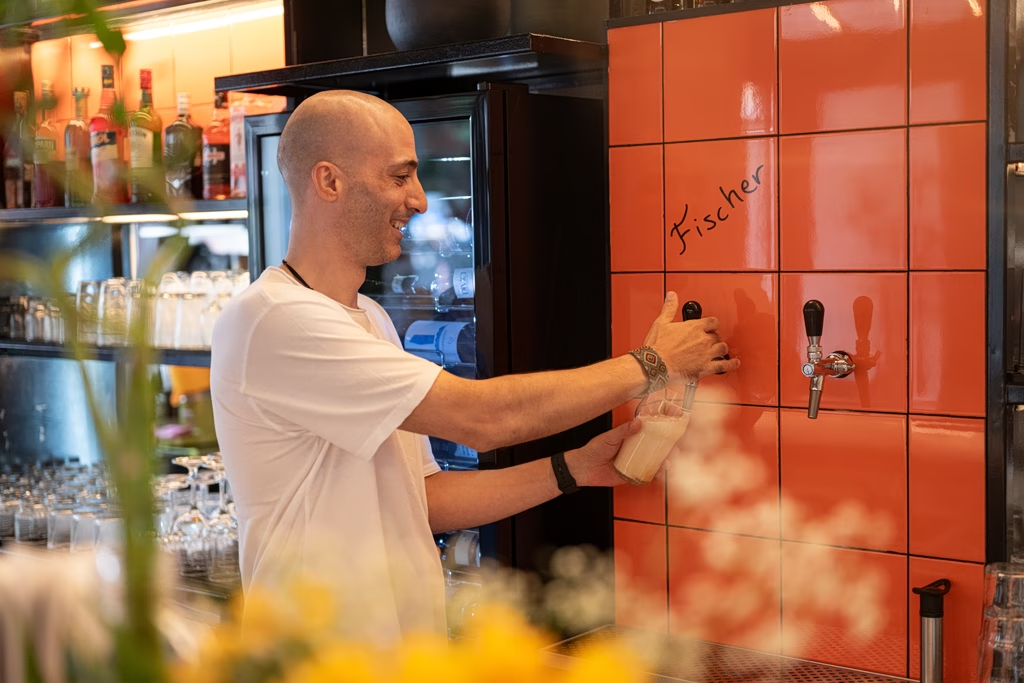
Sinafi serves three favorite cocktails — Margarita, Mojito and Paloma — from the tap. Photo: Alexandros Alexandris
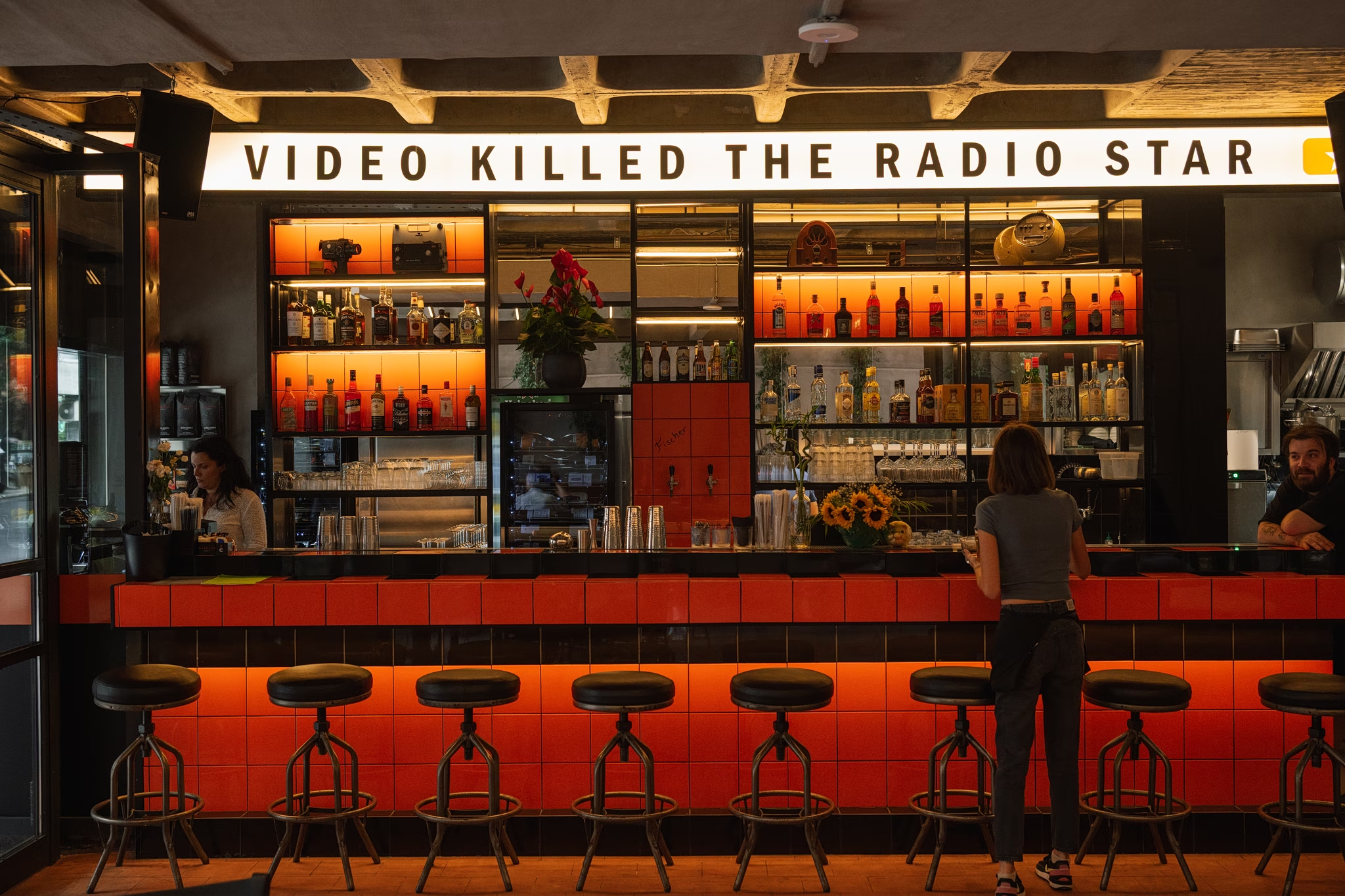
Above the bar is a neon sign that reads: “Video Killed the Radio Star.”
The song was written in the late 1970s by Trevor Horn, Geoff Downes and Bruce Woolley, shortly before the Buggles turned it into a worldwide hit. It was a song about the moment when images began changing our relationship with music and technology began shifting things we had previously taken for granted.
History later gave it an almost prophetic quality. On August 1, 1981, when MTV began broadcasting for the first time, “Video Killed the Radio Star” was the first music video to air.
A song about the transition from one era to another had, without intending to, ushered in precisely that new era.
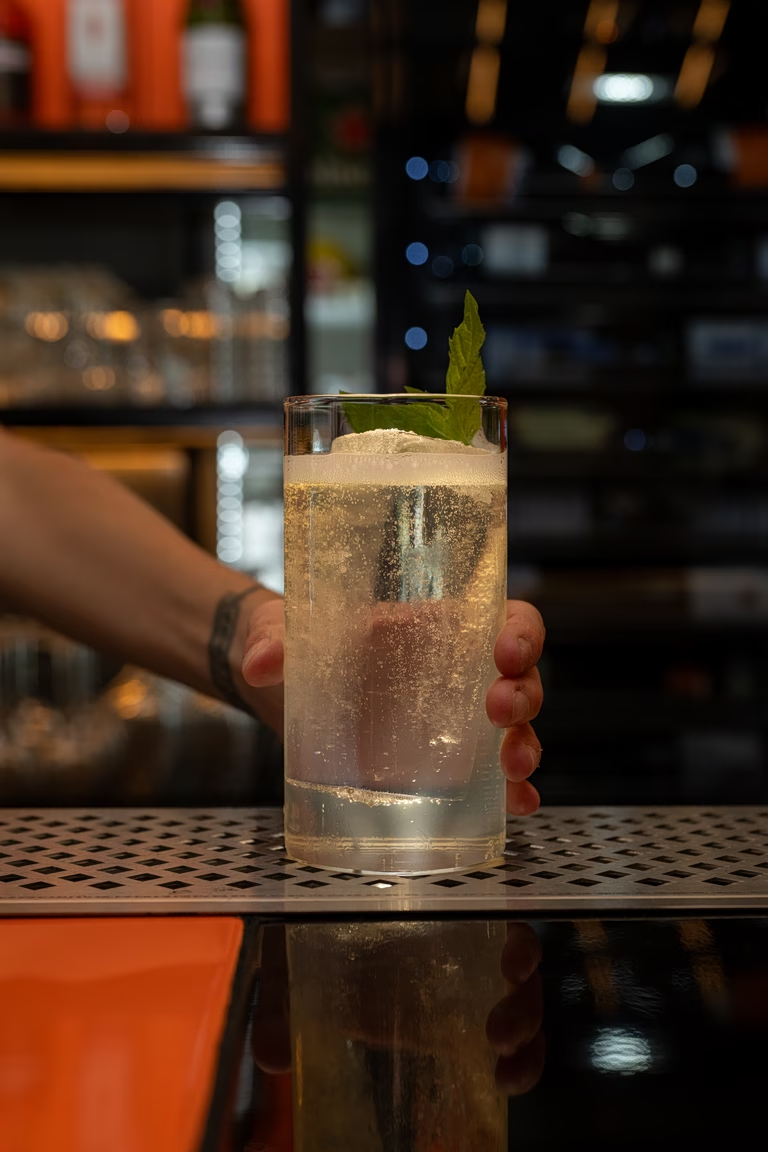
Carbonated Mojito for extra freshness and a lighter taste. Photo: Alexandros Alexandris
At Sinafi, however, the phrase takes on its own meaning.
It hangs illuminated above a bar that looks forward without leaving behind anything that has substance or meaning. Classic cocktails remain classic, while a Margarita or Mojito is carbonated and poured into a glass with an entirely different energy.
Open all day, but never ‘all day’
Once we agreed that none of us had ever particularly liked “all-day” establishments, we sat down to figure out what Sinafi actually is and how best to describe it.
Phaedra was right to say that the place has “developed needs”: it has to operate with the same consistency throughout the day without trying to serve everything, to everyone, all the time.
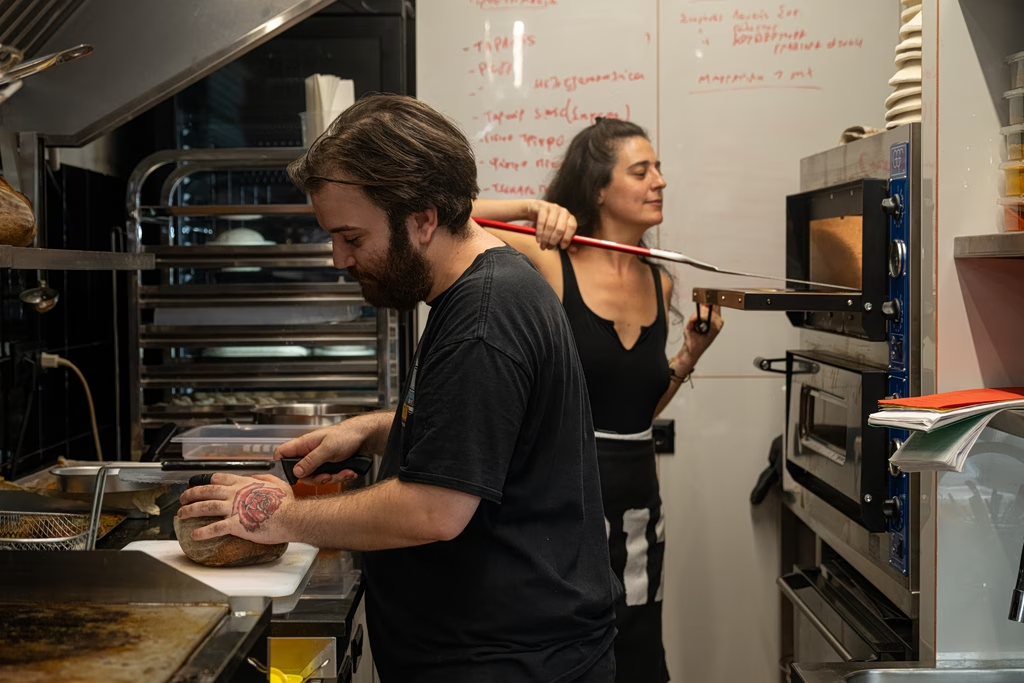
Giannis Stavropoulos with Phaedra in the kitchen. Photo: Alexandros Alexandris
That is where the kitchen comes in.
Alongside Phaedra and Filippos is Giannis Stavropoulos. Phaedra and Filippos had first met professionally in the kitchen at Line and later worked together at Walk In.
Here, they have built a menu that moves with the day.
In the morning, there are handmade pies, trachanas — a traditional Greek grain-and-yogurt pasta — sheep’s milk yogurt with pasteli and za’atar, and sandwiches made with their own sourdough bread.
From midday onward, the kitchen expands. Two or three cooked or oven-baked dishes change daily, alongside smaller plates designed to be placed in the middle of the table.
Green beans with butter flavored with the spices used for pastourma, melichloro cheese from the Greek island of Lemnos with almonds, a salad of melon, cucumber, anchovy and purslane, beef-and-lamb meatballs, and braised beef in tomato sauce with spetseriko and trachanas give a fairly clear picture of their approach.
The food is familiar and unpretentious, but it almost always hides a small surprise somewhere.
And because Phaedra would hardly allow bread to play a supporting role, her sourdough loaf is always present — including for dipping into the “juices for dipping,” which are listed that way on the menu.
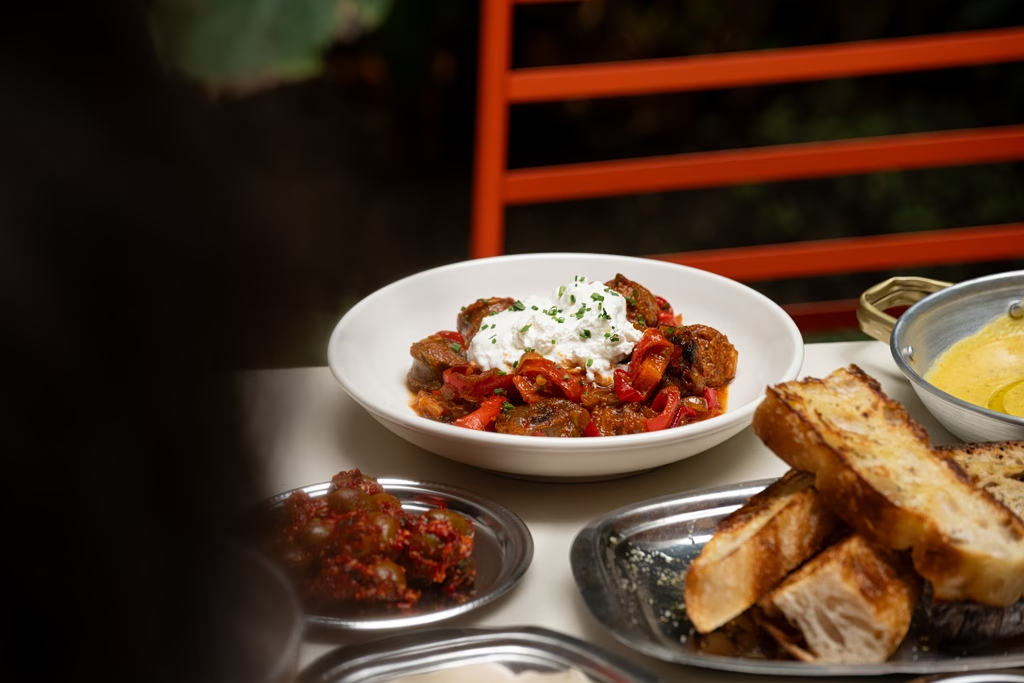
Familiar flavors with a surprise, and sourdough bread always on hand for dipping. Photo: Alexandros Alexandris
The beauty of it is that you don’t necessarily have to arrive hungry.
You can sit down for some cheese, cured meat and bread, order a glass of wine and let the rest of the evening decide for itself where it is going.
The wine list, curated by sommelier Paisley Tara-Kennett, moves between Greek and international wines, with around 35 to 40 labels and plenty of options by the glass.
And so, as the hours pass, Sinafi doesn’t need to transform from a café into a restaurant and then into a bar.
It remains the same place. It simply changes along with you.
And now, everything is beginning
Sinafi is still a baby.
It is only beginning to find its rhythm, get to know its neighborhood, observe who walks through its door and discover, in practice, what it can become.
There are already plenty of ideas for the next steps, and as the place becomes more firmly established, those ideas will take more complete shape.
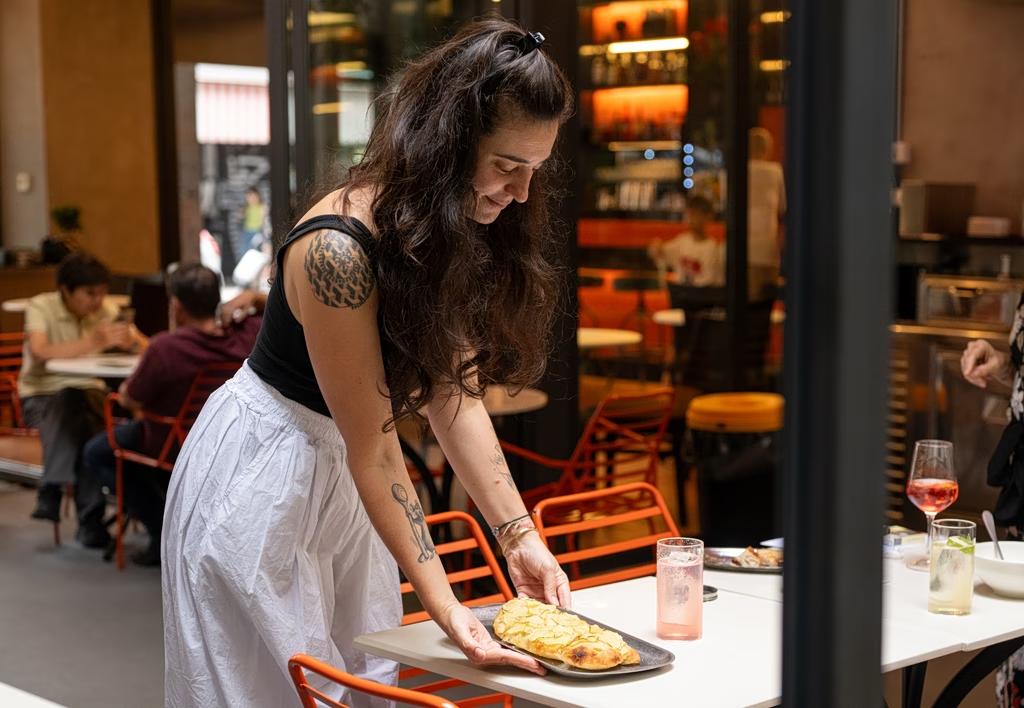
The Sinafi team is only taking its first steps. And it is waiting for us with plenty of ideas. Photo: Alexandros Alexandris
Evenings with small and larger wineries, wine-and-food “sips and bites,” collaborations and guest appearances are already in the works.
On September 30, the team will make its first “away” guest appearance at Radikal.
A little later, music will take on a bigger role: a better-organized DJ booth, people bringing their vinyl records, DJs, Sunday parties and perhaps even screenings.
No one is rushing to decide exactly what the future will look like.
First, they want to listen, see what people are asking for and what the space itself allows, and let the place grow properly without losing the spontaneity with which it began.
They want to widen the circle beyond the neighborhood, bring together people who may arrive for entirely different reasons, and gradually turn Sinafi into a steady meeting point for Athens.
For now, though, it is doing something simpler.
It is opening its doors, setting a table, pouring a drink, putting on some music — and inviting people to become part of the same story.